
An exploration of the solitude of the Californian desert, Eve Adams looks for answers in the dust of the “middle of nowhere”.
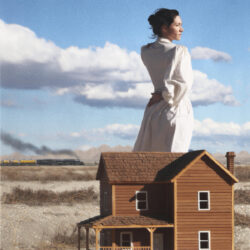 “American Dust’” follows Eve Adams’ 2022 release of her “Metal Bird”, but steps away from the dream-like state she was previously exploring into the sweeping solitude of traditional storytelling that is rooted in the land on which she exists. “American Dust” feels riddled with questions of the past, ones that have answers hidden in the books and photo albums that would be found in the untouched living room of an abandoned home standing alone in the California prairies. Adams is finding some of those answers, and recognising the ones that are better left to the sanctity of time.
Much like the preface to a novel, or even the introduction to the author, ‘Nowhere Now’ sets up an atmosphere of isolation and emptiness. Sketching out the empty landscape, the song acts as a foundation for the album, one that allows for a transition into the contrasting shuffle of ‘Couldn’t Tell The Time’ – one of the album’s brighter moments. On ‘Strangers’, Adams’ gentle vocals are sparsely paired with a steady backbeat, leaning into a sultry tale of womanhood, letting the dark undertones of the album emerge for the first time. It’s the stark instrumentation and production that brings an eerie folk-noir feel to the album, images of a lonely homestead or prairie give us glimpses into a Southern-Gothic world that Adams’ music could accompany so well.
The heart-shattering ‘Ask Me’ leaves little sunshine to be found in the shadows of a broken relationship, with strings offering a sweeping accompaniment. In contrast, the uplift of the bouncy ‘Get Your Hopes Up’ leans into the free-flowing feel of a developing love – the wistful, wishful sentiments of the track bring Lana Del Rey comparisons to mind, further solidified with the ease of transition back into the darkness that covers the album.
There’s a weight that hangs on each of Adams’ words, one that despite her almost whispered vocals, brings a heaviness to “American Dust”. One that carries the stories of both landscape and life. Although purposeful, the emptiness of the album’s sound can make it a slightly detached listen, but with a few rotations, the depth reveals itself – much like noticing the details in the background of an old photograph.
Whilst Adams has undeniably poured her soul into this album, its observations of the lives around her leave a narrative of an outsider, one that’s looking in rather than out. But as the gentle magic of the album closes, something about the lingering questions suggests that she might just be looking on too.


