
Los Angeles-based Big Harp duo relaunch with plainspoken album after ten-year hiatus.
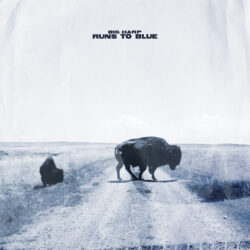 Farmland and ranches make up close on 90% of Nebraska’s land area. Not the likeliest place to find a thriving indie music hub, perhaps; a self-deprecating Nebraska Tourism Commission marketing campaign admitted a few years back, “Nebraska. Honestly, it’s not for everyone”. But it was thanks to the Omaha music scene that Big Harp’s Chris Senseney and Stefanie Drootin’s paths first crossed. Senseney was the guitarist for the band Art in Manila, who were supporting The Good Life, for whom Drootin was playing bass. Senseney’s Cornhusker State credentials were solid; his hometown located in the rolling Sandhills of north-central Nebraska, just south of the South Dakota state line. That city’s post office does a roaring trade in mid-February with its sought-after Heart City postmark: Valentine, NE. Drootin was raised in California’s San Fernando Valley. Both musicians were in orbit around Omaha’s musical epicentre, Saddle Creek Records, when they met on tour in 2007. Soon after meeting, Senseney and Drootin got married and moved to the Golden State. Big Harp was conceived shortly after the couple’s first child. The band released three albums, White Hat (2011), Chain Letters (2013), and Waveless (2015), before being assigned to the back burner.
Winding forward a decade, Big Harp cinched up their Saddle Creek saddles again and relaunched last year as a duo with a stripped-back version of Boys Don’t Cry. The couple’s teenage daughter brought the song, previously memorably covered by Grant Lee Phillips, to their attention as she explored The Cure’s back catalogue. Big Harp’s rendition was recorded live in the studio, with Senseney’s baritone vocal and fingerpicked acoustic guitar augmented by Drootin’s hushed backing vocal and electric bass. It was a precursor to and a stylistic blueprint for their fourth studio album.
Pierre de Reeder, album producer and bassist for Rilo Kiley, hails Senseney and Drootin as “Incredibly talented and unique songwriters and performers.” Fellow Saddle Creek Records alumni Conor Oberst (Bright Eyes) and Tim Kasher (The Good Life, and Cursive) chip in with complimentary press release comments for Runs to Blue. The Big Harp duo describe their album as lyrically plainspoken, but the sparse instrumentation and narrow dynamic range may not hit the spot for all listeners. The lead single I Got An Itch stands out from the bunch. The suggested remedy for the itch in question involves ditching domesticity, tuning up, trading the family wheels for a 15-seater touring van, and hitting the road in search of former freedom. Hello Honey also has an upbeat twinkle in its eye. Both songs might stimulate your John Prine receptors. Recent major life events are manifested, particularly in the elegiac I Ain’t Going To Cry, in remembrance of Senseney’s mother, who died unexpectedly in 2022. Her presence is also felt in Kill It, Kill It, Kill It, a reflection on the grieving process, written around the time of her passing.
Whilst two may be company, it’s not always enough to stand out from the crowd. With the likes of Buddy and Julie Miller, Watchhouse, The Honey Dewdrops, and The Handsome Family, the bar is set high for married americana music duos. In these days of algorithmic streaming, a lack of immediacy may bypass the attention of new listeners. The sonic palette of Runs to Blue is limited by the unadorned delivery of its songs, but if plainspoken folk is your thing, give Big Harp a listen.

