

I’ve gone on record as proclaiming Waiting For Columbus one of the best live albums in the universe, so I took a long time to reconcile myself to the fact that the band had a life after Lowell George’s passing. His voice, writing and slide guitar were so much the core of the Feat sound that it felt disloyal to consider listening to the band without him.
On buying the Rad Gumbo box set some years back, I was pushed to listen to their first two post-reunion albums and found that I could. The truth of course is that Little Feat were always more than George. Paul Barrère and Bill Payne always contributed to the songwriting and took lead vocals, so stepping further into those roles seems natural. Over the years they have brought in a range of new members who allowed the “new” Feat to find their feet, so to speak. The big shift came with the arrival of Shaun Murphy for 1995’s Ain’t Had Enough Fun. That album feels like a “getting to know you exercise,” but from there on most of their studio albums have had at the very least had flashes of inspiration and are for the most part very listenable. They have also become elder statesmen of the Jamband movement and fixtures on the American festival circuit. Founding members Bill Payne, Sam Clayton and bass player supreme Kenny Gradney are still all in residence alongside Fred Tackett, with them since 1987 and on their farewell tour. While performances may be lack the fire of earlier times, they have substituted bluster for a wonderfully languid bluesy feel. Tackett has been one of the key players in their longevity, creating a writing and playing partnership with the late Paul Barrère which built the base from which they have added to Lowell George’s legacy without ever disrespecting it.
Can’t Live With It: Let It Roll (1988)
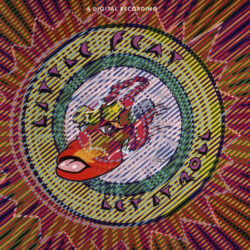 Having said that, the place where they came closest to losing it was on their first album back in the saddle. Let It Roll opens with a real Feat barnstormer in Hate To Lose Your Lovin’. Written by Paul Barrère and new boy Craig Fuller it starts with Bill Payne’s barrel-house piano and kicks straight into a funky groove right out of the glory days. The slide guitar has enough nods to Lowell to be familiar, but not a pale imitation. After that, it all goes a bit wrong with the mid-tempo One Clear Moment, which sounds more like a Doobie Brothers outtake than anything else. Cajun Girl and Let It Roll are Feat lite, but they can’t rescue the album from travesties like the syrupy ballad Hangin’ on to the Good Times, or Business as Usual which is closer to Styx than anything else. Those two titles sound like a bad case of intention setting gone wrong. By the time we get to the end with Voices On the Wind, you’re hoping that they do in fact blow away on the breeze. Even a guest appearance from Linda Ronstadt can’t rescue it. It’s all just too smooth. Producer George Massenburg may have got them a Grammy for best engineered album, but it’s not very Feat.
The next album Representing the Mambo was an improvement, but they were still trying too hard not to be Little Feat. They let the Jazz Rock which so annoyed Lowell George out to play on The Ingenue, which features a fine tenor solo from Michael Brecker, but overall, you can see why their deal with Warner Brothers closed after that album.
Can’t Live Without It: Under the Radar (1998)
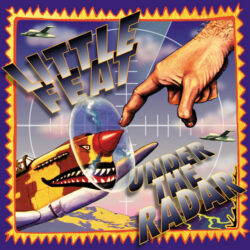 Step forward 10 years from Let It Roll and we find a very different band. Shaun Murphy has replaced Fuller and has helped them find a way to reconcile with their past and integrate it into a new way of working. Home Ground sounds like Spanish Moon sung to the back beat of Bowie’s Fame. The guitar solos keep well away from the slide, and its only downside is the fade after just four minutes. Eden’s Wall shows that they can do a mid-tempo song right. It’s one of several Barrère, Murphy, Payne co-writes. They don’t smooth things out as they did on Let It Roll, the instruments mesh to produce a more ensemble sound than they would have done earlier in their career. The big difference is the brass which was always the extra sauce in the Little Feat gumbo. It adds a punch that was just lacking on the first two reunion records.
The other big difference is that the album is produced by Barrère and Payne, dumping outside producer Massenburg, almost as if they are saying, “we know what this should sound like, we’re taking back control and making Little Feat great again.” By the time a slide guitar solo arrives on Distant Thunder, it is mixed with Murphy’s vocal to create something that is new, and different but still Little Feat. It all comes together on Loco Motives, where Delta Blues guitar meets Richie Hayward turning into the locomotive of the title driving the song on and adding it to the list of great train songs. The stop time rhythm is something old Feat would never have done. The band has the confidence to try something different without looking over their shoulders now. Falling Through the Worlds with its Tex-Mex accordion and quotes from Sketches of Spain is a great song regardless of whose name is over the door. In all honesty the album is 2 songs too long. Losing the sub–Tom Waits I Got Happiness and Calling the Children Home would have allowed some of the other tunes room to stretch out a bit. They aren’t bad, and light years ahead of Business as Usual but just not the equals of some of the other songs.
Since Under The Radar they have produced another six studio albums and several live albums of varying quality, which include rehabilitating Let It Roll as an extended jam, which suggests that the problem was in the production all along.



Lowell was such a great and unique singer, songwriter and guitarist that the Little Fest albums without him could never compete with those with him, but you bring out fact, Tim, that while the post-Lowell output is variable in quality, they were still a great band with their own sound and worth keeping an eye on.
Here, let me fix that for you … “they ARE still a great band with their own sound …”
Thanks Martin, yes indeed, as I say at the start Waiting For Columbus is a sacred text for me, and they were a different band, maybe they would get better recognition with a name other than Little Feat and dodging the Lowell size hole missing in the sound.
Lowell was a unique talent. No one will disagree with that statement. He surrounded himself with truly gifted players (some truly musical geniuses, such as himself) who contributed an awful lot to what you are describing as the Lowell-era band. All of them reunited a decade after Lowell’s passing, and added a couple of other gifted musicians in that first follow-up incarnation. They honored Lowell’s legacy (as they still do, today), even if they modified his songs (as they continue to do today … refusing, like some bands who have lost members, to play note-for-note recreations but instead allowing those old songs to expand and evolve.
But Paul Barrère is a talent in his own right, and you (like so many other purists) refuse to recognize how his fronting of the band changed its direction while giving it a new life. Paul was much more engaging than Lowell, even if his voice could not match that of the master. When Craig left (you seem sort of 50-50 on the value of his contribution … I happen to like some of the different directions his songs took), Shaun replaced him, and you give her hardly a nod. Try listening to Borderline Blues without something stirring in you, even if you aren’t aware that it was written as a tribute to Neon Park.
And I highly recommend taking in a performance on this tour when they come to a city or town near you. There’s a new energy and yet a slightly different course in which they are moving. As always, they are a band whose live performances almost always outshine their studio albums
Thanks for your comments Scott. Sadly I think the chances of them coming to the UK are slim, I’d be front of the queue if they did.
Well done Tim. Not an easy subject to cover – Little Feat post Lowell George. Maybe you are right when you say they should of changed their name.
But i think at the start the remaining members wanted to keep that spirit going.
I confess i lost interest after a while. There is quality in the post LG though, just aint got Lowell.
Thanks Andy, There is quality, as long as you don’t compare it to Lowell. They have some decent live albums as well.
Just for balance, I’d put ‘Let It Roll’ right at the top along with ‘Under the Radar’ but I am a big fan of PPL and Craig Fuller. It’s ‘…Mambo’ that’s the weak link for me and I was also less keen on Shaun Murphy’s contribution – too much of a blues shouter for me.
I saw them many times post-Lowell and they remained an excellent live act, even including Bonnie Raitt as a backing vocalist before her career renaissance.