
Our latest Short Cuts, a monthly feature where AUK casts a brief eye and ear on several albums we’ve received recently, which just didn’t make the cut for a full review. Like most major music websites, we can’t mention every album or EP we get sent, but we reckon the picks below deserve a nod. Click on the links to hear a song.
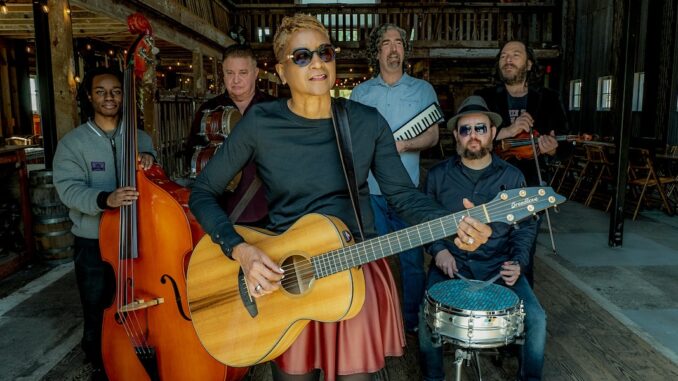
Another fine batch of new releases to recommend, all without the help of those pesky algorithms, just good old-fashioned word of mouth. Up first, the Paula Boggs Band with Sumatra, a bold and melodic collection of ten perfectly crafted songs. While it’s Boggs’ name on the cover, the band operates as a true ensemble, with various acoustic instruments weaving in and out of the arrangements and infusing the songs with an empathetic feel. Certainly, the band’s versatility and prowess are a central strength to the album, but it’s also the songs, mainly written by Boggs, and her soulful singing that truly make it magical. The majestic Sumatra leads things off with a strong statement of intent. It begins with a haunting Gregorian chant before a strummed acoustic guitar enters, and the song transforms into a folkish melody with Boggs’ heartfelt vocals vividly painting a scene of idyllic contentment in the beauty of the natural world. Boggs goes on to contrast this beauty with the darker side of human practices impacting the world, imploring the listener to “wake up” as the band kicks in and brings the song home with some inspired playing in a mélange of musical styles where tabla drums, chorale singing and acoustic guitars come together in a perfect fusion of sound. It sets a high standard right from the start and never lets up. Elsewhere, the sprightly folk-rock storytelling of The Bard of Vietnam, with its infinitely catchy chorus, the violin-led haunting instrumental Traces of You and a deeply moving version of the traditional The Snows They Melt The Soonest with its lovely finger-picked guitars and penny whistle adornments are absolute highlights. The final track ends the album on a transcendent note with a jubilant version of the Civil Rights anthem, Ain’t Gonna Let Nobody Turn Me Around, that features some absolutely joyous vocal turns from The Blind Boys of Alabama and Valerie June. Thematically, it’s a perfect fit with Boggs’ original tunes, in its joyful celebration of resilience and steadfastness and the need to remain optimistic in these difficult days. Delightful from start to finish.
From the UK, the talented David Lewis returns to the fold with his sixth release, In The Moment, containing ten original songs, along with an inspired take on Bill Fay’s Down To The Bridge that closes the album nicely. The album exudes a gentle folk-rock vibe aided by the participation of The Radical Gentlemen, a highly accomplished group of musicians who, in one form or another, have provided musical support to Lewis over the years and whose innate chemistry is wonderfully apparent here. Indeed, the familiarity of the musicians with both Lewis and each other lends an air of cosiness to the proceedings. In addition to providing some nuanced production, Wesley Stace also makes an appearance playing guitar and singing harmony, as well as co-writing three tracks with Lewis. The result is an album that pairs Lewis’ warm, breezy vocals with his impeccable songwriting, at once elegant and poetic. The melodies have a startingly instant appeal, and the production and acoustic-centred arrangements suit the songs perfectly. The backing throughout is splendid, providing just the right touches without ever overshadowing Lewis’ songwriting. Opener, the gently shuffling Your Own Beauty, glides and soars on a lovely melody that is quite stunning in its simplistic beauty, while the gently loping Breathe is a gorgeous piece of music. Dryland is an album highlight blessed with a gorgeous melody and an exquisite guitar solo featuring twin electric guitars weaving back and forth. The hopeful If The Summer Comes is a buoyant piece of shimmering folk-pop with some jubilant harmonies wafting in the background, while Every Brick is an inspired, emotionally rich number that Lewis notes is not just about learning from the past but “about reconstructing it to right a wrong“. The result of a songwriting experiment to turn a current news event into a song, the lyrics reflect the efforts of a community to rebuild a London pub that was illegally demolished. Backed by some delicate mandolin and soft piano, Lewis sings: “So let’s drink to these days of the changing of ways / Old-fashioned ideas that blow in the breeze / Everything that was turned upside down / Is back where it’s supposed to be”. All in all, there’s a lovely sheen to the album. A consistently strong set of folk-rock, warm in its production and arrangements, splendid in its songs and performances and a welcome reminder of Lewis’ singular talents.
One of the more intriguingly named bands this month is The Doomed Bird of Providence, who offer up an album of instrumental delights with the ambitious Meteoric Heralds of Danger, a collection of extended improvisations combined with corresponding shorter prologues. Quite simply, it is a bold and adventurous fusion of sounds, funnelled through some finely crafted compositions that move cinematically, one song seamlessly blending into another. The album’s nautical theme is inspired by a nineteenth-century novel, containing vivid descriptions of the sea that were used for song titles. The album opens with the gentle and lovely Reflection of a Conflagration containing some exquisite Spanish-sounding acoustic guitar adorned with light flourishes of violin and accordion, before transforming into the first improvisational piece, Darkly Rolling Waves Flashed Fire. Featuring some hypnotic percussion, the song mesmerises from the start, with a restlessness to the playing as the melody, featuring a consortium of different instruments, rises and falls like waves. The dreamy A Long Low Line on the Distant Horizon follows a similar pattern and equally succeeds in transporting the listener down this enticing musical vortex. The interplay of the different instruments is quite stunning as the song glides along on a graceful waltz-like rhythm. Altogether, it’s inspiring in its creativity and flawless in its execution.
Jack’s Basket Room, a Finnish alt-country outfit, release the wonderful Yellow Moon, a tasteful blend of folk, rock, and country, with slight hints of psychedelia. The captivating lead-off track, Brass Bells, is a slow-grooving, moody opener with an overt country tinge. Its gently sweeping melody is sung beautifully by vocalist Minna Kilpinen, who adds just the right amount of pathos to this tender ballad, while the band provide restrained but solid backing. The title track, Yellow Moon, picks up the pace a notch; an R&B vibe permeates the melody, underpinned by a throbbing bass line leading the way, along with some atmospheric guitar as the song builds in intensity, capped with Kilpinen’s persuasive vocals. At the midpoint comes the album’s only cover, Bang Bang (My Baby Shot Me Down), brilliantly performed in a film-noir blues style, punctuated by some mournful accordion and an icy-cool veneer to the vocals. It’s a song that sounds perfectly suited to the band. Immediately following is the irresistibly catchy folk-rock sway Lie To Me, complete with its soaring chorus and playful harmonies, where the band get to show off their melodic chops. The guitar-driven closer, I’m Your Lover, ends the album on a rockier, somewhat psychedelic note, where a stinging, fuzz-toned electric guitar mingles with some understated banjo. Meanwhile, Kilpinen’s personality shines through with her passionate delivery, as some truly innovative backing vocals swirl around in the background. It’s a sound that is distinctively theirs and perfectly illustrates the band’s dynamic chemistry; a grand conclusion to an album that consistently delivers.
Playing what they call goth-americana, Swarme of Beese offer up their fourth album, Orchard of Dreams; eight tracks of haunting storytelling steeped in ancient traditions while exploring contemporary themes. Their sound is mostly acoustic, with intimate arrangements, and the songs are all the better for it, allowing their poetic songwriting and interpretations of traditional tunes to really shine. Unhurried in its pace, the songs are allowed to unfurl organically, making for a completely immersive listening experience. Orchard of Dreams begins with the title track, a paean to folk hero Johnny Appleseed, a gentle number with sweeping strings that highlights vocalist Lynn Adele’s deeply emotive voice. The playing throughout is utterly beautiful, and the uncluttered arrangements perfectly capture the quiet, eloquent mood required of the songs, as evidenced on The Shallow River, a sober reflection on “the humanitarian crisis facing immigrants and asylum seekers”. Sweet musical moments abound, such as on their haunting versions of The Cuckoo and Selkie, where, as demonstrated on the former, the call-and-response harmonising between the two singers and their disparate voices creates a beautiful, but sometimes unsettling portrait. Selkie, meanwhile, is both subdued and sombre, but it is an incredible version that has to rank among the best out there. Meanwhile, the final track, a dark, menacing take on State of Arkansas, is a standout performance that fully captures the languid mood of the album.
Hailing from Essex, UK, Victoria’s Big Easy release their debut studio album, What The Tide Took Back, and it’s a gem. It’s a collection of nine smouldering acoustic blues numbers that showcase the powerful vocals of Victoria Skingsley-Bartholomew and the inspired guitar playing of Chris West. The album begins strongly with the gospel-like, shuffling blues of Take Me Down (Freedom), and it’s immediately apparent that Skingsley-Bartholomew has a natural feel for the blues, and the acoustic format allows her assured vocals to stand out. I’ll Be The Devil is equally strong and features some wailing harmonica and a buoyant bass pattern to guide the proceedings. Throughout, her vocals are front and centre, well as they should be, but the band do their part by providing some understated musical support. The backing is spot on, and the band always seem to find just the right groove and arrangements to complement the vocals. The laid-back acoustic ambience of Green Grass Mountain gives it a traditional-sounding feel, while the sultry blues chug of Playing Me A Fool shines the spotlight on Skingsley-Bartholomew’s expressive singing. The final number, Gonna Take That Train, shows the band’s, and Skingsley-Bartholomew’s in particular, natural affinity and affection for early Delta Blues, concluding a delightful album from start to finish.
British Columbia’s Allen Dobb releases The Afterlife Sessions, a collection of ten acoustically inclined songs led by Dobbs’ pleasant, soulful voice and displaying his natural storytelling ability. The album encompasses an authentic, intimate sound where the supporting musicians provide meticulously arranged acoustic soundscapes painted with folk, country and bluegrass colours to frame Dobb’s lyrical songs. From the opening At the Bridge, to the instrumental reprise that closes the album, there’s a cosy warmth to the songs and many lovely moments to behold. Ballad of Willie Holmes is a standout track, a haunting vignette where the protagonist and storyline represent elements of Dobb’s own life. Its stripped-back arrangement features some exquisite mandolin and banjo, underpinned by airy violin figures that provide immediacy to the song without distracting from the story. The reflective Black and White 1912 is an absolute gem, with Dobbs providing some wonderful imagery as he recounts a story of an old cowboy reminiscing about a simpler time through a scene being viewed on an old photograph. The bluesy Rocks to Pick gives off a slightly sinister vibe, but still cloaked in a rootsy, acoustic vibe. The spare, folkish Bluebird has an air of tradition to it, its gentle delivery enhanced by some truly lovely vocals and guitar. It’s a highlight on an album full of rich narratives steeped in the country-folk tradition, where everything is sung and played from the heart.
Peter Karp delivers his latest album, Jersey Town, an album inspired by some of the diverse musical styles he was exposed to during his New Jersey childhood. The album hits the ground running with the forceful Mojo Jam, a sweaty blues romp that, as the title suggests, is short on lyrics but bursting with infectious guitar riffs and wailing harmonica that immediately grabs the listener’s attention. It’s certainly a showcase for Karp’s stellar playing, but by the second track, he’s moved on to the Motown swagger of Baby Hold Tight, featuring his expressive singing with special guest John Ginty also providing some exuberant call-and-response backing vocals. Sue Foley adds her distinctive guitar to the soulful blues churn of That Smile, which also features some tasty organ fills. The charming Faith takes on a countrified, gospel-influenced sound with some inspired backing vocals, while the chugging rhythm of Fate Is A Train bounces along on a steady bass line and some zydeco-inspired accordion and honky tonk blues piano, further showcasing Karp’s command of different americana styles. There’s no denying Karp’s craftsmanship and playing, strongly influenced by traditional blues, but encompassing a host of roots influences along the way, all delivered in his own authentic style.
With his latest release, Field. Recordings, British Columbia-based singer-songwriter Mark Branscombe offers up a set of eclectic americana numbers imbued with a rustic, lived-in charm. Branscombe showcases his diversity on this album, taking the listener on a journey through a variety of styles, all anchored by some splendid songwriting. The album introduces itself in fine fashion with When The Blues Come To Town, a piece of straight-up, hardcore blues sung convincingly by Branscombe in an authentic, weathered growl, adorned with some gritty guitar and swirling organ. Blind Leading The Blind presents a folkier sensibility, but no less impressive in its delivery. The mostly solo acoustic number features some of Branscombe’s more biting comments, such as: “Things have changed in the land of the free / They locked the door and can’t find the key / Lost the handle on Democracy”. The opening pair of tunes provides enough clues that the album comprises a wide spectrum of styles that fall under americana. Indeed, the third track, Leave This World, takes yet another slight stylistic turn that veers into country-soul territory quite convincingly. It’s one of three tracks featuring the talented Steve Dawson on guitar. Elsewhere, Combat Blues leans into classic country and features some clever wordplay in this engaging duet with Atlin Morgan. The biggest surprise comes from Les Deplaces, a piano- and cello-led, mostly spoken-word narrative by Branscombe. It’s contrasted by the enchanting vocals of Jordana Delgado on the refrain on an emotionally charged track that starkly reflects on world events that have contributed to the mass of displaced persons forced to live in exile. Musically, it’s a bit of an outlier, but it’s a credit to Branscombe and his cast of supporting players that the song is able to slide seamlessly in amongst the other styles presented on the album.

