
An album of quiet humanity, modest wisdom and songs searching for connection.
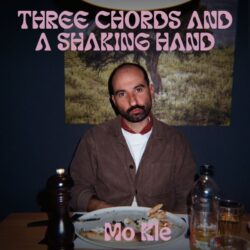 Across nine concise songs, Mo Klé, the performing title of artist René Grünenfelder, explores themes of division, uncertainty, parenthood, loneliness and self-acceptance. Three Chords and a Shaking Hand is an unassuming record, both in its title and in its outlook. Rather than offering grand political statements or elaborate personal confessions, it presents a series of reflections on what it means to remain open-hearted in a world that often seems determined to pull people apart. The album’s brevity helps give the songs focus and immediacy, though there are occasions when ideas feel as though they pass by before they have fully unfolded. The music is often intentionally simple, but beneath the surface there are small instrumental details that add texture and depth.
The album’s strongest thread is its belief in a shared humanity. Opening song 199 Seconds, a quiet introduction to the album based on acoustic guitar and voice, sets out this perspective directly, imagining music as a temporary ceasefire in a divided world. The lyrics focus on common experience: “we’re all made from the same blood” and “your heart is beating the same rhythm / no matter whose hymns you sing”. The song’s title is also the exact length of the song, and it feels there is a modest hope that people might stop hurting one another for the time it takes to listen to it. This human outlook reappears throughout the album, most notably in Little Heart Beating, a tender reflection on impending parenthood. The song, musically quite slow and quiet yet also sounding joyous and uplifting, acknowledges the uncertainties of bringing a child into the world. The response, though, is not fear but reassurance. “Nobody asked you to be here” is a strikingly honest observation, yet it is followed by promises of love, protection and wonder.
Alongside this compassion runs a deep scepticism towards certainty. Expert captures the confusion of living in an age of competing truths and endless commentary. “Rumours turn to facts / And facts turn into lies” neatly summarises the song’s concern with how easily information becomes distorted. Musically, this is a mid-tempo number with a simple, catchy tune which seems to capture the irony of the words. Similar questions emerge in Oasis of Peace, a confessional song of voice and acoustic guitar. Meaning is searched for, but wisdom is found in the idea that it is important to just keep walking.
While much of the album looks outward towards society and human relationships, Rain, one of the highlights of the album, turns inward. Its inversion of traditional imagery is striking: sunshine becomes oppressive while rain provides release. “The heat distorts my thoughts”, and the repeated comfort found in thunder and falling rain suggest someone seeking refuge. Musically, Rain also typifies the album: it appears to be constructed on voice and acoustic guitar chords, but there is so much more going on in the background. Ambiguous notes of other instruments build in the background and create an atmosphere that mirrors the song. Klé’s voice is also at its most plaintive here.
Several songs explore creativity and imagination as ways of navigating uncertainty. Bird is both musically and lyrically introspective and is based on the simple confession that “this song’s my only hope”. It presents music itself as a form of emotional survival and keeps the music itself very simple: acoustic guitar and some distant, mournful sounds are joined by a late-night voice. Likewise, Inner Child argues that imagination is not something left behind in childhood but something that continues to exist beneath adult responsibilities and anxieties. Its image of a world in which “the world was paint / your heart a brush” captures a sense of wonder. This is a song without musical edges; a strummed guitar is joined with some subtle backing vocals.
The album is equally interested in the barriers people construct around themselves. King of Mediocrity, a breezy, almost pop-like number, approaches this theme through humour and self-deprecation, rejecting ideas of greatness and success in favour of accepting our limitations. The closing track, Walls, returns to similar concerns from a more vulnerable perspective. Using its central metaphor straightforwardly but effectively, the song describes emotional isolation as a self-built structure. Musically, the song provides some payback for the quietness that has gone before: it is a song that brings all the instruments together and is almost anthemic. It feels like a fitting conclusion to a record that repeatedly argues for connection despite uncertainty and self-doubt.
What ties the album together is its consistent sincerity. Klé writes in direct language and frequently returns to images of hearts, children, songs, colours and walls. Occasionally this simplicity works against him. Some images feel familiar, and there are moments where the brevity of both the songs and the album leaves themes lightly sketched rather than fully developed. Yet the directness also gives the record much of its charm.
Three Chords and a Shaking Hand does not attempt to reinvent the singer-songwriter form, nor does it offer profound solutions to the problems it identifies. Its achievement lies elsewhere. These songs recognise division, confusion and loneliness, yet continue to argue for empathy, creativity and connection. They embrace doubt while still holding on to hope.

