There was something wonderfully appropriate about arriving at Cherry Hinton Hall for the return of the Cambridge Folk Festival and immediately finding myself wondering what, exactly, folk music is in 2026. One of the pleasures of Cambridge is that its definition of folk has always been broad enough to accommodate traditional music, contemporary songwriting, political songs, americana, folk-rock and artists who stretch the boundaries of the term. Over the course of the weekend, I found myself repeatedly returning to a question that is deceptively difficult to answer: what exactly makes music folk?
After the festival’s cancellation in 2025, its return on 1st and 2nd August felt like something worth celebrating in itself. The sun was baking down on the site, the trees provided welcome patches of shade, the food stalls were doing a brisk trade, and everywhere there was the unmistakable feeling of people happy to be back together. But as two days of music unfolded, the question of what constitutes folk music continued to intrigue me, and I found artists representing the full range of possibilities.
Perhaps that is precisely the point. Folk can be traditional, contemporary, political, funny, furious, intimate, communal, acoustic, electric, beautifully restrained or explosively loud. It can preserve old stories or create new ones. It can be something passed down through generations, or something written yesterday that immediately feels as though it belongs to everybody. Cambridge 2026 provided plenty of evidence for all of those definitions and many opportunities to discover and rediscover musical magic that transcended genre.
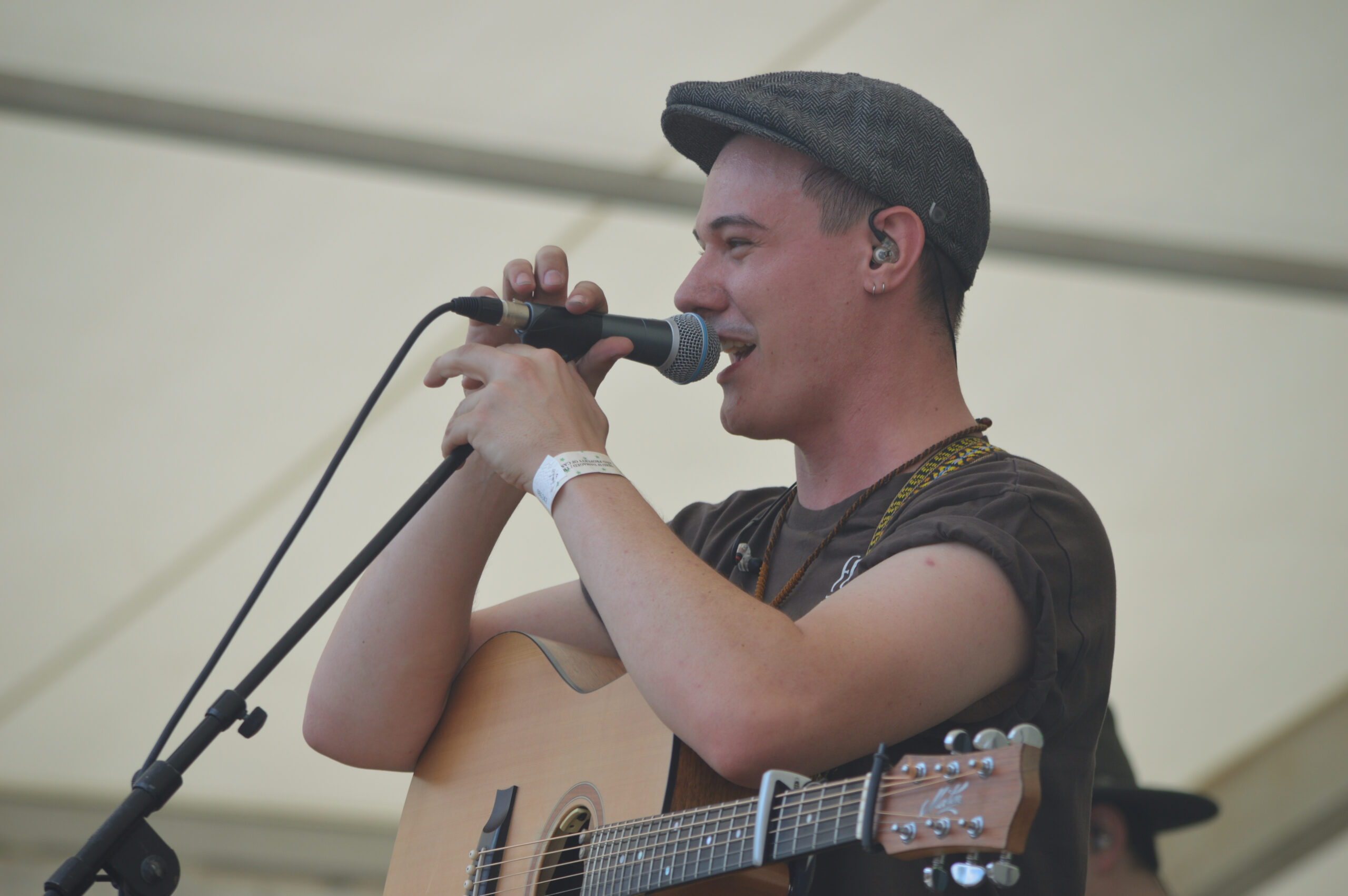
The first act we saw was Nick Cope on Stage One. He quickly established a connection with the audience, asking everyone to raise their arms and keep clapping. “If we all do the same, we’ll all be together,” he told us. There was plenty of audience interaction and a warm response from the crowd.
Next came Australian band Amaidi, making their first appearance outside Australia. Their opening set of three tunes established a sound built around thumping drums, fast fiddle, accordion and banjo. They followed with Cape Capricorn, the title track of their album, telling the story of young men going to sea to work and the families they left behind. Clear vocals and excellent harmonies sat over short fiddle notes and another thumping beat, making this one of the highlights of the set. Tinder Surprise was similarly tuneful, with accordion central to the sound. At one point, the music bounced along on fast accordion keys, rhythmic drums and rapid fiddle bowing. The Brisbane band explained that the islands around their home city are covered in mangroves. St Helena was cleared of its mangroves to make way for a prison, and the misery of that place inspired their song, Saint Helena. Slower and more spacious than what had come before, it featured longer accordion notes and beautifully blended voices. “Far across the bay, we can see the lights of Brisbane so far away,” was particularly poignant. Port Arlington brought things back towards the dance floor, with staccato strumming and short notes from fiddle and accordion. The instruments took turns coming to the fore before stopping altogether and bursting back into life. By now it was considerably busier around the stage, and the audience responded positively to the band’s lively brand of folk. Fiddler Louisa Hickey was particularly impressive. The band told the crowd that they had been working hard on stage and it was now time for us to join in, noting that “The English like to sing along.” Poison Train produced another highlight, with call-and-response in the chorus; those who couldn’t manage the words were encouraged to use “spirit hands”, but plenty of people joined in with, “There’s a Light Down the Line // Let It Shine, Lord, Let It Shine.” Jaunty accordion playing added to the fun. Ship Repairing Man had another fast, jaunty finish before the band concluded with a tune set called Cookie Monster, named after cookies made with an additional ingredient that cookies don’t normally contain.

After lunch, a chilli dog from Diamond Dogs, we headed to Stage Two for Katacombs, the musical project of Katerina Kiranos, who has spent the last few years playing keys for Amigo the Devil. Her set was atmospheric and intimate, with In the Water and the new song Call Me among the highlights. One of the most beautiful songs was Heaven Is, which Kiranos explained, with plenty of good humour, was actually a love song to Tunnock’s teacakes. Nobody back home in America knew what they were, she said, so she had been forced to pretend it was a song about a person. A sweet, lilting vocal melody floated over picked guitar. Fruta y Mar was sung in Spanish. Kiranos explained that her mother was Spanish and her father Greek, and that Spanish had become her love language. The performance was intimate, her eyes closed as she played tense, finger-picked guitar beneath an understated vocal.
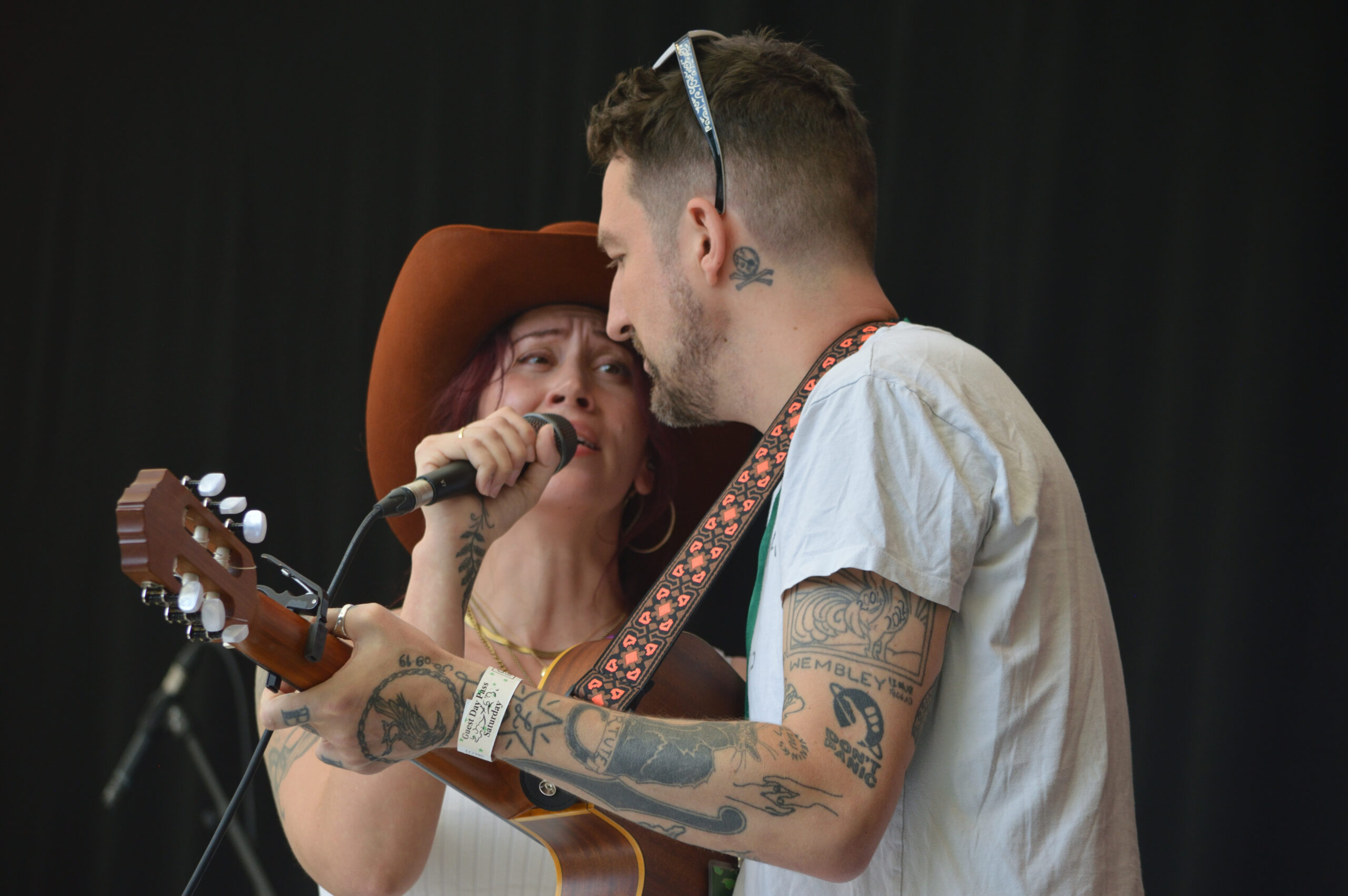
She then played Guy Clark’s Dublin Blues, joined on stage by her partner, Frank Turner, who would headline the main stage later that evening. Kiranos gave Turner her acoustic guitar because, she noted, he plays the song differently from her. Their voices blended beautifully, and there was obvious chemistry as they stood and sang close together. Old Fashioned was another highlight. Kiranos said she had deliberately written the song outside her vocal range because she thought it would be fun, before admitting that it wasn’t. In performance, however, it sounded effortless, particularly when her voice burst into the high notes of the chorus. The finger-picked guitar, capo and notes high on the neck complemented the vocal beautifully. Her final song, You Will Not, had originally been about a toxic man in her life. Now, she said, she sings it about a toxic man running the country. She thanked people in the UK for their kindness towards an American and delivered a warm, moody performance that moved into higher vocal registers over rolling finger-picked guitar. Overall, Katacombs’ set was outstanding and added another international element to our concept of folk.
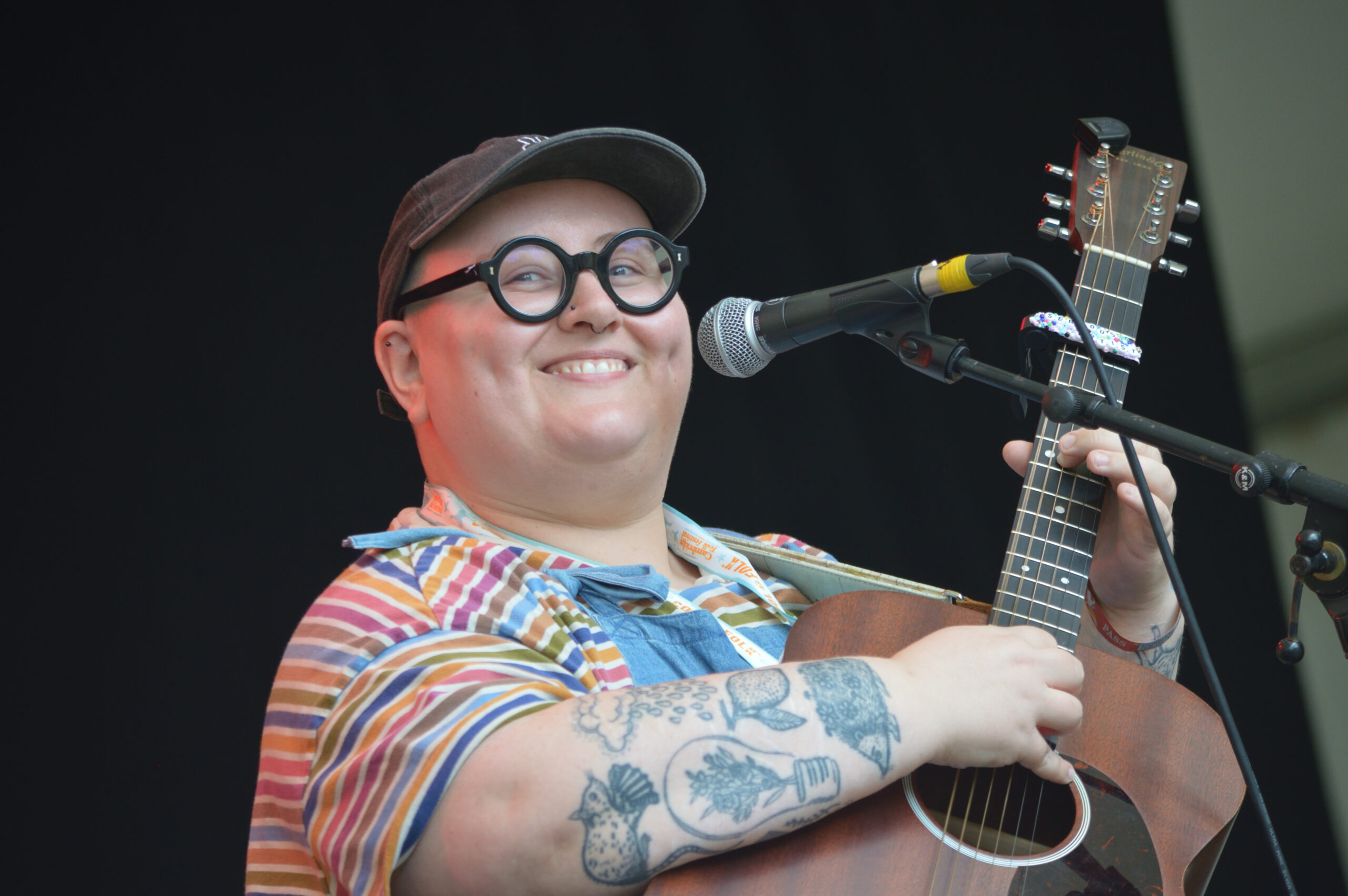
Maddie Morris followed on Stage Two, and their set became one of the most compelling examples of what folk music can mean. Political but joyful, Morris began a cappella with Wee Weaver. Viewed from beneath the leafy canopy of a tree beside the stage, it was a magical performance. Low, slow finger-picked notes were gradually introduced before the music moved higher and then eventually fell away again, leaving just the voice. Morris said they had learned the song from a scary, unkind man on the folk scene, but she imbued it with meaning and positivity. The next song, The Stimming Song, was one of the most magical moments of the entire festival. Morris talked openly about being autistic and about the impact that has had both personally and as a performer. One of their stims is humming. Morris demonstrated it with a beautiful melody and asked the audience to join in. If everyone breathed at different times, they explained, the humming could theoretically continue forever. That humming became part of the song itself, incorporated with extraordinary cleverness. They spoke about their fascination with the stories that folk songs collect and, importantly, the stories that weren’t collected; it seemed that Morris is working to ensure that those human narratives that are absent from our collective conscience will not, actually, be lost. The lyrics and performance were open-hearted and direct, her words almost conversational in their personal nature. Morris sang about once believing they were the only person like themselves, and about thinking that their brain was wrong. The song moved towards the joy of finding community, contrasted with memories of being snapped at in school assemblies for being different. To me, this seemed to be the very definition of folk: this was storytelling, lived experience and community happening in real time.
A Bonnie Bunch of Roses drew on Morris’s work with the LGBTQ archive in West Yorkshire. One story had inspired a song about a woman leaving a bunch of Tesco flowers on the doorstep of someone she loved because she was too shy to speak to her. The archive had preserved the story of how that woman eventually met her now-wife. Morris talked about growing up in Bedford, moving to Leeds as a teenager and returning to Cambridge Folk Festival for the third time. These personal recollections helped take us with her as she delivered her set. Survive, written after the recent Supreme Court ruling, was directed towards the younger version of themselves and younger LGBTQ people today. The message was simple but powerful: you don’t know what the political climate will be like, so you owe it to yourself to continue to survive. The song was sombre and understated, with low guitar notes and a vocal that at times approached speech. It occupied a space between singing, performance, poetry and an intimate conversation. Bread and Roses took its title from the idea that bread represents what people need and roses represent the things they would like to have. Until oppressed people have both, Morris argued, they are not truly liberated. Again, the delivery was almost spoken, sometimes resembling humorous commentary. Morris concluded her set with the audience joining her in the repeated refrain of “solidarity forever” and “together we are strong,” which served to sum up the communal nature of her songs and performance. Morris’s music was political but without hard edges or exclusive barriers or venom. It combined three strands that are often associated with folk music: storytelling, political song and historical memory, and did so without making any of them feel like museum pieces.
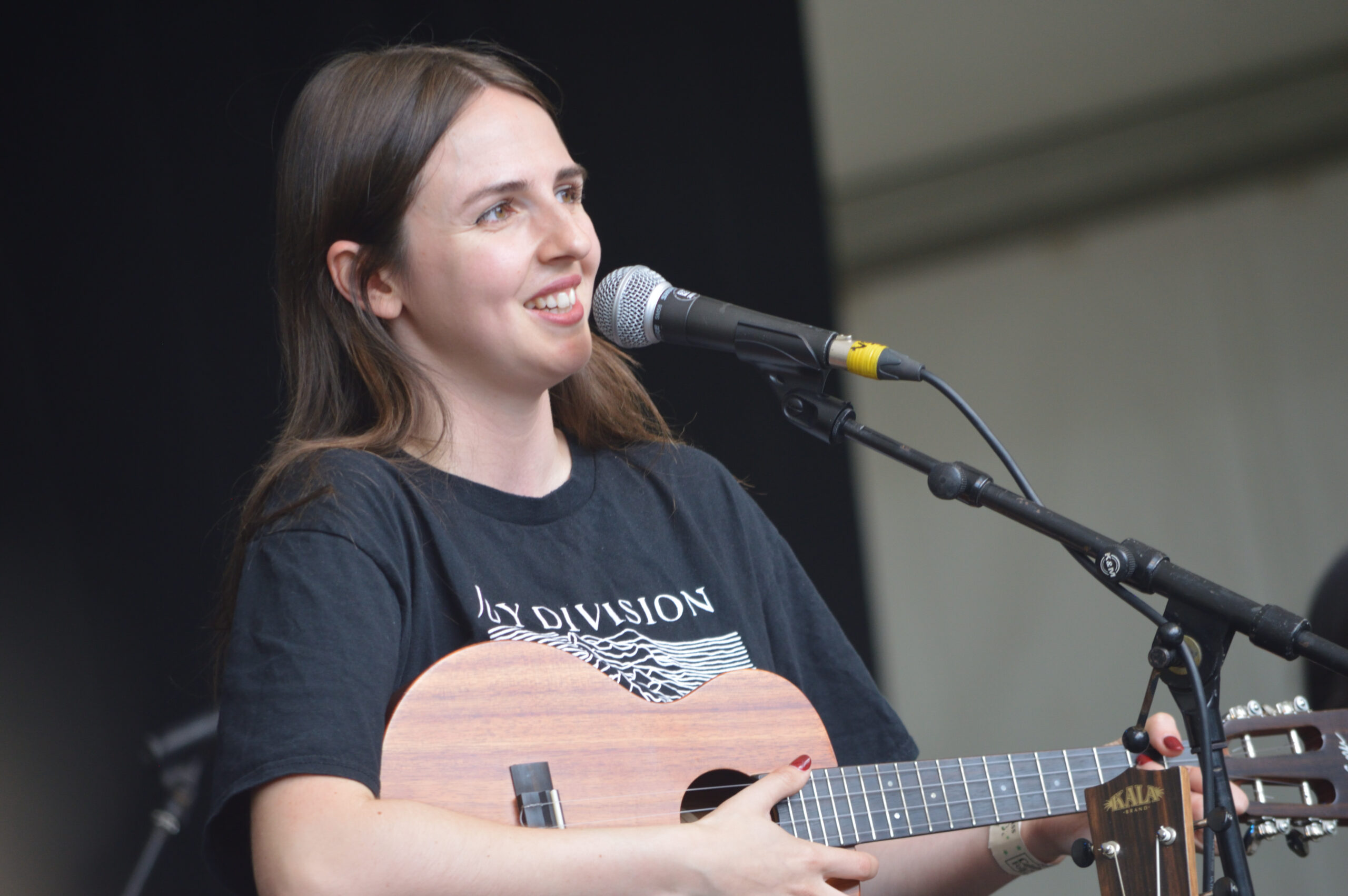
Amelia Coburn followed on Stage Two. She told a story about the romantic idea of meeting someone in Dublin, as though in a film. It didn’t happen, she explained, which is why she’s on Tinder. Dublin Serenade followed, with a beautiful high vocal and a strong melody that became one of the highlights of her set. Captain, Guide Me Home brought more audience participation, with clapping accompanying a beautiful high melody and tumbling notes. Luke Murray’s drums added depth, while Coburn’s humour was both disarming and charming. Perfect Storm increased the pace, with faster instrumentation, a marching drumbeat from Murray and sustained, tuneful notes from the keys. This was another set of finely-written songs, performed with melodic precision.
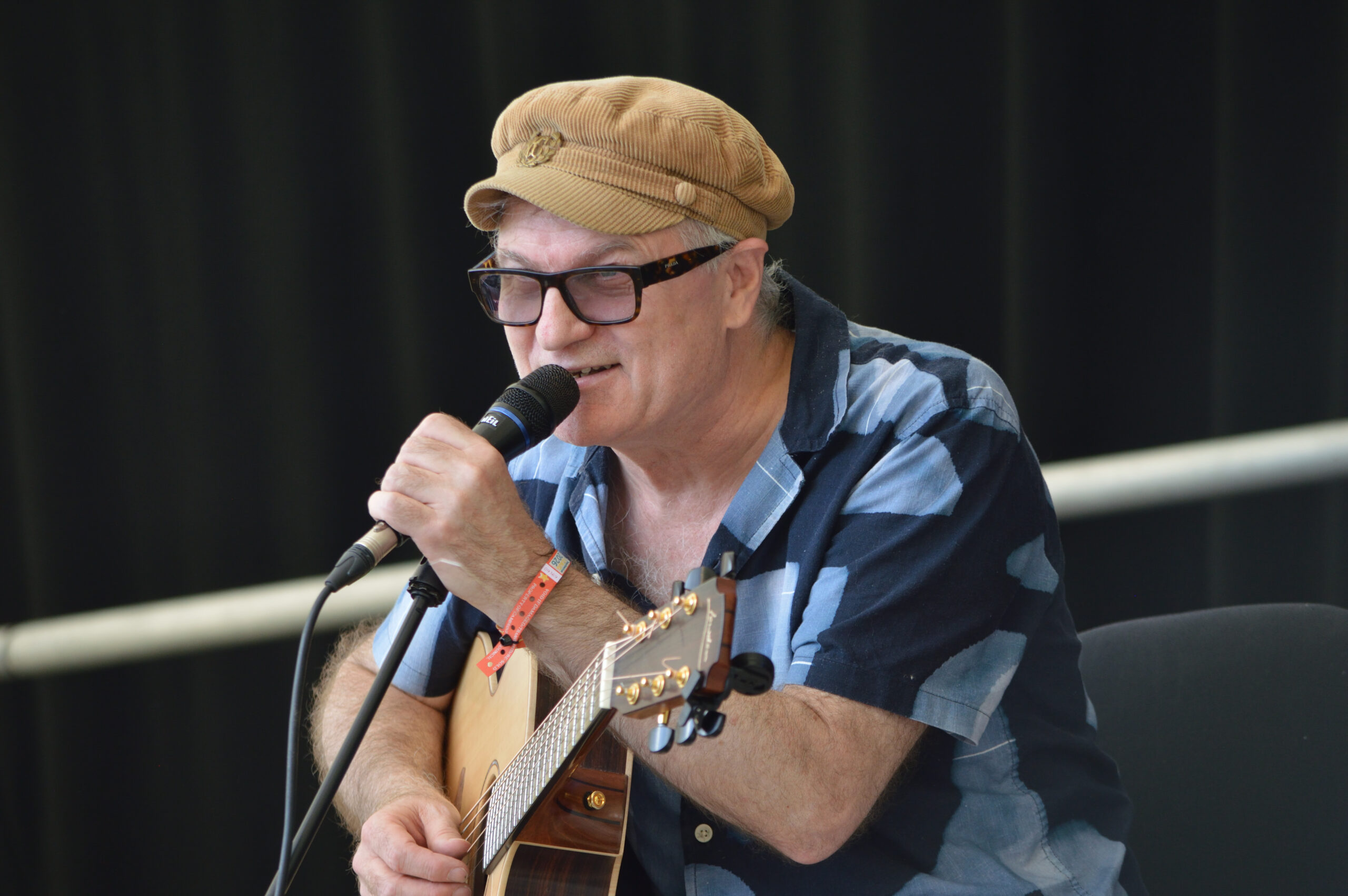
Next came Nick Harper, whose set demonstrated yet another aspect of the festival’s musical breadth. She Moves Through the Fayre was moody and atmospheric, with a plaintive storytelling vocal and precise picked guitar. His voice was sonorous and resonant in its lower register and highly emotive when it rose. He played David Graham’s instrumental Angie, explaining that if you could play it in Soho in 1965, you got the gig. He also told a story about Bob Monkhouse putting up money for the recording and about Monkhouse’s ambition to write jokes for his hero. His easy storytelling between songs provided context and interest, engaging everyone in his performance. Harper’s fluent guitar playing moved rapidly through changing chords and beautifully picked acoustic flourishes. Black Waterside was another highlight, showcasing the musicianship that can be added to folk without overwhelming its essential character.
If there was any doubt that folk could encompass wildly different sounds, Skinny Lister on the main stage dispelled it; they demonstrated through their dynamic, joyful show that folk truly is a broad church. Their first four songs: Wanted, Set Us Straight, George’s Glass and Tragedy in A Minor, burst onto the stage in a flurry of energy designed to whip up the crowd. The dancing began almost immediately. Colours represented a slight change of pace before Rattle and Roar became more restrained and melodic. At points, the instrumentation stopped altogether, leaving chanting voices and handclaps, and the quieter moments in this and Mantra were all the more effective because of the contrast. 13 Miles returned to the band’s effervescent, more communal sound, with gruff, characterful singing as the vocals were shared around. Accordion and audience participation turned it into an irresistible chant-along. The band talked about their early days breaking into festivals and playing wherever they could, and how good it felt to finally be on the main stage at Cambridge. They also admitted that, despite what people might expect, they like a drink. Their Drinking Song, from the new album, had a great shuffling rhythm before they launched straight into Arm Wrestling in Dresden. 40 Pound Wedding, written by “…the legend that is Party George,” became a party song, with vocals passing between band members and the accordion coming strongly to the fore. There was a clap-along section with the instrumentation dropping away, leaving the crowd to carry the rhythm. Bold as Brass began with the voices together before bursting into life, with Lorna shouting, “Show us what you’re made of!” And the crowd obliged dutifully and joyfully. Pauses and slower handclaps gradually built into faster rhythms, producing enormous raw energy beneath the afternoon sun. Indeed, the crowd in the centre was literally bouncing to John Kanaka and Rollin’ Over. Cathy brought a lighter mandolin strum, while Company of the Bar was a real highlight, with the band clapping and jumping on stage. The song felt genuinely communal, leading into the final song, Trouble on Oxford Street, which simply made me smile as Lorna interacted with people in the crowd. It was another interesting strand of folk: music whose purpose seemed to be to bring people together physically as much as musically; and, here, under the heatwave sun, it was glorious.
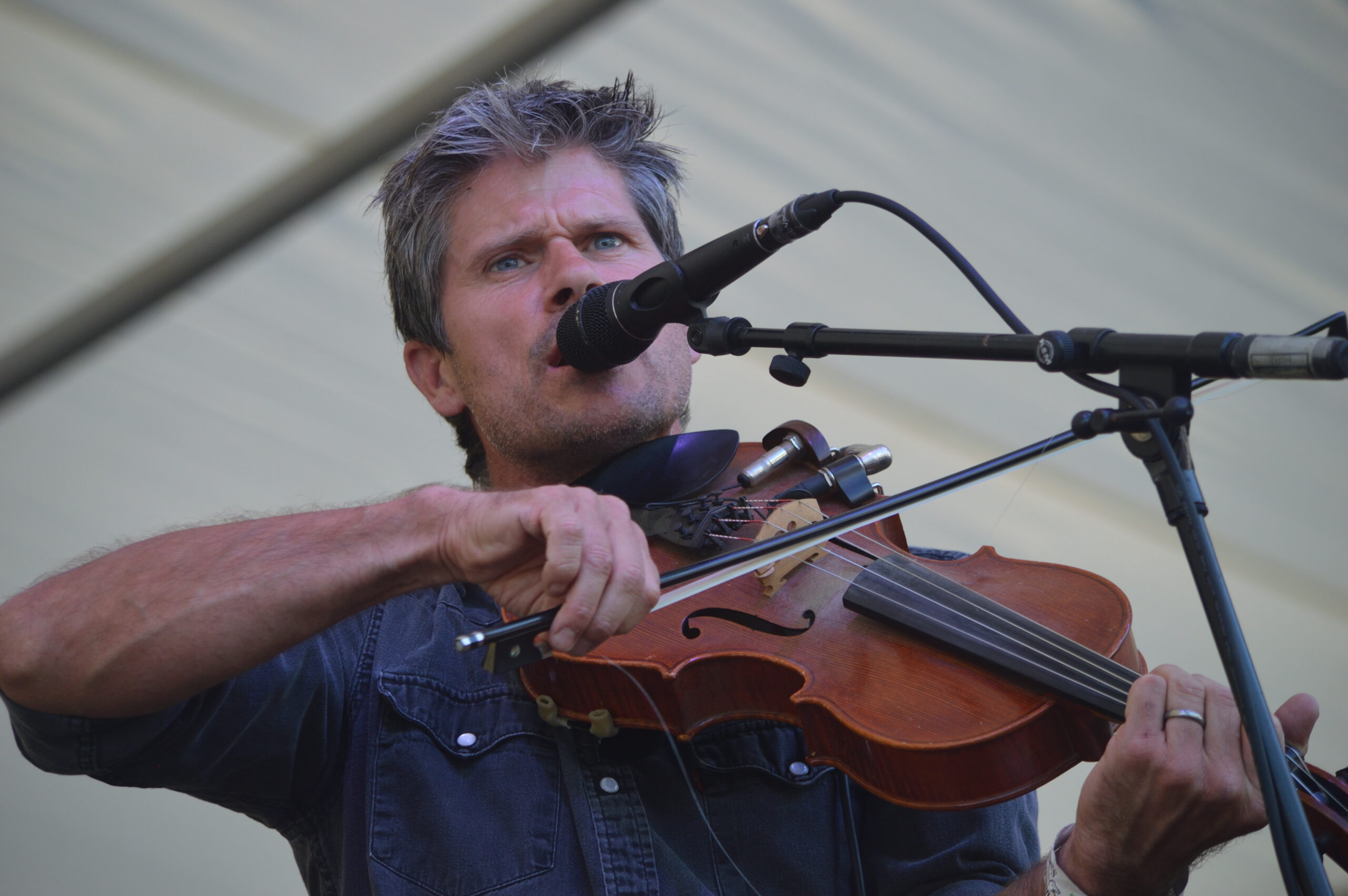
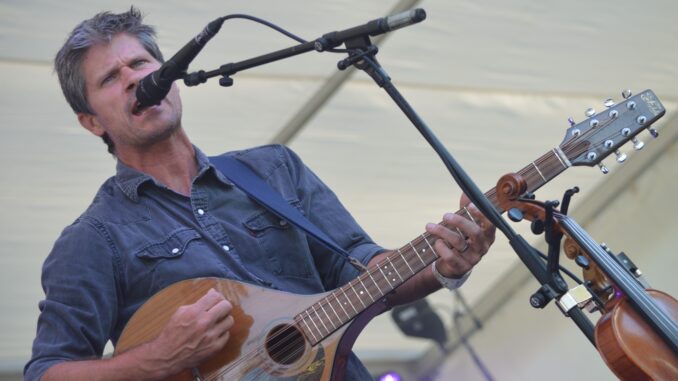
Seth Lakeman followed on the main stage, beginning with Lady of the Sea and noting that it was 20 years since the acclaimed album Freedom Fields. Stand-up bass and fast fiddle immediately established the sound and were mesmerising to watch. The Setting of the Sun was one of the highlights, an absorbing performance that drew the audience into its atmosphere. The Rambling Sailor had a traditional feel, with rhythmic banjo replacing Ben Nichols’ stand-up bass, while Take No Rogues featured Lakeman on acoustic guitar. The frequent switching between instruments, including mandolin, was one of the most impressive features of the show. The Black Fox, from his most recent album, was another highlight. Lakeman returned to the fiddle, producing long, ethereal violin notes against huge percussion. The song felt earthy and mythic, with an intense vocal and greater tension. Side by Side, from Make Your Mark, was built around a refrain that seemed to circle endlessly. The music had a timeless quality, combining big percussion with acoustic guitar and stand-up bass. Alex Hart shared the vocals, and there was an extended hypnotic chant-along. The Colliers brought another quiet, slow moment for the crowd to sing along with, accompanied by a low hum from the audience. Poor Man’s Heaven drove forward on heartbeat-like percussion and pulsing bass, Lakeman switching mid-song to fiddle while swirling electric guitar added another layer. Change then returned to a thumping beat, banjo and clap-along interaction, with almost everybody’s hands in the air. Kitty Jay was completely different: just Lakeman and the fiddle, moody and haunting, opening over low rumbling sounds before suddenly bursting into rhythm. His foot-stomping and effects on the violin made it extraordinarily atmospheric. By now, the alluring smell of the Authentic Indian Street Food kiosk beside the stage was drawing me to it, but Kitty Jay and the subsequent songs were hypnotic enough to hold me, not so much delayed gratification as greater gratification. The instrumental Scrumpy’s Set delivered the dancing Lakeman asked for, with big drums, flying fiddle and clapping from the crowd; it was a resounding success. The final song, Race to Be King, was thumping and bouncing, built around staccato violin and tumbling bass notes. It was a great set, and one perfectly suited to this festival and this audience. Again, the very definition of folk

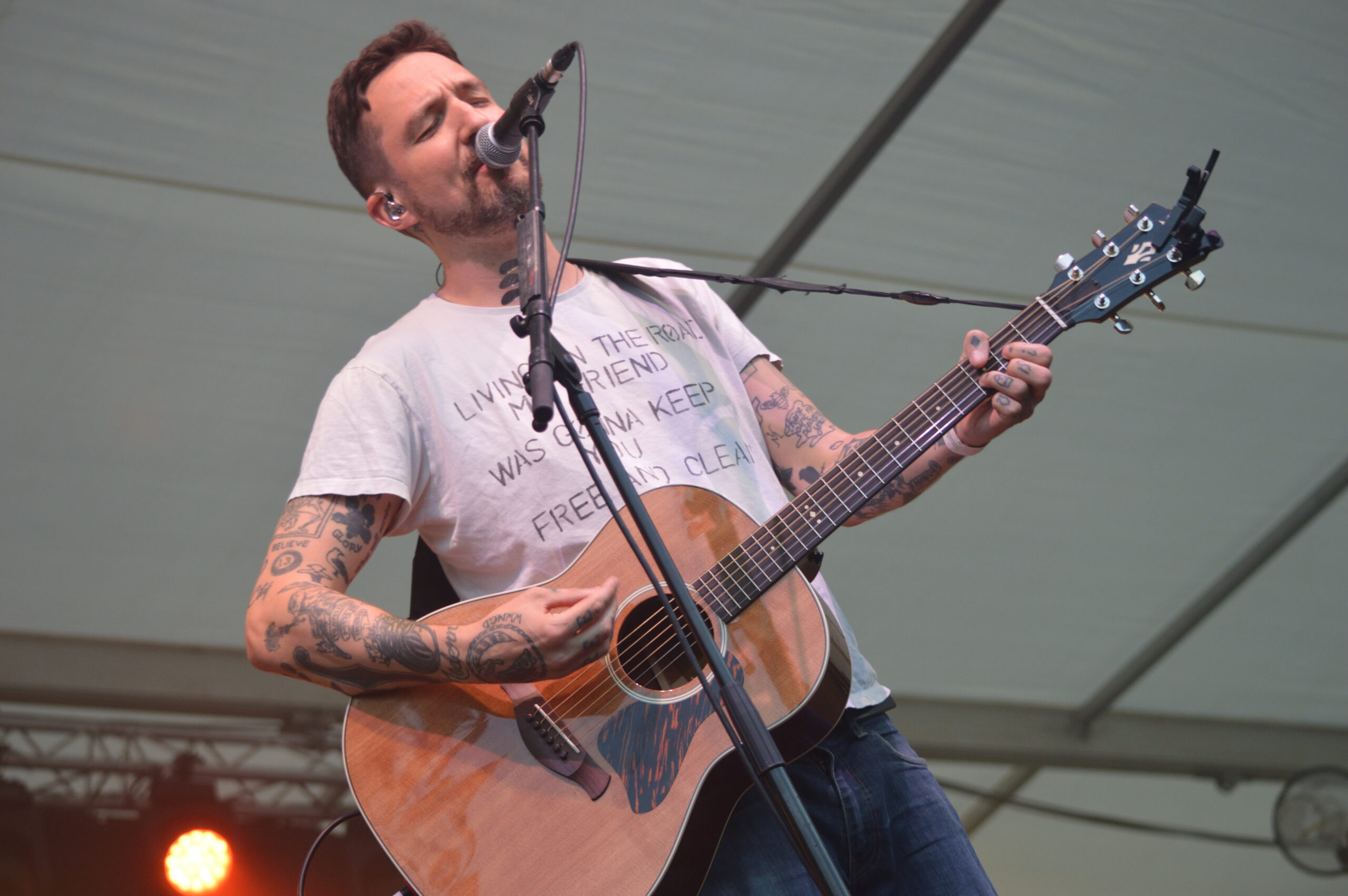
After finally getting some food- beautifully rare steak and chips- it was time for Frank Turner, playing his 3,166th show. I have seen Turner many times, usually with his band The Sleeping Souls, so it was striking to see just how powerful he could be alone with an acoustic guitar. Sailor’s Boots began with just his voice before the guitar entered. It was an effective opening and perfectly in keeping with the festival. If I Ever Stray, always a fan-favourite at live shows, brought the first major audience interaction, which intensified with Do One, a fast-strummed song from Undefeated, his most recent album; with the band it’s a driving punk-edged blast, but it retained plenty of power and energy with just Turner’s voice and guitar, as his full-throated commitment to performance was undimmed and incredibly focused solo. The Real Damage, from Campfire Punkrock, which is 20 years old this year, followed. Lines such as “…spending this night with all my friends,” seemed particularly relevant in a field full of people gathered around music. Substitute, from his second album, was introduced as an old and pessimistic song about love. Turner apologised to his current partner, who was standing beside the stage, saying, “I wrote this before I met you, baby.” With its more understated vocal and guitar work, this was a clever change of pace and tone and well-suited to a solo acoustic show like this.
Of course, Girl from the Record Shop was instantly much more forceful, loud and direct, and The Road was similarly powerful. Its scale was such that it sounded as though an entire band were playing, despite Turner standing alone. Large sections of the crowd chanted along; a particularly animated group behind me joined me in communal song, while Turner adapted the lyrics to be about the next 3,000 shows. There were firmer moments and quieter interludes and an especially emotive delivery before Turner launched into the final chorus. This is one of Turner’s classic songs and was one of the high points of the evening. 1933 was introduced with the joke that it used all the same chords as the previous song, but was an anti-fascist song. His words spilt out at speed, yet remained clear, and it was, again, one of the strongest songs of the set. There were no embellishments or sonic layers provided by a band, and yet it was still stirring and engaging. Turner flowed straight into Recovery, another bright and tuneful favourite with a huge sing-along. Its final verse became almost spoken and conversational before exploding into the final section. Again, I was struck by how these songs translated so successfully to performing alone, retaining their essence and ability to captivate a large audience. Then came Thatcher Fucked the Kids, from Campfire Punkrock, always good for a little audience interaction. Turner noted that it was the 20th anniversary of his first solo EP and told the crowd to “…follow your dreams, kids.” The song was arguably politically retro even when it was written 20 years ago, he observed, but its themes had survived the intervening years. There were plenty of jokes, including the observation that some people in the audience had not even been born when it was written. Be More Kind was one of the biggest highlights. Turner explained that he wrote it in 2016, “…the year when things went to shit,” attempting to encourage people to be more considerate and make civil discourse more civil. He had hoped that this would be as bad as things got. Ten years later, he noted, he was there to tell us that it hadn’t. Despite the gentler instrumentation and change of pace, this is one of Turner’s most powerful songs, carrying an important message and always delivered with real feeling. He mentioned one of his favourite writers, Clive James, who had written about wishing he had been kinder to the people around him. The song was sensitively delivered and precisely finger-picked; Turner bathed in yellow light as the sky began to darken, adding to the magic. The ever-popular The Ballad of Me and My Friends followed. Turner noted that August 2026 marked the 28th anniversary of his first tour, playing to nobody in squats. The words of the song had clearly acquired additional meaning with time, and the audience provided a huge sing-along.
Turner then spoke about the death of Lou Koller of Sick of It All, a friend he had toured with in 2003, and Glenn Hansard, whom he described as one of the best songwriters of his generation and a kind, decent human being. Show People, one of my personal favourites from Undefeated, followed, with a beautiful chord structure and softer, more melodic vocal that was almost spoken in places. The nature of the song’s themes carries significance and purpose for Turner as a performing artist, and he transmitted this effectively to a receptive crowd. The Way I Tend to Be was tender, with delicate guitar and vocal; pauses in the instrumentation demonstrated how powerful the absence of sound can be. Turner then told the story of living on a sofa in a hallway above Nambucca in North London and playing songs in the kitchen at 4 am, dreaming that one day he might play a show in South London. It was an origin story, but also an illustration of why independent music venues matter: if those venues disappear, the stories they make possible disappear too. I Knew Prufrock Before He Was Famous followed, Turner awash in green light, his bright strum rising beneath the vocal. Before The Resurrectionists, Turner pointed out that the more observant members of the audience would have noticed there was no full band tonight. That meant he didn’t have to get four people to remember a particular part. He talked of having written a sequel to the popular, often-heard Prufrock, although he doesn’t play it often. He remains grateful for songs that become popular, he said, but this was also a song about getting older. He got the audience chanting and singing until they became almost an additional instrument.
Turner then introduced a new song, You Can Believe in Me, describing it as a folk song he thought would, “…smash it at Cambridge.” He admitted that he had written a lot of love songs recently and had been somewhat reticent about doing so, until his friend Dave Hause reminded him that love songs make up a huge part of what songwriters do. If you’re in love, he suggested, that’s a good thing. Photosynthesis brought another huge audience response, particularly to the lines, “I won’t sit down // I won’t shut up // And most of all, I will never grow up!” By now, many of the attendees were moving, dancing, jumping, reacting physically in their own way, especially the large contingent who had gone along specifically for Turner’s headline set and knew all the words. Get Better followed, encouraging even greater levels of jumping, shouting and enormous participation. Turner then played a well-received cover of Somebody to Love, before finishing with a rousing rendition of I Still Believe. It was an exciting and energetic end to Saturday, and an almost perfect headline set for Cambridge Folk Festival. What struck me most was not simply that Turner could perform songs written for a full band without one, but that they retained their urgency and power. One man, one acoustic guitar, one voice, and a field full of people singing back. Like the music of Skinny Lister, a band Turner praised, this is folk as a communal experience, an act of kinship and release, something that transports us and takes us out of ourselves.
Sunday began in Club Corner with Homity, whose traditional sound and lovely harmonies provided a gentle start to the day. On Stage One, author Lally Macbeth discussed her book The Lost Folk, ranging across the folk scene in Cornwall, technology, social media and the ways audiences engage with folk music. She finished with a reading containing two thoughts that seemed particularly appropriate for the weekend: “People will only grow tired of folk when they grow tired of being alive,” and “In coming together, we are a force for change.”
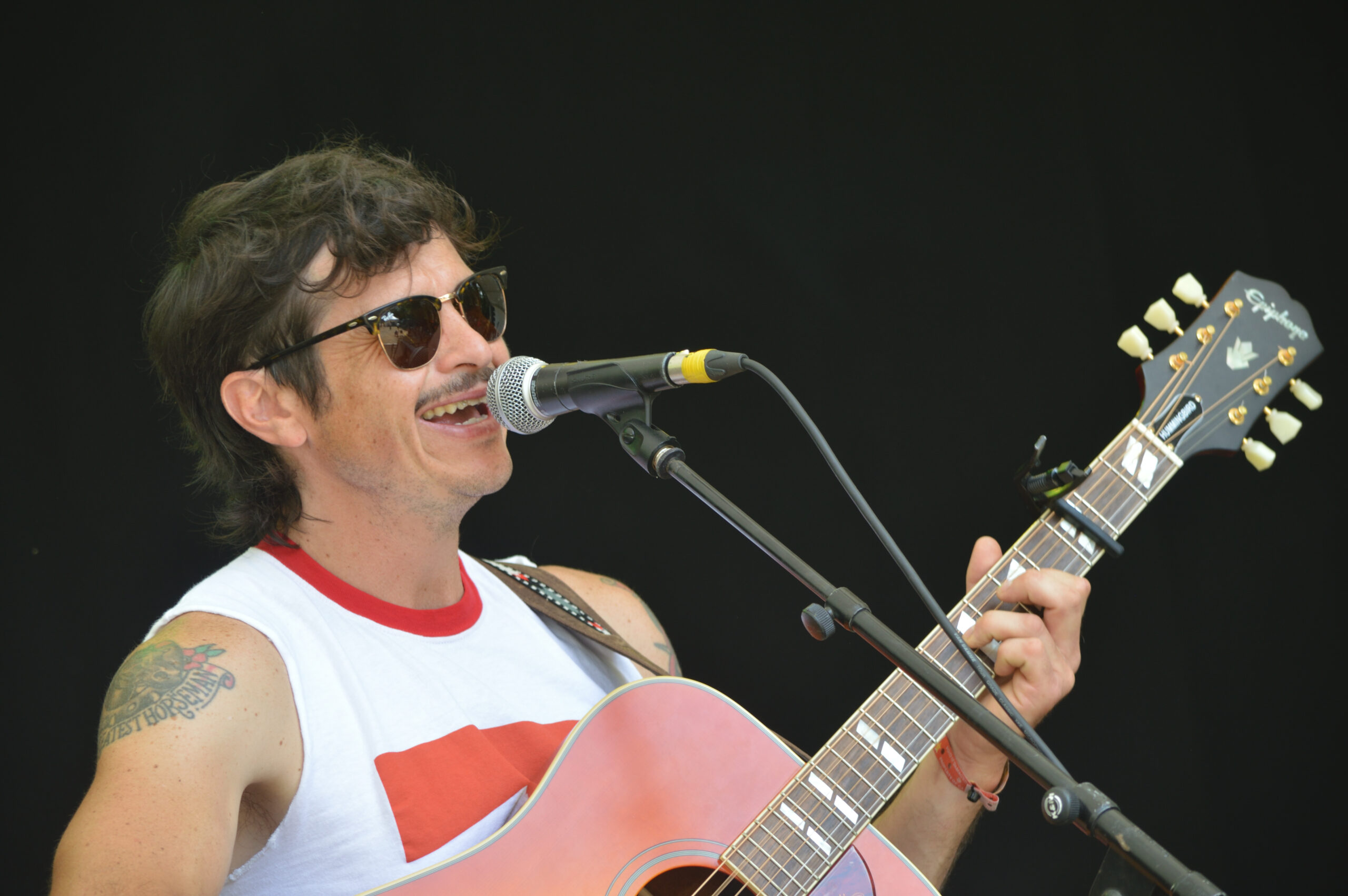
On Stage Two, Tom Jenkins provided another version of “proper folk”: bright finger-picking, a high, impassioned voice and stories drawn from his life as a shepherd and travelling sheep shearer in the Welsh valleys. He brought considerable humour to his set, including asking people to sing along to a Welsh-language song if they knew the words. His album was a celebration of Wales’s industrial history and the people who gave their lives to the coal industry, including his grandfather. Glyndwr Griffiths was a highlight, with Jenkins strumming with his thumb to create a strong rhythm as his voice exploded above it. The song addressed social injustice while celebrating community and the hardships of the valleys. In the Valley featured plaintive harmonica. Jenkins breathed in and out through it, combining the sound with a storytelling vocal that was almost spoken in places. He then joked that he could continue with social-injustice songs, but it was getting a bit heavy, so asked whether anyone wanted a love song. Be There for You reflected his 13 years as a travelling sheep shearer and shepherd, dealing with travelling and longing for people left behind. He returned to coal mining with Old Rhondda, talking about how much he loved working in the Rhondda valleys and the “…salt of the earth” people he had met there. When the Coal Dust Settled was another highlight, with Jenkins again discussing his grandfather and his desire to carry people’s stories and legacies forward through song. Tom Jones was a humorous song about a dream of entering a karaoke competition and singing with Tom Jones. Jenkins described it as, “…funny, not funny at all,” but, importantly, the song was carried by a vocal tune that was simply lovely to absorb. Stay and Work the Land, from his most recent album, had been recorded in a barn at home. Once again, Jenkins used harmonica and brought the audience into the performance. Jenkins delivered thoughtful folk as a way of capturing the stories of everyday people and social history in compelling fashion.
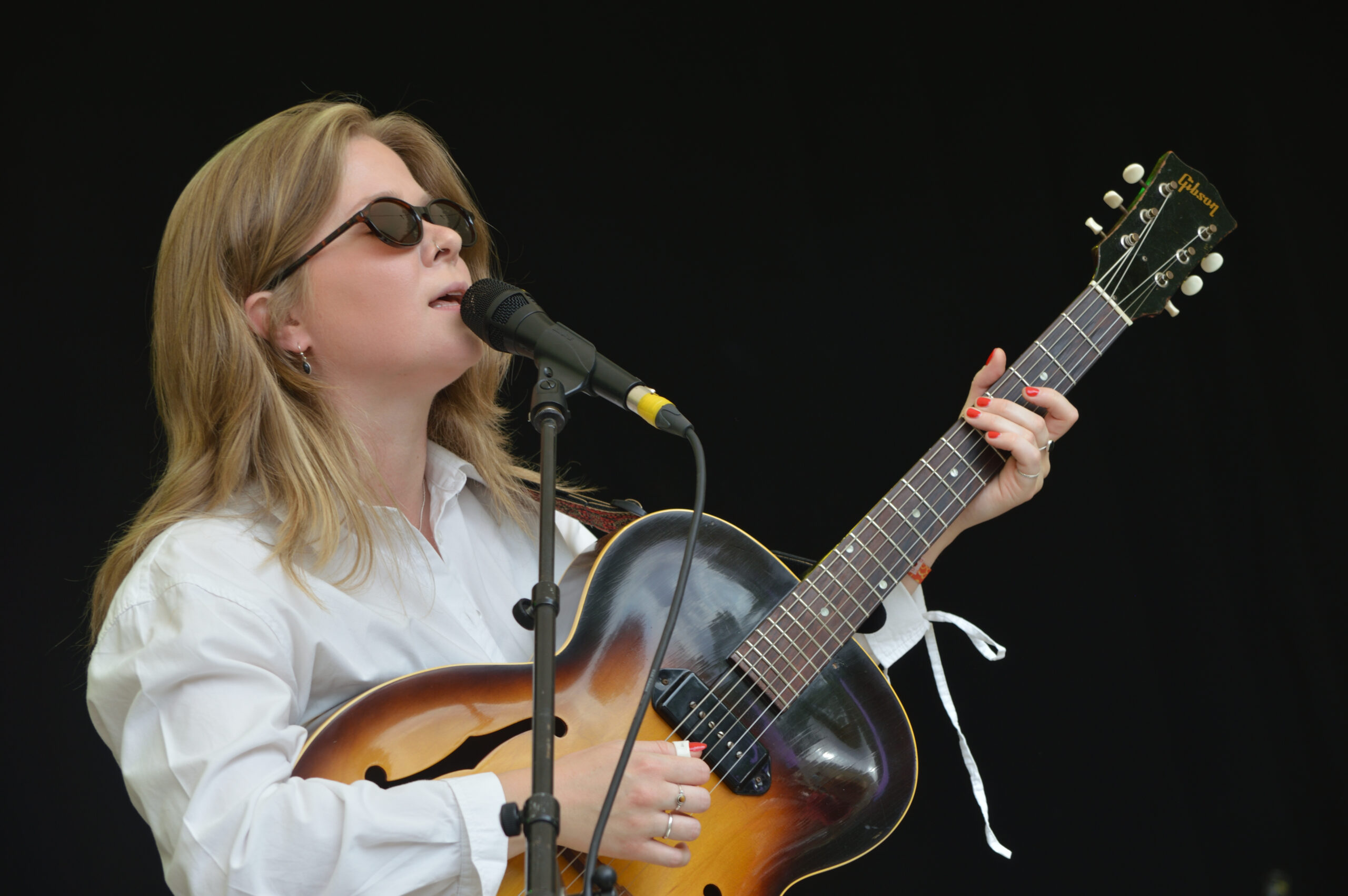
Katie Spencer followed on Stage Two, beginning with Cold Stone from her most recent album, a collection I have absorbed in recent months. Swirling modulation effects on her Gibson hollow-body guitar and sustained notes created an organic sound that seemed to channel Spencer’s innermost thoughts and feelings in resonant, immersive music. What Love Is, the title track from her latest album, was softer but equally engaging. Spencer noted that she had last played Cambridge Folk Festival in 2022 while celebrating her second record; this time she was celebrating her third. Come Back and Find Me was about trying to find your way back home, with a beautifully warm guitar refrain and understated, intimate vocals.
Spencer then talked at length about the next piece, the first music she had written on a guitar made by Tom Sands. The instrument’s back and sides were made from Neolithic black oak, around 5,000 years old, recovered from the Fens not far from Cambridge. The top was made from sinker cypress, around 2,000 years old, recovered from the Ashley River in North Carolina. The density of the wood transforms the guitar’s sound. Spencer wanted to write about the journey the wood had made over thousands of years, submerged in bog and then brought back to the surface. The resulting instrumental, Back to the Brightness Above, was extraordinary. Its rich sound was matched by absolute precision in pitch, control, vibration and volume. It was hypnotic. Stranger followed, Spencer’s voice entering almost as a shock after the instrumental, despite its subtlety. There was a low power to her singing, apparently generated without effort through purity of melody and a hushed delivery. Her voice was as controlled as her guitar. The Edge of the Land celebrated Hull, the Humber and the east coast. She now lives in West Yorkshire, roughly equidistant from both coasts, and misses the sea. The song was lyrically striking and deeply thoughtful, exploring the way water shapes landscapes and the people who live around them. Hello Sun, from her first record, had been lost in time until she rediscovered it after playing in Montreal at -20°C and then travelling to Brisbane, where it was 40°C. When the doors of the plane opened in Australia, she was hit by an extraordinary wall of heat and resurrected the song as a result. Her low vocal and elongated notes sat above intricate, vibrating guitar work. Spencer returned to her electric Gibson for It Was Then That I Knew Love, a song about feeling grateful as an adopted person. Its beautiful vocal melody rose and fell above a delicate solo. With time for one final song, she introduced What Time Will Do, a new piece with a low, sonorous vocal contrasting life on the road with life at home. Spencer’s songs were genuinely thoughtful, offering insights into her inner self, presented with a calm, understated power and warmth that emanated from the stage to where we watched, once again beneath the leaves of the tree.
Frog on a Bike with Mary Panton brought a completely different kind of participation to Stage One. Fiddle, accordion, mandolin, recorder and drums provided the soundtrack while a large space was kept clear in front of the stage for a ceilidh. Panton gave instructions, and the crowd formed a huge circle, cheering when dancers got the moves right. There were lots of smiles and a surprising level of competence as waves of dancers joined hands, ran between lines and formed circles, whooping, kicking and singing. People hop-stepped, turned and faced new partners, clearly having enormous fun, though watching was almost as entertaining as taking part.
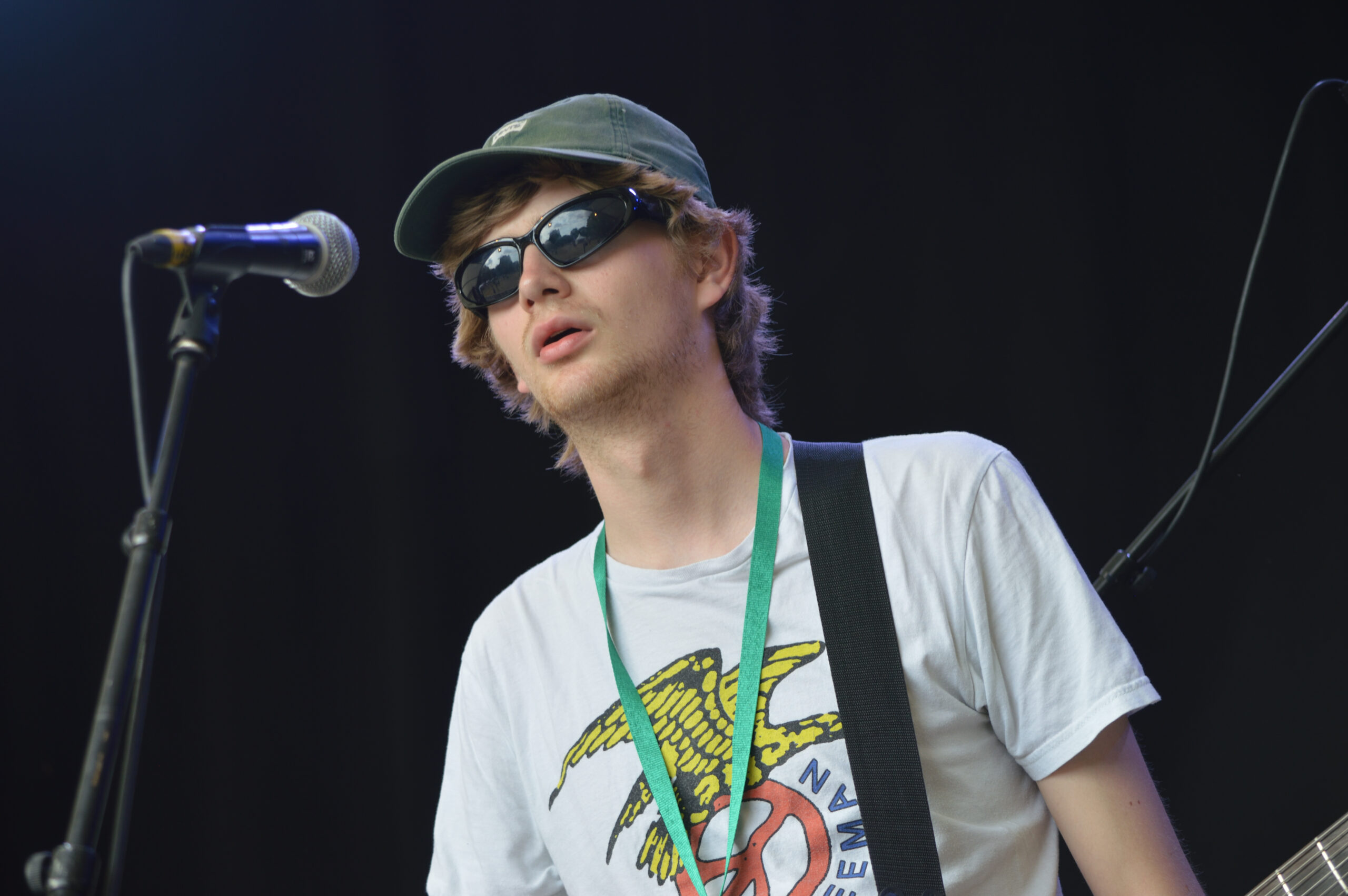
Ollie Cook & the Hogwash followed on Stage Two. Cook played a Fender Jazzmaster with a bright, brash sound, strumming high on the treble pickup. Guitar and bass were both high in the mix, with pounding drums and distorted feedback. Home Video was a highlight, while Born To… from Dog & Gun was more melodic, built around a repeated bass refrain and chords. This was a very different form of alternative folk, taking us into slacker rock territory and delivering a dynamic vibe.
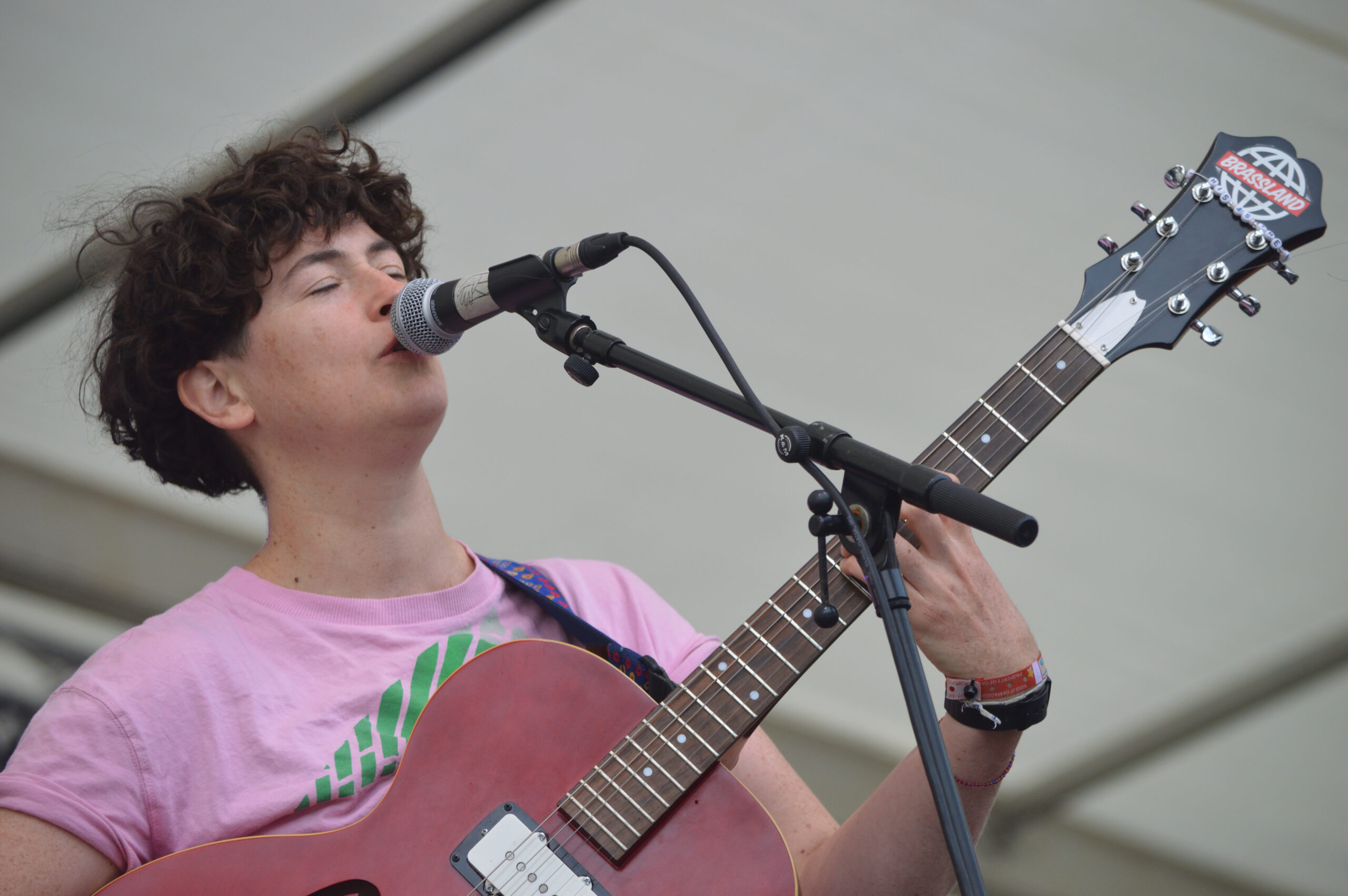
On Stage One, This Is the Kit, the musical project of Kate Stables, produced one of the most intriguing sounds of the weekend. Stables was joined by Rosie on bass, Jamie on drums and Neil on guitar, all making substantial contributions. The opening bass was so powerful it vibrated through the metal barrier, yet somehow the overall performance remained quiet and understated. Bulletproof was a highlight, with Stables switching from guitar to banjo. The sound was dreamy, with deep bass underneath. The bass was frequently hypnotic throughout the set, while Neil’s electric guitar moved from fast-fingered passages to sustained high notes. This Is What You Did featured an insistent banjo refrain and flashes of electric guitar before Neil delivered a distorted solo. The sound became intense. Off, Off, On followed, with a finger-picked banjo interlude and softer vocals, the harmonies moving to the front of the mix. More Change was similarly strong, with a swaying rhythm, Neil’s backing vocals echoing Stables over sustained electric guitar notes. The set was a demonstration of atmospheric mastery, creating moods and soundscapes through captivating, layered sound.
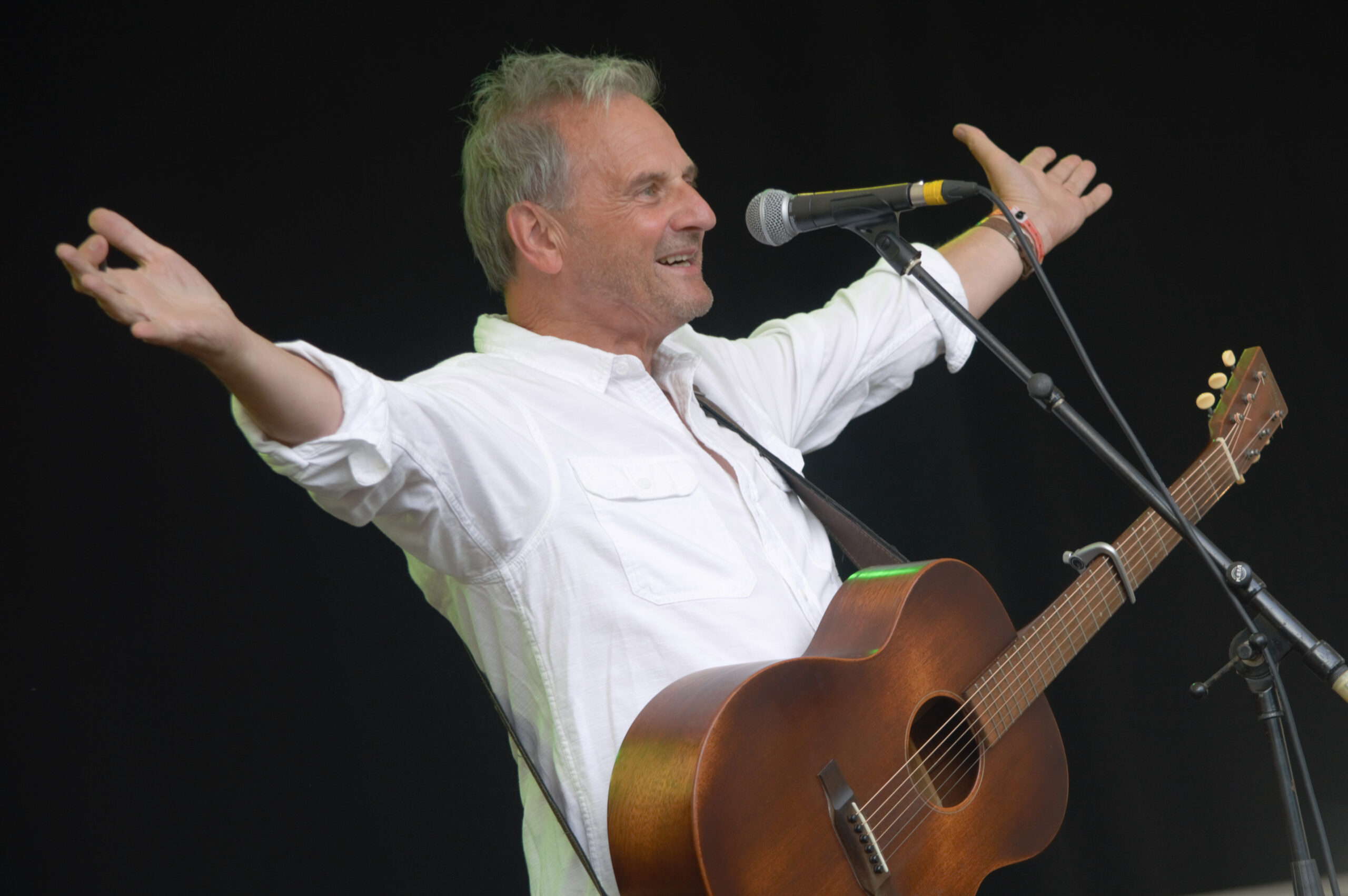
On Stage Two, Mark Radcliffe and David Boardman brought humour as well as music. Radcliffe, well known from the radio double act Mark and Lard, maintained a comic thread throughout the set. Merchant City, Driving Rain was a highlight, with smooth harmony and fluent double acoustic strumming. The pair’s guitars and voices harmonised beautifully. Radcliffe photographed the crowd as they photographed him, asking them to look as though they were enjoying themselves. Steal the Sea, about people working on the docks in Liverpool, featured an amazing low harmony, while Radcliffe encouraged people to dance at the front. At the Bar San Callisto, about a favourite bar in Rome, was another fine song. Radcliffe was the sort of charming, engaging performer who could captivate an enthusiastic audience effortlessly, holding everyone’s attention through amusing anecdotes and interesting tales. This set represented folk as unfolding stories; the stuff of life.
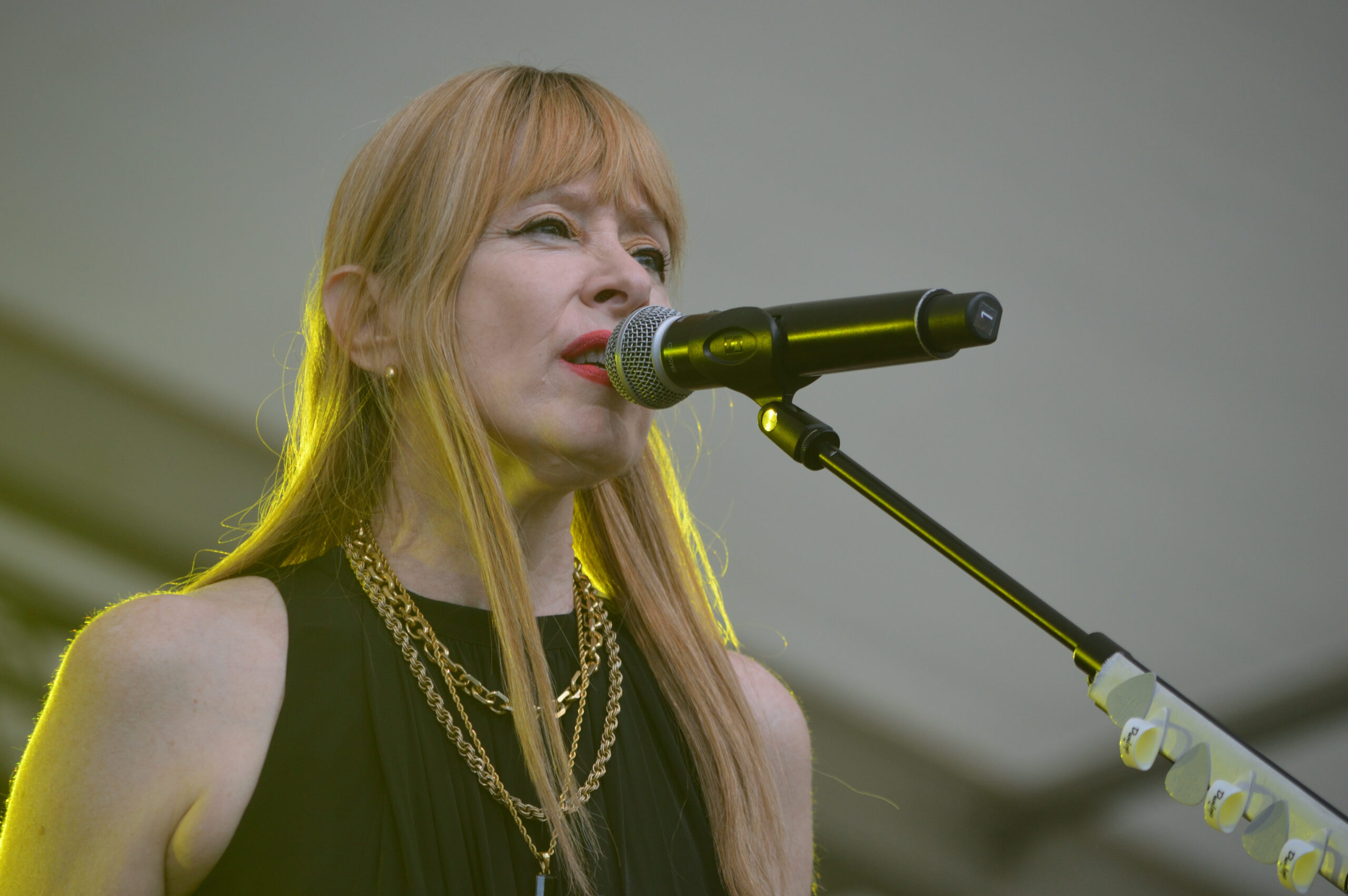
Then came Suzanne Vega on the main stage, emerging in a top hat and joined by Stephanie Winters on cello and Gerry Leonard on guitar. Marlene on the Wall was an immediate highlight and powerful opener, going down extremely well with the crowd and featuring excellent guitar work from Harwood. 99.9 Degrees Fahrenheit followed, Vega’s voice remarkably clear, before Caramel and Gypsy maintained the quality of songwriting and performance. The Queen and the Soldier was another major highlight. Vega introduced it as, “…old and sad and very long,” with a tragic ending, before asking whether we were ready. Indeed, we were. She began on acoustic guitar before rich cello and electric guitar entered. Her voice rose and fell as the narrative unfolded in her pure, controlled voice in a striking performance. When Heroes Go Down was a shorter, faster song, introduced as a homage to Elvis Costello. It had urgency but retained its melodic intent, with another strong clapping rhythm. Flying with Angels, a heartfelt song of caregiving, was about those moments when you don’t know what to do and then seem to be lifted by unseen hands. Vega’s vocal was beautiful, almost whispered at times, while smooth cello increased the intensity beneath bright, staccato guitar. Speaker’s Corner, from her forthcoming album, demonstrated Vega’s ability to move between genres. It initially sounded almost like Californian easy listening before its subject became apparent, and the song is anything but an easy listen; it was actually about the First Amendment and presents us with some difficult truths. Bright, rhythmic chords and backing vocals kept the sound upbeat while the themes were serious.
Chambermaid responded to Bob Dylan’s I Want You, in which Dylan devoted a verse to a chambermaid. Jangling guitar and a melodic vocal accompanied Vega’s story about supporting Dylan on tour. Left of Centre introduced distorted guitar beneath a clean vocal and a groove. I Never Wear White was, Vega explained, mostly true. She said her colour was black, and she had decided to write a song explaining why. Strong bass and booming drums accompanied a vocal delivered with remarkable control, almost a powerful whisper. Some Journey was a personal highlight, Vega playing acoustic guitar while electric guitar dropped echoes around her. It was intense, with bright electric guitar and long, sonorous cello notes. Luka was another crowd-favourite and a strong performance. Its storytelling lyrics and vocals were superb, the guitar rising high as Harwood’s fingers moved up the neck. Vega demonstrated extraordinary control of pitch, volume and tone, while Harwood’s electric guitar solo was powerful and emotional. Tom’s Diner brought back the top hat. The song’s short, staccato guitar notes, repeated refrain, hypnotic backing, handclaps and swirling sound made it a perfect festival closer from an incredibly accomplished performer.
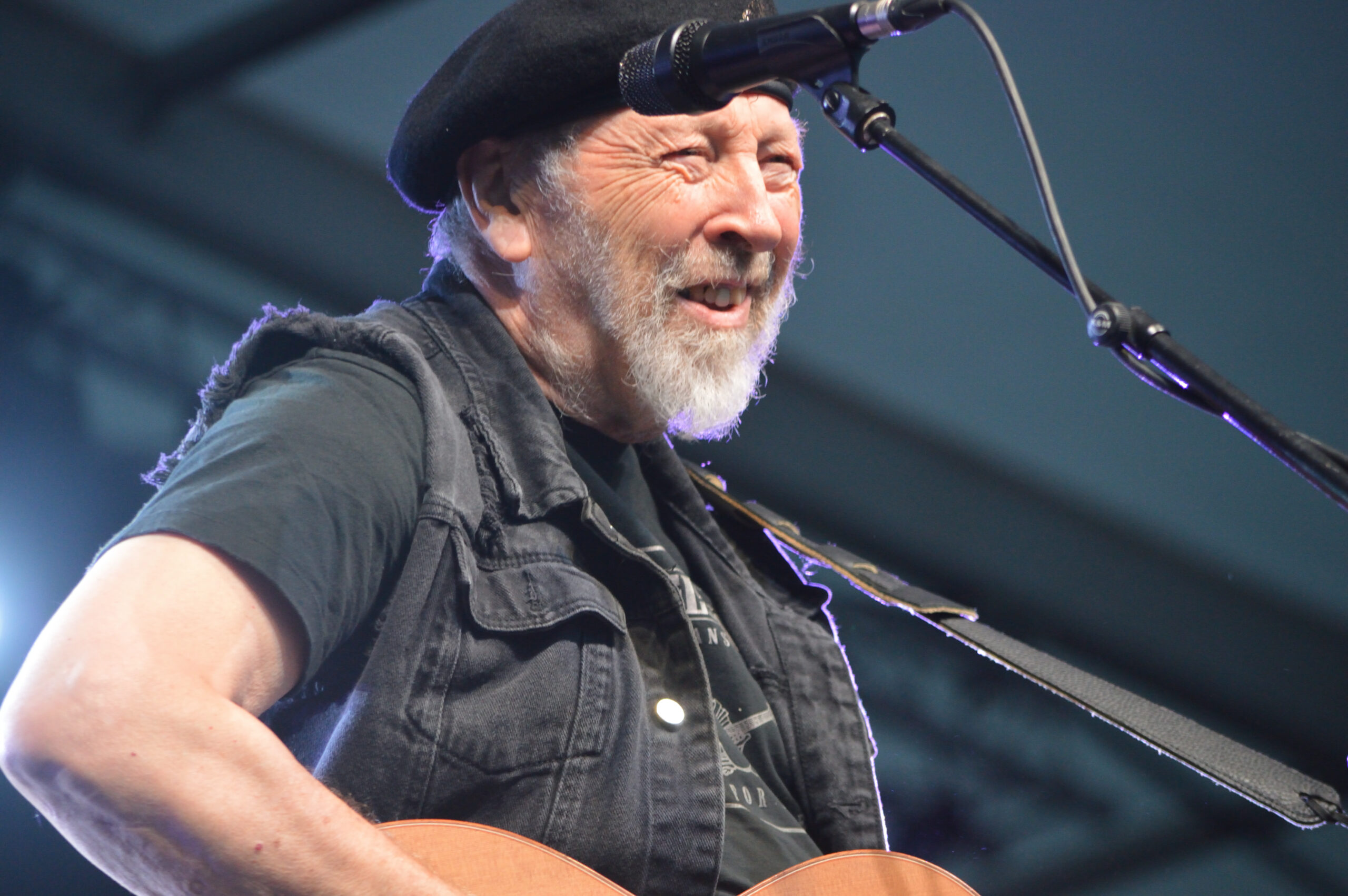
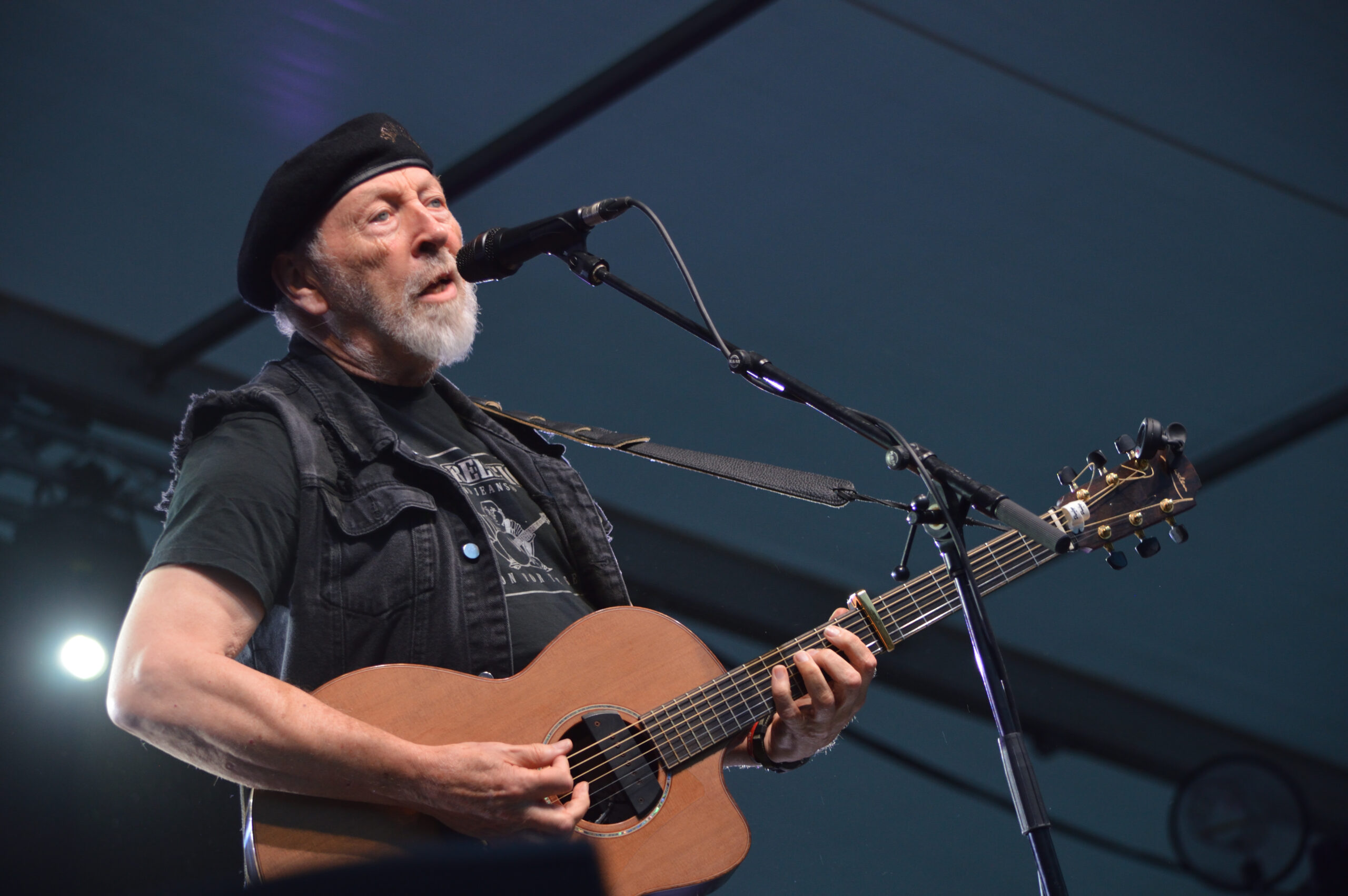
The final headliner of the weekend was Richard Thompson, who drew from across his career, including songs he had written and performed solo and with Linda Thompson. He began with the rhythmic strum and high, quivering guitar of If I Could Live My Life Again, followed by Walking on a Wire, with intricate guitar playing. Johnny’s Far Away was one of my personal favourite performances. Thompson jokingly described it as a modern sea shanty, a cruise-ship sea shanty, before telling the audience it was their turn. The resulting interaction was full of smiles and humour, while Thompson’s intricate guitar playing remained extraordinary. Again, like other acts over the weekend, this was music as shared experience, as collective joy, and it was glorious. Pharaoh followed, then Valerie, another highlight, with chugging rhythm and upbeat energy. This was proper folk-rock, despite the absence of a full band, generated by Thompson’s counterpoint playing.
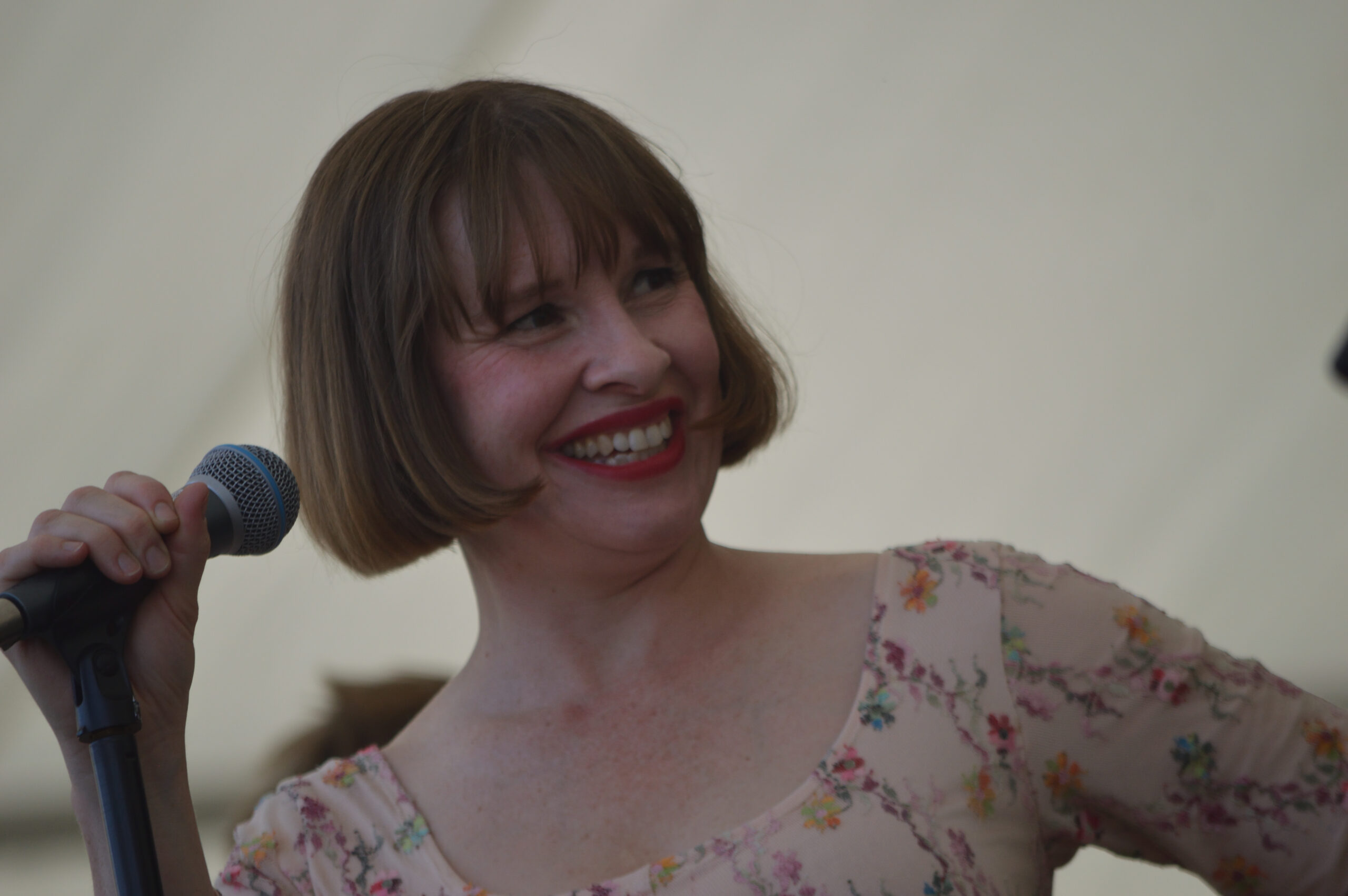
1952 Vincent Black Lightning was a wonderful anthem. What a tune. The guitar was beautiful, the vocal melodic and Thompson’s control extraordinary. His playing was intricate and precise, with rapid finger-picked notes, while his voice ranged effortlessly from high to low. His lyrics spilt forth with a strong narrative and descriptive quality. Beeswing followed with fluttering guitar and bright high notes. The quality of Thompson’s acoustic guitar playing was remarkable, while his vocal control remained faultless. Cocaine Walking, Booze Talking, from his forthcoming record, featured Zara Phillips on vocals. There was a firmer strum and gruffer vocal, followed by Withered and Died, another emotional standout with Phillips providing harmonies.
Thompson joked that he had done the 1970s and could now tick off the 1980s before playing She Twists the Knife Again, with fast, high strumming and a high vocal. Pipe Dreams, another song from the forthcoming record, was followed by The Rattle Within, from several albums back. The set genuinely covered the breadth of Thompson’s impressive career, and it was notable how well these songs from different times and contexts hung together coherently. She Sang Angels to Rest slowed the pace, while Dry My Tears and Move On again brought Phillips into the vocal arrangement, their voices blending beautifully.
Once again, I found myself standing beside the authentic Indian food kiosk as it was dismantled during Thompson’s set. Its gorgeous smells had accompanied me through the festival, so watching the kiosk disappear as the evening drew to a close felt oddly symbolic.
The final sequence of songs was dramatic and sustained a powerful connection to the festival-going folk. I Want to See the Bright Lights Tonight was beautifully melodic and rhythmic, another highlight from a set full of inspiring moments. Familiar favourite, Dimming of the Day, was delivered with delicate guitar and gorgeous vocals, and then Thompson finished with the tuneful Wall of Death.
Thompson’s passion remained intact, and his voice was fabulously strong. The new songs had stood up remarkably well alongside the older material. Perhaps that was Cambridge Folk Festival in miniature: old and new, traditional and experimental, quiet and raucous, political and playful, individual and communal. It was difficult to find a single sound that defined the weekend. Perhaps that is precisely the point.
If folk music is about preserving stories, passing them between people, responding to the world around us and creating communities in which those stories can continue to be told, then the music doesn’t need to inhabit a particular sound people associate with ‘folk’. Rather, it simply needs to mean something to someone, and be shared. The Cambridge Folk Festival made a very welcome return, and I lost myself in the range and depth of folk in all its aspects.