
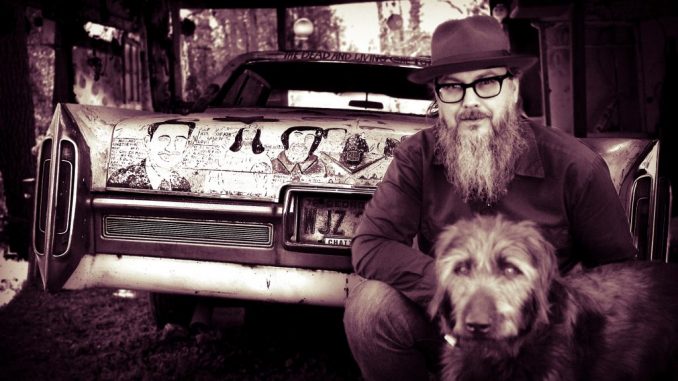
Otis Gibbs hails from Wanamaker, a suburb of Indianapolis, Indiana. He now lives with his partner, musician and visual artist Amy Lashley, in that alt-country mecca, East Nashville. His father, grandfather and uncle played music and introduced him to old-time country and bluegrass. He tells of being taken to a bar as a youngster by a friend of his aunt’s, who was supposed to be babysitting him. The man would make money playing piano, while Otis sang along. Otis’ roots are very firmly working-class, and this is important in understanding the political nature of some of his lyrics, which are given extra heft because he has seen for himself the struggles of ordinary people. His experiences also give him great empathy for people hitting hard times in their lives. Otis worked for ten years as a tree planter in Indiana and seems very proud of the 7,176 trees he planted. Digging up the rock-hard ground to plant the trees was brutally hard at times- most fellow workers gave up the job swiftly- but he really enjoyed it.
He started very well with his debut, 49th and Melancholy (2002), which gives a good reflection of what is to come on later albums. There is his raw, gravelly voice accompanied by rough-around-the-edges acoustic guitar, sometimes strummed, sometimes picked. It is similar in style to Townes Van Zandt. There is an energy and vigour to it all, although some songs have a calmness and delicacy, and this is seen in later work, too.
Once I Dreamed Of Christmas (2003), a quirky, sometimes tongue-in-cheek look at the festive season, is an outlier compared to his other work. However, you get a good idea of his sense of humour in songs like Lloyd the Reindeer, where Lloyd, a bit of a character, has to drop out of Reindeer school. Carl and Mavis, the tale of two people so mean that they break up at Thanksgiving to avoid having to buy Christmas presents, is just great. You see his empathy on Lonely Mistletoe Night, about the struggles of a single mum at Christmas. And there is the despair at the state of the world, seen in later writings, in A Man Named Jesus, where Jesus is horrified at what Christmas has become.
One Day Our Whispers (2004) is a great album, well worth checking out. It is the most country-sounding of his albums, with plenty of steel guitar, but also bluegrass in some tracks and twang in others. There is a beautiful country duet with his partner Amy on Ours is the Time. It is more political than later albums- there is idealism and a sense that the world can and will be changed for the better when people organise and take action. It reminds you of Woodie Guthrie at times.
There is politics, too, as you might perhaps expect, on Grandpa Walked A Picket Line (2009). It starts with the wonderful Caroline, still a staple of his live set, about a girl from a mining family whose mother leaves, with the girl later ending up in an abusive marriage. This is followed by Everyday People with words that hit the nail squarely on the head: “Grandpa walked a picket line when he was nineteen/ Had a wife and kids back home to feed/ Daddy did the same, it was his turn too/ Made things better for me and you”.
The politics is less overt on the excellent Joe Hill’s Ashes (2010), although the title track is about an iconic union activist, executed in Utah in 1915 for a murder, despite huge doubts about his guilt. His last words before execution were apparently, “Don’t mourn, organise”, and have served as an inspiration to future generations. It is a gentler album than Grandpa Walked A Picket Line and moves away a little from a traditional country sound towards folk, although there is still fiddle and banjo to be heard. Where The Graves Are Real is a rousing attack on the fake friends who had attached themselves to him. The final, very moving track, Something More, is a tribute to a dear friend of his who worked with him planting trees but died young. Here, again, you see Otis’ despair at the world, “Why do the good die young/ And why do the worst of those among us never fail”.
The next three albums, Harder Than Hammered Hell (2012), Souvenirs of a Misspent Youth (2014) and Mount Renraw (2017) are similar in musical style to Joe Hill’s Ashes. However, Otis has gone electric on his last two albums, Hoosier National (2020) and The Trust Of Crows (2025), to great effect. I don’t think anyone will have shouted “Judas!” at him.
Up until about five years ago, Otis produced a podcast, Thanks For Giving A Damn, consisting of interviews with people in the americana music business telling entertaining tales of the lives of the “stars”. He is a great storyteller himself, and this comes through strongly in the words of a number of his songs. He has recently made a film, A Letter To Handsome John, which was originally a tribute to John Prine, but then became a record of the last year in the life of his friend, Todd Snider.
He is still touring and came over to the UK recently. As you would perhaps expect, his guitar playing sounded lovely, and there is a calm, good humour to him. He has some great stories to tell, and there is no pretension or ego to be seen; if anything, he is slightly self-deprecating, although he clearly has some steel. You leave the gig with a warm glow, and it was nice to see a good audience turning out for him and greatly enjoying the show.
Can’t Live With It “Mount Renraw” (2017)
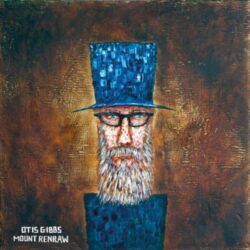 I like Mount Renraw– it is a good album- but not as much as his other work. There aren’t as many really strong, memorable songs as on other albums, although many are good. Once I Dreamed Of Christmas was another possibility, but it beats Mount Renraw with its originality and humour.
Sputnik Monroe is a stand-out. It is one of his great “story” songs. Sputnik was a white champion wrestler who was a great friend to many black people in Memphis. Crowds were all segregated at that time in the Deep South, but Sputnik demanded that crowds to see him were desegregated, and his pulling power was such that promoters caved into him. It has a great chorus, too.
The light-hearted Great American Roadside tells of Otis’ love of visiting weird US landmarks – for example, “the world’s biggest ball of twine”– often driving hours to get there. Empire Hole has a socio-political dimension, telling of his father’s hard graft in an Indiana limestone quarry, “it was filthy toil and work for too little pay”. The limestone was used to build “monuments of beauty” in New York, but Indiana was just left with a hole in the ground and an economy where people felt that they had to leave. Bison is a fiddle-driven story of these animals being driven away from their home by white people.
The final three gentler songs are more personal. Kathleen was someone he knew as a young man, and the lyrics draw you in to make you wonder what passed between them. Lucy Parsons feels like a woman who supported a younger Otis when he was struggling. Wide Awake has him thinking as he is driving long distances, including about a couple of friends from the past.
So, it turns out that there are enough good songs on Mount Renraw for me to be able to live with it, after all.
Can’t Live Without It “Harder Than Hammered Hell” (2012)
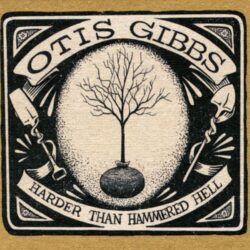 It was a close call with this one. Souvenirs Of A Misspent Youth is a great album with a number of memorable tracks. It includes my number two Americana track of all time, the heartbreaking Ghosts of Our Fathers, about a family friend who had lost his son in Vietnam. The Darker Side Of Me is another of Otis’ great stories. If it is autobiographical, then you wouldn’t want to get on the wrong side of him. His first “electric” album, Hoosier National, has consistently great tunes- it is my favourite music from him. However, Harder Than Hammered Hell has one or two more great tracks than Souvenirs Of A Misspent Youth, and its words are more stirring than Hoosier National.
The album leans more towards folk than country, with some lovely, gentle lead guitar filling at times, and backing vocals from Amy Lashley sounding very good. The opener, Never Enough, and Made To Break, “We were made to break/ And struggle with our private pain”, both accept that life will be hard. On the first, those struggling are urged to dust themselves down and get back up again after setbacks. In Dear Misery, Otis tells of his own hard times that nearly broke him.
Big Whiskers is yet another of Otis’ wonderful stories- this time, his grandfather saw a huge catfish in the river and wouldn’t shave his beard until he caught it. In Christ Number Three, he tells of “three different men who claimed they were Christ/ On the streets of Milwaukee on a Saturday night” and, as elsewhere, of “too many friends lost along the way”. Detroit Steel, a live favourite, “I got 1000 pounds of Detroit Steel, and I’m ready to drive” is a good tune, with an almost-rock solo. The jazzy Second Best humorously shows him again as not taking himself too seriously: “I never settle for less/ than second best”.
The Land of Maybe is a personal favourite, taking aim at the American Dream, you guess, with the words: “Welcome to the land of maybe/ Where no one ever disagrees/ They claim you can achieve anything you want/ But it’s highly unlikely” and “I’ve seen people decay in the Volunteer State/ And it’s harder than hammered hell”. The album ends fittingly and empathetically with Blues For Mackensie about a close friend suffering from grief.
A fabulous record. I would urge readers to delve into Otis’ back catalogue, if they haven’t done so already, and to get along to see him live when he comes over here next.

