
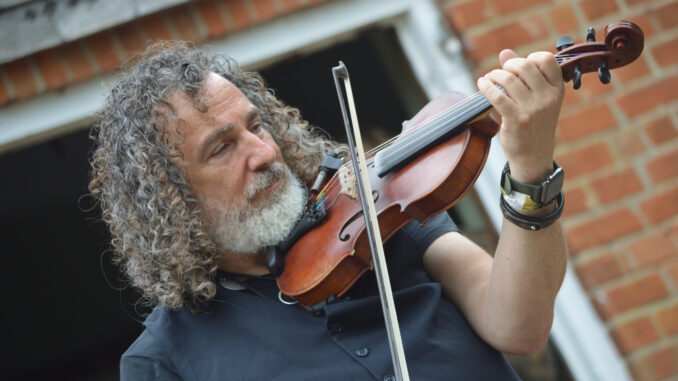
There are some festivals you attend because of the line-up. Others because they’re close to home. Some because they’re fashionable, or because everyone else seems to be going. Then there’s Maverick. After many years of returning to Easton Farm Park, Maverick no longer feels like simply another festival on the calendar. It feels like coming home. Long before the first note is played, familiar faces begin appearing across the site. Musicians wander through the crowds chatting to audience members. Friends who may not have seen one another for a year pick up conversations as though no time has passed at all. Complete strangers become companions over coffee, food or a pint beneath the Suffolk sunshine. That sense of community is impossible to manufacture. It has grown organically over almost 20 years, built by artists who genuinely enjoy returning and audiences who care as much about discovering new music as seeing established favourites.
This year’s festival opened beneath another glorious summer evening. Before seeing a single performance, there was already time to savour one of Maverick’s increasingly impressive food offerings. Beautifully seasoned slow-smoked loaded fries provided the perfect start to the weekend, while somewhere across the site came the distant sound of A.D. Scruffs and an old-time banjo drifting gently across the fields as the sun slowly began to sink. You couldn’t have scripted a more welcoming opening.
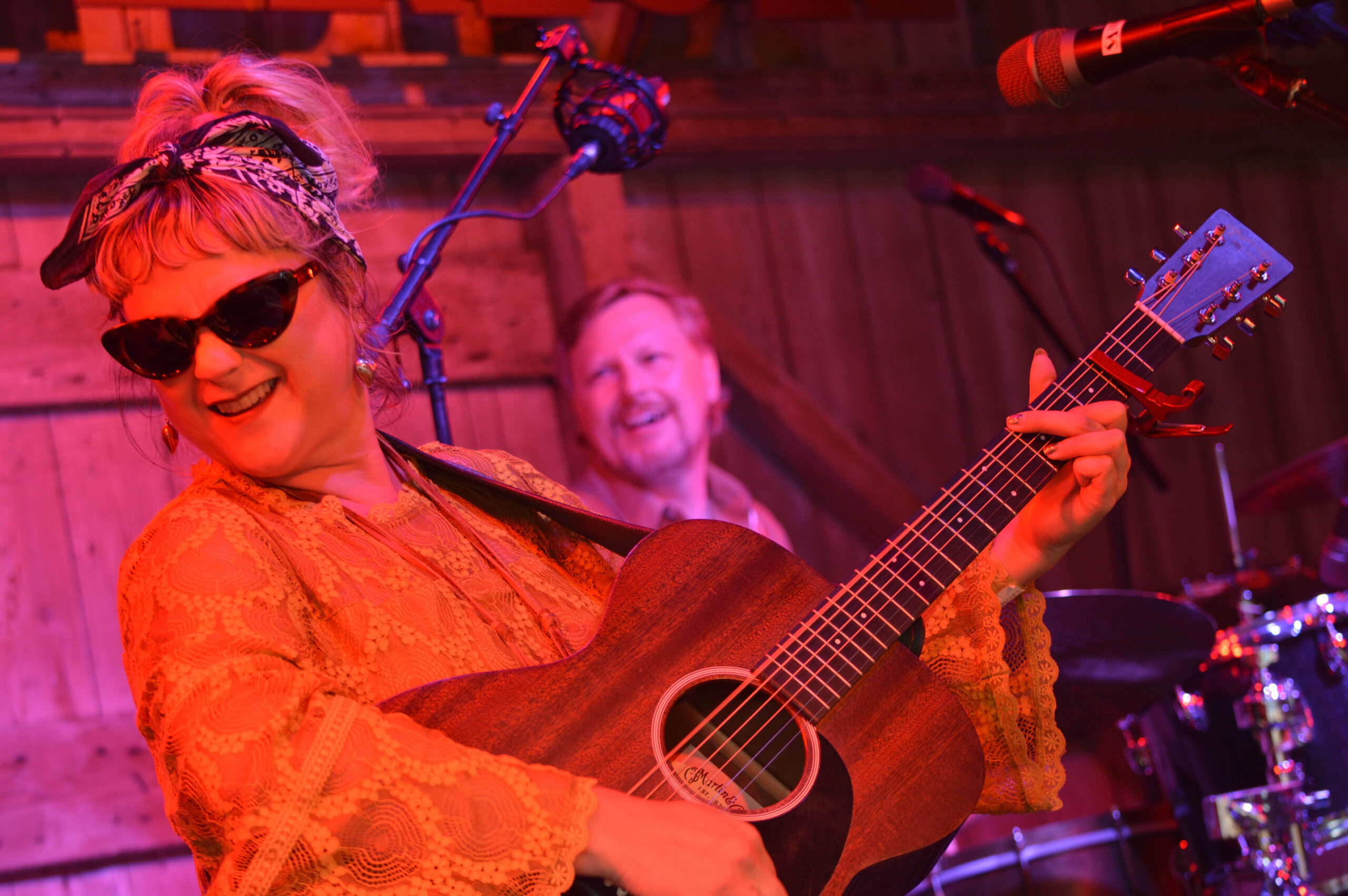
The Barn Stage was the destination for Carter Sampson, introduced warmly as an old friend of the festival, returning ten years after her first appearance here. That familiarity immediately translated into the audience’s response. Opening with Wilder Side, Sampson launched straight into an energetic set that balanced Oklahoma country storytelling with confident rock textures. Gold brought a weightier Telecaster sound, its rhythmic guitar work and driving drums giving the song real momentum, while Sampson’s voice effortlessly climbed into higher registers before dropping into richer lower tones on Ten Penny Nail. Throughout, her powerful vocals remained the focal point, anchored by confident acoustic guitar and an excellent band capable of shifting between restrained accompaniment and expansive country-rock arrangements. It was exactly the sort of assured, relaxed performance that Maverick has become renowned for.
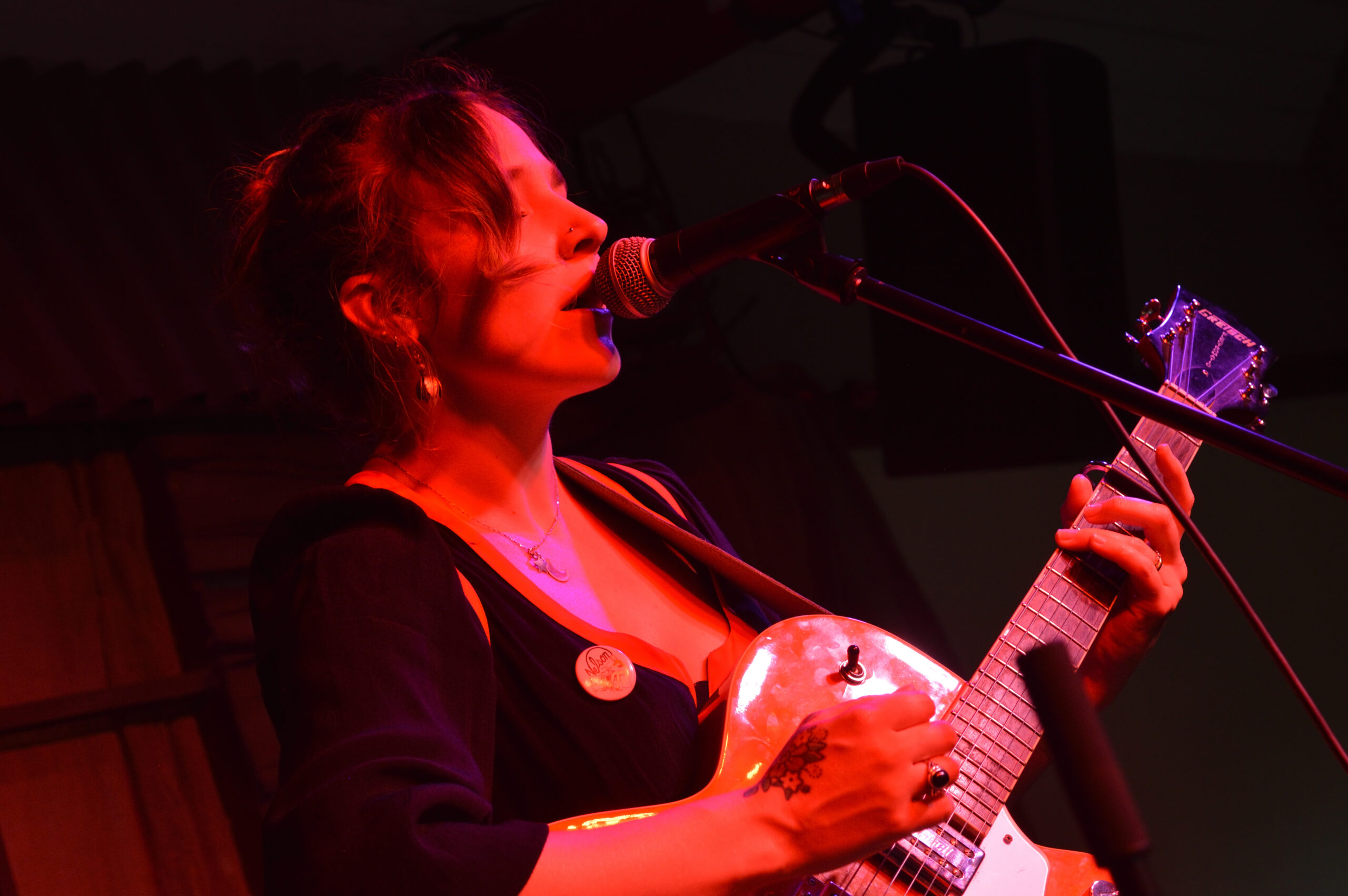
If Carter Sampson demonstrated the strength of contemporary americana songwriting, Holly Carter offered something rather more intimate inside the Moonshine Bar. Beginning with Reverend Gary Davis’ Samson and Delilah, Carter immediately drew the audience into her world. Watching her intricate fingerstyle guitar work up close was fascinating. Melody, rhythm and bass notes flowed independently beneath her fingers while she often performed with her eyes closed, completely immersed in the music. It felt less like watching someone perform and more like witnessing someone disappear inside the songs. That intimacy only deepened as the set unfolded. Stella featured beautifully resonant vocals accompanied by fluid fingerpicking that travelled effortlessly across the neck of her warm-sounding Gretsch guitar, before Leave Your Mark showcased one of Carter’s greatest strengths as a songwriter; she has a gift for uncovering remarkable lives. Before playing the song, Carter recounted the story of Stetson Kennedy, the civil rights activist who infiltrated the Ku Klux Klan before passing their secrets to the Adventures of Superman radio serial, brilliantly undermining the organisation through satire rather than secrecy. It became a fascinating piece of storytelling that never overshadowed the song itself, whose lyrical narrative and memorable melody carried the history effortlessly. Several of the evening’s finest moments came through similar introductions. Out To Sea, inspired by two aunts with very different spiritual outlooks, became a beautifully warm meditation on finding your own path, while another deeply personal song explored mental health with honesty and vulnerability. Carter joked that she often performs with her eyes closed because otherwise she becomes distracted, or ends up watching the sheep grazing in the neighbouring field. “If in doubt,” she smiled, “look at the sheep.” The audience laughed, but it perfectly summed up the gentle, unhurried atmosphere that defines the Moonshine Bar. History continued to run through the set. Where The Fraser River Flows, based upon Joe Hill’s union anthem, celebrated the enduring power of music to unite people during times of struggle, while My Hands Are Tied honoured labour organiser Frank Little, murdered for standing by his principles. Later, What You See paid tribute to photographer Tish Murtha and her extraordinary documentation of working-class communities. In lesser hands, such introductions might overshadow the songs. Instead, Carter’s warmth, humour and exceptional musicianship ensured each song became another captivating story shared between friends.
As darkness gradually gathered outside, Kelvin Davies and Chloe Turner offered an altogether different but equally absorbing journey through country music history. Describing their repertoire simply as, “…proper country songs from the 1920s and 1930s,” they demonstrated exactly why this music continues to resonate. Their opening harmonies on I’m Leaving You immediately established the quality of both singers. Pure, beautifully balanced voices intertwined above twin acoustic guitars, while Been All Around This World rolled gently forward with understated elegance. Traditional country harmony singing can often appear deceptively simple. In reality, performances this refined require remarkable musical sensitivity. The Carter Family classic The Storms Are On The Ocean produced one of the set’s loveliest moments. Chloe Turner’s beautifully clear lead vocal was gradually lifted by Kelvin Davies’ harmony until both voices seemed almost to float above the audience. His gentle acoustic solo added further warmth before the song concluded in glorious harmony. Worried Man Blues injected fresh energy. Davies joked about resisting the temptation to begin too quickly because of the blistering guitar solo waiting later in the song. Even so, the performance burst out of the blocks with dazzling flatpicking, Gary Jones contributing wonderfully rhythmic harmonica before encouraging the audience into a joyous singalong. John Prine’s Speed of the Sound of Loneliness became something altogether more tender, transformed into an exquisite duet whose intertwining vocal lines revealed fresh emotional depth within a familiar song. Later, the resonator guitar emerged for House of Gold, its beautifully shimmering metallic tone seeming almost to drip from every note, while the closing Low and Lonely combined gorgeous vocal harmonies with more outstanding harmonica work and plenty of humour between the musicians. It was a masterclass in traditional country music performed with affection and authenticity.
Meanwhile, across at the Barn, The Waco Brothers were providing a rather less subtle experience. Their set exploded with loud guitars, raised fists and irrepressible energy. Brash and gloriously uncompromising, they reminded everyone that americana has always contained plenty of rock and roll swagger. The audience responded in kind, throwing themselves wholeheartedly into every chorus before the band closed with an exhilarating Do You Think About Me?
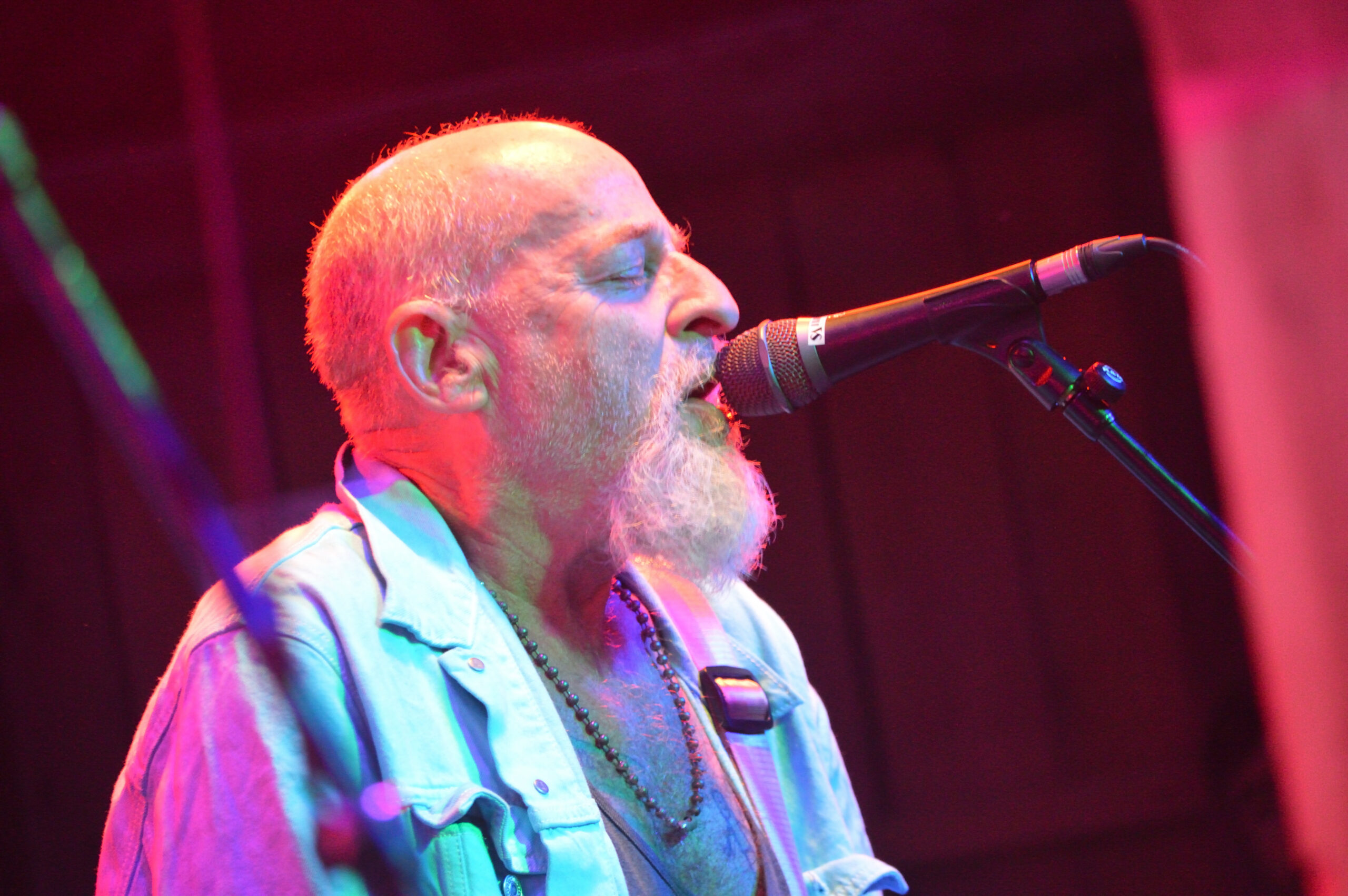
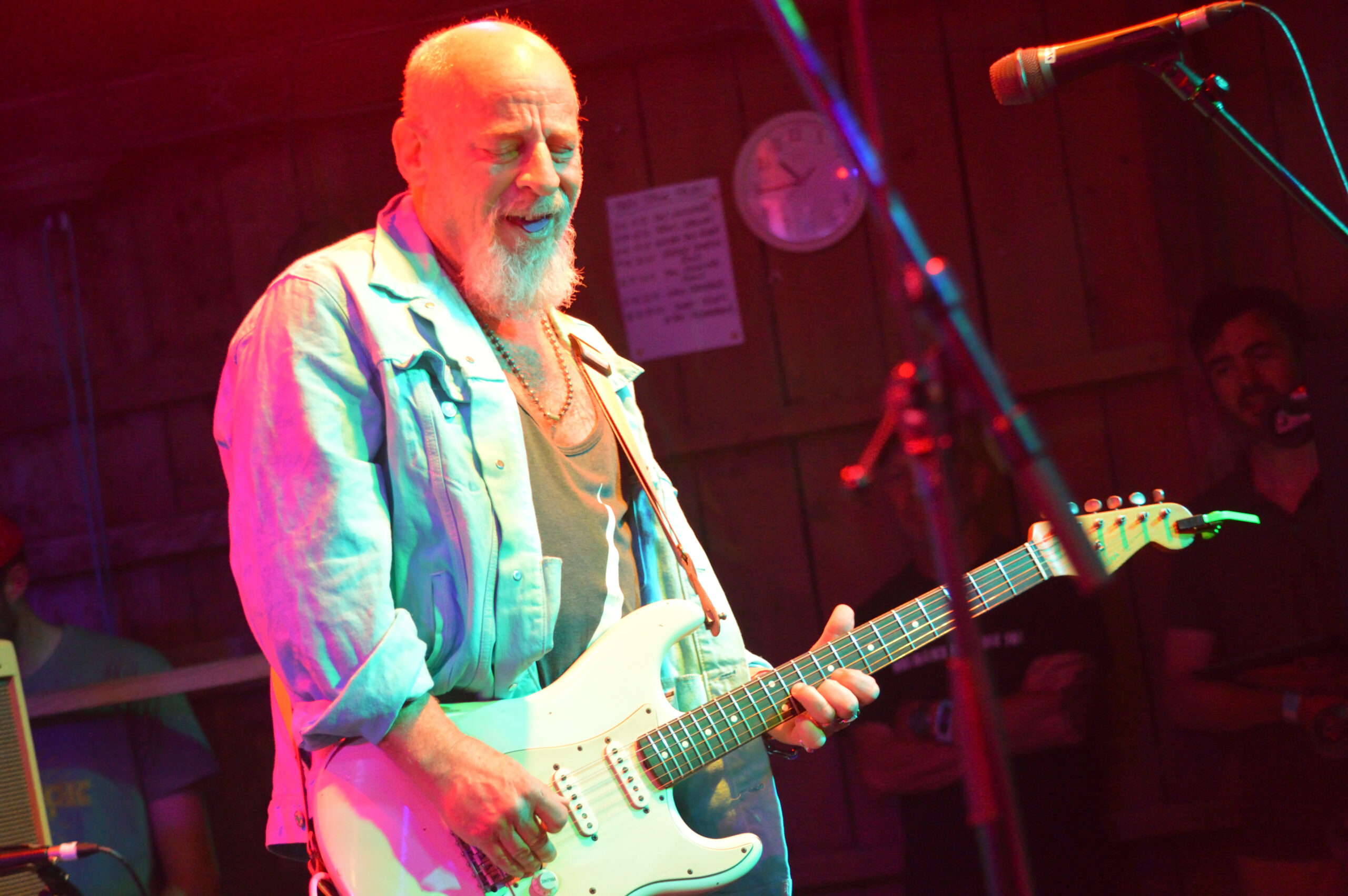
If the evening had already offered remarkable variety, it still had one extraordinary performance to come. Jerry Joseph and The Jackmormons closed Friday night with what proved to be one of the defining performances of the entire weekend. Remarkably, while Joseph has performed on these shores many times, this was the first time the full band had played together in the UK. It immediately felt worth the wait. Opening with an immense Pink Light, Joseph unleashed wave after wave of sound. Screaming guitars collided with pounding drums and a wonderfully melodic bass line that seemed almost physical in its impact, vibrating through the floorboards and into the audience itself. Songs weren’t simply performed; they expanded, evolved and breathed, each one finding new textures and fresh emotional intensity. Leonard Cohen’s You Want It Darker became a mesmerising centrepiece. Joseph abandoned his guitar, discarded his shirt and threw himself completely into the performance while the band locked into hypnotic grooves beneath him. The bass repeated insistent patterns as guitars chopped and howled above them, creating something almost ritualistic in its intensity. Radio Cab pushed even further, its extended arrangement allowing soaring guitar solos and relentless rhythmic momentum to build into something genuinely overwhelming. By the time Chris Murphy joined the band for Eat My Soul, Friday night’s closing set had reached another level entirely.
Murphy, returning for a fourth consecutive year as Maverick’s Artist at Large, has become woven into the very fabric of the festival. His soaring violin lines floated above Joseph’s towering guitar sound before the two instruments began answering one another in thrilling musical conversation. Sometimes everything fell away except drums, handclaps and voice before the full band crashed gloriously back into life. The closing Climb To Safety, incorporating a passage of Brown Sugar, became an epic conclusion to the festival’s opening night. Murphy’s ethereal violin danced above huge distorted guitars while Joseph led the band through one final extended crescendo that left the Barn buzzing long after the final note had faded. It was dramatic, transporting and utterly unforgettable.
As people drifted back towards tents and campervans beneath a clear Suffolk sky, Friday had already reaffirmed everything that makes Maverick special. Not simply exceptional musicianship. Not simply outstanding songwriting. But the unique feeling that everyone: artists, volunteers, regulars and first-time visitors alike, is contributing to something far larger than a music festival. By the end of the first evening, it already felt like coming home once again.
Saturday has always felt like the beating heart of Maverick. By now, everyone has settled into the rhythm of the weekend. Faces have become familiar, conversations continue from the previous evening, and the festival site seems to shrink as friends old and new greet one another between stages. One of the joys of Maverick is that nobody appears in a hurry. People drift between the Barn, Peacock Stage, Moonshine Bar and The Green, stopping to chat, discovering new artists and happily changing plans because someone has just recommended another performance not to be missed. The music reflected that easy-going atmosphere from the outset. The café was already doing brisk business, another enormous breakfast setting us up for a long day ahead. Once again the food deserves considerable praise. Maverick has quietly become one of those festivals where eating well is part of the experience, whether it’s breakfast in the café, superb loaded Lebanese flatbreads later in the day or the excellent loaded fries that had welcomed us on Friday evening.
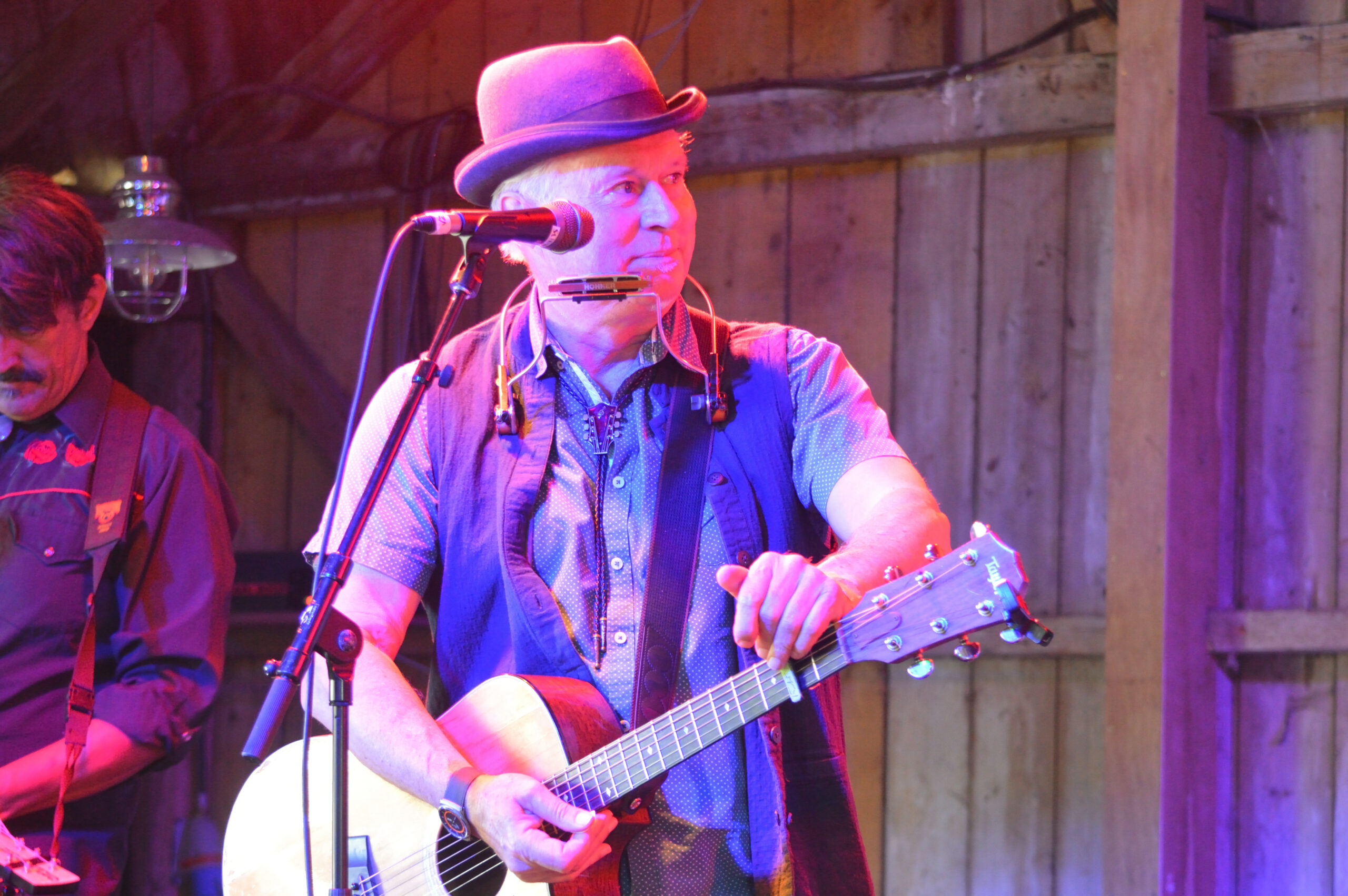
My musical Saturday began in the Barn with Jerry Hannan, whose relaxed storytelling and understated humour immediately drew the audience in. Hannan has that enviable ability to make a venue feel as though you’re sitting in his front room rather than in a festival venue. Between songs he chatted naturally, telling stories that were often as engaging as the music itself, before effortlessly slipping back into song. His performance balanced warmth and melancholy in equal measure. His acoustic guitar provided a gently rolling foundation while his weathered, expressive voice carried songs that felt lived-in and authentic. There was an intimacy to the performance that perfectly suited the Barn, allowing every lyric room to breathe. Hannan never overplays emotion; instead, his songs unfold naturally, allowing their stories to emerge with quiet confidence. A particular highlight was the song Society, which was written for the film Into the Wild and recorded with Eddie Vedder. This rendition featured Hannan’s characterful voice, edged with grit, and epic violin from Chris Murphy, whose notes seemed like wisps of smoky spirit drifting up into the Barn’s high ceiling. It was an ideal way to begin a day that would prove rich in songwriting of the highest order.
Away from the indoor stages, The Green once again became one of Maverick’s great successes. More than simply another performance space, it offered a carefully curated soundtrack to a glorious Suffolk afternoon. Beneath blue skies and summer sunshine, audiences settled on the grass, wandered between food stalls and paused by the new circular bar while a succession of artists provided one of the most coherent musical threads of the entire weekend. There was no sense of one act competing with another; instead, each performance flowed naturally into the next, creating an atmosphere that was relaxed, welcoming and unmistakably summery.
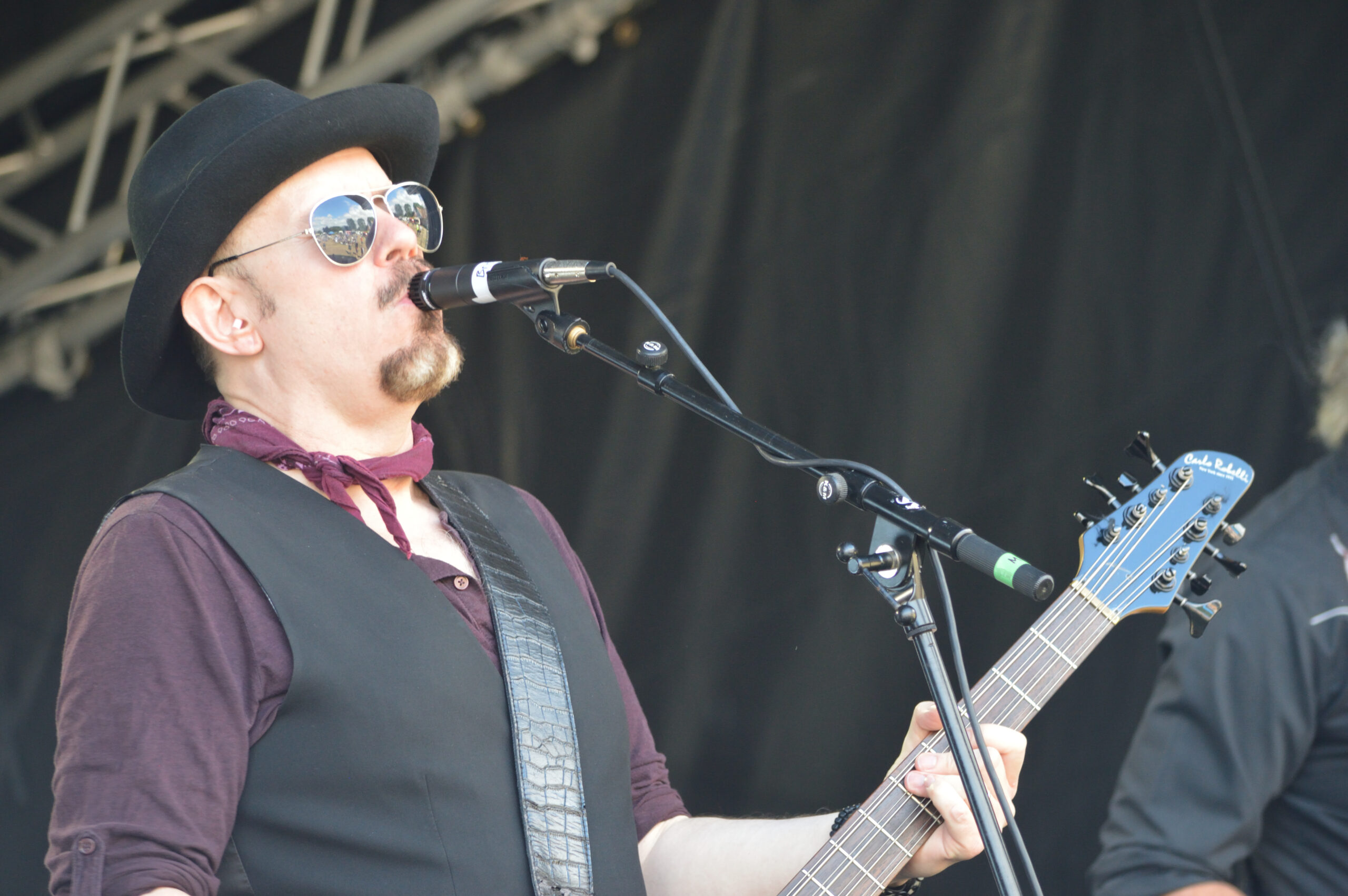
The Autumn Saints opened proceedings with exactly the sort of bright, melodic americana that seemed made for a warm July afternoon. Their harmonies floated effortlessly across The Green, supported by shimmering guitars and an easy rhythmic flow that encouraged listeners simply to stop, sit down and absorb the music. There was a lightness to the performance without sacrificing musical depth, and their songs carried an optimism that perfectly matched the mood around the site. Watching families lounging on blankets while children wandered, it was difficult to imagine a more fitting soundtrack. Highlights included the bright rock sound of She Wanders Out with slide on the Telecaster, the slower vocal and drawn-out notes of Briers Don’t Cut Anymore and Blue Disaster from the next record, which built steadily over sustained, swirling keys and melodious bass. The Autumn Saints closed with the catchy vocal tune and big drumming performance of Josephine.
That easy momentum continued with Courting Ghosts, whose set brought a little more drive without losing the intimacy that defines The Green. Their songs combined strong melodies with thoughtful arrangements, weaving acoustic textures together with subtle electric flourishes. The musicianship was quietly impressive, never showy but always serving the songs, especially the vibrant, dramatic sound of Open Book and the bursting chorus and rhythm of Falling My Friend. Like so much of Maverick, the emphasis remained firmly on storytelling, and the audience listened with the kind of attention that artists must treasure.
One of the pleasures of festivals such as Maverick is discovering artists you perhaps knew only by name beforehand, and The Dead Religion provided exactly that sort of rewarding experience. Their performance possessed a rich, rootsy warmth, blending country, folk and rock influences into songs that felt both timeless and contemporary. The interplay between the musicians gave the set a wonderfully organic quality, each instrument contributing to an expansive sound without ever becoming over-complicated. There was a lovely sense of space within the arrangements, allowing vocals and harmonies to shine while the band gently built and released tension across each song. Especially absorbing were the smooth, ranging vocals of If You Really Love Me and the full, bright, jangling sound of Big Mystery. The Telecaster was again the guitar of choice and the focus for fine solo work.
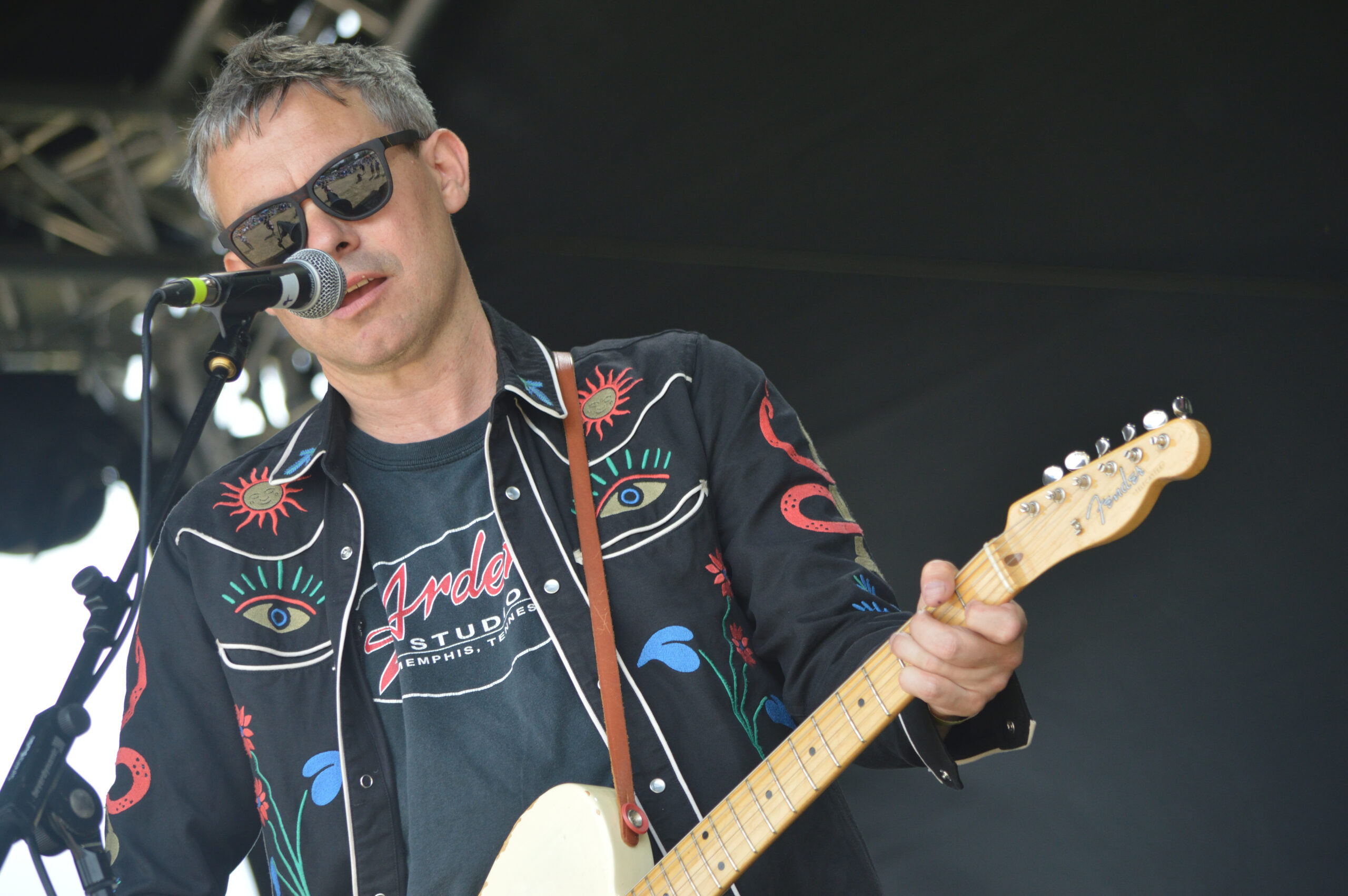
The Green’s musical journey continued with The Dreaming Spires, whose beautifully crafted songwriting rounded off a sequence of performances that demonstrated just how carefully Maverick programmes its smaller stages. Their songs unfolded with quiet confidence, full of memorable melodies, understated musicianship and thoughtful lyricism. Pleasingly, some of The Dreaming Spires’ strongest material was their recent work from the 2025 album Normal Town. The title track featured exquisite harmony vocals while Normalisation began with pounding drums before settling into a fabulous, summery groove, perfect for The Green on a sunny afternoon. Best of all was the catchy, driving guitar and relatable lyricism of the brilliantly-titled 21st Century Light Industrial Park. Acoustic guitars intertwined with tasteful electric embellishments, while warm vocal harmonies carried songs that felt reflective without becoming overly earnest. There was a timeless quality to their writing that sat perfectly within the festival’s ethos, and by the end of the set, The Green had become much more than somewhere to stumble across a band. It had become a destination in its own right.
One of Maverick’s great strengths is that no stage feels secondary. While larger festivals inevitably funnel audiences towards headline acts, Maverick continually encourages exploration. Some of the weekend’s finest musical moments happened away from the biggest crowds, rewarding those prepared simply to wander, listen and trust the festival’s programming. Saturday afternoon on The Green encapsulated that philosophy perfectly. Each artist complemented the next, creating several hours of music that felt less like a succession of individual performances and more like one continuous celebration of americana in all its many forms.
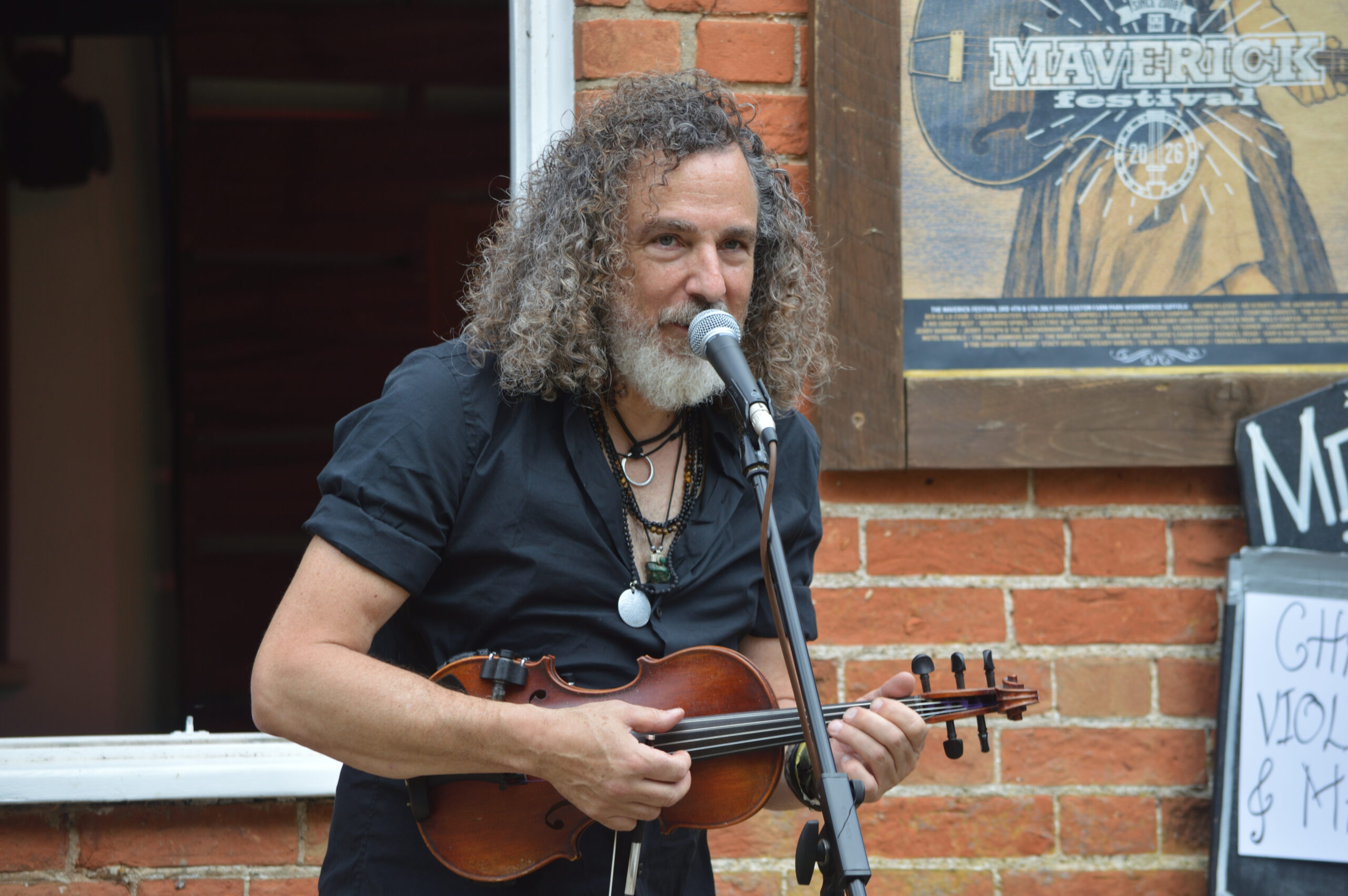
From The Green, it was impossible not to be drawn back once more towards the Moonshine Bar, where Chris Murphy had gathered another audience around him. Murphy has become such an integral part of Maverick that it is easy to think of him simply as the festival’s resident collaborator. However, it is always particularly important to spend time with his own music. Introducing his set with typical warmth and humour, Murphy immediately created the conversational atmosphere that makes the Moonshine Bar feel less like a venue and more like someone’s front room (or someone’s garden, in this case, as he performed just outside, weaving amongst the picnic tables as he played). Opening with Edgar Allen Poe, Murphy demonstrated just how expressive the violin can be outside traditional folk settings. High melodic lines floated above rhythmic looping figures before he began plucking and bowing different textures from the instrument, creating an almost orchestral sound from a single fiddle. The recently released Clean Break showcased another side of his writing. Beginning with long, ethereal loops that slowly accumulated into richer harmonies, Murphy gradually introduced thumb-plucked rhythmic figures that transformed the piece into something hypnotic and quietly uplifting. It demonstrated the same instinct for building atmosphere that had enhanced so many other artists’ sets throughout the weekend, but here it was unmistakably his own musical language. Halfway Around the World carried that same sense of movement and travel that seems woven through much of Murphy’s work. Long bowed notes gave way to more rhythmic passages, while subtle looping allowed melodies to overlap and converse with themselves. It was music that rewarded careful listening and, for those who have seen Murphy play in the UK on many occasions, it was like his touring, travelling anthem. The title track from his latest album, Songs From The Trees, was one of the afternoon’s highlights. Murphy allowed melodies to emerge gradually, never rushing them, creating the sense that the music was growing organically rather than simply being performed. Around the Moonshine Bar, people who moments earlier had been chatting over drinks now stood almost silently, completely absorbed; this is a song that possesses the quality of an early, earthy myth. He closed with the magical, ethereal Connemara Ponies, bringing together rhythmic bowing, playful melodic turns and the infectious good humour that characterises both his playing and his personality. Throughout the weekend Murphy had appeared on stage with what felt like half the festival, but hearing him front his own set was a timely reminder that he is not simply an exceptional collaborator. He is an outstanding songwriter and performer in his own right. More than anyone else, Murphy seemed to embody Maverick’s spirit. One moment he would be guesting with Jerry Joseph, the next encouraging dancers in the Moonshine Bar, later appearing with A.D. Scruffs or playing beside Jason McNiff. For the fourth consecutive year as Artist-at-Large, he once again became the festival’s musical heartbeat, not simply connecting songs, but connecting people.
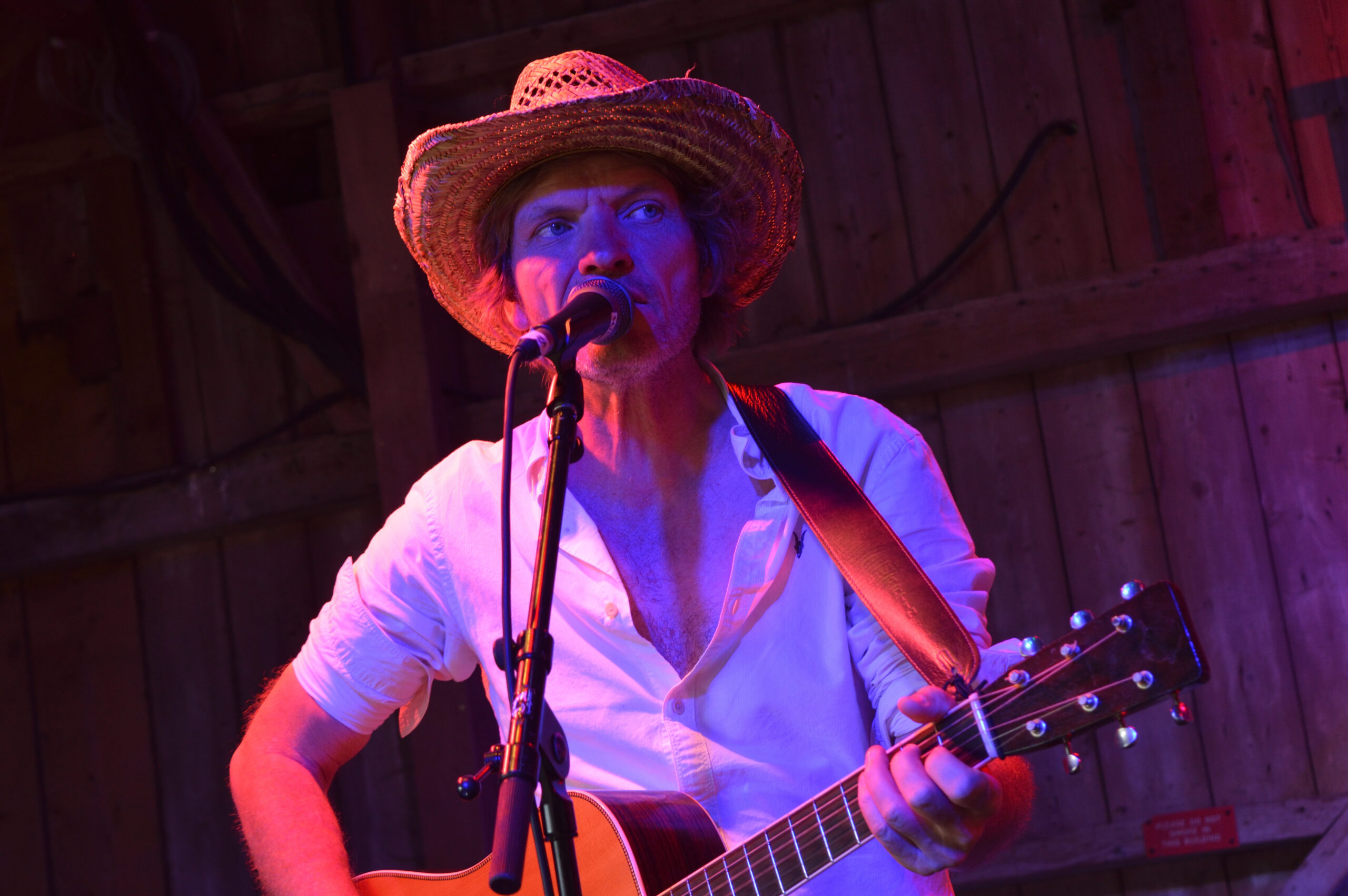
Back in the Barn, Jason McNiff delivered one of those beautifully understated performances that have become his trademark. There is never any unnecessary embellishment with McNiff; his songs are allowed to stand on their own merits, carried by finely crafted lyrics, expressive guitar playing and a voice that feels completely believable. Throughout the set there was a conversational warmth, both in his introductions and in the songs themselves, as though every audience member was being personally welcomed into his stories. Typically personal and amusing was the way he thanked an audience member for loaning him her hat during the performance, which he said had made him play better. McNiff’s guitar playing was, as ever, a masterclass in tasteful restraint. Delicate fingerpicked passages gave way to broader, rhythmic strumming as songs subtly gathered momentum, while his easy rapport with the audience reflected everything that makes Maverick special. There is a quiet confidence about his performances that never seeks to dominate attention yet somehow holds an audience completely. Watching him in the Barn, it struck me, once again, how perfectly his songwriting fits this festival. Needless to say, there were many high points in one of the festival’s strongest sets: the rhythm and rising chorus of My Mississippi with a light flutter of mandolin backing; the fluent vocal tune and intense picking of latest single Scared to Love; the reflective Try For the Sky; the beautiful, rolling, flowing vocal tune of I Remember You; and the acoustic solo of Lost My Way. These are songs that reward careful listening, and the audience responded in kind, hanging on every lyric before rewarding each number with warm, heartfelt applause.
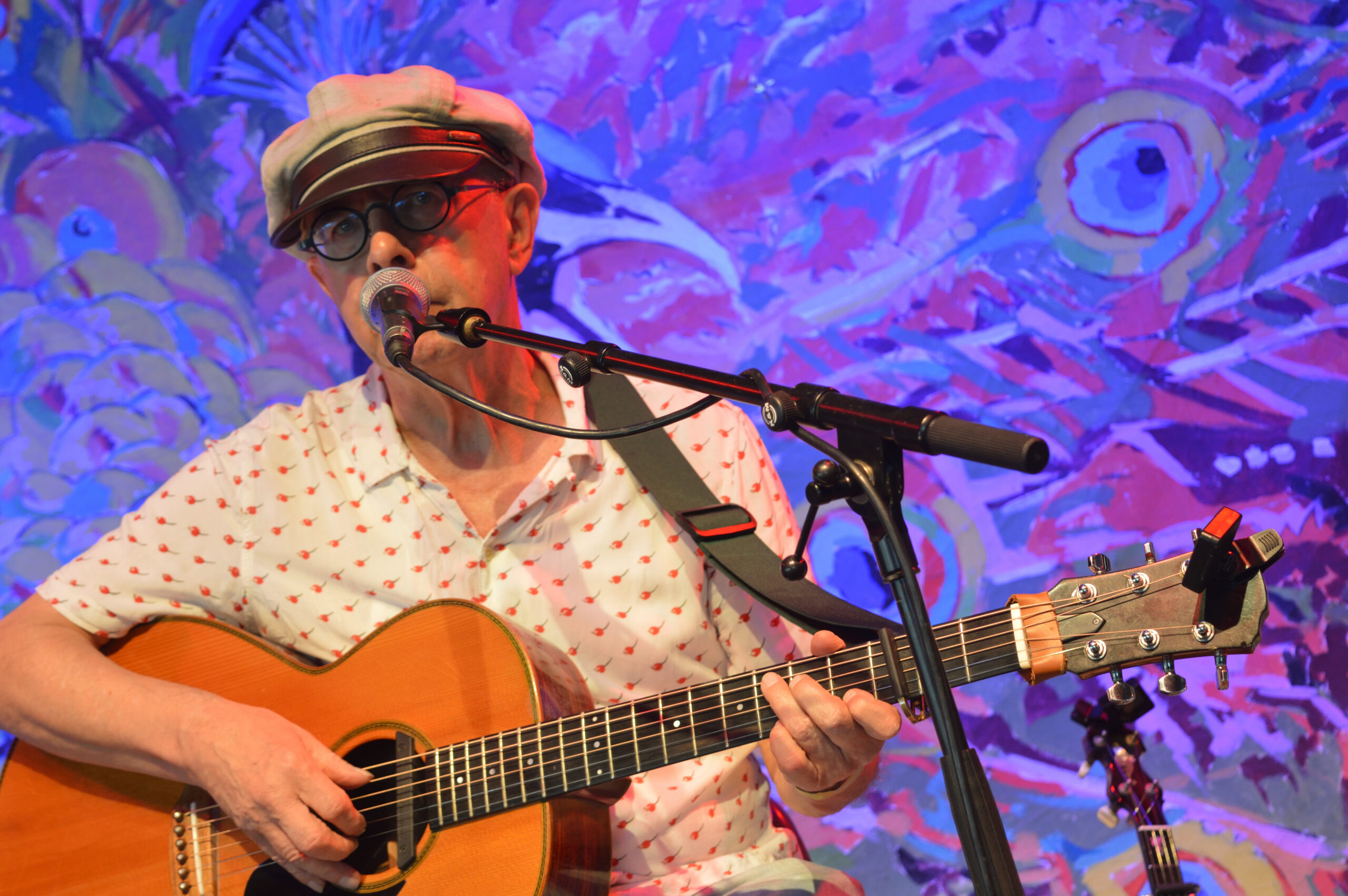
If McNiff embodied quiet reflection, Sweet Lucy brought an altogether different energy to the Peacock Stage. It was unfortunate that Michele Stodart could not be present, so the trio became a duo. However, banjo-master Johnny Fewings and multi-instrumentalist Holly Carter were more than able to celebrate the music of outsider folk musician Michael Hurley as a pair. Their glorious vocal harmonies immediately caught the attention, weaving effortlessly around one another with the kind of natural blend that cannot be manufactured. There was a buoyancy throughout the set that perfectly matched the sunshine, the songs dancing along on bright acoustic guitars, subtle rhythmic accompaniment and wonderfully uplifting melodies. Carter switched seemingly effortlessly between acoustic guitar, her rich-sounding Gretsch and her pedal steel. What impressed most was the chemistry between the performers. Their voices continually moved between harmony and lead, sometimes echoing one another, sometimes intertwining in ways that made individual lines almost impossible to separate. Rather than simply accompanying one another, each singer became another instrument within the arrangements, creating a rich, layered sound that floated beautifully across the festival site. Around the Peacock Stage, people who had intended merely to wander past found themselves lingering for song after song, smiling as the infectious warmth of the performance drew them in. Unsurprisingly, Pancho and Lefty was well-received. However, I Paint a Design was simply beautiful and the smooth harmonies and voices ringing out on Somebody To Say Bye-Bye To were just extraordinary. The pedal steel in O My Stars was like another singing voice, vibrating but understated and restrained with quiet power before being released in a lilting solo. With Fewings on the banjo and a healthy serving of humour, Slurf Song created an altogether different feeling. They closed with the subtle warmth of Sweet Lucy, while a large image of Michael Hurley smiled down from the stage. This set represented both musicianship and warm connection.
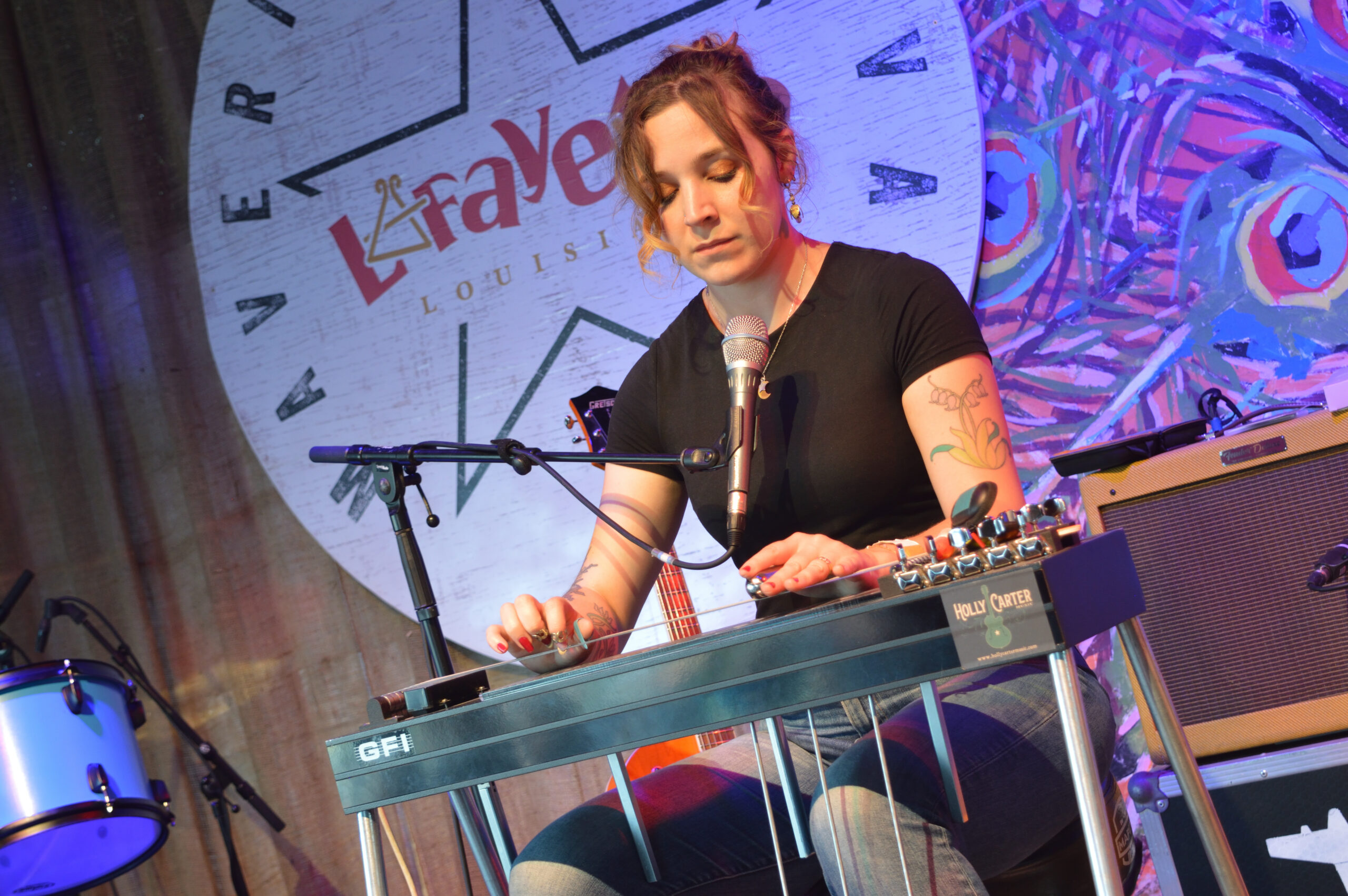
One of the pleasures of Maverick is discovering artists whose names may be unfamiliar but whose performances linger long after the weekend has ended. Travis Shallow was one such discovery. Performing in the intimate surroundings of the Moonshine Bar, he delivered a set that combined Southern storytelling with an engaging, easy-going stage presence. His songs unfolded naturally, moving between reflective moments and more driving passages without ever losing their sense of authenticity. His voice possessed an appealing grain that gave weight to every lyric, while his guitar work provided a steady rhythmic pulse beneath songs rooted firmly in the traditions of American songwriting. Eyes closed and smiling, Shallow was lost in a performance of the unreleased Not There Yet, which showcased that big, rich voice. His singing was equally impressive in Come On In, described as a reflective song of reconciliation and a song of welcome; an idea that could be considered thematic of this entire festival. Another fine composition, with chords high up the neck, a subtle vocal and performed with controlled strength and volume, was One Day. By the end of the set it was clear why he would later be welcomed back onto the Moonshine stage alongside Jerry Joseph; he felt entirely at home within Maverick’s musical family.
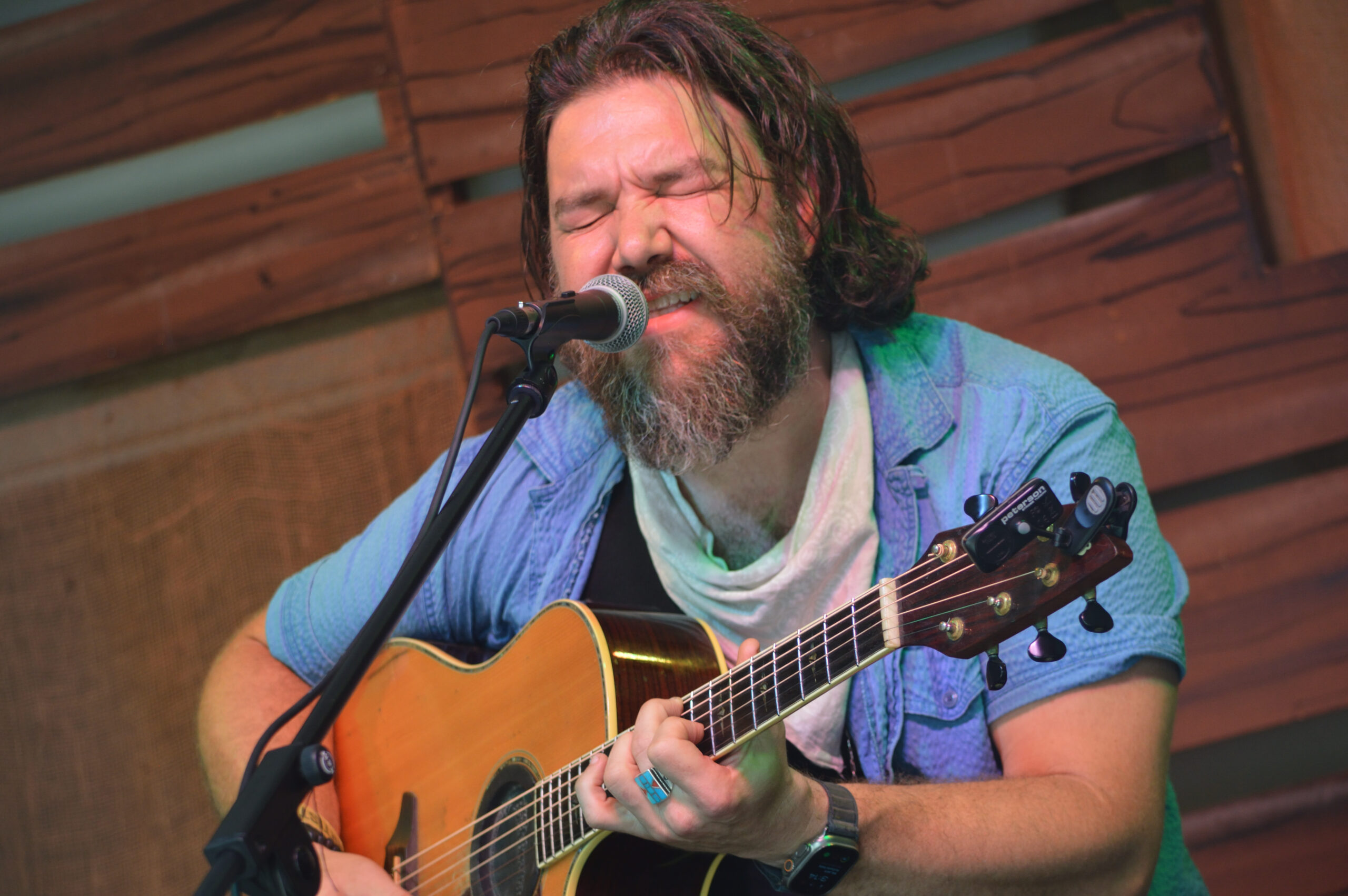
The Moonshine Bar continued to showcase homegrown talent through James Hodder, whose songwriting demonstrated an impressive maturity. There was a confidence in both his playing and his vocal delivery that belied the intimacy of the setting. Hodder’s songs balanced melodic accessibility with thoughtful lyricism, while his relaxed rapport with the audience reinforced the sense that nobody here was separated by the invisible barriers so often found at larger festivals. Artist and audience occupied the same shared space, chatting before the performance, laughing between songs and allowing the music to develop naturally. That openness remains one of Maverick’s defining characteristics. For those who know Hodder’s work (or indeed those who don’t and would like to explore his songs further), he performed Is It Any Wonder with a wonderfully gravelly, characterful voice and also impressed with Wilderness Road, the title track from his album.
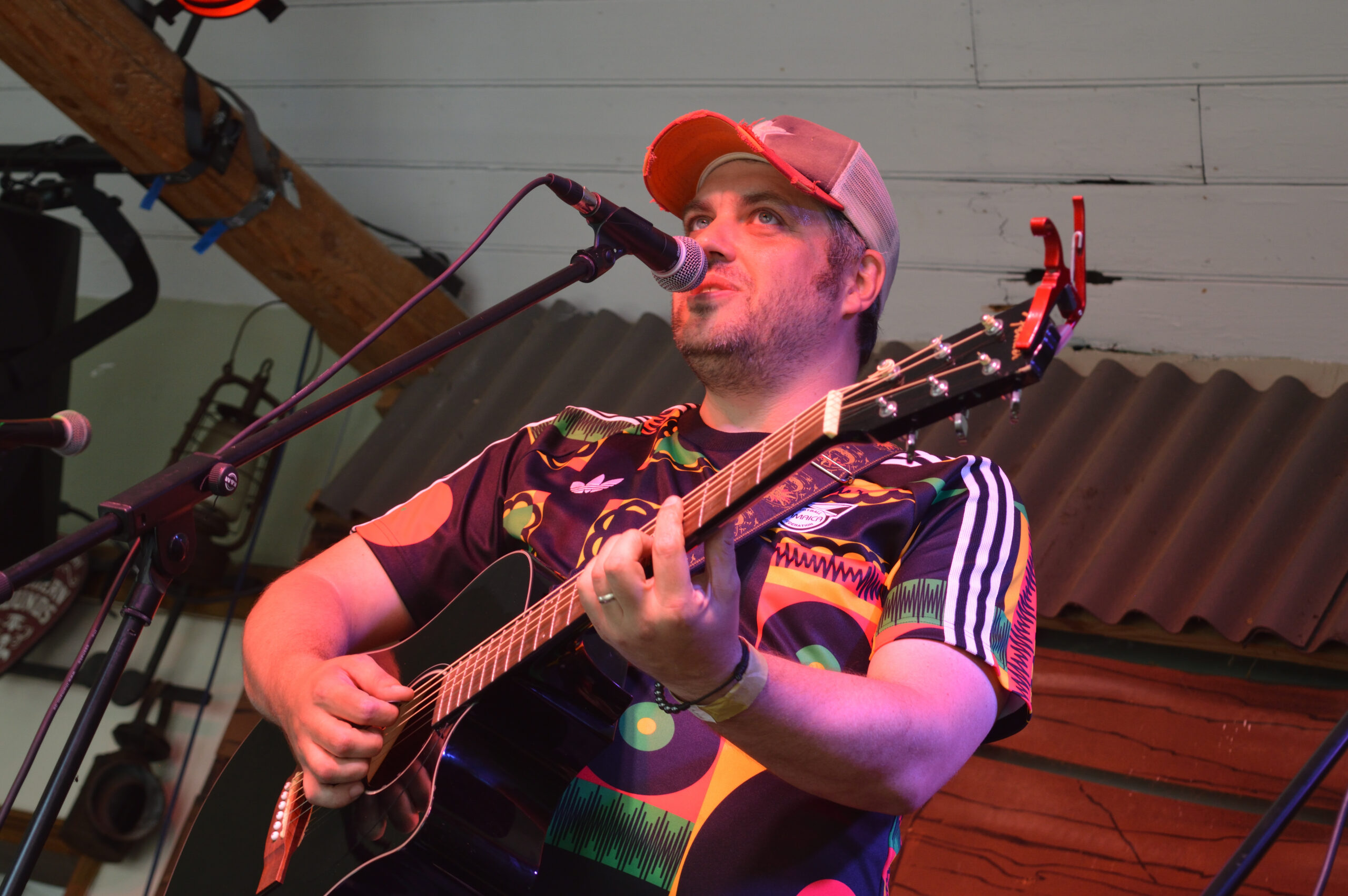
Back in the Barn, Ben de la Cour provided one of Saturday’s darker, more atmospheric performances. His songs possessed an almost cinematic quality, full of haunting imagery and characters who seemed to emerge from the shadows of the American landscape. There was an intensity to his delivery that demanded complete attention, his expressive voice supported by finely judged acoustic guitar and understated accompaniment that never distracted from the narratives unfolding within each song. The dark narrative of God’s Only Son was particularly compelling and contrasted well with his brilliantly dry humour; indeed, between the unfolding tension of his songs, he had the audience in stitches with witty asides. The song that stood out most, for its irresistible drama, was Swan Dive, which he introduced by saying that it was about the time he saw someone kill themselves in front of him when he was a little kid. Lyrically, this was outstanding; evocative and highly visual. This is americana for those who thrive on authentic narratives and dark tales.
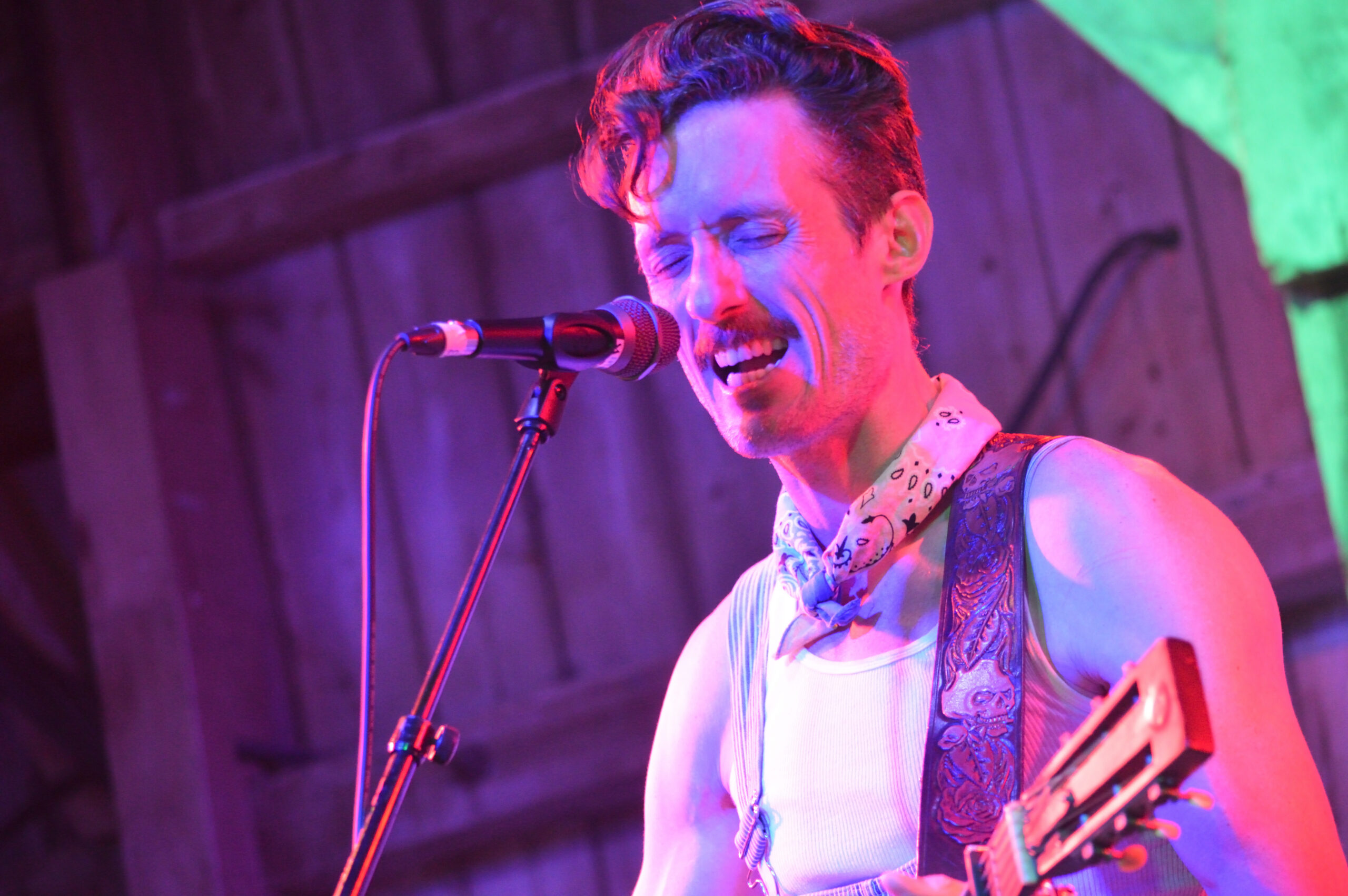
The atmosphere shifted again with Stacy Antonel, whose performance brought a welcome brightness to the afternoon. Her songwriting balanced warmth and honesty, while her expressive country vocal carried melodies that felt both immediately accessible and emotionally grounded. Antonel’s natural ease on stage encouraged an equally relaxed response from the audience, her songs unfolding with gentle confidence before gradually building through subtle changes in dynamics and arrangement. Like so many artists across the weekend, she demonstrated that technical excellence means little without genuine connection, and her set was full of both. This was particularly evident when she donned a pair of antennae for the song Always the Outsider, “…for the alien section of our set, anytime there are themes of outsiderness.” They reappeared for the song Planetary Heartache when she described herself as a foreign exchange student on planet Earth. For songs like Absent Captain and Don’t Be a Stranger, Antonel’s introductory storytelling was full of humour while the audience down at the front broke into line-dancing routines. Above all, Antonel’s set was fun, and she managed to form a great connection with the crowd.
Few bands better captured the adventurous spirit of Maverick than Electric Blue Yonder. Their music comfortably crossed stylistic boundaries, drawing together folk, americana, rock and alternative influences into something entirely their own. Rich vocal harmonies sat above inventive instrumental arrangements, while moments of quiet introspection gave way to expansive crescendos that filled the Barn without ever overwhelming it. There was a real sense of exploration running through their set, each song taking unexpected turns while remaining firmly rooted in strong melodies and thoughtful songwriting. Amidst the cosmic storytelling, there was, once again, lots of dancing down at the front, especially during the cover of Fearless from the Pink Floyd album Meddle.
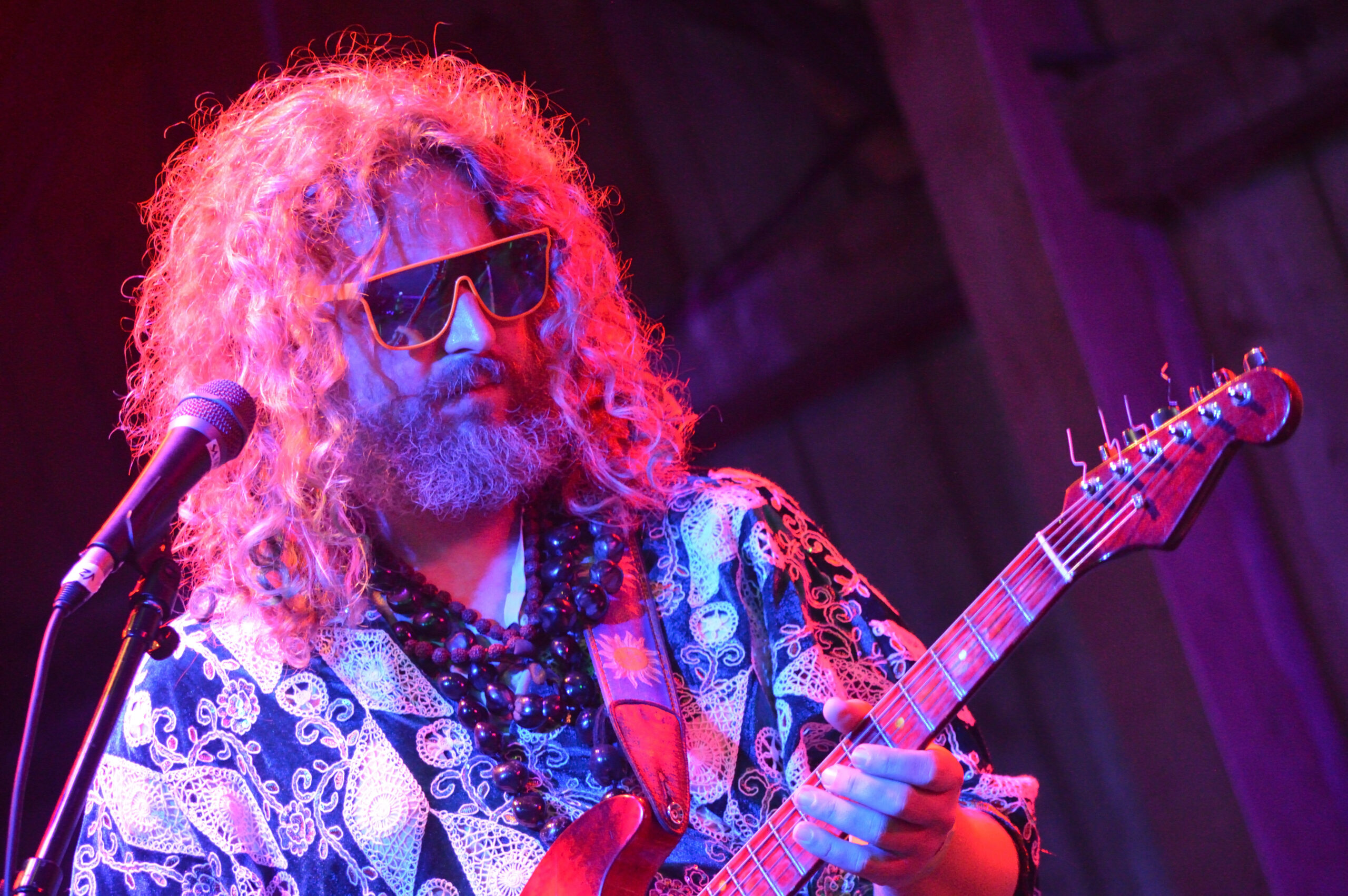
What became increasingly apparent throughout Saturday afternoon was just how consistently high the standard remained. One excellent performance followed another with barely an opportunity to draw breath. Yet despite the sheer variety of artists, there was never any sense of stylistic dislocation. Instead, every performance seemed to contribute another chapter to the same larger story: one of exceptional songwriting, generous musicianship and audiences who listened with genuine attentiveness. Maverick has always excelled at introducing its audience to artists they may never have encountered before, and this succession of performances demonstrated exactly why so many people return year after year. It is a festival built not simply around famous names, but around trust; the confidence that whichever stage you choose, remarkable music will be waiting.
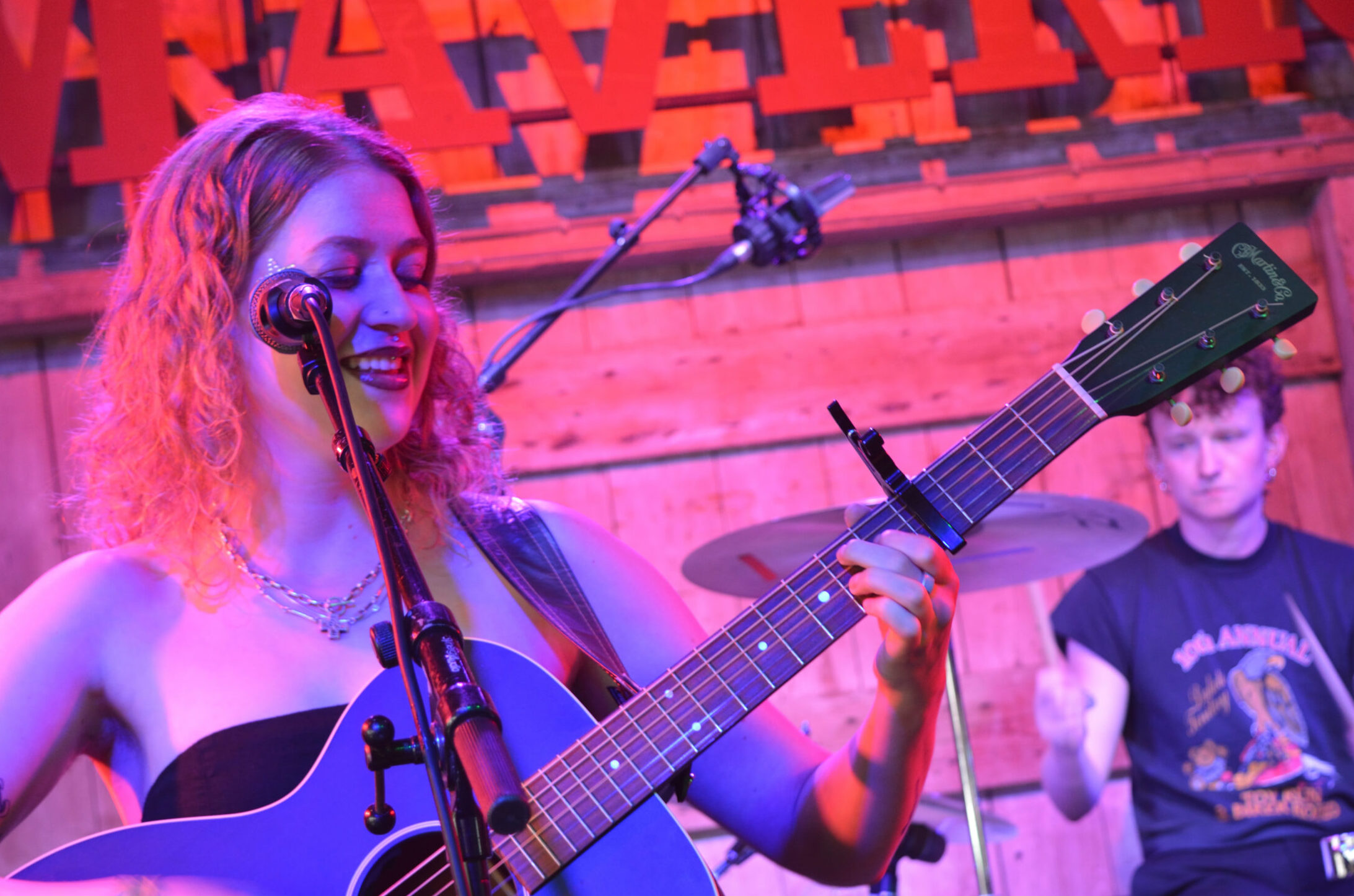
As the afternoon drifted towards evening, The Barn welcomed one of the festival’s own. Ella Spencer has grown alongside Maverick over the past few years, and there was a feeling that this was another step forward. Now backed by a full band: Adam Jack on electric guitar, Vee on bass and Fio McKenzie on drums, the songs had new confidence and weight without sacrificing the intimacy that makes Spencer such an engaging songwriter. Opening with Howlin’ Wolf, there was a rolling acoustic rhythm before Adam Jack’s electric guitar added sustained flourishes around Spencer’s warm, expressive vocal. The audience responded with enthusiastic howls of their own, immediately creating the easy rapport that seemed to define every performance across the weekend. Wishbone followed, its fingerpicked opening gradually expanding into something richer as the band eased into the arrangement. Jack never overplayed, instead punctuating the verses with carefully judged sustained notes and understated melodic lines that added depth without distracting from Spencer’s storytelling. By the final chorus, the song had blossomed into one of the highlights of the afternoon. Spencer has always written songs that feel rooted in ordinary lives, and that gift continued through Warning Signs and the unreleased Missing. The former unfolded with confident storytelling and an increasingly forceful vocal, while the latter balanced quiet reflection with tasteful electric guitar responses that seemed almost conversational. Rather than overwhelming the songs, the full band allowed them greater dynamic range, moving naturally between restraint and release. Scotty’s Tyres began, once again, with restraint before the additional instrumentation kicked in; buoyed by this backing, Spencer’s voice was projected with greater confidence and volume in an assured performance. The emotional peak arrived with The Other Side; with a fast strum and rolling drums, the Barn was pulsing. Closing with Skeletons, the band found one final surge of energy. The rhythm section drove the song forward while Jack’s guitar soared above it, Spencer delivering one of her strongest vocals of the weekend. Watching the crowd respond, it was impossible not to feel that Maverick has helped nurture an artist who now feels completely ready for much bigger stages.
If Friday night’s Barn performance had demonstrated the sheer power of Jerry Joseph and the Jackmormons, Saturday night’s appearance in the Moonshine Bar revealed something rather different. Here was the same band squeezed onto one of Maverick’s smallest stages, close enough to the audience to blur the distinction between performer and listener. It felt less like a concert than an after-hours gathering of old friends, the sort of magical collaboration that seems to happen naturally at this festival and nowhere else. Joseph opened with Yellow Ribbons, his weathered voice and solo acoustic work up and down the frets immediately commanding attention. Brad Rosen’s cajon, which had ‘Weapon of Mass Percussion’ printed on the front, and Stevie James Wright’s bass locked into a muscular groove, but there was a looseness to the performance that perfectly suited the intimate surroundings. Every lyric felt powerful, every musical phrase immersive. That acoustic power continued through American Fork, where Joseph’s guitar alternated between jagged rhythmic chopping and soaring melodic phrases. Stevie’s bass lines were wonderfully melodic, never content simply to underpin the songs but weaving around Joseph’s vocal while Brad drove everything forward with effortless authority. The room seemed to sway together as the intensity grew. The song unfolded in sections, with that intensity giving way to funky rhythms and a more spacious sound. One of the delights of Maverick is that musicians are rarely content to remain in the audience for long, and before long familiar faces were climbing onto the tiny Moonshine stage. The next song was Howlin’ Wolf, made all the more special by the arrival of Ella Spencer. Having delivered such a superb Barn performance earlier in the day, she now slipped naturally into Joseph’s band, her vocal sitting beautifully alongside his rough-hewn delivery. By American Standard, the stage had become delightfully crowded. Chris Murphy returned, violin in hand, immediately adding another colour to the music with those long, expressive bow strokes that had become such a defining sound throughout the weekend. Murphy’s violin circled the voices on stage, sometimes singing above them, sometimes answering individual phrases, while Brad and Stevie held everything together with understated confidence. It was exactly the sort of spontaneous collaboration that Maverick seems uniquely able to produce. Travis Shallow joined the gathering, adding another distinctive voice to the mix. Rather than becoming cluttered, the performance somehow grew warmer and more generous with the camaraderie. Songs became conversations, musicians smiling at one another as solos were passed around almost instinctively; everyone simply intent on making the songs as good as they could be. World Will Turn brought another shift in mood. Joseph has always possessed a remarkable ability to combine intensity with tenderness, and here the balance was perfect. Murphy’s violin floated above the arrangement, Ella’s harmonies added warmth, while Shallow’s contributions enriched the texture without ever overwhelming it. There were moments when the instrumentation rolled into hypnotic repetition and others when it almost disappeared altogether, leaving Joseph’s unmistakable voice hanging in the air before the band gently rebuilt the song beneath him. Joseph traded a high acoustic solo with Murphy’s haunting violin. The evening reached its emotional peak with Light Is Like Water. By now the Moonshine Bar felt less like a venue than a communal living room. Murphy’s violin became almost ethereal, weaving long sustained notes around Joseph’s guitar while Ella Spencer and Travis Shallow added beautifully judged harmonies. Brad’s percussion remained restrained, allowing Stevie’s melodic bass playing to breathe beneath the arrangement.
It was impossible to ignore the smiles exchanged across the stage. These weren’t musicians filling time; they were friends genuinely enjoying making music together. That sense of shared enjoyment spread effortlessly through the audience, many of whom had spent the entire day moving together from stage to stage, greeting familiar faces and discovering new artists alongside old favourites. Standing there, it struck me that this was Maverick distilled into a single performance. A renowned songwriter from Oregon sharing a tiny Suffolk stage with musicians from across Britain, Canada and America; established artists happily supporting one another; audience members close enough to catch every grin, every raised eyebrow and every spontaneous musical conversation. It was gloriously informal and completely unforgettable. That is Maverick’s quiet magic. It is, of course, a festival built around exceptional americana, folk and roots music. But after many years of returning, I know that the music is only part of the story. Maverick is about generosity: artists who happily jump on one another’s stages, audiences who listen with genuine attention, volunteers who somehow make everything run effortlessly, and a community that welcomes newcomers as though they have been coming for years.
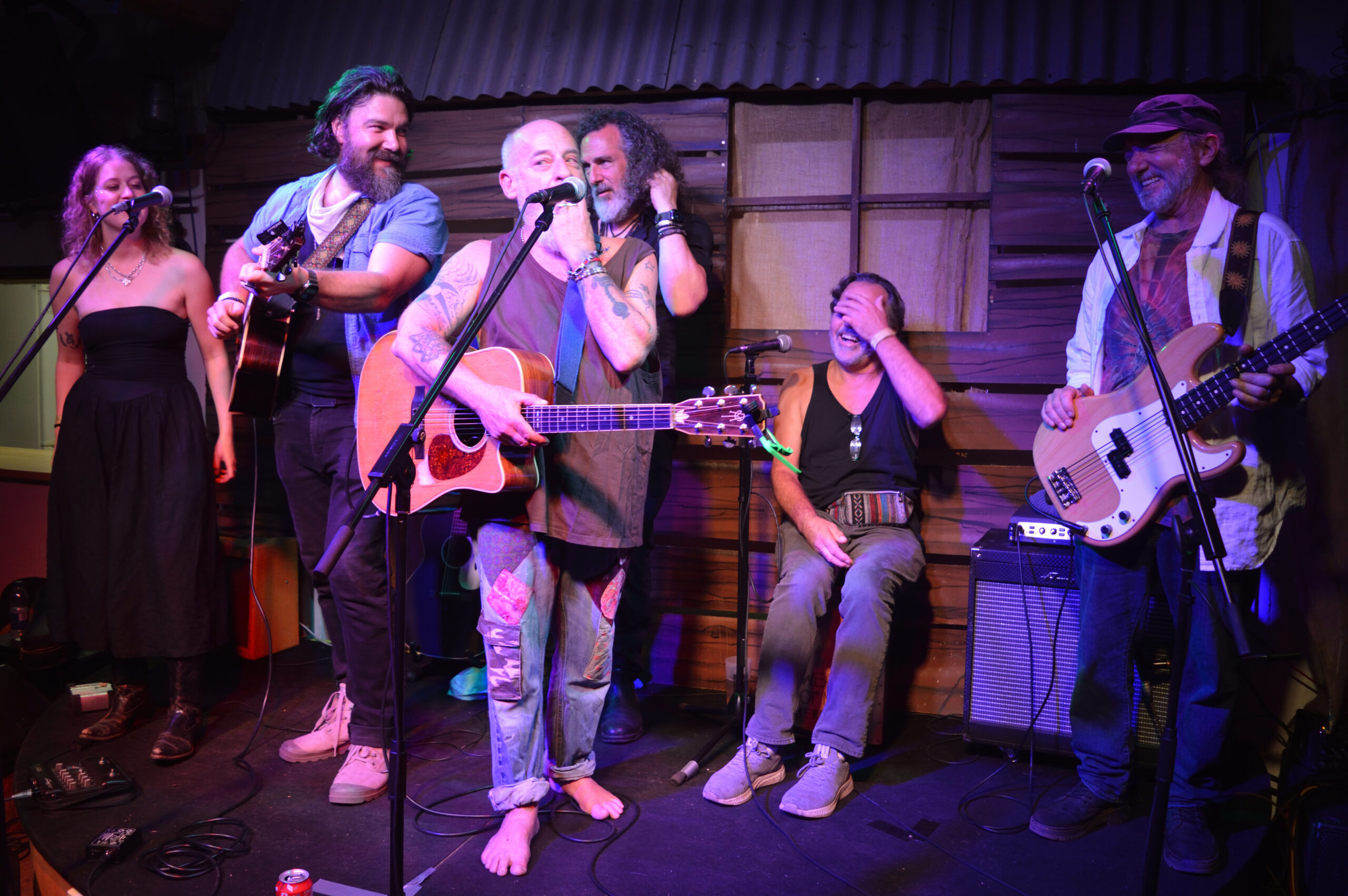
As people slowly drifted away beneath the Suffolk stars, there was little sense that the evening had actually ended. Conversations continued between strangers who no longer felt like strangers. Musicians disappeared into the crowd rather than backstage. From somewhere, a guitar appeared, and the Moonshine became a busking venue before late-night revellers moved into the Barn and the music continued. Songs rang out that those remaining could sing along to, standards like Jolene, Knockin’ on Heaven’s Door, Take It Easy. Eventually, I made it back to the tent, with classic singalongs still buzzing in my head.
After the previous night’s late finish, Sunday began at a gentler pace. Even arriving a little later than planned, Easton Farm Park was already busy, people drifting between stages, catching up over coffee and breakfast, determined to squeeze every last moment from the weekend. One final visit to the café confirmed something I’d been thinking throughout the festival: Maverick quietly has some of the best festival food anywhere. The generous breakfasts have become something of a ritual. The music began in The Barn with Leroy Stagger, and it proved to be one of the most thoughtful sets of the weekend.
Opening with Count to Ten, Stagger’s clear, high vocal immediately filled the Barn, supported by lightly strummed acoustic guitar and delicate mandolin. The arrangement felt wonderfully uncluttered, allowing the melody to breathe before building towards a powerful mandolin-led finale. Crooked Old World introduced harmonica before Ryland Moranz exchanged mandolin for banjo, his intricate fingerwork dancing around Stagger’s increasingly confident strumming. The songs constantly shifted in dynamics, sometimes stripping everything back to voice alone before expanding once more into rich, organic arrangements. One of the joys of Maverick is that artists rarely confine themselves simply to performing songs. They tell stories, invite audiences into their lives and create genuine conversations. Stagger excelled at this. Introducing Last To Know, Stagger recalled with humour a visit to Derry, noting, “I was not ready for Ireland. Ireland was not ready for me.” The song itself floated along on gentle acoustic guitar, fluttering mandolin and echoing harmony, its warmth matching the humour of the introduction. Summer Rain continued the relaxed atmosphere, featuring another gorgeous vocal melody before Ryland Moranz produced one of Sunday’s finest mandolin solos. Yet it was Stagger’s reflections between songs that lingered longest. Speaking about his excellent new album Pilgrimage, inspired by Alastair McIntosh’s book Soil and Soul, he explained that he had wanted to explore his own roots and identity as a Canadian shaped by many different cultures. Looking out across the packed Barn, he thanked everyone for choosing to spend their Sunday together. “Coming out to something like this instead of sitting at home is an act of community,” he said. “These days, that’s a radical act.” It was one of those deceptively simple observations that seemed to capture the entire spirit of Maverick. He continued by saying that he hoped the new record would inspire people to go out into the world and become active citizens. It felt entirely in keeping with so many conversations and performances across the weekend. Again and again, artists had spoken about kindness, solidarity, looking after one another and celebrating ordinary people.
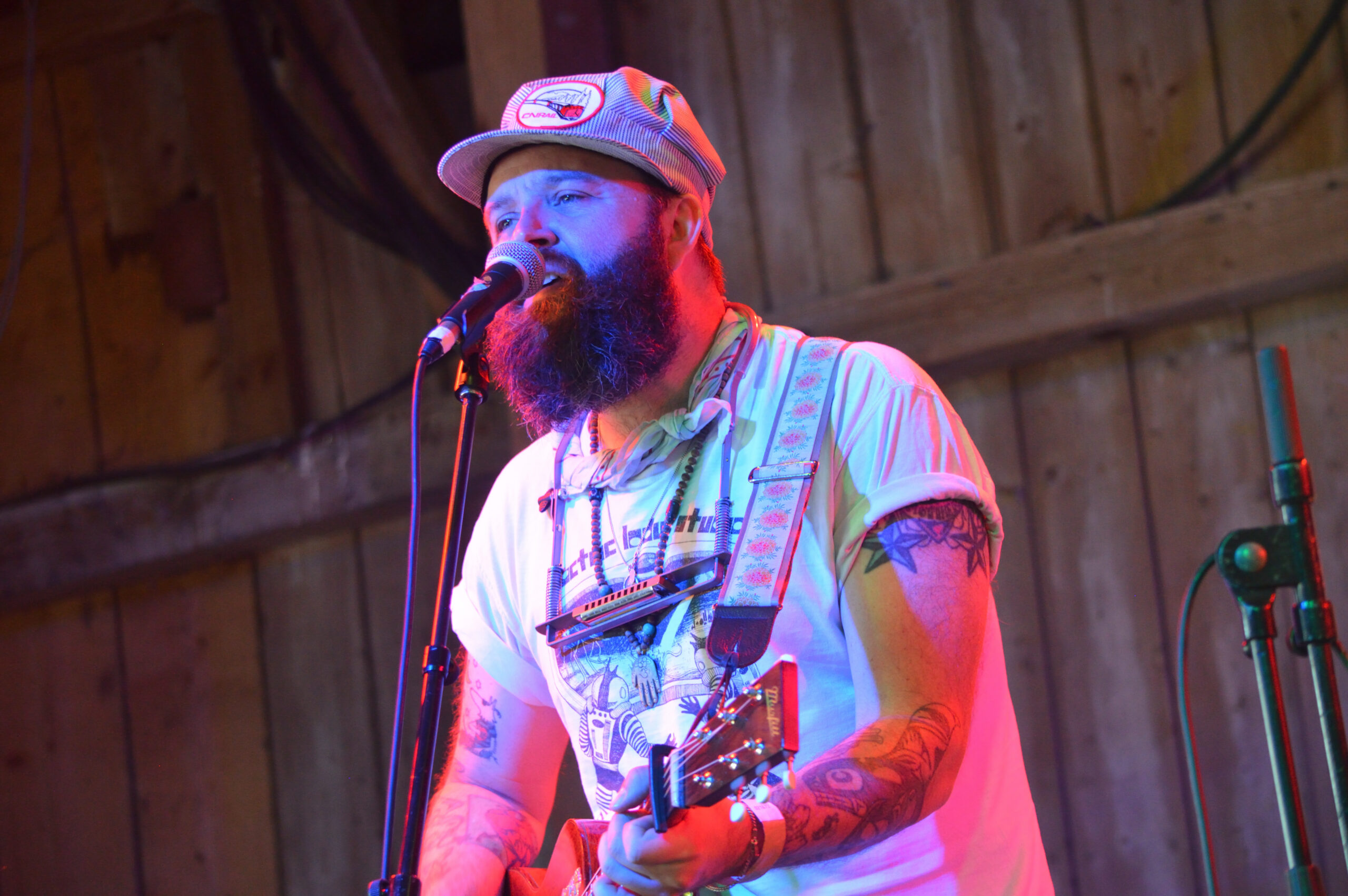
The opening track from Pilgrimage, Fiddler’s Daughter, embraced those traditional influences beautifully. Moranz switched to fiddle, producing a wonderfully rhythmic solo that danced through the Barn while Stagger’s vocal retained its effortless warmth. His affection for Ireland surfaced again with Bangor, inspired by playing the old courthouse there with Frazey Ford. Stagger described wandering into a pub filled with children running around while locals swapped stories until one elderly man stood and sang a haunting ballad about two lovers drowning while searching for one another. That image became the seed for the song. Gentle banjo picking gradually accelerated beneath a restrained vocal, creating something deeply evocative.
Before Lost In The Flood, Stagger shared another deeply personal story. Having recently relocated to Vancouver Island after years living in a 1973 Airstream trailer on the Canadian prairies, catastrophic flooding had devastated both his home and basement recording studio. He spoke not about loss, but about neighbours rallying together to help. The experience became the final song he needed to complete Pilgrimage. Beginning delicately before gradually gathering strength, the song ultimately became one about taking care of one another as we continue our way down, “…this crazy path.” By the closing Searchlight, accompanied by Moranz’s exquisite musicianship, it felt less like the end of a concert than a reminder of why live music matters in the first place.
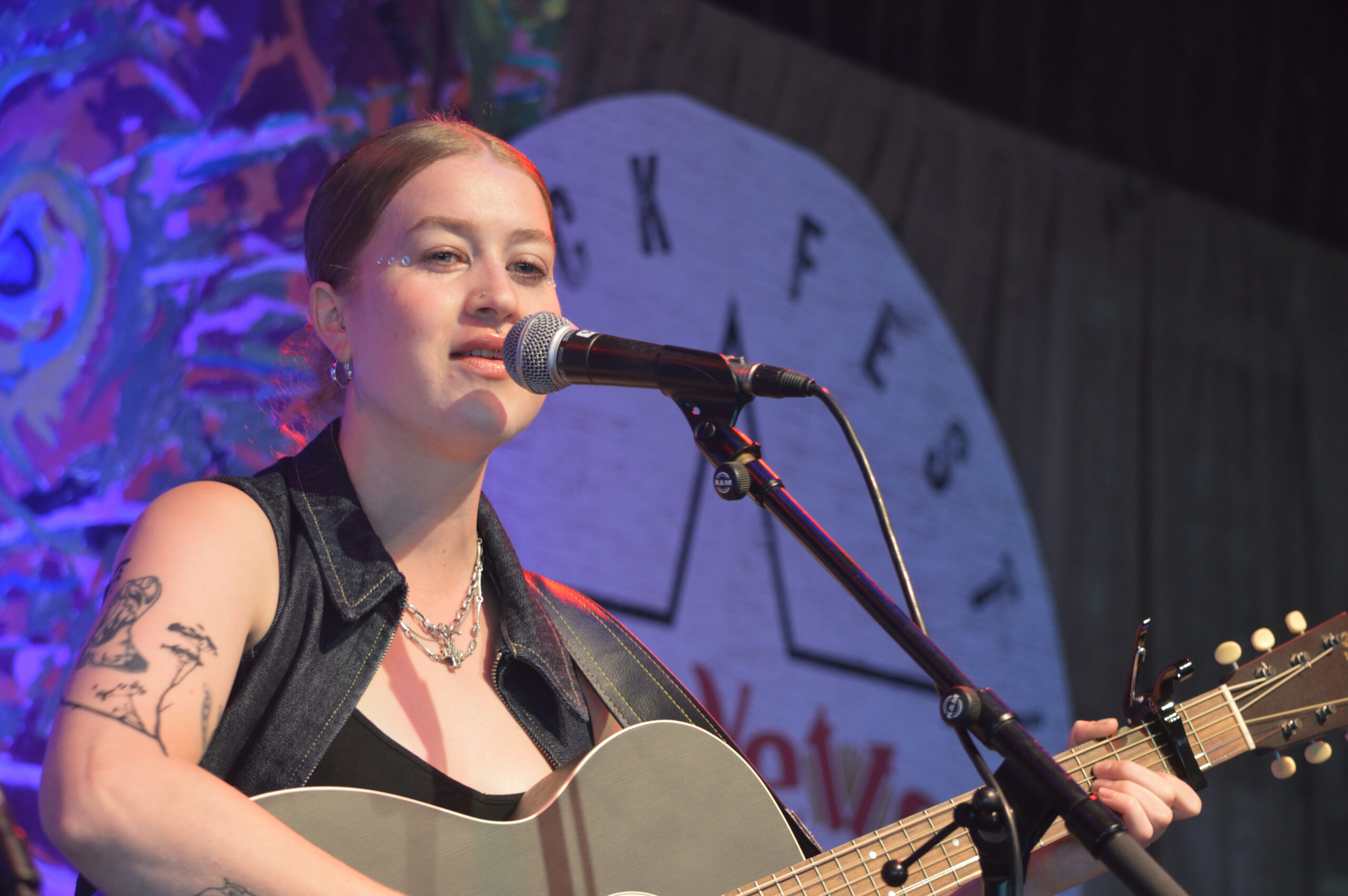
Afterwards, A.D. Scruffs brought their customary good humour to The Peacock Stage, once again joined by Chris Murphy, before another familiar Maverick favourite took the stage. Ella Spencer had already impressed with her full-band performance on Saturday, but Sunday’s appearance on The Peacock Stage revealed a different side to her songwriting. Accompanied solely by Adam Jack on electric guitar, the arrangements were more spacious, allowing every lyric room to breathe. Beginning with Howlin’ Wolf, Spencer’s flowing acoustic guitar and confident vocals immediately established an easy rapport with the audience, who happily responded with playful howls of their own. There was an infectious warmth to the performance, helped by Adam Jack’s restrained electric guitar, whose sustained notes and subtle embellishments added colour rather than demanding attention. Wishbone has become one of Spencer’s finest songs, and I have heard her perform it several times. I genuinely don’t think it has ever sounded better. Beginning with delicate fingerpicking, the arrangement gradually unfolded into a richer strum while Jack’s understated guitar phrases quietly lifted the emotional weight of the song. The unreleased Missing demonstrated another step forward in Spencer’s songwriting. Her storytelling remained intimate, while the guitar provided little responses between vocal lines, almost as though the two instruments were in conversation. Switching to banjo, Spencer delivered a beautifully relaxed version of Townes Van Zandt’s Loretta, moving confidently around the neck while retaining the song’s gentle warmth. Staying with the banjo for Bruce Springsteen’s I’m On Fire proved inspired. The familiar melody took on an entirely different character, the instrument’s bright tone complementing Spencer’s rich, slightly husky voice to produce one of the highlights of the afternoon. Midway through the song, she accidentally caught her hand on the banjo, drawing blood before laughing that she was giving the audience, “…blood, sweat and tears.” It was a wonderfully Maverick moment; entirely unplanned, entirely genuine, and greeted with smiles from everyone watching. The emotional high point arrived with I Never Told You About Oregon, written for her grandmother and played at the request of her father. Seated at the electric piano, Spencer allowed the melody to flow naturally beneath a beautifully controlled vocal. It was simply gorgeous; tender, heartfelt and utterly captivating. Sometimes songs don’t need dramatic arrangements to make an impact; they simply need honesty.
If Leroy Stagger had reminded us why community matters, Chris Murphy spent the rest of Sunday demonstrating exactly what that community looks like.
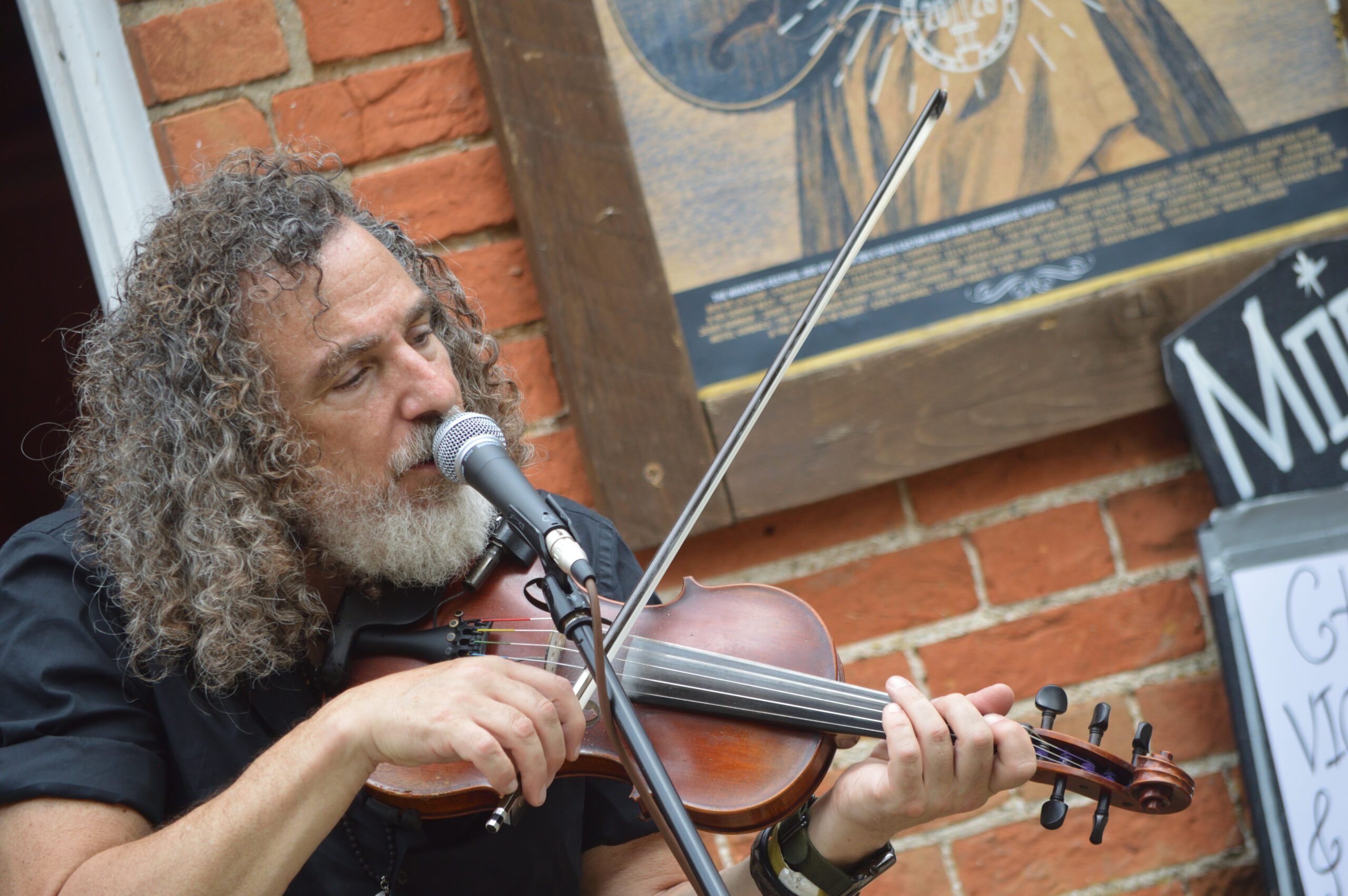
His Moonshine Bar Hootenanny was less a concert than a celebration of friendship; it perfectly reflects Murphy’s role within the festival. For the fourth consecutive year as Artist-at-Large, he seemed to have appeared everywhere over the weekend: guesting with Jerry Joseph, A.D. Scruffs and countless others. Yet, this afternoon belonged entirely to him. Greeting the audience with his customary warmth, Murphy simply smiled and welcomed his fellow “music lovers” before promising an afternoon featuring some of his closest friends.
He began alone with Longing, released under his Seven Crows project. Entirely instrumental, the piece showcased Murphy’s extraordinary command of the violin. Long bowed notes gradually gave way to rhythmic plucking and looping phrases that slowly accumulated into something almost orchestral. His violin rarely simply accompanies; it sings, converses and dances. Jason McNiff soon joined him for Bob Dylan’s Abandoned Love, an inspired choice given the prominent violin throughout Dylan’s Desire sessions. Murphy had joked that the next ten minutes would be, “…the greatest music ever”, delivered with his characteristic tongue firmly in cheek. Yet there was something genuinely magical about the pairing. McNiff’s acoustic guitar and Murphy’s violin seemed almost to converse with one another, each leaving space for the other before intertwining once again.
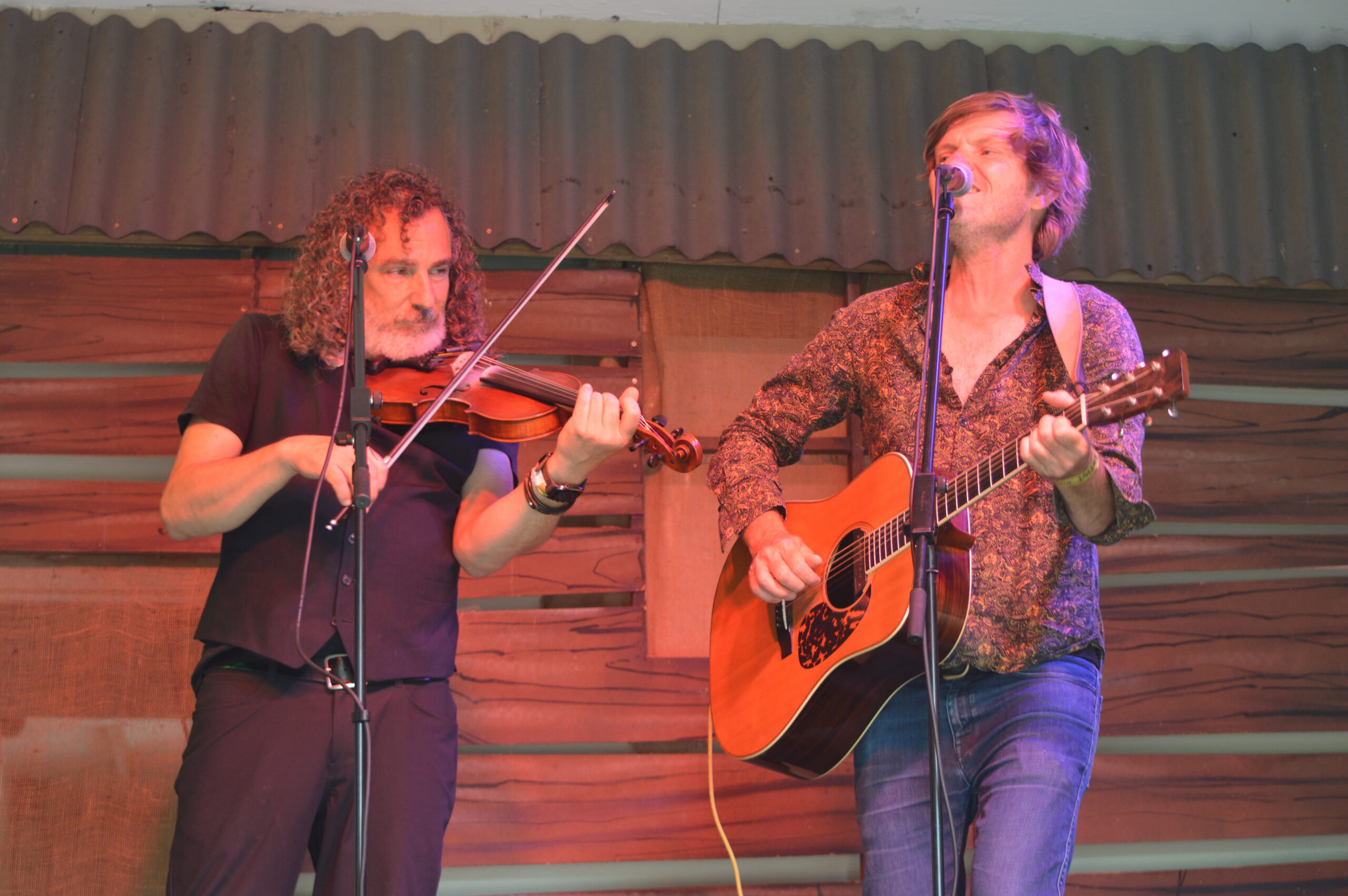
Murphy then returned to his own catalogue with the reggae-inflected When The Lava Does Flow, exploring every conceivable sound from the violin through plucked rhythms, bowed melodies and looping textures while dancers gradually appeared in front of the stage, enthusiastically encouraged by Smithy, the Moonshine Bar’s ever-enthusiastic compère. A track from Murphy’s latest album, Clean Break, demonstrated just how inventive his songwriting has become. Ethereal loops of sustained violin slowly accumulated before thumb-plucked rhythmic figures transformed the piece into something hypnotic and unexpectedly joyful. The pace lifted further with Hard Bargain, before Murphy’s Edgar Allen Poe combined sweet, soaring melodic lines with increasingly intricate rhythmic loops. Throughout the set it became abundantly clear that Murphy deserves recognition not simply as the musician who appears alongside everyone else, but as one of the festival’s most distinctive artists in his own right. The afternoon then evolved into precisely the sort of collaborative celebration that Maverick does better than anywhere else. Jerry Hannan joined Murphy for Society, his celebrated song recorded with Eddie Vedder for Into The Wild. Murphy’s violin gently wrapped itself around Hannan’s vocal before Hannan picked up his square-neck dobro, producing beautifully resonant accompaniment.
They followed it with The Good Life, Hannan recounting stories of abandoning a successful car wash business because music simply mattered more. Murphy responded by thanking his old friend for thirty years of adventures, adding with perfect comic timing that he was grateful for all the nights he could actually remember. The audience laughed knowingly. Finally, A.D. Scruffs climbed onto the increasingly crowded Moonshine stage for spirited versions of I’ve Been All Around This World and Harvest Moon, Murphy’s violin weaving effortlessly through dobro, double bass, acoustic guitars and harmonies.
As the final notes drifted across Easton Farm Park, Murphy declared that the Moonshine Bar was officially, “…the coolest place in the universe.” It was difficult to argue. Walking back across the festival site one final time, it struck me that Maverick’s greatest headline act has never really been any individual performer. It is the festival itself: the conversations between strangers who quickly become friends, musicians wandering freely through the audience before jumping on one another’s stages, songs celebrating kindness, solidarity and ordinary lives, and a community that grows stronger every July.
Throughout the weekend, there were recurring themes in the songs themselves: kindness, belonging, social justice, remembering forgotten lives, looking after one another and finding joy even in difficult times. Holly Carter sang about people who deserved to be remembered. Leroy Stagger encouraged us to become active citizens. Jerry Hannan reminded us of friendship. Chris Murphy spent the entire weekend connecting musicians, audiences and songs, becoming, once again, the festival’s beating heart. Every festival has its own identity. Maverick’s identity is community. For one glorious weekend each summer, Easton Farm Park becomes far more than a collection of stages. It becomes a village built around music, generosity and friendship. Music starts the conversations. Community keeps them going. Every year, I leave already looking forward to returning because, after all these years, Maverick doesn’t simply feel like another festival. It feels like coming home.



You must have spent as long writing this massive review as you did at the festival! Super piece and captures the special Maverick atmosphere really well.
Indeed! There is great pleasure in remembering and writing about such a fantastic weekend! Always excellent and I love trying to capture that special spirit.
Chris Murphy is everywhere. An outstanding talent. Great review 🍻
I really appreciate the kinds words Andrew! You’ve managed to see an impressive amount of acts across the weekend and really capture the magic of Maverick.
Two notable omissions: Laurence Kingston Band and Dom Glynn and his Sunday Best. Both their Saturday and Sunday sets were terrific