
At the remove of two hundred years, it is very hard, if not impossible, to fully comprehend the impact that the expansion of railroads throughout the world had in the 19th and early 20th Centuries. The impact was equivalent to the rise of the internet in our own time, and had an impact not only on economies but also on the views and make-up of society, and consequently it influenced politics as well. The United States benefited immensely from the coming of the railroad as it helped the expansion that led to the United States we have today, and the railroads maintained a cultural significance into the 20th Century as the Mississippi Delta continued to be developed, and the desperate need for people to find work saw the increase in hoboing across the country as the Great Depression started to bit. This period of American history also coincided with the rise of the record industry and radio, which ensured a greater sharing of the various geographically based American musical cultures that existed at the time.
The railroads came to represent the hard times and also hope for the future in the American South across both black and white audiences, and these emotions and sentiments were embodied in the songs and performances heard on 78s, jukeboxes, and the radio. The American Delta had been the biggest supplier of cotton to the world pre-American Civil War, and great fortunes had been made. However, there was little understanding of the need for crop rotation, and after the Civil War, it became clear that more virgin land was required, which necessitated whole swaths of forest to be cleared. This provided an opportunity for both newly freed slaves and white workers to find employment. The main system of cotton production was the sharecropping system, which meant that black and poor white farmers were able to have a subsistence lifestyle but no spare income to invest in their farms. While sharecropping ensured that profit and land ownership remained with the powerful landowners, the working conditions were highly reminiscent of those of pre-Civil War slavery. The Great Migration began in the early 20th Century when black and white southern workers were encouraged to seek a better life in the Northern and Midwestern cities like Chicago, New York, St Louis and Memphis. The flatness of the delta made it ideal land to build railroads on, and they moved populations and produce around. It was the railroads that took Southern workers with their culture and experiences to the North during the Great Migration.
The population of the Mississippi Delta was split racially, with a third white and two-thirds black. This meant that despite the racial tensions, there was a lot of shared culture between the black population and the white workers. Railroads and trains were such a part of their lives that it isn’t surprising that they are featured in the blues, country, folk and jazz songs of the day. Songs like Rock Island Line, Wabash Cannonball, Freight Train, Midnight Special, Orange Blossom Special, and Floating Bridge all celebrate railroads and trains. Given the importance of railroads to many aspects of southern life, it is little wonder that the men who drove the trains were seen as something akin to today’s rock stars. Casey Jones was just one such personality embodied in song. One of the first recording stars was Jimmie Rodgers, and he styled himself as the Singing Brakeman and often appeared on film in railroad garb. Since he became one of the founding fathers of country music, the link between railroads and country music was there at the start.
Once these songs entered the folk tradition, the folk revival ensured they were preserved for future generations. Contemporary songwriters also used railroad and train symbolism to suggest a sense of loss, freedom, or a sense of the past. As with all lists, this list is essentially subjective, so if you don’t agree with any of the views or you think essential recordings are missing, please use the comment feature to share your views.
Number 10: Sid Selvidge Hobo Bill (2003)
In the iconography of America, there is not much to beat the hobo and his rides on the railroad, which embodied the same sense of freedom and searching that fostered the Frontier Spirit. This is the same spirit that Woody Guthrie and Jack Kerouac locked into. Lots of people think that a hobo is simply a more romantic term for a tramp, but this is not the case, as hobos were itinerant workers who worked a lot on the actual railroads, and had their own culture and social rules. The Great Depression, which started in 1929, meant that more people were forced to ride the rails in a desperate attempt to find work, and this probably helped blur the lines between hobos and tramps in the eyes of settled populations. Waldo O’Neal wrote Hobo Bill (also known as Hobo Bill’s Last Ride) specifically for Jimmie Rodgers, who recorded it in 1929. The song describes the death of Hobo Bill in the winter as he rides a train. The song plays on the listener’s heartstrings as it brings sadness and describes his courage and hopefulness to the last. Memphis legend, and member of Mudboy and Neutrons with Jim Dickinson, Sid Selvidge plays it straight on his version of Hobo Bill, bringing a dose of Nashville to his Memphis blues on his 2003 album, A Little Bit Of Rain.
Number 9: David Grisman Bluegrass Experience Engine 143 (2006)
The early railroads, while seen as exciting by the general public, also came with a sense of danger. This sense of danger is best exemplified by story songs about train wrecks. One of the most popular songs of the early 20th Century was Engine 143, which was based on the wreck of the Chesapeake and Ohio Railway’s Fast Flying Virginian, which crashed in 1890 in West Virginia. The only fatality was the driver, George Alley, who was killed when the train overturned. The song was recorded by various artists in various versions until it was recorded and copyrighted, in its definitive version, by the Carter Family. While Engine 143 celebrated real events, the lyrics didn’t include many correct historical details, but the song did celebrate duty, honour and the challenges faced by railroad workers. The song subsequently entered the folk tradition and was covered by many artists. David Grisman is probably best known for his newgrass Dawg Music and his work with the Grateful Dead and Jerry Garcia. While he has recorded traditional bluegrass at various times in his career alongside his more signature stuff, the David Grisman Bluegrass Experience were a real working band that played traditional bluegrass and songs from the bluegrass tradition and earlier times. David Grisman may be the band’s leader, but he lets every musician shine in a truly collaborative way. Their version of Engine 143 is played straight with no sense of irony concerning the obviously sentimental lyrics. This is not a parody along the lines of Dave Van Ronk’s Georgie on the IRT (Parody on ‘Engine 143), but a heartfelt celebration of past times.
Number 8: Taj Mahal Freight Train (1977)
Freight Train was a signature song of the American Folk Revival, and it also helped boost the UK’s skiffle boom in the 1950s when it was covered by the Chas McDevitt Skiffle Group, reaching number five on the UK singles chart in 1957. The Quarrymen, with a certain John Lennon on lead vocals, were only one of the many skiffle groups that had it in their repertoire. The song was written in the early 20th Century by a teenage Elizabeth Cotton, who was inspired by the trains she could hear from her childhood home. As well as writing songs and rags, she developed her own style of guitar playing. Any hint of a musical career ceased when she got married. Her career took off when she was in her 60s, when, through happenstance, she was employed by the Seeger family as a domestic. Mike Seeger helped get her a recording contract, and Peggy Seeger introduced Freight Train to local musicians when she moved to the UK. Elizabeth Cotton remained a working musician into her 80s and became something of a standard-bearer for authentic music. Taj Mahal made his reputation as a blues musician working with guitarists like Ry Cooder and Jesse Ed Davis, but he also brought world music influences to his recordings. He covered Freight Train on 1977’s Music Fuh Ya (Musica Para Tu), and his version brings a distinct Caribbean feel to the song with the use of steel drums.
Number 7: Gillian Welch Leaving Train (1998)
Gillian Welch and Dave Rawlings have been able to keep the musical past alive while at the same time making it relevant for the present. In 1998, Welch’s career was building nicely, her debut album had generated positive reviews, and her songs were being recorded by other roots artists. The soundtrack to Robert Redford’s The Horse Whisperer featured what was then called alt-country with artists like Emmylou Harris, Lucinda Williams, Steve Earle, Allison Moore, Dwight Yoakam, and Iris Dement. Gillian Welch fit right into this company with an acoustic song written with Dave Rawlings and produced by T Bone Burnett, Leaving Train. The lyrics are about the breakdown of a relationship, but there is no bitterness, only a sense of despondency. The use of a train to emphasise the finality of the breakdown and the sadness invoked by the music suggests Welch and Rawlings had been influenced in part by Robert Johnson’s Love In Vain recorded in 1937.
Number 6: Leon Russell & Willie Nelson Wabash Cannonball (1984)
Wabash Cannonball was another song that was introduced to the UK skiffle scene by Lonnie Donegan in 1956. At the time, it had only been twenty years since Roy Acuff’s version, with appropriate train effects, had sold over ten million copies worldwide, but the song had a much older history. While the Carter Family released the first recorded version in 1929, Acuff had based his version on earlier copyrighted songs by J. A. Roff and William Kindt. What may be surprising is that Wabash Cannonball is not based on any historical facts or train, but rather it came from the hobo community in the late 19th Century and references possibly a death train that transported dead hobos’ souls to the afterlife. The song manages to capture the excitement that people experienced when the first trains traversed America, and has become ubiquitous across country, bluegrass, and blues traditions. The friendship between Leon Russell and Willie Nelson surprised a lot of people in the early‘ 70s when country music and rock music audiences were very different and antagonistic to each other. While Russell and Nelson seemed very different, they actually had similar upbringings in Oklahoma and Texas. Nelson was looking for a new sound away from the countrypolitan soundtrack that was coming out of Nashville, and Leon Russell appeared at Nelson’s 4th of July Picnic in 1974, which helped the rock fans take notice of Nelson. Russell had recorded Hank Wilson’s Back Vol. I in Nashville in 1973, and they recorded their version of Wabash Cannonball around this time, but it was first released on Russell’s Hank Wilson Vol II in 1982.
Number 5: Steve Goodman City of New Orleans (1971)
Chicago had a vibrant folk scene following the Folk Revival. Steve Goodman was a Chicago native who dropped out of college to play music on the circuit, where he met a young John Prine. The pair became friends with Goodman becoming something of a mentor to Prine, and the pair wrote songs together. Kris Kristofferson introduced Goodman to Paul Anka, which led to him getting a recording contract with Buddha Records. Goodman also persuaded Kristofferson to go to a John Prine concert, which resulted in Prine getting a contract with Atlantic Records. Steve Goodman recorded numerous critically acclaimed albums before his untimely death at 36 in 1984 from leukaemia, but, unfortunately, his songs were better known by covers by other artists than his own recordings. After he got married in 1970, he made a train journey from Chicago to Southern Illinois on a train called the City of New Orleans, which went as far as New Orleans, with his wife to visit her grandmother. He made some notes during the journey on what he saw out of the windows and activities on the train, and when he heard that the route was being cancelled due to falling demand, he reworked what were now lyrics to add support for the route. The song highlighted the trend of many American train routes being closed in the early ‘70s and helped galvanise protests, however, it was Arlo Guthrie’s version of the song that proved to be a hit, not Goodman’s own. Goodman had pitched the song to Arlo Guthrie over a beer in Chicago. It is certainly Goodman’s most popular song and, after Willie Nelson included it as the title song of his 1984 album, Steve Goodman was awarded a posthumous Grammy for Best Country Song in 1985.
Number 4: Bob Dylan Broke Down Engine (1993)
The 1980s weren’t the best time for Bob Dylan, who seemed to lose confidence in his song selection on his albums, as evidenced by records covering the period in The Bootleg Series, and his various experiments with new, more contemporary sounds didn’t always work. It was clear he was looking for some form of consistency and inspiration, his album sales had fallen after Slow Train Coming, as had his standing with critics. In 1987, Dylan undertook a stadium tour with the Grateful Dead, who played their own sets and backed Dylan on his. The tour was captured on the live album, Dylan & the Dead, which was savaged by the critics of the day and despite strong early sales was not a good seller. However, the tour with his friend Jerry Garcia and the Grateful Dead did start Dylan on the road to rediscovering his sense of musical direction. Dylan respected Garcia’s instrumental skills and his determination to follow his own eclectic muse, he also recognised Garcia’s knowledge of American music across genres. Their backgrounds were not dissimilar in that they were both influenced by the folk revival and both expanded the music of the ‘60s. Importantly, they shared the burden of unrealistic fan expectations, so they could empathise with each other. Garcia had managed to reignite Dylan’s love of American traditional folk music, which was given full rein on Good As I Been To You in 1992 and 1993’s World Gone Wrong. Both albums saw Dylan go back to recording solo acoustic cover versions of traditional songs. It was a case of looking back to go forward with the critical and commercial success of Time Out of Mind in 1997. World Gone Wrong featured more blues songs and included heartfelt liner notes on each song by Dylan himself. Dylan explains that Broke Down Engine is a masterpiece of songwriting by Blind Willie McTell. He uses the engine and the railroad as a metaphor of life, covering personal emotions to economic and political issues. Dylan may have looked back to the early days of his career to refresh his own roots and artistic direction, but he had matured as a performer to take on the full mature mantle of the songs. The young Dylan could never have recorded anything as real as this version of a classic song.
Number 3: Tom Waits Downtown Train (1985)
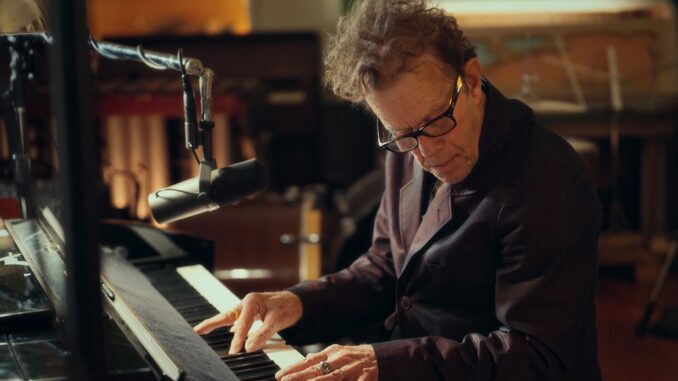
In the early ‘80s, Tom Waits changed his life and his sound. He had married songwriter, musician, record producer and artist Kathleen Brennan, who encouraged him to take more control over his sound. This reappraisal coincided with his move to Island Records, which agreed to release Swordfishtrombones in 1983, which saw Waits move away from his piano-based songs to something more percussive, abstract and avant-garde under his own production. Waits and Brennan had moved to New York by the time he recorded Rain Dogs in 1985, which was viewed as the second album of a trilogy that included Frank’s Wild Years. The album was really a commentary on New York, and Waits achieved a very organic sound using a range of instruments that managed to look back to pre-rock & roll sounds while sounding new and fresh. One of Tom Waits’ most popular songs is Downtown Train, thanks to a very successful cover by Rod Stewart. Waits uses the downtown trains as a metaphor for a city that is continually busy. He brings in unrequited love and the sense of alienation in a big city. The song updates the train metaphor used so often in American song and literature for modern times.
Number 2: Grateful Dead Casey Jones (1970)
Grateful Dead members Jerry Garcia, Bob Weir, and Ron “Pigpen” McKernan had played together in Mother McCree’s Uptown Jug Band, a local Bay Area jug band formed at the height of the ‘60s jug band craze, and folk songs always played an important part of the Grateful Dead’s repertoire. The Grateful Dead were well aware of, and even occasionally included in their live performances, the traditional song The Ballad of Casey Jones. Casey Jones was a real-life engineer who had a reputation for punctuality and speed, who unfortunately died in the crash that derailed his train because another train was on the same track in 1900. His reputation was cemented when it became known he had instructed his fireman to leap from the train, and he stayed with the engine to reduce its speed, which meant he was the only fatality. Fast forward to 1970, and the Grateful Dead were working on songs that would become Workingman’s Dead. The songs looked back to their jug band days rather than their then signature psychedelic sound. The songs may have invoked America’s past, but it was a past that probably never existed. Casey Jones is a case in point. Lyricist Robert Hunter has said that the lyric “Driving that train, high on cocaine, Casey Jones, you’d better watch your speed” had just popped into his head, and it was only later that he thought of completing a the lyric. Driving a train at high speed was considered potentially dangerous, something it shared with using cocaine. When Jerry Garcia crafted the tune to fit the lyrics, he did so in a way that echoed the effects of cocaine on the user. Garcia said about the song and cocaine, “A little bit evil. And hard-edged. And also that sing-songy thing, because that’s what it is, a sing-songy thing, a little melody that gets in your head.” The song became one of the Grateful Dead’s most popular songs and was performed live more than 300 times. It is a song where they managed to combine their own mythology with that of America to create something new, mixing Casey Jones with 19th and early 20th Century recreational cocaine use with their own drug mythology, enhanced by the double entendre use of the word “speed”.
Number 1: Seatrain Orange Blossom Special (1970)
What is the definitive train song? It is probably Orange Blossom Special, which was written in 1938 and first recorded in 1939, popularised by bluegrass originator Bill Monroe, and had become one of the most popular tunes at bluegrass festivals by the 1950s. The song was written by Florida musician Ervin T. Rouse about a luxury train called the Orange Blossom Special that ran from New York to Miami, Florida. Rouse based the song on an old fiddle tune, and the reason for its success is that it allows musicians to imitate the sound of the train itself. The song has been covered countless times, and Johnny Cash’s version in 1965 is significant for two reasons. First, Cash featured a harmonica instead of a fiddle, and secondly, with the help of his mother-in-law, “Mother” Maybelle Carter, he ensured that Rouse was recognised as the writer of the song, as others had also claimed authorship over the years. The song was featured on Will The Circle Be Unbroken by the Nitty Gritty Dirt Band with Vassar Clements on fiddle, and on the live Flying Burrito Brothers album, Last of the Red Hot Burritos, which featured ex-Dillard Byron Berline on fiddle. However, Seatrain’s version with fiddler extraordinaire Richard Greene is probably the most energetic and out-there version. Seatrain were a band that achieved some commercial success mixing rock, psychedelia, country and bluegrass. They were formed from the remnants of the Blues Project, though they had various lineups in their short four-year history, and by their second album, Seatrain, ex-Bluegrass Boy Peter Rowan had joined fellow ex-Bluegrass Boy Richard Greene in the band. The album is also the first rock album George Martin produced after the Beatles. Rowan and Greene recorded one more album with the band before moving on to Muleskinner with Clarence White.


Robert Earl Keen’s Lynnville Train is an excellent song (as is most of everything he writes).
Here’s an excellent cove by by Wade Bowen, recorded at the Steamboat Springs music fest. The double album Undone recorded at the fest is rather good too.
It is certainly a significant inspiration for a lot of great songs, Steve.
What an interesting idea Martin. You must have had some fun researching the intro and the songs. Just watched Train Dreams a few weeks ago. Film okay… but what a book. For what it is worth, here’s what came to mind reading your feature.
https://m.youtube.com/watch?v=WcKmoJ-d2PA
Thanks.
Thanks, Andy. Yes, I will have to admit to having fun penning the feature. The clip shows that the influence is still being felt by today’s bands as well. It must be a very strong echo.
Here’s another one with great visuals in the video: https://youtu.be/SSnY7FiNOOA
I’d forgotten about Blackfoot, Alison. There are not many bands who get one of their grandfathers to write them a hit song. Shorty Medlocke was a bluegrass/country guitarist and banjo player I believe. Frontman Rickey Medlocke is in the Native American Music Hall of Fame I understand. As you say, a fun video.
Great idea Martin and excellent choices. Was only listening to David Rawlings ‘Monkey And The Engineer’ last night. Also Welch and Rawlings ‘Empty Train Load Of Sky’ from “Woodland”. So many possibilities, deserves a second 10 at some point. Josh Ritter ‘Harrisburg’ needs to be in there 😉
There are certainly more than enough great songs for a second bite at the cherry, Andy. I’m also got a forlorn hope Welch and Rawlings will bring their Grateful Dead celebration to the UK.
Terrific topic.
Billy Strings performed a whole set of ‘Train’ songs at Yuengling Center, Tampa, FL April 13th 2024. The set list was:
Slow Train
Old Train
Freight Train
Ridin’ That Midnight Train
Greenville Trestle High
Streamlined Cannonball
Last Train From Poor Valley
I’d Like To Be A Train
The Baggage Coach Ahead
Bringing In The Georgia Mail
Train, Train
Back on the Train
The closer, originally by Phish, was for the ages.
Thanks, Jeremy. Not only great, but pretty bottomless as well.