
An old-styled folk protest album from two past masters of the genre which skewers the current administration with acerbic lyrics.
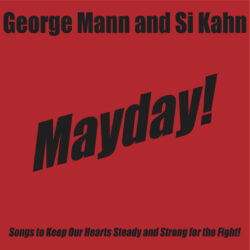 This is George Mann and Si Kahn’s second album working together following the release of Labor Day: A Tribute To Hardworking People Everywhere in 2024. That album, released to celebrate Kahn’s 80th birthday, was rightly celebrated within the Civil Rights and the music fraternities. AUK said: “It’s a great collection, mixing acoustic and electric folk, the strident and the occasionally more sentimental, but throughout, Labour Day is inspired and inspiring and features songs that are sadly not dated… Obviously album of the month.“
This latest album, Mayday!, is subtitled Songs To Keep Our Hearts Steady And Strong For The Fight and reflects on life in a darker, less democratic country. The album features 9 Kahn originals, two of which were recorded last century, 3 new songs jointly written by Mann and Kahn, and a track where Kahn shares a writing credit with Beethoven. Mann has clearly been a key facilitator in making this album to celebrate Kahn and takes the lion’s share of the vocals, with Kahn taking the lead on four tracks and the remaining track covered by two guests. The three jointly written tracks are stunning and politically bang up to date lyrically.
The first, Anyone Can Be President, leads the attack on the current incumbent of the White House and they don’t mince their words. The first verse leads with: “Come choose your partner/ for the Presidential dance/ Even a convicted felon/ Still has an equal chance“. And the chorus follows with: “Anyone can be President/ Ring that Liberty Bell/ When you see what we’ve got now/ Anyone would do as well.” This is set against a folk-rock backing of acoustic guitars, mellow horns, and short, sharp electric solos. Mann’s voice is world-weary and affecting rather than outright scathing, and he lets the lyrics take the lead on the vitriol.
The Heart Of The Country takes this further with a direct attack on the events in Minneapolis: “They tried to take the city with a wartime show of force/ Though the people knew the ICE goons were the ones breaking the laws/ but this gang of thugs and bullies would not be denied/ And two good people died“. The song is bitter but raises a hopeful tone that this might be the start of the American people recognising that who they voted in is not looking after their interests. The music is an upbeat folk-country shuffle which musically reflects on the hope that this tragedy will lead to action. The third of these new tracks, You Can’t Count On The Numbers, identifies the gap between how “the numbers” are interpreted as good by those in power, but the lived experience of most people is not seeing that or buying it.
Whilst I suspect the current administration could generate even more songs of this type, Kahn leavens the anger with a no less effective Ask The Penguin, Ask The Seal. Using Beethoven’s Ode to Joy for the music, played on a strident, rallying piano. Kahn pens lyrics that refer to the decision to levy a 10% tariff on an uninhabited South Pacific island. The tone is light and witty but nonetheless biting. Mann and Kahn hand the lead vocals to Terry Leonino and Greg Artzner, who jointly lead in a Salvation Army-styled hymnal.
Whilst the majority of this album is political in nature, At The Crossroads chooses to take a different tack. It takes the old myth of going to the crossroads and selling your soul for musical genius and fame. However, it tells of the itinerant musician who goes to the crossroads and cannot find a buyer for his soul. It reflects on growing old without achieving fame or riches and references Robert Johnson over a sparse acoustic folk blues backing.
The final track is a rallying call to pull together and raise voices of protest together. One Voice is left to Kahn to sing, in a voice redolent of age and experience. The backing is a full band which slowly builds in power and passion, with horns kicking in over final repeat choruses.
The album is an assured and effective folk album, enjoyable on that level alone. It brings together two experienced writers and performers who complement each other and clearly enjoy the experience. The lyrics, though, are incredibly effective and, like the best of the folk protest music, deserve to be taken up and shared widely across America, and perhaps be a part of changing people’s views.


