

Anyone who’s caught Kevin Connolly’s live act knows he’s rarely at a loss for words. Speaking his mind like a street-corner preacher, the folk bard uses the stage as a pulpit for his witty wordcraft, both in song and between-song banter, all without coming off as a know-it-all. This chronicler at the fretboard of life writes beyond any sense of restraint or convention, and calls upon his uncanny ability to craft powerful verse. Connolly can describe anything with more imagination and passion than most songwriters. But primarily, he’ll amaze you with his ability to entertain.
On his latest release, “No Where,” he wastes no time in establishing the album’s tone, offering up the lyrical double negative in the very first chorus. Nobody says too much anymore with nowhere to go, he states, guiding listeners into a collection of literate gems that thematically pick up where the rest of his discography left off, with an engaging critique of both life and the people in his world.
He portrays in “No Where” perhaps a self-consciously serious tone. Recorded in one setting, mostly live, the album is an unedited snapshot of Connolly’s headspace, a preoccupation with longing and doubt blanketing the record. As a result, the songs feel fresh and honest, weaving strong material with a strong guitar-and-voice folk vibe.
The middle ground is Connolly’s comfort zone, though his lyrics suggest anything but solace. Hummable Prine-like tunes abound, namely ‘Not My Business,’ which is reminiscent of the melancholy title track from his “Invisible” album a few years back. Down Canoe Tree Street, we’d glide in your grandma’s old Dodge Dart. Turn the headlights off, the radio up, and then just sail beneath the stars, it was stupid, it was dangerous, but under pine trees we would glide, into another world where no one else could hide… invisible.
Proving he can turn a phrase with the best songwriters, Connolly has graced the new album’s 13 songs with vivid character studies, capturing both intimate moments and the unpredictability of the world today. His prose is usually laced with a sigh behind a laugh, as in ‘A Man and His Son.’ Some get it right, some get it wrong, for some it’s so easy, some never know, what made him this way, why we do what we do, A man and his son. (It ain’t nothing new).
He is twelve albums deep into a career, singing songs that often reflect his New England upbringing on the Irish Riviera. It’s a region of the US that is particularly hard to define. But that confusion usually makes for pretty good art, and “No Where” is certainly no exception. Let’s hope Connolly doesn’t figure it all out anytime soon.
Howya doin’, Kevin Connolly? That’s my best Boston accent.
Pretty good. I don’t know about your accent.
You wrote that song about Evel Knievel with Leigh Montville, who was the best sports columnist – general columnist, too – when he was with the Boston Globe.
I’ve known Leigh for 20 years. He came to a gig when I opened for James McMurtry years ago. It was at Johnny D’s in Boston, and I was in the middle of reading his book on Ted Williams.
For our UK readers, Ted Williams or Teddy Ballgame or The Splendid Splinter, was the greatest hitter in baseball history.
No argument there. So, I was reading this book and I’ve got to slow down because this is a really fast read. I really love this book. I did the gig, and at the merch table afterwards get the email list out, and he’s saying I want to sign your email list. And then he says he knows a friend of mine, a guy I went to school with. Who’s that? Ric Bucher. How do you know Ric, I ask? Ric is a sportswriter, too, covered NBA for ESPN forever. He said, I’m a sportswriter. I say, you are not Leigh Montville, are you? He said, yeah, and I said you son of a bitch. I’m in the middle of reading your book. He was going through his third divorce or whatever, so I said we should hang out and drink beer and go see bands, and that’s kind of what we’ve been doing. He was at my show at Passim a couple weeks ago. I go golfing with him every year.
Alright, I’m jealous. Talking to musicians is okay, but Leigh Montville. Come on.
Well, come up to Massachusetts. I’ll introduce you and we’ll hang out. You two would get along, being a sportswriter yourself. He is a music nut, loves roots stuff, americana.
(This goes on for another 10 or 15 minutes, talking about sports and people both of us know. Sports led to talking about Boston area venues.)
We better start talking about you and your music. You come from Marshfield, Mass, going towards Cape Cod.
We call it the Irish Riviera between Boston and the Cape. Back in the ‘70s, it was for families that didn’t quite have the money to buy a house on the Cape. It’s a little more gentrified now, but it was mostly construction guys, a lot of fishermen, light blue collar, some professionals. Very few families commuted into Boston.
My parents encouraged me and my brother and sister to play music. All of us took lessons willingly. My dad grew up in Dorchester in a very complicated family situation, and so he never had access to music education. He was a woodworker and would make instruments and learn one song on every instrument. He made a guitar, a ukulele, a mandolin. My mom was very musical. They’re both still alive. My mom sings and plays piano as kind of a hobbyist. She sang with her Sweet Adelines into her eighties.
When did you pick up the guitar?
We were in the Peace Corps in 1969. Both my parents were school teachers. We were the first family to go to the Eastern Caribbean, and at that time, the draft was happening for Vietnam. As I learned later, all of the guys who were in the Peace Corps with us, who were about 15 to 18 years younger than my parents, they all avoided the draft.
The Peace Corps volunteers were from that ‘60s era of folk music, sitting around and singing and playing guitars. These people became like a generational bridge. I remember being really sick for about a two-to-three-week period, and one of the volunteers, a guy named Charlie Cademartori, who was this real deal guy from Hoboken (New Jersey), brought his cassette player over. He had Buffalo Springfield, Simon & Garfunkel, Peter, Paul and Mary, stuff like that. I was so sick. All I could do is sit in bed and listen to that music nonstop. I just had enough strength to basically get up and change the cassette, and that went right into my head and changed my life.
We were in Barbados. You could pick up beer cans or Coke bottles off the street and make 5 cents turning them in. I got enough together to buy a Japanese classical guitar from a place called Manny’s Showcase in downtown Bridgetown, Barbados. Took the bus down there myself. There was no case for it, just a cardboard box. It cost 25 bucks. Then I saved up another 25 bucks picking up bottles and bought a surfboard. I don’t have the surfboard anymore, but those two things were major markers in my life because I still surf and I still play guitar, and I still have that $25 guitar.
My parents were teaching, and we lived in a very poor neighborhood on a hundred dollars Barbadian a month. Instead of a car, we had a family bicycle. A lot of the kids were malnourished. I had never seen that level of poverty before, and there was crime. We were the only white family for a good square mile and just got used to never seeing white people. Occasionally, there would be catcalls from the rum shop, and then my dad would go straighten that out. But it was an intense period. Still, we were allowed to run around the whole island. We’d jump on buses and we’d go up to St. Lucie, which is at the very northern tip, and we’d go down into the city and get snow cones. We’d go swimming at the beaches and go on sleepovers and get up in the middle of the night and go surfing on Styrofoam boards off coral reefs.
The island had just got their independence about five years before we got there, and they were on good terms with Britain. In fact, Prince Charles came to the island. He came to my dad’s classroom, and I got to meet him, which was really funny because the Secret Service guy showed up and said, you have to bow to him. My dad is like Boston Irish and said I’m not fucking bowing to anybody or calling them your Royal Highness. When he came, my dad had a fucking green shirt on and a green tie with shamrocks, and he went right across the classroom and held out his hand and said, Hi, Prince Charles, I’m Jim Connolly from Boston. I was sitting in my dad’s chair, completely petrified, and I called him Your Royal Highness. I stood up and saluted.
At least he didn’t say “Tiocfaidh ár lá,” our day will come.
Well, he wasn’t with the IRA, but our community in Marshfield was mostly Irish Americans. What was happening in the early ‘70s in Ireland, we knew about it. It was horrible.
How did you become a singer/songwriter? Were you a natural?
No, I’m not a great guitar player. The volunteers would show me chords and stuff, and I just kept playing. I took lessons for a couple years from a guy who lived in the neighborhood, and I just kind of gravitated towards this stuff that I liked from a musical standpoint. But mostly, how I learned songwriting and music was just imitating other songwriters. It was John Prine. I didn’t really become a Dylan fan until I was in my late twenties. As soon as I heard Prine, it was like getting hit by a freight train. It was really a powerful thing, so I just imitated him, learned all his songs, and I would sing like him. That was how songwriting got inside me. I would do it secretly for a good chunk of my adolescence into my early twenties.
You still have a little Prine lilt to your vocals, a little gravelly, not too Rod Stewart though. One of your new songs – ‘Not My Business’ – has some Prine going on.
I haven’t let myself write like that in a long, long time because I didn’t want to appear to be imitating him. But by the same token, I thought at this point, more than 50 years after starting to play guitar and learning his songs, that it was one of the rules I was going to let go of, however the song comes out. If it’s a simple song with a simple melody and it rhymes in a simple way and it’s slightly ironic, and then he sneaks in images and things that don’t totally make sense, but do from a poetic standpoint, then that’s okay. I just started writing a batch of songs that were in that finger-picking vein, very much sort of unabashed folk approach without trying to hide anything, including my influences.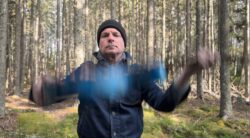
What kind of business is it not?
(reciting) But it’s not my business what you dream. It’s not a chance to shout or scream. If I could, I would change everything, but the bombs are disappearing from the buildings, and that will chase me down and kill me running wildly and my dreams. It’s a song about bad dreams, basically, but it sounds like a John Prine song.
What’s this about you being in a prison band?
When I got to Chicago, I took a job at the Leo Burnett ad agency out of college, and one of the guys worked at a competing agency, J. Walter Thompson. His wife was an assistant DA for Cook County, and she would prosecute a lot of people going to Joliet, the state prison, which is the Blues Brothers’ prison. That’s where Jake and Elwood were busted out of Joliet. She knew the warden, and the warden said that they had a band of prisoners who were kind like honor prisoners. I don’t know.
Did you see the movie called “Sing Sing?” It came out last year and won some awards. Basically, it was about an honor theater group in Rikers Island, and it was all based on true stories. About half the guys who were in the film were actually in Sing Sing in this theater group. The band was called The Essence of Darkness, and it was a nine-person prisoner band and very multi-ethnic. We would go down there on Saturday mornings, be there at 7:30 and stay until two or three in the afternoon. We’d play guitar and were the band leaders, just being their friends. Then we would do gigs at the prison and gigs at other prisons. I did that for two years, every Saturday, hung over sometimes. I’d go down there, and they wouldn’t let us leave. We practiced in a firehouse in the middle of the yard, and if you broke a string, you had to go up to the guardhouse and walk across the yard by yourself in jeans and a t-shirt looking like a convict. You would try to explain what a B-string was, and the guard would bring out the wrong string. They didn’t want the prisoners having extra strings.
That might get dangerous.
I thought I was a tough guy at the time, and I was kind of up for adventure, but in the end, it was like there were no guards, and we didn’t have any trouble. But the guys were in there for a reason. They just happened to be really good prisoners. And they didn’t want to screw that up and get thrown out of the band.
Was the band doing a Blues Brothers thing?
We played a lot of blues. Occasionally, I remember bringing in sheet music for a Stevie Wonder song – ‘I Just Called to Say I Love You’ – which was very unsettling when we would sing it together, and we would look at each other and – you know how it is in prison. One of the guys he was sort of the leader of the band. He had been in for armed robbery. We helped him out a little bit in Chicago. when he got out.
Are you a biographical songwriter or make up the narratives?
Most of the characters are based on other people or made up. They tend to be characters who have gone through some challenge in their life. There’s a song on the record called ‘A Lot Like You,’ and it’s about a guy who loses his wife and just goes downhill, drifting from town to town. And it’s not just every person or every woman that he sees. It’s everything he touches in nature. Every experience he has, he’s sort of haunted and at the same time grasping for something. And you learn in the third verse what happened.
For me, they feel like characters out of a Cormac McCarthy story. Well, that’s not the worst thing in the world, but these characters are people who are looking for something and people who’ve been through something. From my point of view, I think I’m trying to write in a more personal way and not be embarrassed about that. I started out that way, and then I gravitated away from that. It felt more interesting for me to write about other people or made-up other people. It wasn’t that I was embarrassed to share my feelings. It was just that I thought it was more interesting for me to create a character or a situation.
Do you think coming from New England has a particular effect on how your songs come out? I mean, it’s a unique region of the country. They all are, but New England is like none other.
I think more so in the past, when I was writing about my hometown a lot. I was really inspired by Bill Morrissey. He was a friend. He would say that the way that the Texas singer-songwriters write about their nature and about their setting was what he tried to do and what he definitely did with New England. I thought that was interesting. I didn’t want to be quite so literal about it because Bill was very much a New England songwriter. He really did that kind of in spades. Greg Brown was another guy that I did a lot of shows with back then, and he wrote about his town in Iowa. So, between those two guys writing about place, and also, I would say Lucinda Williams naming places that are real, talking about your town and what’s happening was foundational.
One of the songs I just sent you, as kind of a contrast to the other one, is a bluesy, kind of rhythmic thing. It’s called ‘Here Comes the Rain.’ That was inspired by a camping trip that my wife and I did in western Vermont last summer, and then also going down to Florida and seeing the devastation of the floods and marrying that with a story about a guy whose life is out of control and robs a business. But the beginning images of it, seeing the West Coast of Florida getting hit with those two hurricanes last year and the floods in Asheville. You see it on the news; you see the destruction, you go, okay, a couple months later, I’m sure they’ve all rebuilt it by now. And then you see it and go, holy shit, this place is fucked. And these towns in Vermont were fucked. And those towns close to where my dad still lives in Florida were just decimated.
On the news, there was a piece about a guy in western Carolina who watched his house go floating down the river, which had been a brook the day before.
It’s happening everywhere. This feeling to me that nature is out of control is a symbol of something else that’s going on in the world, in terms of this guy’s life is out of control. It’s not even in a biblical sense. I didn’t even think about it once that way, but just seeing the piles of wood and the way that the river went and this sediment buildup and the wreckage of barns and houses, you just go, wow, this is what happens when things really come apart. This is what happens, and you have no control over it. So inadvertent metaphor for either this character’s life or this idea of what goes down when that happens.
Lori McKenna made a terrific album that was all about her hometown of Stoughton, Mass and its town folk. It was called “Massachusetts.” Is one of your albums similarly about Marshfield?
She’s awesome at writing about the same stuff we’re talking about. I haven’t talked to her in a long time, but we did a show together maybe six years ago. I remember I saw her at Newport Folk, and she goes, Kevin, I remember opening for you when you brought your daughter, who was 11 months old, to the gig, and you had on your rider that they provide a babysitter, which they did. “Little Town” is tapping into a lot of that hometown stuff. I mean, to the point where I don’t think I should have said some of the names that I said, but… well, they’re in the song. I can’t get ’em out.
You also have a band called Mule Variations. From what I’ve been told, there is an album on the way.
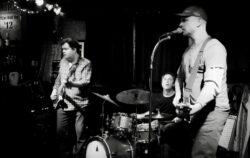
Yeah, it’s called “Alive and Kicking” and is coming out on CD on the Italian record label New Shot Records this September. The band has a residency at a club in Somerville. I started the band because I stopped touring actively at the end of the nineties and became more a local and regional artist, occasionally doing outside gigs, but not that often. It was the Kevin Connolly Band, and basically 90% of it was original. It floated my boat when I was working at my advertising career and raising my kids. But then, after a while, I wanted to separate those things and have a project that is looser from a musical standpoint and also plays songs that I’ve always wanted to translate into the way I hear ’em, which is in a blues-based way, letting people take longer solos. The idea of the band is based on several writers, mainly Tom Waits, but also J.J. Cale, with a little bit of Pop Staples and Van Morrison.
We cover everybody from those guys to Muddy Waters to Steve Earle, so it’s what I call lo-fi swamp. We’re at our best and our happiest when we’re clanking away. John Hammond Jr. made a record called “Wicked Grin” in ‘91. It was all Tom Waits covers, and it sounds like a legitimate blues band, but it’s not a tribute band. Who else is taking the time to take ‘Get Behind the Mule,’ or ‘Hoist That Rag’ or ‘16 shots from a 30 ought six,’ disassemble them and put them back together in your own way? That is what we’ve been doing for the last three to four years. People come and dance, so it’s not so pretentious. A lot of it was I wanted to play bar gigs and not worry about people listening to the words and getting my message.
Wasn’t ‘Bumpy Road’ one of those songs about your hometown?
That was written about where I grew up in Marshfield. At the end of the road, there was an old sandpit that grew over… well, we made the sandpit into a baseball field. That’s where we would go with our Schwinn bikes and set up ramps, and that was kind of our taste of nature. A fair amount of songs actually came out of that. There was a guy who lived in the back called Mr. O’Brien, and I wrote a song called ‘Walking Out in the Woods’ about him, and he was our version of a reclusive guy that you might find in Appalachia.
Would this one have been your ‘Car Wheels on a Gravel Road’ song?
In the sense that it was going back to remembering where you were. Greg Brown has a song like that that’s very reminiscent of Car Wheels, going back to childhood and sings this through a different lens. The trick is recall that stuff but not make it overly sentimental.
You’ve also written songs about family, like ‘Dancing in the Kitchen.’
My wife’s a chef. We got married in ’91, and I wrote the song not long after. She’s been cooking around Boston for 15 years.
And your brother is a musician, too. He plays bass?
He has been out in Santa Barbara (California) for thirty years, though he plays on my records. He’s on the new one, “No Where.” His playing is on the avant-garde side, which can be nice. You’ll hear some crazy brother shit on ‘Here Comes the Rain.’

Has he ever been in your band?
When I left that pop band in the mid-eighties, I didn’t want to be in a band with anybody. I wanted to play my songs. So, I started my own band. My brother was the bass player, and a guy we grew up with, Frank, who had been in punk bands with my brother, joined us. It was before I got married and moved to Italy. So that was a really formative time for us as brothers. In our twenties, we were both driving cabs, just living off of very little. I think I was making seven or eight grand a year from playing music and driving a cab.
Why did you move to Italy? You’re not a jazz player or Elliott Murphy, who went to France from Jersey.
As I said, my wife’s a chef, and at the time she was working for a successful restaurant in Boston. It was really intense. She had cooked in Italy several times and had always wanted to go back and study or work there. We went for a walk one day, and I said, Well, how long do you want to go for? And she goes, I’d love to go for a year. I was teaching at that time, around ‘89, ‘90. I had to try and get a little more respectable. I had taken a job teaching English at a Catholic boys’ school, St. John’s Prep, and I thought, well, I’ll get a teaching job over there. Let’s do that. I wrote letters, got interviews and was hired by a school outside of Rome. She said, So are we going to get married before we go or after we go? I said, you tell me, and she thought before made sense. Okay, we got married in August of ‘91, and a week later, we were on a plane to Italy and lived there for a year. Should have stayed two years. I went back seven or eight years in a row and did tours over there at least once or twice a year.
Let’s talk about a couple more songs from the new album.
I wrote one called ‘On the Run.’ I wanted to write a character song from the point of view of a guy who might’ve been at January 6th. And I wanted to, in a moment of truly trying to understand that perspective, put myself in the shoes of this guy, who is an older white guy, probably very angry at the world, but also angry secretly about other things that went on in his life. I wanted to be fair. I wanted to try to see what the humanity was and what the fear was, and not be overtly critical or judgmental of him, but try and understand his perspective without over-explaining it. So, in the first verse, I’ve been on the left, I’ve been on the right, I’ve been hard at work, I’ve been up all night. I’ve been tuning out, never tuning in. I’ve been hard at work. I’ve been on the run, I’ve been on the lamb, I’ve been on the run, everything in this life. It’s getting harder to see. I’ve been on the run, going down real deep. Finally, by the third verse, he’s on his back porch and feels like someone’s coming to get him. It could be black people, could be liberals, but he’s ready. He’s packing what he needs to get the job done. I guess in that way it is kind of judgmental, but I wanted to write a bleak, dark treatment of what that guy’s world may be and not be afraid of it.
And stay clear of being overtly political?
Yes. Without being political, just saying, there used to be a field, there used to be a factory, and everything’s gone. No one looks like me. What else we got? I got one called ‘Working on a Farm.’ It’s kind of like a John Prine song in that it mentions, I’ve been working on my fastball. I’ve been working on a farm, kind of like I’m trying to get shit straight. I’m trying to understand what’s going on, and it’s a little personal. I wrote it when my wife was in Mexico for a while, and I was missing her. You know, what am I doing with myself? Because when she leaves me alone, I don’t go into a depression, but I go into a different creative mode than when she’s around. And I end up being more productive.
That’s another angle to “when the wife’s away” line.
I never really plan on it being that way. I learned how to write songs, even with kids screaming in the background. That was one of the things, raising kids, I made my peace with. If I have an idea for a song, I’m just going to sit down and pound out at least a good chunk of it while I have the idea, even if the kids are running back and forth or there’s TV on. I have to get the chunk of the idea out before I lose it.
Thinking of inherently New England songs, there is ‘Ice Fishing.’

I love that song. I think that’s one of the best songs I’ve ever written. If you like that song, you might be one of the very few people who have mentioned it to me and said, that’s an interesting song. Where did that come from? I was in a writer’s group for 10 years, and we wrote mostly fiction, but I brought that song in and played it, and they responded to it. We used to go skiing at Sunapee in New Hampshire. When you go up there in February and drive by all these lakes, you see people out ice fishing. I just always wondered, what the hell is that all about?
I can’t imagine why anyone would want to sit out on a frozen lake, but then I don’t have any desire to go regular fishing.
There was a real darkness to it, and then, okay, well, I’m going to write about a girl who dies. It’s going to be about an abduction, and I’m not going to totally spell it out. People are just not comfortable mentioning it, but I’m really proud of that. I think that represents what writers try to do – challenge themselves to put work out there that is not necessarily going to be what people are going to listen to 25 times and go, I love the chorus. I love what he talks about, the girl frozen in the ice. That’s hysterical or deep.
There is the one with the bus station in Arizona, ‘Up on Willoughby.’
We went to a nice wedding out there, and I thought there’s got to be some stories and some people who live in the woods up here that are interesting. So, I wrote that during the wedding, and I originally had the woman who got married as the crazy witch, and my wife says, You fucking have to change the name. Okay, I changed the name, but it was originally Abby Page is the preacher’s daughter. She might get you with her broom, married now with 40 kids, and she lives up in the hills.
What’s the most rewarding aspect of being a creative type?
If you can detach yourself early on from trying to make money at it and figure out what your authentic nature as an artist is, then pursue that and learn how to support that, whether it’s through being an artist full-time or getting another gig. That is the lifelong challenge of being an artist. I finally got to the point where I couldn’t make enough money for a mortgage and have enough money to put my kids through college and have enough money to retire on. I just said, here’s the deal. I’m going to use another part of my brain to pursue this other thing and make money, but I’m also going to be an artist while I’m doing that. They just won’t know it because I’m going to take the same principles and apply them, and then I’m going to continue to be an artist in my free time, which is what I’m making this investment for, so that I can retire early, I can get out while I still have ideas. Ultimately, everything is a means to an end.
How has that been working out for you?
It’s working out great. I’m happy. I’m never going to stop. I honestly couldn’t give two shits about what anyone thinks. I mean, I do actually give a shit. I like when people like my music, but I’ve never been saddled with trying to be commercial or trying to be successful. I’ve only been competitive with myself in trying to do something that felt like me and not like I was imitating other people.
What songs do people really want to hear at your gigs?
Sentimental songs. Especially at Passim, I played a song there that I hadn’t played in years called ‘Icicle Rain,’ which is also a relationship song about my wife when I was driving a cab and she was cooking. If you’re doing a show, people have to be entertained. They can’t be taken on a really boring, self-involved artistic tour of your deepest and most sensitive inner thoughts and feelings. I mean, who cares? But from a crowd pleaser standpoint, funny stuff they really like. I think that it’s my responsibility to surprise and challenge people. I realized ‘Ice Fishing’ was a little bit heavy-handed in a live setting. Try and take the people-pleasing part out of it while still understanding if someone’s going to pay money that they’d like to be entertained.
What do you expect people who like your music will think of this new album?
If they’ve heard my stuff, then they think it’s totally different, which I think it is a real departure from making band records and or records that have more production. Essentially, there’s guitar and voice based on maybe five songs and a little bit of electric guitar texture on four or five songs. We recorded it all in one day with no headphones in a studio, and did one to two takes of all the songs. I didn’t know if I could do it. I thought maybe I’ll get through half the songs. But at the end of the four hours, basically, without taking a break, I said, I think we’re done.
I hope that they hear a simple record, and the songs are short. As you get older, you go, are you kidding me? Four minutes, four and a half minutes. Why do you have a fourth verse? Do you need a bridge? You don’t need a bridge. You need two verses and two choruses, and then shut up. That’s the way I’m going to write for the rest of my life.

