

John Carter Cash has enjoyed a remarkable career in the music industry. Winning multiple GRAMMY awards for his work as a producer, he has collaborated with a succession of iconic artists, from John Prine to Emmylou Harris, Kris Kristofferson to Elvis Costello, Chris Cornell to Loretta Lynn, and many, many more household names. He is also an inventive songwriter, whose songs range from sombre, heartfelt ballads to the island music of his latest release. Cash’s new album, “Pineapple John”, was released the day after AUK’s Andrew Frolish caught up with him to discuss life, family, legacy and new music. The new record is full of life, vitality and sunshine, a character-driven musical journey, rich in storytelling and humanity, while maintaining a delightful lightness of touch. Open-hearted and authentic, Cash shares the joy and inspiration of his parents, June Carter and Johnny Cash, and how they live on through their music and that of their children and grandchildren. His books about his parents are intimate, sensitive portraits that reveal much of the most iconic family in American country and folk. Join us as we explore the many facets of John Carter Cash.
Andrew: I really appreciate you taking the time to talk to Americana UK.
John: Yes, sir, Andrew, I’m glad to talk to you.
Andrew: Let’s start, of course, with the brand-new album, “Pineapple John”. It’s a kind of concept album. Can you tell our readers what it’s about and the narrative and themes behind it?
John: Yeah, you know, I grew up on the ocean. I spent a lot of time in Florida when I was young. My father had a boat, and he would just go out 20, 30 miles into the ocean, and we would fish on the bottom and float around all day, catch a bunch of fish. I have a boat still in Florida. The ocean has always meant a lot to me. My parents had a place in Jamaica. So, I spent time down there growing up, and I’ve always been connected to it. During the coronavirus times, we‘d been sitting there, having been at home most of the winter and then come into spring, and you couldn’t go to where it’s warm. I was thinking about the sea and wishing I could go to the coast. My son and I were driving around, and he started beating a rhythm on the dashboard, and I started singing ‘Pineapple John’. I guess that was the beginning of it.
Over the next month or so, I began to work in the studio again after having not done so for a few months. I began to write with other people, and we just stayed and focused on this sort of spirit of Pineapple John and his storyline. My son, Joseph, and I wrote some music together for it, and then my son, Jack and I actually wrote the theme song, ‘Pineapple John’. It just all came together – a story in my mind. There was this washed-up old songwriter on the beach, and this was his life. He’d been looking for a girl that he had misplaced many years before, that he’d done wrong, trying to find her, but he never could. This is the latter part of his time running hard, living a sort of a rebel’s life. There are songs on there, I think, that maybe the character would have sung in a bar if he was a real musician, but there are also songs that mean a lot to me, like ‘Jamaica Farewell’ and ‘Shame and Scandal’. I’d always wanted to find a reason to record ‘Ballad of Spider John’ by Willis Alan Ramsey, and it happened to just fit right into the storyline. But everything else amongst the 16 songs, except for the James Taylor song at the end, are all original compositions. There are a lot of co-writes, stuff that I wrote with other people. I usually had the original creative thrust for them, and then people helped me finish. It was just a lot of fun, you know! To me, I like to watch films, and so why not listen to a full album, you know? That’s sort of what this is. It’s a visual experience for your heart by music.
Andrew: It’s a beautiful idea. Pineapple John is a well-realised character. What was the real inspiration behind him? Was there anybody you had in mind, and what should we learn from his character?
John: Yeah – be responsible in the first place, maybe! I think the character was burning the candle really hard when he was younger and wound up being washed up on the beach, sinking into his own mind. There’s a lot of real, deep interior work in this album with songs like ‘Uncle Ben, the Devil and the Deep Blue Sea’, ‘The Hole in the Bottom of the Sea’ and ‘The Ocean Calling’. There’s a lot of depth within the mind. I think it’s also important to have your own interpretation of the album. It’s not certain. It’s like listening to “The Wall” by Pink Floyd – you don’t necessarily know every bit of the storyline, but you can grasp the emotional arc of the story, right? I think he lost the girl and went looking for her, but he got lost himself while looking. In the end, to me, he actually floats out into the ocean, and he sees a girl swimming, and then she turns around and flaps her tail, and she happens to be a mermaid. He’s trying to catch her, but even at the very end, it’s uncertain, you know? You can take it however you want to see the album. To me, that’s what I like about music and songs like ‘The Ballad of Lucy Jordan’ by poet and songwriter Shel Silverstein and ‘Young Lust’ by Pink Floyd; songs like that create a visual for the story, but also leave it up to your own personal interpretation. And so that’s sort of Pineapple John – that’s sort of the story of this character. There are a lot of things that are like Pineapple John, but it’s definitely not me. It’s a fictional character.

Andrew: It’s got some real emotional contrasts across the album. Some of the songs are really playful and quite comic. Then, others are more personal, and meaningful, and heartfelt in a way. So, was that balance important to you, and how did you achieve the tone?
John: Yeah, it is important to me that this album would show the humour in the spirit and the laughter and the irony. You know, it showed that our character is not shallow, that that he’s sort of lost in that interior journey. The whole album is really an interior journey, a soul-searching experience. And it was for me – the creation of it. I went through a lot of the arcs that the character went through during the time that I was making the album, and in the coming back into back into the world again, coming back into working again and making and producing music again, coming out of coronavirus. We really finished the album a couple years later, but that’s where the writing of it all began. So, it was definitely a journey, and I can’t say that I knew where it was going to go when it started, but I think about halfway through, maybe I did. I knew that I wanted to say certain things about this character, and that I didn’t want to just record songs for the beach either. If the songs were written by somebody else, I wanted them to mean something to me. Or when it was a classic cover like ‘Jamaica Farewell’, that’s one of those the most meaningful songs in my life. When I was young, I remember my father singing it. I think it’s also very meaningful in my mind to the character because he’s missing the girl that he never had. In the case of the song, it’s missing the girl that he knows he’s going to have to leave, right?
Andrew: You did a lot of instrumental work on the album as well: the acoustic guitar, the 12-string, even things like the sea pods and the tuna sticks and the frog hand drum and so on. What was it like putting all that together?
John: It was fun. I mean, we had no rules! I don’t know how many percussive instruments there are on ‘Pineapple John’, the song itself. There’s probably more than are listed. But I did have the chance to work with Sam Baco, who is one of the greatest percussionists in Nashville, and has been there for years and years. Sam also has an amazing amount of of instruments! He has the largest collection of a musician in Nashville; he’s got a whole warehouse full of percussion instruments. So when I played the album for him and asked if he had any steel drums or a marimba and he said, “Oh, yeah, how many marimbas do you want?” He was able to put a lot of stuff on there, and it was fun, you know? Some songs, like ‘Pineapple John’, are reliant on that sort of Rolling Stones kind of percussion. Not that the song sounds like the Rolling Stones, but there are so many percussive instruments, and they’re all hanging with the groove. It sort of works that way with a conglomeration of sound. It’s definitely all within the frame of island music. I grew up listening to Bob Marley, Calypso and Harry Belafonte. That music was as important to me as hard rock was when I was young. It was in my soul, and I guess this album’s been been trying to come out for a long time.
Andrew: All that instrumental work really does come through in the playful island tone of the music. It’s also a real family affair. You’ve got your wife on there, your daughter and your nephew. What was it like being able to work together with your family like that? How does that change the experience for you?
John: It was so much fun. With Thomas, my nephew, he was just right for the character. I mean, to me, he was the old seaman with that deep baritone voice, which is perfect for ‘The Hole in the Bottom of the Sea’. And working with my son Jack was great – he was young at the time, 16 years old. We were laughing and having a good time and connecting as a father and son in the creation of this. My son, Joseph, had moved to New York City before coronavirus, and then he came home right at the top of the pandemic. So, it was a way for us to get back into the studio together again and start making music again. And that was very meaningful. He’s a great musician, Joseph is. He does audiovisual, a filmmaker now for the most part. He does play guitar and mandolin, although not as much as he used to. But back then, I’d call him for mandolin as much as I would anything because he’s just a wonderful player. I think that’s part of what the deal is. Yes, my wife’s on it and my sons and so on, but they’re just handy master musicians and vocalists. It just happens to be that I’m related to them. And I know that this is true about them. They are an easier call because they’re family, but they’re still the right call.
Andrew: That’s a brilliant way of looking at it. You’ve also got people like Marty Stuart on there. What was it like working with him?
John: Hey, it was fun. I always love to work with Marty, and he and I have done a lot together off and on through the years. What was interesting about working with Marty was when we were working on the last song on the album, which Marty plays on, we were missing a guitar solo. I knew that I wanted it to be a wailing, Les Paul-style guitar solo playing the melody and then playing an intricate melody to make it through the modulations, leading into the last section. He said, “What are you hearing on this?” And I said, “Well, I hear a Les Paul.” He said, “I’ve never played a Les Paul.” I did a sort of double-take. So, I let him borrow my Les Paul, and that’s the first time Marty Stuart has ever played a Les Paul in his life. On that solo, that’s my 1959 Les Paul that he’s playing. I’ve had that for years and years, but that’s the first time he ever picked one up, and I think he did a great job.
Andrew: So, there’s a lot of collaboration on the album. Of course, the job that is the ultimate in collaboration is being a producer, and that’s something that you’re so well known for. Let’s talk about your work as a producer, starting with your early work and working with Rick Rubin. What did you learn from him, and what it was like when you first met him and were influenced by him?
John: Yeah, I worked with Rick in the studio when I was working with my father. One thing was I was very green. I was very young and I was learning. I was willing to learn, still. I think I was more vocal, and I would move faster with my decisions. I would go from the hip more. One thing I learned from Rick was when not to intercede and when to sit back. Also, I learned how to be a part of the recording. Rick, when the musicians are working, sits right in the room with them, and it’s an experience that he has with the musicians. Ever since I began working with Rick, that’s what I do also. I always sit in the room with the musicians. I don’t go in the console room and be this voice from afar, like a lot of producers will and then just try to orchestrate. I like to be a part of the creation process. So, I did learn that from Rick, and I’m sure a whole lot more, like how to be open-minded, how to make the artists most important. This is not stuff that they put in books.
My job as a producer – you could read a book about it, but there’s not a ‘how to be a record producer’ tool. There is, but it’s not like you can go and apply for the jobs – it’s not that easy. It’s a hard thing to get into in many different ways. I think that when I decided I was going to start producing records, it was actually after I’d worked with my mother on ‘Wildwood Flower’, and I was looking at my life ahead of me, and I just had to work. So, I just began making more and more music. Don Was gave me a lot of really good early direction for being a record producer. It was just more about persistence and carrying on, and just keep doing what you’re doing, and maybe someday something will work. What Don was offering to me just sort of stuck in my head and became a way of living. All through my life, I think the most important thing that I’ve learned as a record producer is when not to speak up, but when to sit back and let the artist be who they are. Then, you have to find those elements about the artist that are going to make the best presentation for an album and clarify later, but let them be as creative as they want. Take every different channel that they want, try different things, record as much as they want as material and then look at it all later. So, that’s what I like to do when I make it a record – let the artists have the greatest time of their life and then capture it where I can.
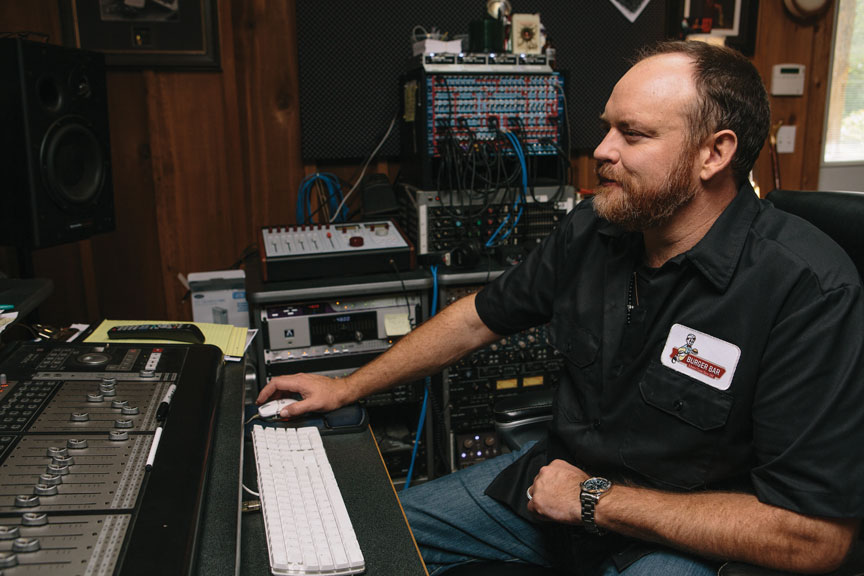
Andrew: That must be a wonderful experience for the artist, especially with you being in the room with them and being immersed in it. It must have been an incredible experience producing for your mum, June Carter, on albums like “Press On”. What was it like producing firstly for a family member like that, but secondly, somebody who is such a legendary figure in her own right?
John: My mother was talking about making an album, and I told her that was great. I was glad she was going to do that. Then she came to me and said she wanted me to co-produce the record. At that time, I really didn’t know that I wanted to produce music. I didn’t know that I was going to be a record producer, and I said, “Okay, well, let’s do it!” I got excited about potentially working on an album. Working with J.J. Blair on that record as my co-producer was great, because J.J. was still young in his career, but he was also so knowledgeable about microphones and recording in general, about what sound is and how to make things sound good. He and I were both extremely green on Pro Tools, but we worked on Pro Tools on that record. We recorded it on eight tracks and then did the editing on Pro Tools. We were both in the early parts of our careers, but he was further along than I was in many different ways, and so I learned a lot from him.
Working with my mum, it was a family affair to her. She was going to record the entire family, all of her grandchildren, if she could get them all in one room. She wanted to surround herself with them and have them sing every word with her. I tried to say, “No, Mom, sing this one by yourself,” here and there, where I felt like it was important. At the same time, I still let her lead the charge. I mean, when we recorded “Wildwood Flower”, the last record that she did, I remember we had three days of sessions and she recorded 14 songs and at least three takes for each song. It was something just to see her drive, even though she was feeling ill. The air conditioning was out. Half the time we were recording in Virginia, there was no air conditioning in that house. When we had to record, we didn’t want this loud air conditioner on the tape and on the recording, so, we had to have to turn that off. She had somebody help fan her and keep her cool while she was singing, you know. But she had a great drive, and that whole thought of pressing on was just how she lived her life. She pressed on. And it mattered; it made a difference. She’s going to the Country Music Hall of Fame this year, and she’s very due for that. The film about her that came out this past year is also a wonderful documentary. There’s a lot about my mother that was special. A lot of the good in my life that I’ve been able to achieve has come from my mom.
Andrew: Beyond family, you’ve produced for so many famous names. The list of much-loved figures is incredible, like Kris Kristofferson, Willie Nelson, John Prine, Elvis Costello, Mavis Staples and so on. What things perhaps stand out as special moments or times you’re really proud of? What achievements with these sorts of artists have remained with you?
John: I think sometimes you’re just doing it, you’re just working, you don’t notice when it happens how important it’s going to be later. I mean, working with John Prine was wonderful, and having Kris Kristofferson in the studio with the Nitty Gritty Dirt Band, I’m still friends with those guys. After all these years, that means so much to us. Now, all of us still remember that session. Working with George Jones in the studio at the Cash Cabin was an amazing experience. Working with Chris Cornell from Soundgarden was great – I was a monstrous fan of that music myself in my early 20s. So, that was a life moment for me to be able to work with Chris and to be that involved with him in the writing process. Then, he and I got to be friends, and it was very sad when he passed, and it means a whole lot that we recorded together.
Working with my sisters, Carlene and Rosanne, on various projects was all meaningful. I won a GRAMMY last year with The String Revolution and Tommy Emmanuel, and recording that track was an amazing experience. Working with Tommy was just unforgettable, as was working with The String Revolution, for that matter. We just did another track that’s out right now: ‘America’, the song from “West Side Story”, featuring 5-times GRAMMY-nominated sax player Lakecia Benjamin. I look at the artists that I like, and it’s been wonderful to record with them, such as working with Marty in the studio doing the “Badlands: Ballads of the Lakota” album. He and I were talking the other day, thinking about how it was one of our favourite experiences in the studio. Some of his friends from the reservation, the indigenous people, came down and recorded with us at Cash Cabin, which was full of musicians and people, and it was, looking back now, an amazing experience. I just didn’t know how rare it was.
I think that sometimes when you have no rules in the studio, you wind up with some really rare experiences later down the line, and so those mean a lot. But working with my dad, I mean, I’ve got to say, he was the most magical person in the studio. He was the boss. He was in control. He had days that weren’t as good as others. But when I look at the complete work that he did, it just lasts, and his persistence was amazing. However, the person that I’ve worked the most with in the studio is Loretta Lynn; we’ve finished over 100 songs. There are four albums released, but there will be a fifth album of that series that will come out. So, I learned more from her than I probably have anybody else in the studio. She was a master vocalist. She was a wonderful person and was so much like my mother. So working with her all those years after my mom passed was a great healing thing for me. It’s good talking to you – I’m realising it in so many ways how important my time in the studio has been in my life. Most certainly, I’ve learned how to behave and how not to behave.
Andrew: I suppose those experiences form you and you don’t realise at the time, perhaps how meaningful it is. Perhaps that’s a metaphor for life itself, isn’t it? A series of experiences that gather meaning over time. One of your songs that I’ve found the most meaningful, one of my favourite songs of the last few years, was ‘Garden of Stone’ (see our post here), where you took something so intensely personal and made it universal because those themes of time and family and legacy are important to everyone. The idea of that question in the lyrics, Who will ring the bells? makes the hairs stand up on my arm just talking about it, the idea of familial ties between past and future. It’s such a beautiful song and video. Could you tell us a little bit about that song, where it came from, the story behind it, and what it means to you?
John: When my mother and father weren’t there, there was a husband and wife – Winifred and George Kelly – who helped raise me. George travelled with my parents when I was young, taking care of me. On all those tours, he would bring stones with him back to Tennessee, from wherever he travelled, from Israel to Australia, all around the world. He would put them in his suitcase, and his suitcase would be 20 or 30 pounds heavier on the way back. In the latter part of his life, he got some old bells, a number of river bells from river boats and from bridges; there was one monstrous bell from a bridge that was over the Tennessee River. He gave them to my mother and father and then cast them in mortared masonry stone, and then put those stones from all around the world in a garden and made this ‘garden of stone.’ It’s up the hill from my parents’ house, and it began, I think, with my Aunt Anita’s funeral, if I remember right, that when she died, the whole family gathered around and rang the bells. There were about 14 bells – bells for all the grandchildren, all the children, and my mother and father. Then, when my Aunt Helen died, and then when my mother and father died, those bells were rung. So, it’s literal. The ‘Garden of Stone’ is a literal place, and it’s still there. But, the song means, of course, so much more than just that. That’s where it comes from. In the video, my daughter, A.B., is the one carrying the heavy bag, and I’m the one dragging the chains. My son, Joseph, has a great vision, and he’s a great filmmaker and so working with him was a great experience. That was one of the first full videos that he did. Actually, I wrote that song at 2:30 in the morning. I woke up and couldn’t go back to sleep. The microphone was there, and I walked in, sat down with the guitar, and it just came. I just hit record and started playing, and that song’s what came out. So, it was a spontaneous creation. I then went back and listened to what I did and edited it, arranged it.
Andrew: It’s amazing that it just flowed out of you, and maybe sometimes the most profound things do just that?
John: Yeah, and I’ve had a few things like that in life. I can’t always just turn the switch on, but it happens sometimes, and I think I was at a point where I was I was thinking about those bells. They were on my mind. I was missing my parents, and also my daughter, Grace, had just been born. My hours of sleep were all turned around. A lot of everything came together to make that song happen.
Andrew: It’s a wonderful story and a wonderful song that obviously speaks of your family’s legacy and the future as well, which brings me on to the book “Forever Words”, the collected writings of your father. Your foreword in that is a beautifully written piece in which you talk about his many faces: the fact that he was fun, that he was a brilliant scholar, an entertainer, a poet, and so on. What would you say your many faces are?
John: Oh, gosh! Well, one is a father, most certainly, I’m a father. I’ve had little children since 1996; I have five children. I just dropped my four-year-old and my eight-year-old at school. I have one son who’s on the road with Jamey Johnson. I have a 23-year-old and a 19-year-old in college. So, I’m grateful for that. I also paint – a lot of oil painting and pastels, and other mediums. That’s gotten to be something very important to me. My works are going into galleries this year, and I’m excited about that. I’m not writing novels anymore. I did write a novel at one point. I’m not writing as much as far as books, although I am working on my memoir. At the moment, I’ve put a hold on that project. I’m going to wait for a little bit, but I’ll finish that within the next two or three years. You know, I wrote the one cookbook and some children’s books. I think, the main thing is that I want to be known as a good father. My father said the same thing. I don’t know if I really got it when he said it at first, but that’s got to be the most important thing. I want my children to think of me as having been a good father. They’re going to definitely think of me as having flaws. I know that and that’s part of it – that’s part of me being honest if I have to be. If I’m going to be honest with them, they’re going to know that I’m flawed. If I’m not honest with them, then they’re going to figure out I’m flawed anyway somewhere down the line, so it’s better to try to be honest about it. I want to love my children. I want to spend time with my family. I want to be there with them through life – my wife, my kids – and not turn around and wish later on that I would have done something different. I want to be there however I can.
Andrew: It’s a powerful thing to think about what you are and what you represent, all those different faces. Of course, that book is all about being close to someone else through their words. You’re a very literary family, with your father being a poet, and you’ve obviously written a lot of books. You mentioned the children’s books and the fantasy novel you’d written. I’ve got your books, here, about your mother – “Anchored in Love” – and your father – “House of Cash”. One of the things that I really feel about your non-fiction writing is it’s so meticulous and it’s clearly a labour of love. Can you tell us a little bit about what it was like writing these non-fiction books?
John: Well, my mother’s book was the first book that I wrote. When I sat down to do it, I didn’t know if I was going to work with a co-writer or not. I sat with someone who might have been a co-writer, and she helped me with the outline, but then I wound up writing the book myself. I knew if I was going to write the book about my mom, that I had to tell the truth. I had to bear a little more than I think is comfortable. I was going to have to tell things about her life that were going to be harder to say, but I knew that if somebody else wrote that book, there was going to be a bunch that was wrong and would be misunderstood. There was the desire for the book to come out because people wanted to have a book about her life. There needed to be a book about her life. So, I took it on, and I think that sort of set the dominoes in motion with my writing. After that, for a few years, I was writing a lot. I always liked to write stories because I think having a story about somebody can help you find out the most about the person. The little stories in the “House of Cash” book mean a lot to me. I think that’s where the magical moments are in life, that we can relate to other people. It’s like it’s our own personal parables, right? So, I love to write that way. It was very meaningful for me when writing to go back and to look at my memories and to put them in order. Also, there was the whole work of putting together all the music that I made to accompany “Forever Words”. Looking at all my dad’s works and figuring out what would fit for the book that Paul Muldoon and Steve Berkowitz helped me with, and then doing the production of the music. It was almost like that was my thesis: Johnny Cash! Right? My father, Johnny Cash. That’s my thesis! That was a heck of a lot of work, and I’m done now. I mean, I won’t go back and write another biography of my father.
I feel like between “House of Cash” and then “Forever Words”, that’s what I’m going to do. That’s why a lot of the stuff that’s coming out lately, Mark Stielper’s writing more of it, because I feel like I’ve written what I needed to write myself. Of course, there will be other things, but it was a healing process for me. You get to a certain place and you’re healing, and it’s like, I’m not going to rehash that. I’ve healed – I’m where I need to be with that, and I’ve also made the statements that I need to make. And then you go on with life. I love music. I do. Music leads me and guides me in so many different ways in my life. It is what it is. I think writing is very important to me, but music’s got to be the most important.
Andrew: I’d like to ask about your children’s books. That’s quite a different thing to have worked on and I was wondering, do they come from the same creative space as your other work?
John: Yeah, I’d say so. It’s like writing poetry. It comes from a very free place. I think one thing I learned was how precise poetry needed to be to have these published books. I wanted to write it just as clear as possible and have the rhyme scheme laid out perfectly, but still come from the heart. So, the editing process was interesting. It was a little more in-depth than I would have thought, but it was also great to work with artists that I enjoyed working with, like Mark Burkhardt, who I worked with on my mother’s album, “Wildwood Flower”. He did a cover for that album, and he did a few other things that I was involved with, images of my father and so on. That was a great thing to be able to work with Mark on that process. He’s a visionary artist and is still making amazing works. It was freeing, I think, if I could put one word around it, to write the poetry for those books. It was great to see it come about in a visual form.
Andrew: To work in so many different creative directions must be stimulating as well. With the music production, songwriting, the non-fiction writing, the fiction writing, you’ve covered a lot of ground there! So, a final question, which I think sort of brings our conversation to a natural ending. One of the finest songs on your mother’s album “Press On” is ‘Will the Circle Be Unbroken’. It’s obviously such a meaningful song. Then, in your book, “Anchored in Love”, the epilogue is called ‘The Circle Completed’. I hear the song and see that title, and read that section of the book. Now, some years later, I think about what that means: the idea of the circle being unbroken and then the circle completed. What does that mean to you about legacy and the future?
John: I think that it is what it is, and it all sets as it sets. And that, I mean, in realising the beauty and the love that has been there and accepting the past as it is and looking on to a brighter future. Those things all together complete the circle. There are fears, and there’s everything else that comes back around. But it is what it is, and life is as it is. I miss my mother. I miss my father. But I feel that their circle was complete and their life arc was what it was. Now we can take from it what we will, but it continues. Their genes continue on in the bodies of my children and in the music that we hear coming from my sons or my daughters, or myself. In the music that we create, you’re hearing the extensions of those genetics. My parents aren’t alive in the sense that they can think or that they can speak for themselves from their own minds anymore. But we can still hear from them, right? In their music, and we can hear from their spirit in the music that comes from those that were close to them, friends, and of course, from family. So, it carries on, and I’m grateful to have been a part of it. The link is what it is, and I’m just going to keep trying to hold true every step of the way.
Andrew: And your part in that is continuing with, of course, “Pineapple John”. That is a beautifully-worded ending. Thank you!


