
How to achieve true musical Symbiosis.
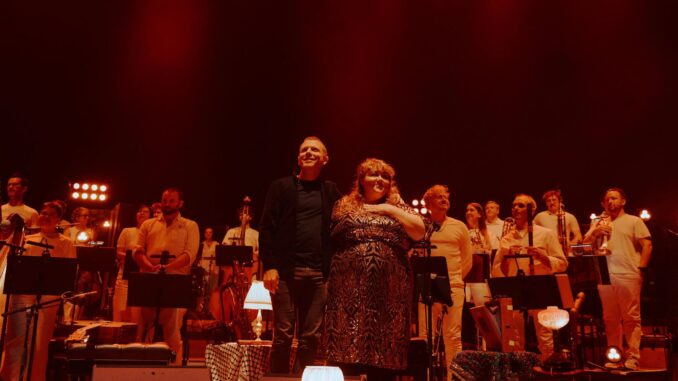
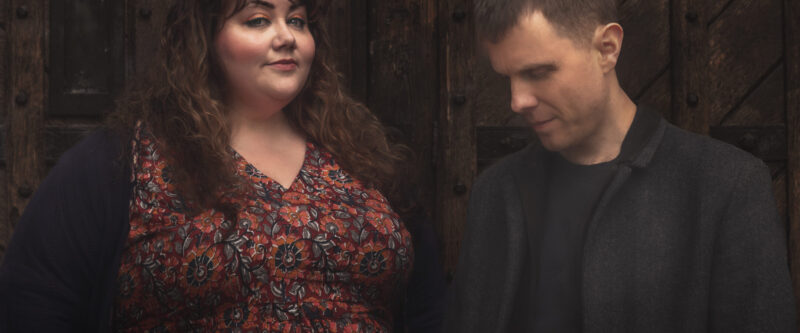
The Breath are guitarist Stuart McCallum and singer Ríoghnach Connolly, and they ensure that the song is always at the centre of their alt-folk sound. That sound is rich, reflecting their disparate backgrounds, with Stuart McCallum being something of a jazzer, and Ríoghnach Connolly, who is a one-time member of the Afro Celtic Sound System and is steeped in Irish music through her family connections. After recording three albums for Peter Gabriel’s Real World Records, including a tribute to American folk icon Karen Dalton, the Breath collaborated with the Paraorchestra at the Bristol Proms in August 2025 on Symbiosis, a piece that includes the Breath’s songs with arrangements and additional material by Oliver Vibrans, which utilises some of the Paraorchestra’s more unusual instruments. The Paraorchestra is led by conductor Charles Hazlewood and is made up of disabled and able-bodied musicians who have earned a reputation for pushing the limits of what an orchestra should and can do. The Bristol Proms performance was such a success that London’s Barbican Centre expressed an interest in putting on Symbiosis, and it is scheduled for Wednesday, 22 April, 2026. Americana UK’s Martin Johnson caught up with Stuart and Ríoghnach to discuss the Barbican concert and get a feel for how they have managed to form a natural musical bond despite having disparate musical influences and experiences. The fact that both musicians have a love of the drone in music, from the pipes of Irish music to the drone that is found in world music, right up to the classical and ambient music of today, may be a small clue to their musical compatibility. Both of them are full of praise for the musicians in the Paraorchestra, and Ríoghnach shares her admiration for the determination the musicians have shown to play their music. Symbiosis indeed, and you don’t have to take my word for it because Charles Hazelwood’s views on working with the Breath are included at the end of this interview.
How did you and Ríoghnach get together and form the Breath?
Stuart McCallum (SM): I think, although Manchester is a reasonably big city, it has a lot of smallish musical communities that are very much like a Venn diagram, a bit of a melting pot, and I think I wanted to do a project with a singer, and we sort of just crossed paths. Just the quality of her voice, and the fearless kind of creativity that she’s got, there was an immediate connection there, really, and I think there aren’t many people in your life that you just have an immediate musical bond with, where music just happens. You sit in a room together, and you’ll come up with an album a day; that kind of stuff just appears. That’s the relationship, really. We can write a tune in soundcheck, and some of the tunes have been written in soundchecks on gigs.
Genre doesn’t seem to matter too much to either of you. Which musicians have inspired you?
SM: In the very beginning, I was kind of getting into classic rock, like Led Zeppelin and Jimi Hendrix and stuff, kind of from a guitar perspective. Then, once I kind of got into jazz from about the age of 15 or 16, I sort of had to stop listening to guitarists after a while, because I was quite good at copying them, and I guess the true kind of underpinning of jazz, the mentality, is to find your own sound. So I really got into a pianist called Keith Jarrett, and he’s a great American piano player, yeah, an unbelievable musician. I listen to a lot of him, and I listen to people like Brad Mehldau, another pianist. Then, you know, a lot of historical figures in jazz, as well as more contemporary ones, and then I think through getting into more electronic music and things like drum and bass, broken beat and stuff like that, kind of London-based electronic music, before moving into ambient music, people like Brian Eno. I’ve always kind of been curious about folk and open string tunings. I listened to a lot of Pierre Bensusan when I was younger, and then in my 30s, I got into Martin Simpson a lot. Also, people like Kelly Joe Phelps, who’s an American singer-songwriter, I guess, singer-songwriters that are really good guitarists. John Smith is another good example of that, and Clive Carroll, I know he’s not a singer-songwriter, but he is a phenomenal guitarist. So, from an acoustic guitar point of view, those kinds of people. I’ve always been really into Indian classical music, so people like Shivkumar Sharma, Hariprasad Chaurasia, Zakir Hussain, the real kind of super heavyweights. I guess people like John Coltrane, who are jazz musicians who sort of took that music into jazz, that sort of modal music into jazz.
I’ve always had that kind of love of drone-based music, which I guess is also very present in electronic music. I think that’s one of the things that binds Ríoghnach and me together, that we just both love drones. A lot of the writing, for me, from a harmonic perspective, is that there’s always a drone in an open string tuning. There are a lot of ways that you can kind of orbit around the drone, like, harmonically speaking. So I guess that’s been my kind of a bit of a guitar journey with the Breath as a project, is to think about, yeah, kind of maintaining a drone somewhere in the sort of register base, and thinking about how the harmonic kind of shifts around that to kind of support the emotional content of the music.
We all know the journey that the folk music of Scotland, England, and Ireland made to America, and the influence it had on Appalachian music, and the influence mountain music had on bluegrass. It is hardly surprising that the drone is a fundamental element that provides the rhythmic foundation and adds to the overall texture of the music. You can’t have folk music without the drone.
SM: Yeah, very much so. I think I spent my teens and 20s really getting in deep, like neck-high in harmony, and kind of complicated kind of Western classical, influenced harmonic structures and stuff like that. I think once I got into my 30s, I was like, enough, let’s get rid of all of that, and let’s just focus on emotion. Latterly, some of that harmonic stuff has started to come back into my writing, I think I kind of started to realise the over-intellectualisation of the music kind of really started drawing me away from the emotional kind of content of the emotional expression within music, and I think I just sort of had to strip all that away, so kind of coming back to tonality and thinking about simplicity, and then rebuilding from there, I guess, has been sort of from the age of 30 to now, the past 15 or so years, has sort of been a bit of a journey for that.
You are now embarking on a new phase of your career. Your collaboration with the Paraorchestra, “Symbiosis”, debuted at the Bristol Proms in August 2025, and you are playing the Barbican Centre, London, on 22 April. How is something like that funded in such economically challenging times?
SM: Good question. Very good question. We met when the Paraorchestra played in Manchester, with Brett Anderson, the singer from Suede. They did a project with him, and they played at Aviva Studios, which is Manchester’s flagship cultural venue, and we supported them. I first heard of Paraorchestra with the project that they did with Hannah Peel, which is on Real World Records. I was aware of the kind of quality of stuff that they put together. After the gig that we did, in Manchester, supporting them, where obviously they got to hear us a little bit, and I know that that made a bit of an impact. on them, they were quite surprised. I got through to the record label, and got in touch with the CEO of Paraorchestra, and said,” Wouldn’t it be great if we did something?”, and he said, “Not thought of that, but yes, it would be great. “So, they’ve sort of made it all happen as a funded charity. That performance was the guiding light that kind of helped the whole thing come to fruition, because it gave a real sense of direction, purpose and a deadline for it all to happen. They brought Ríoghnach in, and I went to Charles Hazelwood’s studio. We just sort of played some tunes, just quite jammy, really. We just sort of tried to do tunes we don’t normally play live. I was kind of keen to do different tunes because the arrangements on the albums were for bigger kinds of forces, and we’ve never done a duo version of them. We jammed through those, and some other tunes, and we did that twice.
Charles Hazelwood suggested working with this guy called Oliver Vibrans, who’s an amazing arranger, composer, and so he, kind of, basically, did all of the orchestral arrangements and little bits of additional compositions in between the tunes. It all came together really well. It was quite an intense experience, you know, 2 or 3 days of rehearsals before the proms. You know the proms gig was live, and there’s quite a bit of jeopardy in there, but it just came together really well. The Barbican were at that show where they’d been invited by the bookers, and they agreed to put us on, which is super exciting for us, you know, it’s a big thing for us. I guess it’s like a recognition at a higher level, and from a cultural perspective. So it’s nice to be recognised.
Does this mean you are in the classical world now?
SM: Well, yes and no. I don’t know, how would I describe it. Just brilliant. I mean, it’s just really exciting. I try to leave the description of music to other people. Charles put it very well; he said that basically, we’ve invited Oliver into our house, and he’s made himself fully at home. He really understood the music from a chord-playing perspective; he’s really got it, he really understands the kind of way that I think about music very well, and has adapted and expanded that kind of sound world out into the orchestra. He also brought in additional melodic content and textures, and he’s very, very clever. So, yeah, it’s very good.
Charles Hazelwood, the Paraorchestra’s Musical Director, is a very experienced classical conductor who has also worked on film, television, theatre and the panel of the Mercury Music Prize. What was he like to work with?
SM: Very easy. So, Oliver’s the arranger, he dedicated a few months of his life to putting all of this together, and Charles is the conductor, and orchestral leader, I guess an artist, a director, I mean, he’s just like a super positive, supportive, beautiful human being. He gets the best out of people through positivity. You work with a lot of conductors, and they shout, and they criticise, and he communicates the things that need to improve in a way that’s very positive and very beautiful. Yeah, it’s lovely. It’s great to work with him.
The Paraorchestra is known for pushing the boundaries of orchestral music. What have you learned from the experience?
SM: What did we learn? You learn something from every performance experience. I think, for me, personally, it was that I had quite a responsible role. I was sort of like the drummer and bass player, the kind of locking it down, rhythm section. I suppose I have that in the duo performance, but actually trying to be very clear and direct, and adaptive, but also determined to stay where I was with 40 people. It was a challenge, musically. It was quite different to normal, a different sort of responsibility than I would have normally. There were little, sort of subtle details and differences to how we would play the tunes normally, so it was quite a bit of being very aware of the specific arrangement details that had to be played. It’s just a bit more, kind of, freewheeling, and interpretive, but it couldn’t be that on this gig. So, yeah, I had to kind of do my tie-up and kind of lock it down a bit more, if that makes sense.
What are you looking forward to when you play the Barbican?
SM: Well, I’ve done the Barbican a few times before playing for other people, so it’d be nice to do it where we’re the band that hopefully people are going to come and see. I think it’s always nice playing in those bigger venues with a bigger sound system. You know, there’s a sense of space, and there’s a sense of enjoyment, sonically, just from that environment, but I think there’s an enjoyment sonically and socially from having that many people involved in the project. It’ll be a nice two and a half days with lovely people, making some nice vibrations of air.
Are there any plans for the Breath to record with the Paraorchestra?
SM: It’s not an impossibility, and discussions have been had. I think there’s a possibility that this gig might be recorded, and whether that’ll end up being used, I don’t know, but we’ll have to see how it goes.
I’d never considered some of the challenges a disabled musician may have playing in an Orchestra. What are the thoughts of the actual musicians?
SM: They are just musicians, you know. They are great at what they do, great players, they might have accessibility needs, or whatever, but that doesn’t impact their ability to make music in any way. They’re brilliant musicians, lovely people and a good laugh.
What are your plans for the future?
SM: A long, healthy life, and for the more immediate future, to survive. Just to slowly get better at things every day, get better at music, get better at being a human, and just try to enjoy things. I don’t really have huge aspirations beyond that.
Thanks for joining, Ríoghnach .
Ríoghnach Connolly (RC): Hello Martin, nice to meet you.
SM: I will leave you in Ríoghnach’s capable hands. Thanks for the time.
Thanks, Stuart, nice chatting with you.
SM: Likewise.
Stuart explained how his love of guitars brought him to folk music and the importance of the drone to his music. He also explained how well you both work together.
RC: Well, it happens very easily. Most people that I work with take a bit of manoeuvring, but, yeah, he’s just a really talented guitarist. The drone that he was talking about, I don’t know what put him onto it, but I grew up with pipers. My dad was a Uillean piper so the drone is in everything with me, so I can make them all day out of a single note; that’s all I need. I kind of hummed through everything in life. You’ll find music when there aren’t a lot of musical instruments at home; you make your own music. Singing would have been a lot in my mother’s side of the family, and they were dancers and singers, because they wouldn’t have had a lot of money, and then my dad’s side of the family were pipers and fiddlers and harpers and concertina players, and boron players, so there were loads of instruments on that side.
So, it was sort of like a marrying of my two families that made me folk-oriented, but I think there’s no hierarchy. Everybody’s got their own song, and people are territorial with their song. So it doesn’t matter whether you’re a good singer or a bad singer, just the song is what’s important, you know. And then I think drone work, for me, is how I bring everybody into a room at the start of a workshop. I’ll get everybody home and together, and then you’ll see a difference in personalities just on what note they choose to stray into. Some people are major, some people are minor, some people like to sit on an in-between note just to be awkward, and they’re my favourite kind of people.
I think, Stuart, when he first met me, he was looking for a vocalist, and I started off singing other people’s songs with him, and he, being a jazzer, you go through the real book of standards. You make your way through the real book, dead handy, just like you would with any other archive of people’s music, I suppose, the American side of things. And you, coming from americana, it’s just American music, just a document of the diaspora. I love mountain music. You know, that’s all it is, poor people’s music that couldn’t be written down but has now been written down. Just poor people’s stories. I think, for me, coming from traditional music and then folk music, it’s a lot easier to write, because you’ve got the imprint rattling through you of how to make a story out of nothing, how to make a story about the very mundane. Not everything has to be drama; it just so happens that I’ve got a very dramatic sort of life, so I have plenty to write about, and then nothing to write about at the same time. It’s really easy to write a song; you just have to be comfortable in yourself so that what you put out there is going to be authentic and not pretentious, and it’s going to represent your people. You have to check your privilege of being documented just because you’ve got a nice voice, because many people don’t get documented because they don’t have nice voices. So for me, it’s a lot of responsibility, and I take it really seriously. Now Stuart takes practising very seriously. He’s very, very adept at scales, and re-voicing things, and improvisation, and technically, he’s really switched on. He makes it his business to be that, and he teaches children how to really focus in on things to make them perfect, and I am everything to do with imperfection, because I love the character of things. So really, we are completely opposite.
The drone thing, I’m trying to think of how he found his way in there. Maybe because he was into meditation, that he was into the chant, maybe that was a meditative thing. I love the Shruti. I bring the Shruti around with me because I just call it a portable piper, but it’s mostly because pipers always spend their time complaining and whinging about tuning, and this Shruti Box is always in tune.
What you’ve explained very well is that your music is truly part of you, it’s organic, it’s who you are, it’s who your family are, you can’t separate it, it’s just there. From Stuart’s point of view, his obviously means an awful lot to him, but he’s learned it deliberately, and he’s explored it. He picks it up from records and everything. I think the drone is there in a lot of music, and it seems to be something that pulls music together. Music that is disparate, and disparate musicians, it’s something that is a historical part of music that goes back aeons, and it’s there in various cultures. Your music comes from your culture, and you are now taking it with Stuart to an orchestra. What do you think about it?
RC: I always love playing with an orchestra, to have as many musicians behind you as possible is really proper, isn’t it? That’s real, she’s got notions about herself. Having that sort of support network is amazing, and the hairs stand in the back of your neck when you hear everybody coming in, you know. That’s a fantastic feeling, and a real privilege. And they are magical people, really, really talented, like Oliver Vibrans, he’s an absolute Jedi. He really is something else, and to see how his brain works, how he’s mapped out these variations, is really something. It’s lovely to feel confident, to give your stories and your music over to people, and have complete trust there. Usually, you’re doing it out of curiosity you have about them. I love that, but it’s a real learning curve as well because not everything that bounces back you are in tune with, but everything he’s done has made me go, how did I not think about that? Why didn’t I go there? You know it’s great, he’s great at getting what you love about a melodic line. Really, like, honing in on it and springing it so it’s like little seeds within the music have now sprouted, and then took off in different directions. It’s lovely to have a section of instruments explore every little vocal move you’ve made; it’s really, really something.
Your guy, Charles Hazlewood, the guy, the conductor, he’s a lunatic, he’s a tour de force just bursting with character, and authenticity, and he’s got mischief and magic about him. We call it draíocht in Irish. He’s got something magical dancing out of his eyes and his movement. I’m very emotive, I’m a funeral singer by tradition, and a lot of the songs are centred on grief, loss, and lament, and that’s my thing. I do love that. To see the joy being brought out of it, and the catharsis in movement, I think that’s what I’ve really enjoyed. That sounds really abstract, I suppose. Usually, whenever I went to see an orchestra, I found it really stiff. I find it a bit too considered for my taste, because I want everybody to get up and start moving, or shouting, and hollering. I want to see the emotion, the emotional process. I find it very constricting when people have to wait until the end of a movement before they can clap. Do you know what I mean? I find it leaves me in a bad temper, because it feels like everybody’s kind of strapped in and told how to behave, and then I always feel like lying down in the road after a gig. If I’ve been to, say, a gig, and I’ve been told to behave a certain way, it’s like being in a library, but you have to fart really loud, you know? You have to hold it in, which I never do. So, I just like hanging out with these people who don’t have any rules, who are also full of mischief, and who have never behaved and wouldn’t have been allowed in an orchestra. That was me. So I’ve kind of found my tribe in this group of people, and how the organisation is run.
You’ve got some amazing musicians who have had to overcome horrendous obstacles just to get there. Sometimes there’s an ambulance outside the practice room, all the way through, because we might only have a few minutes if someone has an allergic reaction. We’ll have a matter of minutes to save their lives, or there’s a recorder player, a wind player, and he has read the music in Braille. He’s had to learn everything by ear, which is my tradition, which I love, which he and I really bonded over. He’s learning, like, really, really intricate parts across, different clefs by ear, and I could never do that. I can only learn a tune or a song by ear if it’s done in repetition. I can’t just do it off the cuff, and he is. That’s really something. It’s also really something to study how people have to climb into music to make it a part of them, and I really appreciate that. I’ve learned loads; they kind of operate like a part of a rebellious family. There’s a lot of love in the room, and I’m very, very at home with them. I’d gone through my own accessibility issues. I was on stage with a broken leg last time and found it very hard to tour. I had lost months of touring, and then suddenly, for the first time, I was able to say yes to a string of gigs, because I knew there would be a way of getting onto the stage, and that someone would be dedicated to thinking about my accessibility into a building. Little things like that have made a massive difference to my year, really. It couldn’t have come at a better time; it’s been such a blessing.
You are going to the Barbican. Isn’t that a bit posh?
RC: Oh, not at all. I’ve been there. I’ve played there a couple of times with the Afro Celtic Sound System, and one of my oldest friends, a fantastic, polyglot artist, she works there, so whenever I’m ever in London, I always call to see her. It’s great architecture as a building; it’s really stunning, and to feel like you are so far underground. You’re basically in a big bunker. A big concrete bunker under the ground. So I was like, oh, I don’t like the sound of this. And then you get backstage, and there’s a really fancy piano in every dressing room. That’s very bourgeois, but I think I like the venue. You try not to spook yourself, you know. I really spooked myself with the Royal Albert Hall, and I got out there and nearly pooped. It’s a grand place. It is a very grand place, but it’s a very safe place, and very few venues are safe nowadays from an imminent nuclear threat or from a monster wave.
You are based in Manchester. The location clearly works for you.
RC: My mom’s from here, my granny’s from here, my great-granny came over on a coal boat. My grandmother was born in Moston, in North Manchester, and then moved south, and my mother was born in South Manchester. Then she went to university in the north of Ireland and met my father. It’s been a generational thing. I’ve got, like, my granny was born here, but my grandfather was Irish and came over and met my grandmother, and then, you know, we kind of went back and forth over the generations. But my dad’s side of the family is all from Armagh, Armagh and Tyrone. Then my grandparents moved to West Cork when they retired, so I’ve got loads of Cork family as well. So we’re just all over Ireland and all over England. You know, it’s the usual industrial, family, where we’ve just followed the mills. History in motion.
What are your plans for the future?
RC: Quite a lot of cooking. There’s always quite a lot cooking. I owe quite a lot of favours. A lot of people that I said I’d record with, but never had the time, I just have to get working with, and another project called Honeyfeet. We’ve got an album that we are writing and recording at the same time. We’ve gigged most of it in the last couple of tours. We’re just back from Sweden, and we did, like, a week around Sweden. That was weird, but wonderful, and also a bit midsummer. Wonderful, lovely, lovely, lovely people. Great to play loads of places that are full of good wood, great acoustics in those Nordic countries. Then I’m also doing a country hymnal with loads of friends of mine, because I love a hymn. I just love hymns. I’m not big on organised religion, but I love the way people praise things. So, with respect, we’re gonna sing the shit out of that because I’ve just sang so many Masses, funerals and weddings over the years, I’ve got some really old archive. The melodies are just beautiful, and I’ve been planning on doing that for years, so that’s cooking, with some traditional musicians, friends of mine, here. Then I’ve got a drone album going, where it’s just me and loads of drones. It’s amazing to find just how many drones there are in nature, so I’m just amplifying that. I’ve got a dance album that I’m doing with an electronic producer, I don’t know, that might be god-awful, but I’m having loads of fun with him because he’s a good friend of mine, he has the sound system from Afro Celtic Sound System.
So, just spend more time with the Sound System. And then, all of my work with communities around Manchester. I’ve always worked with refugee charities. That’s my main business here, community facilitation. So, just sitting with them, we’ve recorded an album with all of the beautiful Iraqi, Iranian, Palestinian, Lebanese, Eritrean, Sudanese, and Congolese women of Manchester, and we usually just get together and drink coffee and gossip, and bitch about who’s got the best recipes. We’ve been recording a song about women’s stories, and we’ve done an album, and that’s been great. What else have we got cooking? I’ve got 5 albums going at once, and I’m a nightmare for every single person in my life, because we’re all just trying to find time, and I’ve just moved house. I’ve got a 6-year-old, and I’ve painted the whole thing. My ADHD is like a superpower, because it means I’ve been getting shitloads done. I’m so happy to be in good voice, and the head’s on straight, and I’ve got lots to sing about, you know.
Thank you, Ríoghnach. I’d better let you get back to everything you have to do.
SC: Thanks, Martin, I enjoyed it.
Charles Hazlewood: Working with The Breath reminded us of the incredible power of music as a storytelling device, not just literal stories, but abstract stories that they tell. They are extraordinary narrators. But aside from that, we laughed a lot in rehearsal, which is also a huge tonic. I guess they reminded me that music is a beautiful communal act. It’s an act of love, and their music is so much about joy as it is about pain; it’s about humanity, it’s about lofty things, but they’re down and dirty as well, and we had a joyous time.


