
An ambitious and affecting debut that fuses indie, americana, and nostalgia-fuelled introspection.
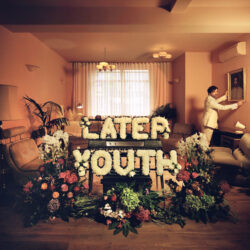 The debut album from Later Youth – the new solo project of The Travelling Band’s Jo Dudderidge – feels like paging through a diary written at 2 a.m. – those moments between collapse and clarity. “Living History” is a richly textured collection that brims with vulnerability, self-destruction and sonic wanderlust. It’s not an easy album to pin down stylistically, and that’s part of its charm.
Across eleven tracks, Dudderidge weaves an eclectic soundscape that ranges from the dreamy pulses of ‘Enabler’ – a highlight of the album – to the acoustic warmth of ‘The Lurker’, through to more traditionally rooted fare like ‘On the Missing’, which leans closest into Americana territory. There’s an openness here – emotional and musical – that gives the album its staying power.
At its heart, “Living History” is preoccupied with love, loss, and the hazy trail of memory. Lyrics reflect the cycles of emotional turmoil, looking back with a mix of tenderness and regret. Whether it’s the dark irony of ‘Arcane Love’ (“Darling, I know that you’d like to put your hands around my throat”) or the dissociative drift of ‘Hotel Venezuela’ – a parable to the impact of hedonism – (“I’m the project manager of my own demise/Sitting in the courtroom telling lies”), Dudderidge consistently finds new ways to voice familiar themes without sounding derivative.
There’s also a cinematic edge to the production – ‘Nuclear Love’, in particular, conjures a vivid, slightly surreal backdrop, like a lost scene from a post-romantic film. Elsewhere, the album feels more stripped back and personal – ‘Make It Right’ plays like a reckoning with guilt and accountability, its plaintive chorus looping with quiet urgency. ‘The Lurker’ is a simple acoustic-led song which is a bittersweet reflection on the messiness of grieving a lost love – “I practise loving things I used to hate/But as evening comes with shadows overdue/Sometimes I wish I wasn’t over you”.
Musically, the album is striking in its variety. A whiff of honky-tonk piano here, a looping indie riff there, some Grandaddy-ish haze, even a music-box-like flourish that nods – perhaps deliberately – to Tales of the Unexpected. While that might suggest inconsistency, Dudderidge’s voice – calm, expressive, and edged with just enough grit – threads everything together.
Thematically, the album drifts from chaos to catharsis. Early tracks are populated with damaged relationships and emotional spirals, but by the time we reach ‘The Ballad of Charlie’, there’s a glimpse of redemption. It’s a generous closer – hopeful even – that feels like a message to a younger self or someone just starting out, “Whatever’s lost can be found/You’ve got so much life to live/When your feet can touch the ground”.
For an album so steeped in melancholy and self-reflection, “Living History” is never dreary. It balances rawness with craft and sincerity. While it occasionally stretches itself thin stylistically, its ambition and honesty make it more than the sum of its parts. There’s a lived-in wisdom here – the sound of someone turning pain into art, without sanding away its emotional rawness.

