
Warm, analogue-produced record of intimate indie-folk storytelling.
 This is Octoberman’s seventh full-length long player. It was recorded live in the studio on analogue equipment, direct to two-inch tape, without the aid of click tracks or screens. The result is a stripped-down and laid-back album. It also has fresh instrumental touches, such as accordion, banjo, and vibraphone, which haven’t previously appeared on Octoberman releases. Half of the tracks stem from rediscovered demos on an old hard drive, while the remainder are more recent compositions.
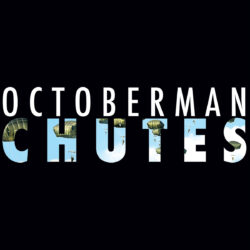
The album artwork makes reference to the title via the parachutes which are depicted within the letter which make up the record’s name. However, chutes are also used to move things from a higher place to a lower one, so the title could well refer to the unyielding passage of time sliding ever onward. The record certainly delves into the delicate nature of relationships and the inexorable march of time on many of the tracks. Canadian lead singer, Marc Morrissette’s song writing seamlessly weaves personal introspection with narratives drawn from external perspectives, often musing on how the passage of time changes people and their relationships.
The album opens with ‘Harry Nilsson’. It’s not really about the late singer songwriter but a reflection on ageing and as Morrissette sings, ‘It’s hard to know just how to grow old.’ It’s a sparsely arranged song. In contrast it’s followed by ‘We Used to Talk of Death’ which has more a upbeat tune despite its subject matter, with a slight Vampire Weekend feel to it. However, lines such as “We used to talk of death, When we were least afraid” and “We used to spend our lives, Just trying to survive, But now we’re lost in these afterthoughts” offset the upbeat guitar riffs. Morrissette recently lost his mother which has informed many of the songs such as this one. He says that he “was hyper-aware of mortality and how things can turn on a dime. Losing an ever-present person in my life made me more afraid of it happening again, especially as a father and husband.”
‘Roger’ is a reflective third-party narrative about somebody whose girlfriend has decided to settle down with someone named Roger rather than him; it’s a rather touching story of navel-gazing. ‘Austin’ drifts in like a page from a lost Lloyd Cole and the Commotions’ songbook; it’s wistful, literate, and quietly aching. ‘Ottawa River’ is a paean to the water adjacent to which the album was created. The river becomes a living symbol, ever-changing, yet eternal. Its currents echo through the music, where accordion sighs and vibraphone shimmers lend a rich texture to the music.
‘Chutes of Time’, the album’s title track, arguably serves as its emotional and thematic centrepiece, reflecting on how time channels our experiences, memories, and relationships. The penultimate song ‘Marla’ is another story of a fictional character who “celebrates the past and forgets the future.” The album closes with the gentle ‘Come People Go’, which is a bittersweet reflection on a past relationship. It’s a good way of drawing this collection of songs to a close. The album represents a gentle step forward in Octoberman’s evolution which can only be a good thing.

