
Lost songs from an imagined family past, sung with quiet conviction and understated authenticity.
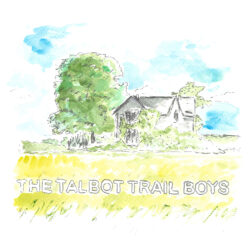 The Talbot Trail Boys is the latest iteration of Canadian Henry Adam Svec, who has produced music under various names (Peter Mansbridge and the CBCs, The Boy from ET, The CFL Sessions, Folk Songs of Canada Now, and LIVINGSTON) over the last twenty years. Svec has created a concept album based on the premise of three brothers getting together on their farm in Ontario in 1993 and performing some long-lost family songs. It’s an imaginative conceit and allows Svec to produce a nostalgic but musically and lyrically coherent piece. Many of the tracks feel like half-remembered stories or embellished truths, and the central theme is about generational continuity. This is not just about family; it is also about the passing down of struggle, violence, restlessness and longing. Musically, the album leans heavily into traditional North American folk, the same sort of space that artists like Neil Young have occupied.
The album begins with Kent Flu Blues, which follows the idea of a “fever” across generations to weave a sense of inherited fate. Granddad’s fever is one of aggression, and he died “In a barroom brawl in Biloxi / Who throwed the first blow / Ain’t something I know”. The music creates a real sense of era, too: the piano part is redolent of Western movies. Dad’s fever is religious “But they ran him down / They ran him out of town”. The singer, too, has a fever, but his is intensely romantic. There is a wider sense of social commentary here: three generations all dealing with their mental health in different ways.
For Tom follows a wandering singer who is dying, either literally or emotionally. It reflects on pain, independence and the desire to leave a trace behind. “I’ll leave you some signposts / They’ll say where I’ve loved and been / And what I’ve seen / Please see they’re kept clean” are powerful lines, stark but unsentimental, showing a wish to be remembered. Musically, the song starts slowly but builds and creates an almost barroom sing-along feel, perhaps indicating there is one more performance before it’s over.
Driving to the Forest City is a mid-tempo, guitar-led song which provides a snapshot of youthful escape. There’s boredom with the hometown, but the sense of hedonism is not glamorous; it is more reckless and hollow, “Gimme the night, let’s get in a fight”. We Sang Auld Lang Syne follows and is the song that dwells most deeply on family nostalgia. It is performed as a slower lament, with a pedal steel helping to create a reflective atmosphere. There is further sorrow in Bury Me Under Lake Erie this time around betrayal, heartbreak and desire for oblivion. Appropriately for a song that leans heavily into folk tradition, there is an introduction of a very musically effective fiddle.
In Harwich Township feels almost like a drunken account of a toxic relationship based on violence, betrayal and obsession. There are some great lines, such as, “If you or I was lucky / You or I would be in jail”. Musically, there are some effective backing vocals on this song, which create a sense of feeling tired and worn. They are supported by a lovely guitar part. Saturday Morning Cartoons is musically gentle, but there is something slightly threatening in the background, indicated by a drum that feels almost out of place. The song is about endurance and the strain that can be put on families by hard work: “We’re heavy with debts, and I’m ready to drown”. But there is hope and again the sense of strength in nostalgia and belonging, “We lay by the fire… like Saturday morning cartoons”. Two covers complete the album, Take It Easy which reinforces the idea of trying but failing to stay carefree, and I’ll Fly Away, which fits with the album’s themes of death and escape.
The Talbot Trail Boys is an album which tells a family history through fragments. The concept of the brothers gathering together to perform the songs is clever and works well. Lyrically, it’s not trying to be poetic in a polished way: it’s plainspoken but emotionally dense, which is exactly why it works. The overall tone is nostalgic but unsentimental, and Svec has created a musically consistent record; it really does feel like a collection of undiscovered gems from a different era. Like the best folk traditions, it blurs the line between history and invention until the distinction no longer matters.


An impressive well written review, which, to my ears, perfectly captures the vibe of nostalgia. Many thanks for the “heads up” on this John. Already added to my “to listen to/purchase” list.