
An album of simplicity, sincerity and songs of reflection.
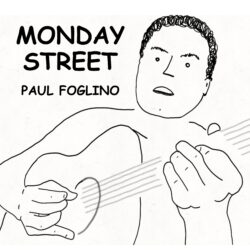 For this album, Foglino has produced twelve songs which seem to provide a reflective look back at life, the power of music and the need to protest. Musically, the songs are constructed on just a combination of guitar and voice. This music simplicity works for some songs, such as the ode to American folk Did You Hear Dave Van Ronk, but some might feel that the words demand greater depth or emotional weight in the compositions. The lyrics are often sombre, though it is sometimes difficult to tell whether Foglino intends the words to be darkly comic or just dark.
Album opener Our Band Could Be Your Life begins in this vein with its first line, “Your first mistake was being born”. This may acknowledge the absurdity of birth, but it is also rather chilling. Foglino’s music and voice feel quite light-hearted, suggesting irony, and the main theme is around a retrospective acknowledgement that music can be a medicine. “Trust your fading ears” is a line that suggests that Foglino is still finding solace in music. The song title nods to the book of the same name by Michael Azerrad, which is about American indie bands, and so there is a sense that being an outsider is also a part of survival.
Several songs lean into the political. Halfway considers our responsibility and need to be together in a difficult world. Hard Times reflects on inequality with lines like, “One big fish drank all the water”. The standout song is When the Devil Calls Your Name. It is politically powerful but performed almost like a child’s lullaby. Lyrics like “When to speak the truth means you could die” are stark and urgent.
A pair of songs look directly at the idea of love. If You Had a Heart is a sad song about a relationship in which one side feels nothing. Love is the Only Thing, which has one of the more distinctive guitar parts on the album, has at its heart the paradox of love, “Love is not the only thing that matters / Love is the only thing”.
Other songs explore resilience and how an emotional landscape can change as we age. Picnic, perhaps the most musically playful song, finds comfort in life’s simple pleasures like chilli dogs and cherry pies. I’m a Stranger Here reflects on alienation and puts a twist on traditional religious songs, “I once was found but now I’m lost”. Religious ideas are also found in the humble, straightforward declaration of faith Walk With Jesus. Yes You, a song with some double-tracked vocals, offers accountability for anger and a subversion of cliché with the line, “What didn’t kill me / Made me old”. Final song, Raise an Empty Glass, provides a suitable reflective ending and is a toast to absence, loss and impermanence: “A pebble in a river / Was a boulder yesterday”.
Foglino writes from the vantage point of experience, shaped by folk tradition and a lifetime of listening. Monday Street is politically alert without being strident and reflective without tipping into self-pity. There is quiet wisdom here, and moments of genuine poignancy. Yet the very restraint that gives the album its integrity also holds it back; the spare arrangements sometimes leave songs that feel as though they might have reached further with a broader musical palette. This is an album of considered thoughts rather than grand statements: one that earns respect, even if it does not always demand a return visit.

