
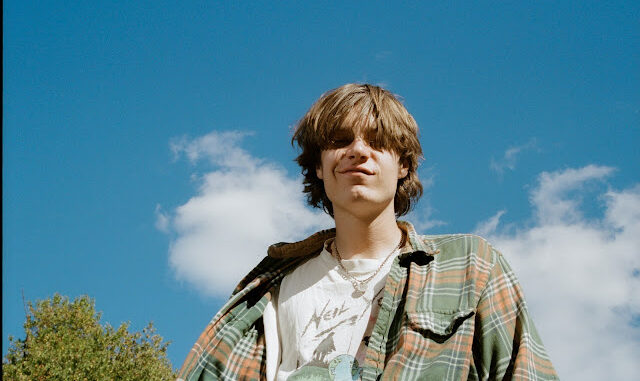
Chicago-born and LA-based singer-songwriter Truman Sinclair will be a new name to many AUK readers, although the more observant of you will have noticed his song Joel Roberts topped my top tracks of 2025 list published at the end of last year. At 24 years old, he is part of that wave of much-needed vitality to the movement at a time when counterparts such as MJ Lenderman and Waxhatchee are arguably introducing the americana genre to a whole new generation. That said, his background wasn’t always the type of music he plays today – he played in bands since he was 8, first in the emo and metal scenes of Chicago. It was his move to Los Angeles at 14 years of age where he fell in love with folk music and songwriting, all while continuing to pursue his love of emo, not a word we hear round these parts much and more’s the pity, which resulted in his homemade debut album American Recordings, an astonishing record for someone born this century. On his recent UK tour, AUK Editor Mark Whitfield caught up with him and asked him about his influences, America and how finding love makes something worth fighting for.
First of all, welcome back to the UK. Have you ever been to the north before, and how are you finding it?
No, I haven’t, but it’s beautiful. We’ve been having a really great time, honestly. We just got into Manchester today. We were just in Glasgow, which really blew us away. It’s a beautiful town, really fun. And the people are great. It’s great to play to everybody. It’s crazy to play this far from home. But no, it’s been amazing, honestly.
Yeah, it’s an interesting time to be away from the States at the moment. How are you finding it?
Oh, I mean, the States are in a bit of a tiff, so it is what it is, but I mean, I don’t know. I miss home, but I’m happy to be out. It’s a blessing to be playing music out here. I’m about to go on tour opening for Courtney Barnett, a lot of the East Coast of the States, which is gonna be really fun. So yeah, I’m excited for that, but I’m really happy to be here. I mean, it’s crazy that I can come all the way out of it with my acoustic guitar and people want to hear me play. It’s amazing.
So, I know the label americana means different things to different people. I obviously edit an americana website, and so I would say this, but to me, your debut, American Recordings, just seems to be like the essence of the genre, and I know labels can be restrictive, but do you feel like you identify with the americana genre?
I think I do. I think that, to me, genre is something to be used, and, like, I think that when you say americana, and you say country music, and you say folk music, it brings things to mind to people. I’m doing that, and I love that, I love that. I think that the ideas that come to people’s minds are something that I can use to say what I want to say. And to me, the record is really like a picture of all these things that I love about America, and my view of America and what americana means to me is this record. And even though that might be a different thing than what everybody else thinks about americana, it’s just my image of the genre and my image of the country. And I’m happy to be able to put it how I see it, so that other people can look at it that way and see what I see, and hopefully we can find some kind of common ground there.
I think that sometimes you don’t have the courage to do it for yourself, but you have the courage to do it for the people you love.
Are there any artists within americana or the like old school country cannon that you felt like you were influenced by when you were growing up?
Well, yeah, when I was 14, I moved to Laurel Canyon, and a lot of that stuff is a huge influence on me. I was a new kid in high school, and so I was just playing my guitar to nobody with the ghosts of Neil Young and Joni Mitchell and James Taylor and all that kind of stuff. And so to me, that’s really where that influence really came from. And I’ve been playing in Los Angeles in emo bands and rock bands to nobody and on curbs in front of a bunch of people and the Troubadour and all these places where people have played. And so to me, it’s just like another link in the chain, part of the lineage, and that’s something that really inspires me, honestly.
Some of those artists, I guess, when I think of them, I think of them as kind of like the protest singers of their generation, and I’ve seen your album described as a protest record. Do you think that’s true?
To me, the album is just a collection of things that I care enough about, and I just sing about things that are close to my heart, and I’m surrounded by this history in Los Angeles of these great artists that inspire me every day that are talking about things that I think are still important. And I think to get my chance at saying what I want to say, means everything to me, and I’ve been doing that for a while, and I love that, that’s what songwriting is to me. I just think everybody has something to say, and the way that you say it comes from many different things. I mean, I’m pulling from all sorts of traditions. I love all sorts of music, but I just think at this point in my life, this medium sort of felt like the right one to more accurately put what I want to put.
From the album, as you know, my son absolutely loves Joel Roberts. I’m convinced that it’s had about half a million plays on Spotify, and 250,000 of them are my son having it on repeat in the car. I have seen other people on Reddit who describe it as a song of the year for them. What do you think it is about the song that makes it so special?
Well, I think there’s a couple things. I think there’s a lot of really universal things in there. And I think there’s also some really specific things. It’s a really serious song, and it deals with really serious things. And I think that a lot of the times in life, there’s choices that you make that tell you who you are. And I think that that’s what the song really comes down to. I think it’s sometimes you do things that really define who you are. And I think that also, I’ve had people reach out to me and tell me that they’ve lived that experience, and that’s something that I haven’t lived and I haven’t seen, and to see that is crazy. I think, to me, it comes down to brotherly love and parental love, and making hard decisions that are and doing what you have to do, and not being ashamed of… being who you are and making decisions like that. Like, sometimes you have to do hard things that are the right thing to do. And even though other people might not see it that way, you know it’s the right thing to do, and you would do it again. And to me, that’s what makes it powerful to me.
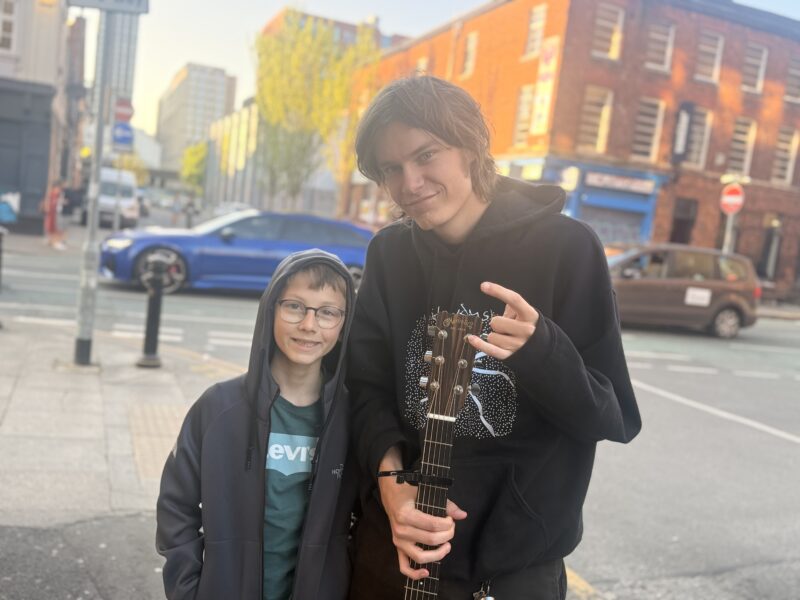
I read in one interview that you were a big fan of the band Pinegrove, and I loved their album, Marigold. Another artist, I want to ask you around that, has had quite a bit of attention, and there seems to be a bit of overlap in terms of your music, is Nate Amos, This is Lorelei. Have you come across him?
I have, I’m a fan. Yeah, I really, really like his music. I’ve just recently, honestly, embarrassingly enough, recently started listening to it, but I love it. I think it’s great songwriting and it’s really, what I love about Pine Grove and Nate Amos is that, it’s like, it’s sort of diaristic, but it deals with really universal themes. So I feel like, and I think to go back to the Joel Roberts thing, I think that’s another reason why that song works for me personally, is because it’s a personal narrative that deals with universal things. Like, you know, Where’s Your Love Now?
Yeah, one of the best songs I’ve heard in years, I think.
Yeah, it’s a very personal song with very specific personal lyrics. And then, but at the same time, everybody has felt something like that and feels that. And I think that those types of songs are really personal to me, using one specific personal story to talk about a very broad and general idea.
So you talked in another interview recently about falling in love, making you political. Can you say a bit more about that?
Well, I think I was a kid who had a lot of feelings, and I would feel different things at different times, and I felt really reckless. And I was into… I don’t know. I just think when I first fell in love, it gave me something to fight for and a reason to want to make the world around me a better place because I wasn’t gonna do it for myself, but doing it for somebody else seemed like an obvious thing to do. And I think that that’s what I mean by that. I think that sometimes you don’t have the courage to do it for yourself, but you have the courage to do it for the people you love. And I think that that’s just real, honestly. And that’s how I feel about a lot of stuff.
The other song on your debut I really loved was Frank. Can you say a bit about that song?
Well, that’s just a song about friendship, and it’s a song about just being, just being around somebody and how it affects your life. And I think that there’s a lot of different themes in that song that I wanted to talk about. Like letting your life pass by and just falling into a certain thing, and how that can be good and how that can be bad. And how your surroundings really affect you, what you’re doing, and sometimes you just end up somewhere with somebody because you are with them, and something really beautiful about that, I think. And I think all of us kind of find that, like maybe you have a co-worker that now you’re friends with, and now suddenly it’s a whole thing in your life. Or maybe, you know, an unexpected relationship and how that can affect your life and all that. And it’s just a song about friendship at the end of the day, and how weird that can be in the different places I can take.
I know it can feel like relentlessly bleak with the world at the moment, but how do you find a way to stay positive?
Well, I think apathy is the biggest killer, and hope is really all we have. And I think that every day you can wake up and decide to make new decisions or be a different person, or at least find people around you that you can help and find small issues that you can help. I think a lot of things feel super overwhelming, but at the end of the day, even if you can make your small community around you a better place to be, that’s extremely powerful. And I think that’s really all we have, too. So I really don’t think there’s any other choice. I think it’s hope or die pretty much.
Final question. I’ve read that your next album’s going to be a bit more rock and roll, and it reminds me of perhaps, at a slightly later point in his career, Ryan Adams did his left turn into rock and roll.
I mean, I’ve always been playing electric guitars. I grew up on emo music. I love to play loud. I think for the next record, I’m a songwriting-based musician, and I have been forever. I think that no matter what, it always comes back to the story. And I love music production. I love playing around with different textures and different genre and all that stuff. And again, I think genres imply things that can be used in songwriting. I think that when you make something loud, it does something to this song, and that really matters. But at the end of the day, I’m just looking to support these songs and the things that I have to say, in the way that I think fits it the best. So, I’m not really going into it with, like, a mentality of, oh, I want it to be this or that. It just, sort of, these songs kind of ended up being better supported by something a little bit louder.


Nice one, Mark. You haven’t lost your touch.
Thanks Martin!
Loved this!