
A memorable change in direction in this celebration of rural Celtic communities.
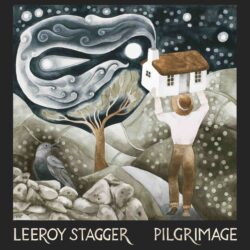 Leeroy Stagger, born and raised in rural Vancouver Island before moving to southern Alberta, is a prolific artist. Pilgrimage is his thirteenth studio album, having started with Beautiful South in 2005. It is a departure from his previous work, which could be broadly described as electric guitar-based pop, although, of course, this doesn’t fully do it justice. Many of his earlier songs feature Beatles-style melodies, but slide and steel guitar are also heard at times, and there is enough of a twang to firmly place it in the americana camp. However, Stagger’s first bands played punk, with him citing The Clash as an influence, and you also hear rough-edged rock ’n’ roll on some tracks.
2024’s 3 AM Revelations reminds you strongly of Wilco’s Yankee Hotel Foxtrot, and Stagger says that they have influenced him. The lower-key Dystopian Weekend (2021) is similar but with more keyboard to give it a soulful flavour. Strange Path (2019) has an eighties and nineties dance flavour which weirdly brings Big Audio Dynamite to mind. Pilgrimage keeps the vigour, life and grittiness of his previous work and also the strong, memorable melodies. This is very welcome, but it diverges in its strong Celtic-folk and almost-bluegrass influence. There is a lot of fiddle, banjo and mandolin to be heard. If you think of Steve Earle, you won’t be far off, and Stagger has supported the great man, a hero to him, in earlier times.
Staggers’ antecedents originally came from Scotland but were moved to Northern Ireland during the clearance of the Highlands in the 1700s. The album is a way for Stagger to connect with this part of his family’s history and thus come to know himself better. He says, “It was always so strange to me that I felt more at home in Scotland than in my own country; it makes perfect sense to me now. There is a deep ancestral grief for where we once called home”.
The album had its genesis in a night in Glasgow, where his friend Joel Plaskett, who co-produced this album, introduced him to Alastair McIntosh’s Soil and Soul. This book, about how rural Scottish communities could take on corporate might, inspired him. He was also influenced by a night in Bangor, Northern Ireland, where he says, “I happened upon a session that stirred my soul to no end, everyone in the village at the pub, singing songs, playing fiddles and mandolins. No heroes on stage, just community at work”. Stagger wants the album to “honour the beautiful traditions our communities once held so tightly”.
It starts excellently with the rollicking Irish folk of Fiddler’s Daughter, about a “salty roustabout up to no good”. In Swimming Back To You, there are great country licks filling in, and the wistful recollection of touring life in Last One To Know is enhanced beautifully by aching pedal steel. Dogwood Flower, with its rousing chorus, tells of Stagger’s troubles with drink, which he seems to have conquered: “Pray that I stay sober”.
Highlands Leaving, with its lilting melody, tells of the clearances: “Goodbye to a life/ And a land we once loved”. Bangor has the swing of a hoedown and another great chorus. The album closes with the simple picking of Carry Me, a tale of a sister at Iona Abbey who was carried through a dark period by “the angels”.
The songs here are lively and memorable. But, in addition, the words and music really complement each other coherently to produce a fine celebration of the Scottish and Irish communities where Staggers’ forefathers once lived.
