

The Americana UK archives are not exactly rammed with Sufjan Stevens content. Andrew Frolish selected the sublime John Wayne Gacy, Jr. for his Chain Gang feature in 2022 (here). Otherwise, there are a few ‘guest appearance’ or ‘produced by’ mentions and the odd ‘reminiscent of’ comparison—and that’s about it. However, one can’t help but admire the ambition and creativity of this multifaceted multi-instrumentalist with a Master of Fine Arts in Creative Writing. So figuring out the reason for this paucity of AUK appearances could prove to be “a difficult pancake”, as the members of Flann O’Brien’s constabulary force might say in his absurdist novel “The Third Policeman”. Whilst much of Stevens’ output lands outside of the broad church of AUK, some certainly belongs in the chancel. At times listeners may be left feeling bemused as he follows his muse, but there is much spiritual nourishment to be found as a member of this congregation.
I first came across Stevens whilst crate digging at Bristol’s Imperial Records sometime back in 2004: at Imperial’s recommendation I left with Seven Swans. The hypnotic banjo driven All the Trees of the Field Will Clap Their Hands drew me in, softening me up for the angelic The Dress Looks Nice On You. By the time I got to To Be Alone With You I had fallen under Stevens’ spell; I had become a convert to eclesiastical-leaning indie-folk. A further rummage at Imperial Records yielded Michigan (2003). This greeting from the Great Lake State was touted as the first instalment of a highly ambitious 50 states project comprising one album for each state of the union. As luck would have it, a few weeks later Stevens was on the bill of a triple-header, sandwiched between Rosie Thomas and Sam Beam—aka Iron and Wine, at Bristol’s sadly long-since defunct St. Bonaventure’s Parish Social Club. That was some night.
Michigan and Seven Swans inhabit singer-songwriter/indie-folk territory, as does the magnificent Illinois (2005), making it two down and 48 to go as far as the 50 State project was concerned. 2005 also saw The Lord God Bird, an exquisite song written for a story featured on NPR’s All Things Considered (here), concerning a reported ivory-billed woodpecker sighting in Brinkley, Arkansas. That magnificent woodpecker, also known as the Lord God Bird, had been thought extinct. Sadly, this proved to be neither a resurgence of the prized bird nor a teaser for an album about the Natural State, Arkansas. The Avalanche (2006) consisted of outtakes and extras from the Illinois album and later that year Stevens’ Songs For Christmas stuffed the nation’s stockings with 42 musical crackers.
Stevens could be regarded as indie-folk’s James T. Kirk. His sonic explorations have visited strange new worlds and he has boldly gone where few singer-songwriters have gone before. His five-year mission from 2009 onwards is a case in point. Bandcamp described The BQE (2009) as “a cinematic suite inspired by the Brooklyn-Queens Expressway and the Hula-Hoop”, whilst The Age of Adz (2010) owed much to the American outsider artist Royal Robertson. Sisyphus (2014) was a collaboration with a Chicago rapper and a New York post-rock band; this was followed by Round-Up (2015), a live score for a slow-motion rodeo documentary. At this point I convened my In-house Un-Americana Activities Committee (IUAC) to scrutinise Stevens’ recent output for subversive musical activity. He was only granted a reprieve because of the further dose of seasonal cheer that he had beamed back to earth in the form of Silver And Gold (2012), with 58 more Christmas songs. Then along came Carrie & Lowell (2015)—more of which later.
Stevens’ output continued with more twists and turns than the Cresta Run. 2017 was a busy year with both the cosmic genre-blurring Planetarium and The Greatest Gift, a collection of Carrie & Lowell outtakes, remixes & demos. There was still time for the mesmerising Tonya Harding single—check out the synchronization of skater and song on the official video (here). Stevens undertook another starship mission with his next four albums: The Decalogue (2019), a Ten Commandments based dance work score; Aporia (2020), an ambient/electronica collaboration with his step-father and Asthmatic Kitty label co-founder, Lowell Brams; The Ascension (2020) and Convocations (2021), a five-volume requiem of meditations, lamentations, revelations, celebrations and incantations, recorded following the death of Stevens’ father. A Beginners Mind (2021)—a series of movie-inspired songs written with label mate Angelo De Augustine—marked a return to singer-songwriter terrain, unlike the ballet score Reflections (2023). Javelin (2023), Stevens’ most recent album of original material, was dedicated to his partner, the light of his life, who passed away a few months before its release. The month before release day Stevens revealed that he was unable to participate in the album’s press and promotion because he had been hospitalised with the rare neurological disorder Guillain-Barré syndrome.
Can’t Live With: Enjoy Your Rabbit (2001)
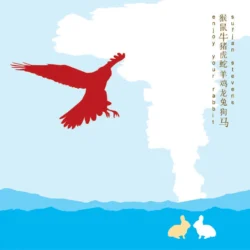 Stevens’ first two albums, A Sun Came Home (2000) and Enjoy Your Rabbit (2001), could not be described as standard AUK fare. In his sophomore effort the animals of the Chinese Zodiac were marshalled into an instrumental/electronica song cycle. Think Doctor Dolittle relocated from Puddleby-on-the-Marsh to Detroit, Michigan. Bandcamp wrote “this collection of fourteen colorful instrumental compositions combines Sufjan’s noted gift for melody with electronic sounds to create an unusually playful and human—not to mention humane—electronic experience.” For me it was an 80-minute endurance test, a concept album now filed under “challenging”, although ballet fans may appreciate the orchestrated adaptation choreographed by Justin Peck,Year of the Rabbit (here). Neither the Chinese Zodiac nor Enjoy Your Rabbit feature a Year of the Cat (you must be thinking of Al Stewart), but Stevens does add a bonus lead off track, Year of the Asthmatic Cat, an homage to Sara, the stray Michigan feline with a wheeze that inspired the name of his record label, Asthmatic Kitty (here). Whilst Enjoy Your Rabbit resides well outside AUK city limits and is too avant-garde and anarchic for my taste it did meet with the approval of Pitchfork. Maybe this instrumental work is, borrowing another phrase from The Third Policeman, ”surely the handiwork of wisdom because not one word of it do I understand”. My selected track, the comparatively short Year of the Sheep, is an ambient electronic drone with sustained choral components and periodic background screeches. I almost expected to hear Dr. Lecter whisper “have the lambs stopped screaming?” in my ear.
Can’t Live Without: Carrie & Lowell (10th Anniversary Edition) (2025).
 There were two candidates for my essential Sufjan Stevens album, barely separable by a silver Rizla paper. First, Illinois (2005), an expansive tribute to the Prairie State with some exceptional songs, including the enthralling and ethereal album opener Concerning the UFO sighting near Highland, Illinois and the standout John Wayne Gacy, Jr., a dark but exquisite song that peers into a mass murderer’s crawl space. Illinois also features perhaps the shortest song with the longest title on record, the 19 seconds of A conjunction of drones simulating the way in which Sufjan Stevens has an existential crisis in the Great Godfrey Maze.
Illinois was up against Carrie & Lowell (2015), an intimate study of the emotional fallout brought about by the death of Stevens’ mother. The Carrie & Lowell (10th Anniversary Edition), released in 2025, clinched it for me. It featured the original 2015 album, plus earlier versions of five of its songs, with an additional outtake and demo from the album recording sessions, neither of which were included on the original. The fully realised version of the bonus Mystery of Love – Demo became part of the soundtrack of Luca Guadagnino’s 2017 film “Call Me by Your Name”, for which it was specially written. It is to date the only song in Stevens’ canon to be Grammy nominated, in the Best Song Written for Visual Media category at the 61st Annual Grammy Awards.
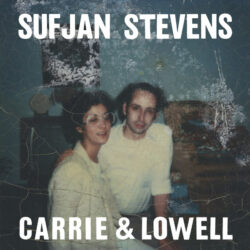
Carrie & Lowell is an anguished rhapsody of raw grief and loss, whose staggering beauty and emotional intensity will have those prone to aesthetically triggered tears clutching a box of tissues. The couple on the cover of the album are Stevens’ mother Carrie and her husband for the first half of the 1980s, Lowell Brams, later the co-founder of Asthmatic Kitty Records. When Stevens was just one year old he and his siblings were abandoned by their mother. It was Lowell who reconnected them; recollections from the three childhood summers spent with the couple in Oregon find their way onto the album, particularly in the early verses of Eugene. Memories of abandonment—a little boy lost and left at a video store—surface in Should’ve Known Better, as Stevens reflects on his grieving process. In The Only Thing, he unflinchingly confronts feelings of self-harm, asking himself “In a veil of great surprises I wonder did you love me at all?” and “In a veil of great disguises, how do I live with your ghost?” Carrie died in 2012; the imagined conversation of the song Fourth of July crystallises much of the emotional turmoil of bereavement. Although overall far from “bright as the Oregon breeze”, Carrie & Lowell’s acoustic indie-folk sensibility unfolds with hushed confessional songs that often dissipate with delicate dreamlike postludes. A decade down the line, Stevens explained some of his misgivings about the album to NPR (here), but to me it is still a case of beauty in the ears of the beholder. Even if the mythical 50 states project was never meant to be taken seriously, some have suggested that despite its main theme, there are enough Oregon references in Carrie & Lowell, catalogued by oregonlive.com last year (here), to make it the Beaver State instalment. Those with time on their hands will no doubt enjoy the Carrie & Lowell Live (Official Film), performed in Charleston, South Carolina in 2015.
For me, listening to Sufjan Stevens at his intimate best—fingerpicked guitars and hypnotic layered falsetto—is a spiritual experience. As no-one in Star Trek ever actually said, “It’s americana Jim, but not as we know it”. Wherever his spirit of musical adventure may take him, he is always welcome back in the americana fold. May his recovery from Guillain-Barré syndrome be complete.

