
Cass McCombs’ double album brings elements of his past into a stirring present.
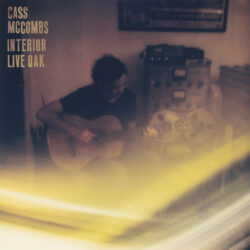 “Interior Live Oak” is Cass McCombs’ second release since returning to the Domino label and his fourteenth overall. An artist who started out in the CD era, McCombs’ earlier albums often extended well beyond the standard 35–40-minute vinyl range and, with his latest, he revisits that with a double LP comprising sixteen songs, four per side.
McCombs has been feted over the years, not least in these pages, where one writer singled him out as the greatest americana act of all time. In creating “Interior Live Oak”, McCombs was inspired by his return to Domino and revisiting his earlier material in 2024’s reissue campaign. This led him to work with some of his earliest collaborators in the Bay Area, including Papercuts’ Jason Quever (guitar, bass, keyboards, drums, cello) and Chris Cohen (bass). Additional recording in New York City brought contributions from other perennial collaborators, including Matt Sweeney and Mike Bones (guitars). Other players on the album include Brian Betancourt (bass), Austin Vaughn, Joe Lyle, Dylan Hadley (drums), Frank LoCrasto (keyboards), Dan Iead and Sam Owens (guitars). McCombs himself contributes guitar, bass, keyboards and harmonica as well as vocals. He also produced the album, although each of Cohen, Quever and Owens is credited as co-producer on individual tracks.
Each of the sides has a song longer than the others by a margin. On side one, that is opener ‘Priestess’ which weighs in at just under 5 ½ minutes. The song has a lazy pop R&B-light feel in which LoCrasto’s electric piano is at the heart of the music and McComb’s soft focus vocal gently rolls over the backing. Second song ‘Peace’, which was the first single to be released from “Interior Live Oak”, continues in a similar vein but with the guitars taking the place of the piano. McComb’s vocal hints at faith with its refrain: “Peace is what we say when we say goodbye/ When we say goodbye, we say peace”. ‘Missionary Bell’ has a folkier sound featuring Betancourt’s double bass and McCombs’ mandolin. For the side closer, McCombs ups the tempo with ‘Miss Mabee’, a lightly chugging rocker driven by Betancourt’s bass.
At the start of side 2, ‘Home At Last’ is slower paced with a rubbery bass line overlain with McCombs’ guitars and, in the second half of the song, a sweet undertow of Quever’s cello. ‘I’m Not Ashamed’ returns to the soulful vibe of the album opener with a lazy beat and two guitars prominent while McComb sings a lyric as unapologetic as the title suggests. The third song, ‘Who Removed The Cellar Door’ kicks in with an insistent bass line from Cohen and twangy guitars, soon joined by an organ. It builds and swirls as the song progresses, providing a perfect backdrop to a tale of storm and flood. The final song on side 2, ‘A Girl Named Dogie’, begins with a bluesy feel and highlights a fizzling guitar running under and around the vocal, eventually building to some impressive guitar work.
The third side of the album rocks right in with ‘Asphodal’ and features a mildly psychedelic melody and vocal from McCombs. Bones’ guitar is prominent. ‘I Never Dream About Trains’ features a soft vocal from McCombs mulling is/is not while emphasising “I never lie in my songs”. Another soft vocal runs through ‘Van Wyck Expressway’ while the guitars slip their way around the melody and vocal. The side closer ‘Lola Montez Danced The Spider Dance’ opens dramatically. Instrumentally, the tune snakes around evoking the legendary Irish performer and her most notorious creation.
The final side starts with a jaunty ‘Juvenile’ in which a playful McCombs choruses “We are the juveniles/ We are the exploited/ We may be gullible/ But you suck”. Next up, ‘Diamonds In the Mines’ has an almost childlike quality, while ‘Strawberry Moon’ recalls the crooner era. The album closes with the title track, which sounds like nothing that preceded it. With fuzzy guitars and adventurous drum patterns creating the atmosphere for the song’s mild horror fantasy of the spirit inside the titular tree.
McCombs’ latest effort is an ambitious group of songs touching on many of the styles he has worked in through his 20-plus-year career. On the one hand, it can seem a little like a compilation, but as a single body of work, it is probably characterised more by the highlights than the whole.


