
Grammy Award-winning singer-songwriters combine for an album rooted in piano ballads and sagacious narratives.
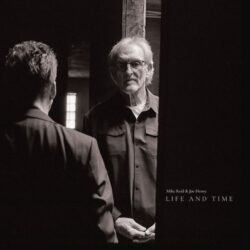 Collectively, singer-songwriters Mike Reid and Joe Henry have, throughout their respective careers, amassed a collection of Grammy awards along with numerous other accolades that few will have matched. Reid initially made a name for himself during the first half of the 1970s in the NFL, playing football with the Cincinnati Bengals, before moving to Nashville in 1980 after Jerry Jeff Walker recorded his song ‘Eastern Avenue River Railway Blues’. From there, he quickly became one of the hottest names in town, writing no less than twelve number one singles during the following two decades, including Alabama’s ‘Forever As Far As I’ll Go’, Ronnie Milsap’s ‘Stranger In My House’, for which he won a Grammy in 1984 for ‘Best Country Song’ and Bonnie Raitt’s iconic ‘I Can’t Make You Love Me’ which he co-wrote with Alan Shamblin. He has also written countless other songs for such country legends as Conway Twitty, Tanya Tucker and Willie Nelson.
The name Joe Henry requires little introduction. Starting his career as a singer-songwriter in the early 1980’s he recorded his debut album “Talk Of Heaven” in 1986 before becoming a protege of renowned record producer T-Bone Burnett, which would see him go on to produce Grammy-winning albums for Solomon Burke, Ramblin’ Jack Elliott, The Carolina Chocolate Drops, Bonnie Raitt, and Allen Toussaint. In addition, he has to date released no less than sixteen solo studio albums, and though his contribution to the americana music scene can at times feel somewhat enigmatic, his craft as a songwriter is never short of sublime, with such luminaries as Roseanne Cash and Madeleine Peyroux being among many beneficiaries.
The duo first came together at Rodney Crowell’s Nashville songwriting camp, and the twelve songs which make up their debut collaborative album, “Life And Time”, are rooted in piano ballads with understated arrangements. Flourishes of pastoral orchestration and upright bass underpin the melodies throughout, providing the perfect conduit for the intuitive narrative that seamlessly runs through each track. All the songs are co-written by the duo, with Henry responsible for the lyrics, while Reid steps forward as singer, his russet tones and thoughtful delivery an ideal match for the poetic perceptiveness of Henry’s creative storytelling.
Henry is also, unsurprisingly, responsible for the production. His vast experience and innate understanding of when something is right finds favour here with a less-is-more approach, deftly sprinkling colour across the course of the album. Subtle touches of pedal steel and saxophone can be found discreetly blending with banjo, organ, mandolin, and clarinet, while some gorgeous harmonies add a sweetness to Reid’s vocals and piano playing.
The ambience of the album is captured immediately with the opening number ‘Sleeper Car’. Its unhurried nature is deliberate in its intention to highlight the poetry, every musical note paying homage to the words of wisdom they accompany, which only time can accumulate. ‘The Bridge’ offers some delightful backing vocals from Bonnie Raitt that instinctively help to emphasise the insightful message woven in the lyrics, which is reiterated on songs such as ‘Stray Bird’ and the title track, where the graphic poetry becomes almost cinematic, the colour and clarity of the rhyme as vivid as the prismatic chords emanating from Reid’s piano.
The reflective flavour of ‘Martins Ferry’ is enhanced by the combined addition of saxophone and clarinet, played with such delicate restraint by Levon Henry, while ‘Weather Rose’ delivers the only perceptible percussive beat on the album without unduly changing the pace. ‘Leaning House’ finds Rose Cousins adding her distinctive vocals to Reids, which continues throughout to telegraph a depth of experience, enabling the narration of each song to coalesce, while a mix of pedal steel from Asa Brosius, and alto saxophone from Levon Henry brightens the periphery, helping to enrich the imagery of the narrative.
On an album where every poetic word has been so carefully chosen, chiselled and crafted, it may appear somewhat superfluous to draw attention to any particular rhyme or verse, though lines such as “This country lives its life enflamed, by stories that refuse the twists of our retelling, -news remaining news”, from penultimate track ‘History’, do reveal a sense of the sagacious pragmatism that seeps through every bar, as if offering a beacon of hope in this increasingly senseless world. Whatever, the almost hymnal tone of the final song ‘So We Are’ feels a very apt choice to close the album.
“Life And Time” is not an album that is going to announce itself with whistles and bells or a full-throated clarion call. No, its message comes with far more delicacy and restraint, completely bypassing any need to analyse the distinctive contributions from either protagonist. And yet, with its abundance of thoughtful prose and subtle ambience, the album’s impact and lasting effect are all the greater, and when listened to without distraction, will continue to reward over repeated listens. “Life And Time” may not vociferously demand your attention, but it’s an album that very much deserves it.


