
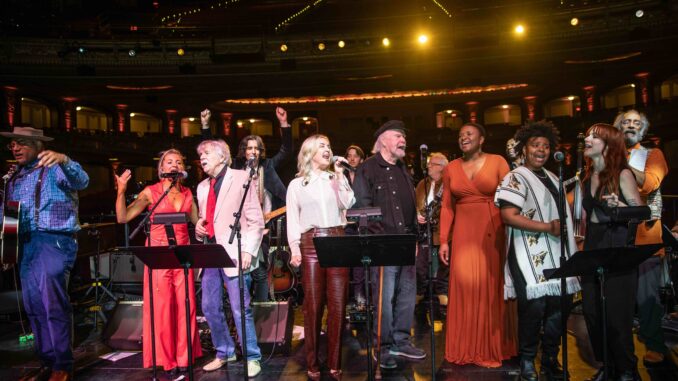
Two years ago, the ceremony honouring the inductees of the inaugural class of the Folk Americana Roots Hall of Fame (FARHoF) set the bar high indeed. Two thrilling and emotional evenings of music-making and camaraderie, memories of which bring tears to the eye and the glorious sounds of which live on in the mind’s ear. Two nights like no other since the great days of the folk revival, whose alums – not least Joan Baez, honoured in 2024 – have continued to sing on and sing out, their voices raised for justice in today’s troubled times, just as they were in the 1950s and ‘60s.
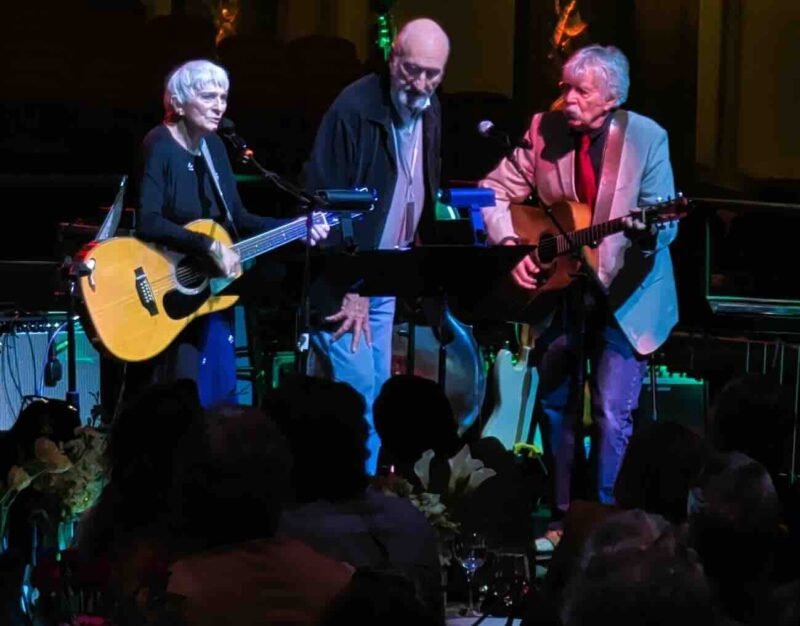
Last month, musicians including Judy Collins, Tom Rush and Tom Paxton converged once again on Boston as FARHoF honoured its second class of inductees, which included Legacy Awards to Muddy Waters, Mississippi John Hurt and Leonard Cohen, at a ceremony which, in the manner of these things, also paid tribute to those who have ascended to the great hootenanny in the sky since everyone was gathered in April 2024. Among them: Peter Yarrow and Josh White Jr, whose heart-stopping performances were among their last. Both men were frail, Peter approaching the end of a long illness, though when they strapped on their guitars and raised their voices you’d scarcely have known. Fortunately, many of the performances were preserved in the PBS documentary Folk Americana Roots Hall of Fame: Inaugural Induction, which was nominated for an Emmy as one of the year’s most outstanding arts and culture programs.
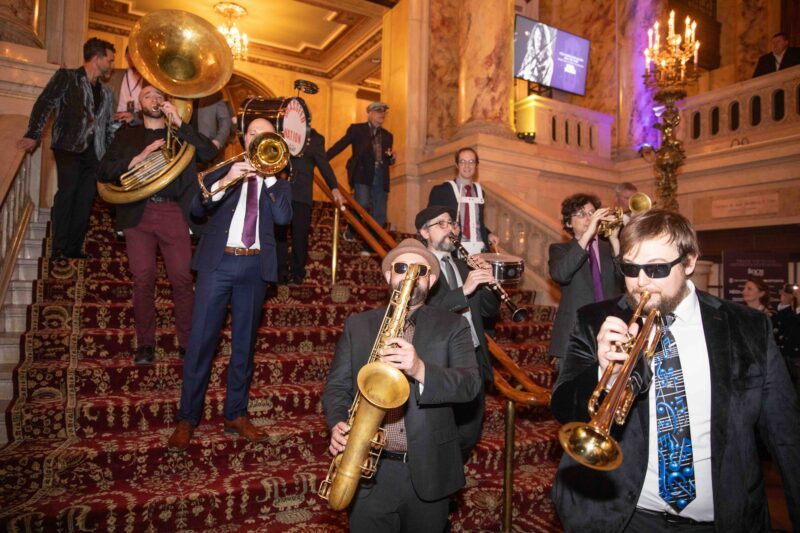
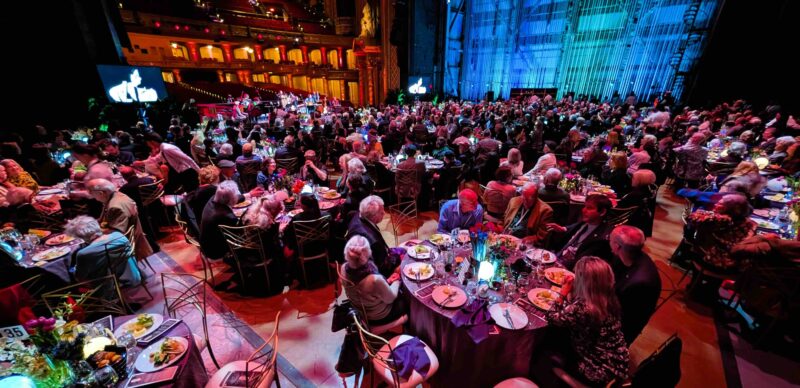
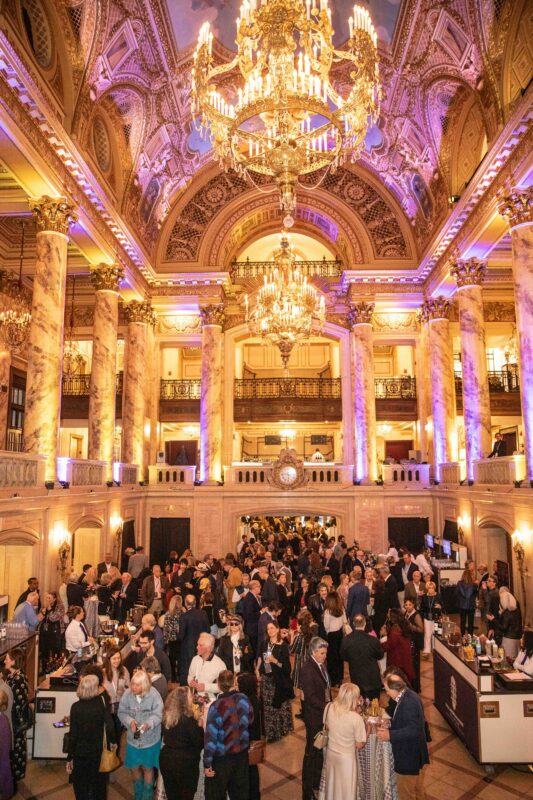
FARHoF 2024 – a truly historic gathering which brought together members of the Guthrie, Lead Belly and Seeger clans among others – was always going to be a hard act to follow. Yet while this year’s ceremony took a more conventional turn – the celebration limited to one evening, a grand reception with themed cocktails from which everyone was led by old-timey band BrassFed Nation into a carefully choreographed dinner for some 500 guests on the Wang’s vast stage – it induced similar heart-stirring vibes. Folk music is, after all, a community, and community is what is needed right now. “Folk music does more than build bridges. Folk music is about the real essence of the people,” said Tom Paxton, one the 2025 honourees. It is, said Paul ‘Noel’ Stookey who inducted him, “the most honest medium.” And honesty, in this most dishonest of times, is what makes folk music so very much meaningful.
The Awards, and the rolling year-round exhibitions in the Wang Theater, owe to the efforts of one remarkable man, Joe Spaulding, a distinguished son of Boston who gave up his own career in the music business when duty and destiny called and he felt duty-bound to save the Wang. By the time he stepped down as President and CEO last year, after forty years handing over the reins to fellow-Bostonian J Casey Soward, he had returned the Wang and its smaller sister, the Schubert (together they comprise the Boch Center), to both health and architectural glory. And along the way he had made his long-cherished dream reality! The germ of the idea for what would become the Folk Americana Roots Hall of Fame Awards came to him a decade ago during a 3am wake-up, taking form as he tossed and turned. After several years of research and hard work and a modest launch in 2019, the project had to be paused in 2020 as “events” intervened and Spaulding was forced to lay off almost a thousand staff. When he and his wife had recovered from serious bouts of Covid, he turned his attention to the Save Our Stages initiative, helping to raise over $16 billion.
Spaulding, whose firm belief is that music and the arts help us heal and are essential to a civilised society, has every right not only to his retirement from the Boch but also to a real sense of pride in what he has achieved. And not simply in the awards themselves but in the broader educational and cultural centre he has created at the Wang, a century-old jewel modelled after the Paris Opera, exquisitely restored on his watch at a cost of $10 million. Wander the gilded third- and fourth-floor balconies and Boston’s rich music history unfolds before your eyes while, in the marbled basement, exhibits reflect FARHoF Award-winners. All of that is the work of Deana McCloud and Bob Santelli of the Museum Collective who, when Spaulding first ran into them at Folk Alliance International, were just completing their work in Tulsa on the Woody Guthrie and Bob Dylan exhibits.
The Folk Americana Roots Hall of Fame honours “the music that built America” – roots music in its broadest sense – and, at the same time, Boston as a music city that is the equal of Nashville and thus the Wang as a sort-of sister shrine to the Ryman, which itself had to be rescued from neglect. And as Soward observed: “These inductees represent the heart and soul of folk, Americana, and roots music. They gave voice to ordinary people and helped shape the soundtrack of this country; its struggles, its hopes, and its beauty.” It’s early days yet: coming years will bring many more inductees.
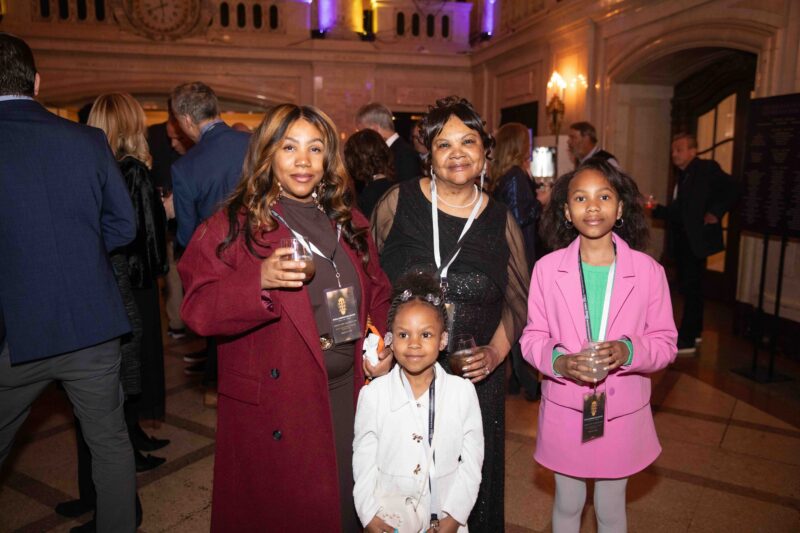
Though there was less of the hanging-out in the hotel lobby that made the first awards so heart-stoppingly special, FARHoF is a get-together that’s as egalitarian as Newport in its heyday. And how wonderful it is that families of long-gone honourees are present to see justice belatedly done – Sister Rosetta Tharpe’s great-niece TeAnna Atkins and her family for example, including two little girls for whom Tharpe must seem like ancient history. They heard her music brought to life by Crys Matthews and Joy Clark.
FARHoF is also to be commended for the non-performer categories which bring another dimension to the awards, shining a light on key figures – “advocates whose influence reaches far beyond the stage” – whose names may not be so widely known but whose influence on the music world cannot be gainsaid: Last year George Wein, who created the Newport Jazz and Folk festivals; Betsy Siggins, godmother to the Cambridge folk scene and mentor to so many performers; and Albert Grossman,
manager of Bob Dylan the creator of Peter, Paul and Mary, all of whom were among the Class of 2024. This year it was the turn of Alan Lomax, the ethnomusicologist whose field recordings introduced the world to Lead Belly and countless others whose music would otherwise have been lost to obscurity; and John Hammond, the producer responsible for the recording careers of Billie Holiday, Pete Seeger, Bob Dylan and Aretha Franklin among others. Both men were honoured this year for their creative or technical contributions, which shaped the sound and legacy of American music as we now know it.
There were five Living Artists this season, Jackson Browne, Judy Collins, Tom Paxton, Tom Rush and Neil Young. Paxton, like Guthrie an Oklahoman, declared that “I’m still writing songs and I won’t stop.” Accepting the award from fellow Greenwich Village folkie Noel ‘Paul’ Stookey and holding it aloft, he added: “Thank you for giving me this – the honour was all mine.” Then, backed by the all-star house band – directed by guitarist Scott Sharrard of the Gregg Allman Band and including Tony Leone of Little Feat – he sang a countrified version of his most-loved song, “The Last Thing on My Mind.”
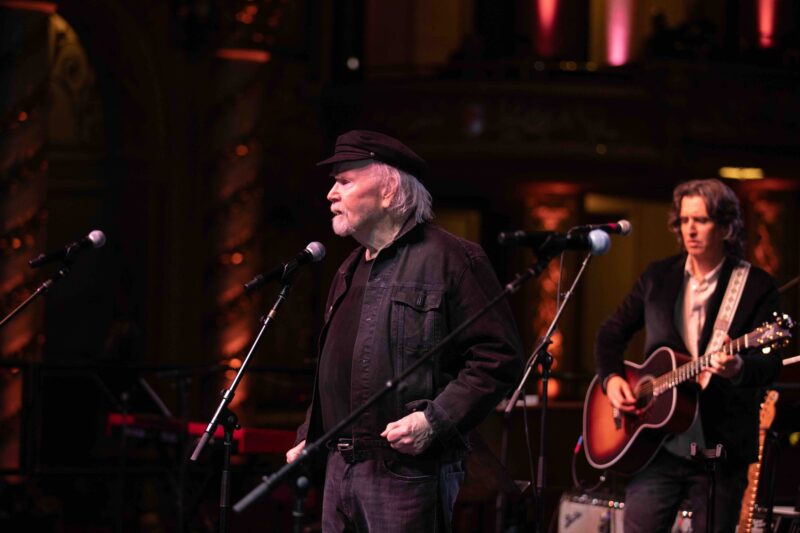
Tom Rush, whose “No Regrets” provided the Walker Brothers with a big hit and the composer with money to put his kids through college, accepted his award from Spaulding, whose music career he had inspired – the guitar, its fretboard inlaid with a naked lady something of a come-on. Accepting it, Rush joked that when he first got the call he thought he was “being indicted at the Wang Center. Turns out I was being inducted — a major upgrade.” Rush offered “No Regrets” and “Jamaica Say You Will,” sung in honour of Jackson Browne, whose award had earlier been presented by FARHoF singer-songwriter-in-residence Chuck McDermott, with John Oates among those playing musical tribute.
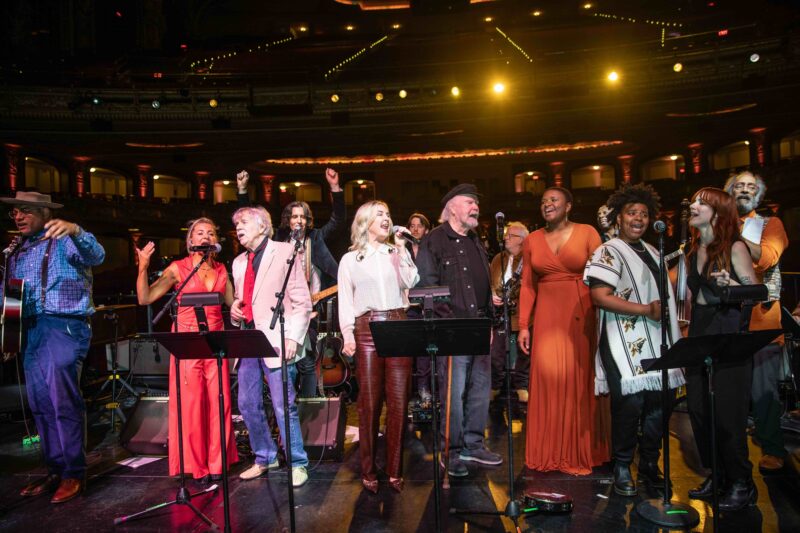
Beth Nielsen Chapman was a somewhat surprising presenter of the laurels to Judy Collins, who praised the whole FARHoF initiative and the chance for thoughtful historical reflection in our topsy-turvy world. Her four-song set included “Both Sides Now” the song which established Joni Mitchell (Class of 24), and “Where Have All the Flowers Gone?” on which she was joined by Stookey and Rush. Tears were shed, everyone joining in Seeger’s timeless song which stands as a testament to the timelessness of this music.
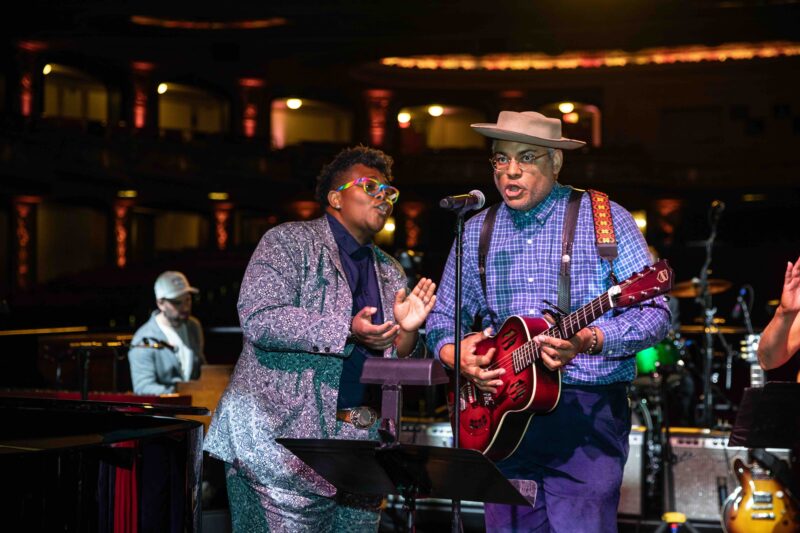
Everything about the evening was thoughtful and appropriate, those presenting awards and those accepting them on behalf of those no longer with us pitch perfect: Lorca Cohen accepting on behalf of his father from author and journalist David Browne, who was wearing the scarf Leonard gave him when they met for an interview on a particularly frigid day, and Paula Cole bringing the house down with “Hallelujah.” John Oates presenting Mississippi John Hurt’s award to his daughter Mary Hurt, the versatile Dom Flemons stepping up to perform “Pay Day” and also, in honour of John Hammond (that award presented by Don Law), “Fox Chase.” And, carrying the torch for the Guthrie family, Anna Canoni presented Anna Lomax with the award to her father Alan Lomax, who recorded grandfather Woody Guthrie’s first Library of Congress sessions. Not even six degrees of separation!
For Soward, the induction was “an important step in establishing FARHoF as a national platform. Not just honouring legacy artists, but creating real, living connections between generations of musicians and audiences.”
Reflected Joe Spaulding, Founder and Board Member FARHOF: “In 2018 when we created the Folk Americana Roots Hall of Fame everyone asked why not pick one of those genres. My answer was that in fact without all three you wouldn’t have what FARHOF stands for. What this induction ceremony and celebration accomplished was that all the artists, songs and friendship that proved once and for all that Folk Americana Roots represents one Genre. My dream came true! Keep stirring that pot of gumbo!”
It sure makes for a nourishing feast.
The Class of 2025 in full:
Living Artists: A living artist is a contemporary performer whose initial impact on the genre was at least 25 years before the year of Induction.
Jackson Browne
Judy Collins
Tom Paxton
Tom Rush
Neil Young.
Legacy Artist: A legacy artist is a performer whose initial impact on the genre was at least 45 years prior to the year of Induction.
Leonard Cohen
Aretha Franklin
Mississippi John Hurt
Sister Rosetta Tharpe
Muddy Waters
Industry/Non-Performer: Honors those whose creative or technical contributions shaped the sound and legacy of American music.
John Hammond
Alan Lomax
Liz Thomson is the author of the award-winning biography Joan Baez: The Last Leaf, and the revising editor of Bob Dylan: No Direction Home by Robert Shelton, the New York Times critic who had unparalleled access to Dylan in the key early years. Liz is currently at work on a biography of Betsy Siggins, godmother to the Cambridge folk revival and a mentor to many.
