
Lowland lo-fi compositions of “love, loss and lap steel”.
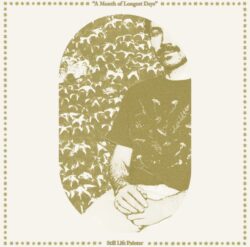 Phil Smith was part of Glasgow’s thriving indie-rock scene before embarking on his solo venture as Still Life Painter. In 2018, he took on bass duties for The Vignettes, described as “the missing link between Glasgow & NY” by the Belgium-based music blog Turn Up The Volume. From 2019, he was a member of Blush Club, a 5-piece indie-rock band founded after a meeting of musical minds at the city’s King Tut’s Way Way Hut venue. Blush Club’s final flourish came in 2024, enforced by the emigration of their vocalist. Following that amicable split, Smith rebooted his creative drive with his Still Life Painter project. Youthful exuberance made way for existential vulnerability. When I asked him about the origin of the name, he replied, “I’m a pretty quiet person, I like to sit and watch the world go by. So, the name ‘Still Life Painter’ felt like a reflection of the observer in me, while being open enough to work if the project shifts or grows into a band in the future.” A pair of artist residency programmes in 2024 played an important role in the project’s gestation. Smith’s time at Clashnettie Arts Centre in rural Aberdeenshire, and at Studio Faire, a 19th-century maison de maître in Nérac, in Southwestern France, provided ample opportunity for the reflective observation evident in his lyrics.
The title of Still Life Painter’s debut album, A Month of Longest Days, comes from a line in its first track, How Long Will I Wait?, a bright jangle-infused opening statement with a summer-sounding double-tracked vocal chorus. The bucolic imagery of Gold, the album’s lead single, speaks of new beginnings; “Start again/ Once the dust settles/ You may find/ There is gold among the rubble”, echoing the spirit of Ron Sexsmith’s Gold in Them Hills. Rather than a new start, It’s Too Late deals with an old ending, further advanced than the one in Carole King’s song of the same name. The chiming guitar of November may elicit recollections of Roger McGuinn’s Rickenbacker, or even the Television song Days, before coming to an abrupt halt, followed by footsteps on a wooden floor and a brief disjunct piano coda. Smith sharpens his woolgathering game with the organic tones and strong harmonies of Good Fortune, and the enigmatic Shore inhabits a similar musical burrow to some Fleet Foxes’ songs. There are a couple of less accessible songs, perhaps sketches in search of an injection of colour and sparkle from a band.
In his bio, Smith describes A Month of Longest Days as a “joyous bundle of americana-infused indie rock tied together by love, loss and lap steel.” He plays all the instruments apart from drums, with lap steel embellishments loosely tethering his sound to the americana flagstaff. Playing in bands provided his musical education, apart from a couple of years’ worth of guitar lessons in Aberdeen. “Before recording A Month of Longest Days”, he told me, “I was very much a novice in terms of using a DAW; I learned a lot about mixing and production through the process of building the arrangements for the songs on the album.” The sound resulting from that steep Digital Audio Workstation (DAW) learning curve is undeniably lo-fi, and some listeners may feel that in forsaking the collaborative synergy of a band approach, Smith has missed a trick. Overall, A Month of Longest Days shows enough promise to warrant keeping an eye out for his next offering, whether that be another bedroom-based instalment or a horizon-broadening collaborative effort. Until then, enjoy some “Love, Loss & Lap Steel”.

