
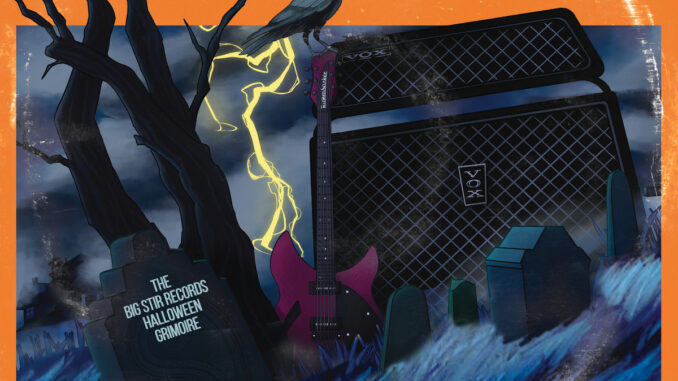
Well, here we are again. Come in, you know the drill by now, I suppose, ha ha ha! Yes, we do have time for another track from Big Stir Records’ Halloween-themed compilation – we think you’ll like this one, we think, though, that you should have liked them all so far. Let us know – or not, as you prefer.
Vermont-based indie-folk duo Hungrytown (singer-guitarist Rebecca Hall and multi-instrumentalist Ken Anderson) have an ethereal take on folk on ‘Footprints‘ – it’s a little bit Espers / Meg Baird in feel, as it sinuously moves through an unsettling psych-folk landscape. It’s an influence that the band themselves acknowledge as they told us individually. Rebecca Hall noted that the songs inspiration was “from reading about a creature from Brazilian folklore called the Curupira, who is described as a young boy having backwards-turned feet. He is a guardian of the woods and its creatures who uses misleading footprints and strange noises to frighten and disorient hunters and others who would threaten the forest. This idea became a jumping-off point for a song about getting lost in an enchanted forest, where “all familiar things seem strange.” In keeping with the footprints theme, I’ve always loved this lyric from well-known Irish folk song ‘She Moved Through the Fair’ that mentions a loved one’s ghost gliding soundlessly, as if hovering above the ground: ‘so softly she came, that her feet made no din.’ I wanted to put an echo of that ethereal floating ghost idea into the first verse, which describes walking into a forest ‘where footsteps make no sound.’”
Ken Anderson added that: “We were aiming for the song to have an eastern folk-horror vibe to it, if there is such a thing! The combination of clawhammer banjo, strings and echoey drums give ‘Footprints’ the lonesome and somewhat desperate feel that we wanted. Influences on display here include Espers, Dead Can Dance, Pentangle, and Trees.”
And, of course, we can recommend a suitable reading accompaniment for this – a tale where strange footprints and unsettling woodlands play a significant part can be found in the seminal cosmic horror of “The Willows” by Algernon Blackwood.


