
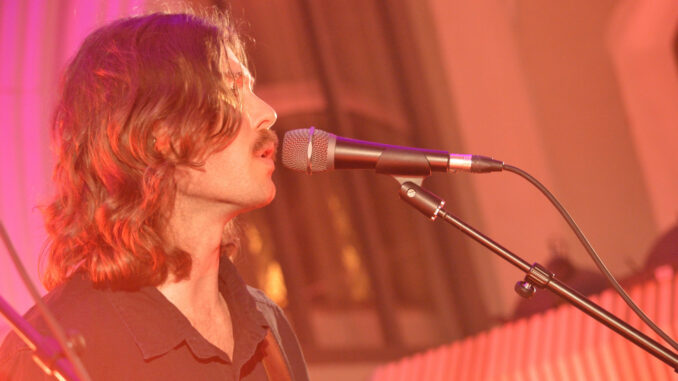
St Stephen’s Church in Ipswich is a venue that invites atmosphere. With its vaulted ceiling, wooden beams, and resonant acoustics, it’s a space where music doesn’t just sound; it lingers, rises, and expands. On this April evening, that sense of space was filled to the rafters as Brown Horse delivered a richly textured and immersive set, following a beautifully poised opening performance from Elanor Moss.
Moss began with Fixer, her low, sonorous finger-picked guitar setting a slow, cinematic tone. There was a quiet command to her performance, her voice moving fluidly through shifts in pitch and dynamics, at times drifting into wordless vocalisations that added a further layer of emotional depth. Again, My Love, a song rooted in change and reflection, unfolded with a natural ebb and flow, her phrasing delicate yet assured.
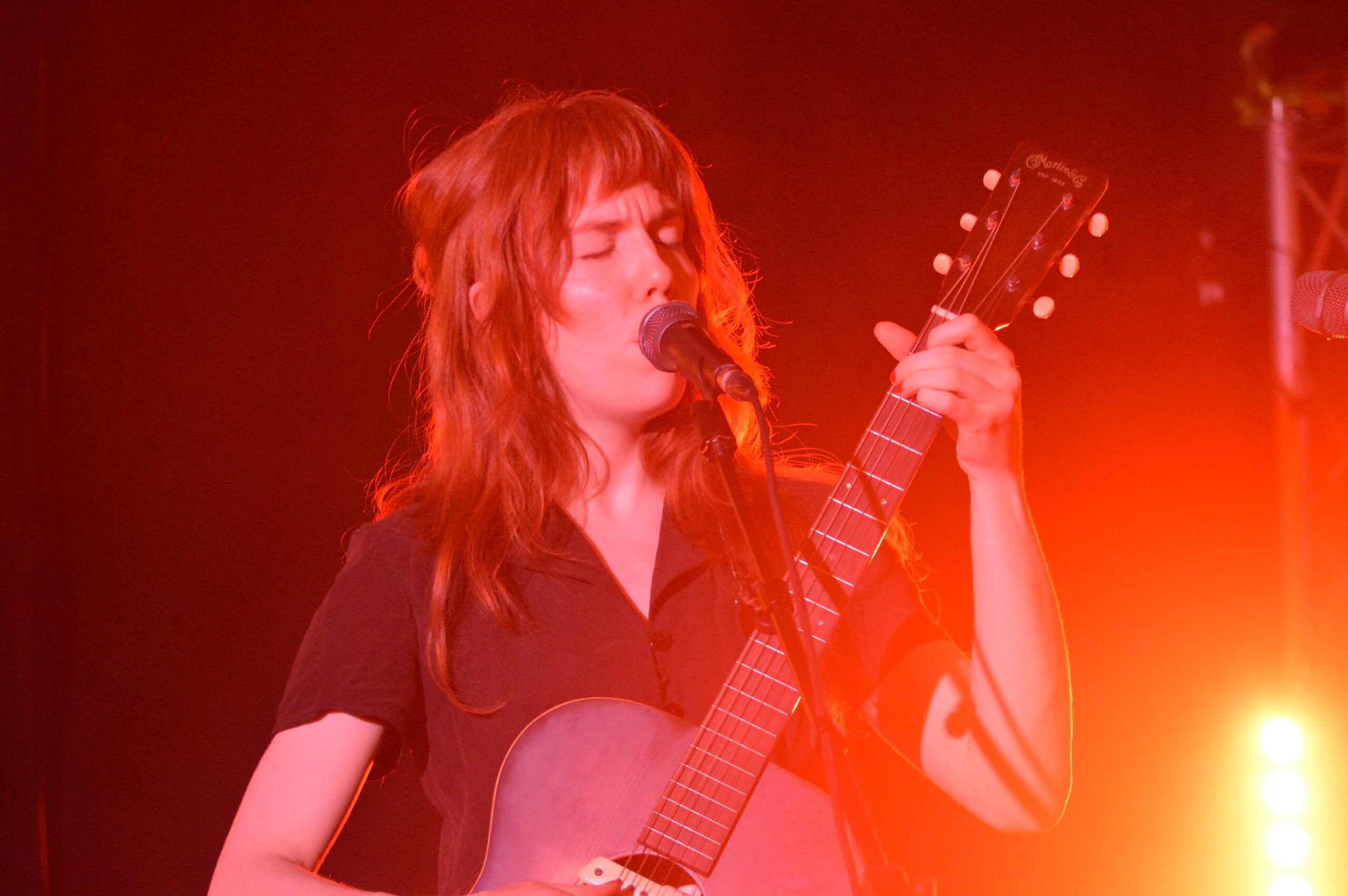
There was a warmth and ease to her stage presence, too. Introducing a cover of On a Good Day, she joked that anyone familiar with the song was “…a cool crowd”, before delivering a dreamy, higher-register interpretation. She also used the set as a space for experimentation, sharing a newly written song, possibly titled Taxi, with a lilting, repetitive finger-picked motif and poetic lyricism that gradually gathered intensity. By the time she reached Sarah Waiting in the Car and The Way That It Feels, the room was hushed, her voice full of longing, at once intimate and expansive. It was a captivating set, performed with a natural, unforced elegance.
From the first notes of their opening song, Brown Horse shifted the scale entirely. The title track from their new album, Total Dive, arrived with searing force: huge snare hits, splashing cymbals and a melodic, driving bass underpinning a dense wash of fuzzy, distorted guitar. It was immediate and enveloping, a wall of sound that filled the church with striking intent.
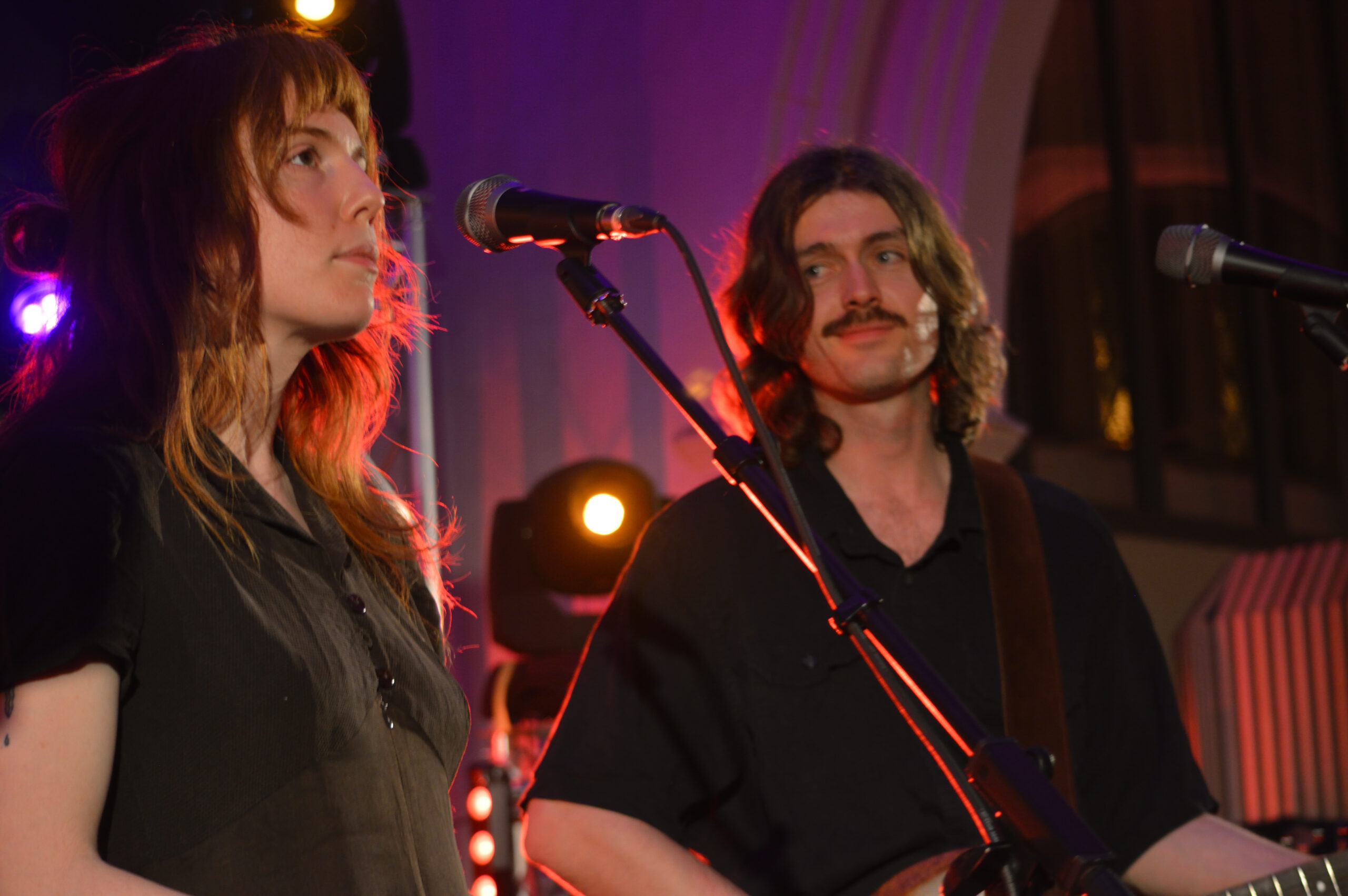
Twisters followed, building from pounding drums and sustained keys into a swirling, restless mass, before an early highlight with I Hear You Calling, a cover of Bill Fay. Joined on stage by Elanor Moss, the band created something hypnotic and expansive: bright accordion tones, circling rhythms and a gradual rise into an ethereal, intertwined vocal passage, the sound briefly dropping away to leave a moment of weightless beauty.
Much of the set drew from the new record, including Hares, written by Rowan, which pushed forward with forceful energy, swirling keys, a muscular bassline and a vocal that ranged with urgency and intent. Corduroy Couch, penned by Niall, brought a different energy: jangling guitar lines, buoyant rhythms and a sense of playful momentum, lifted further by a fluid keyboard passage and a bright, melodic guitar solo. Throughout the set, the band’s habit of crediting individual songwriters added a sense of shared ownership and creative interplay.
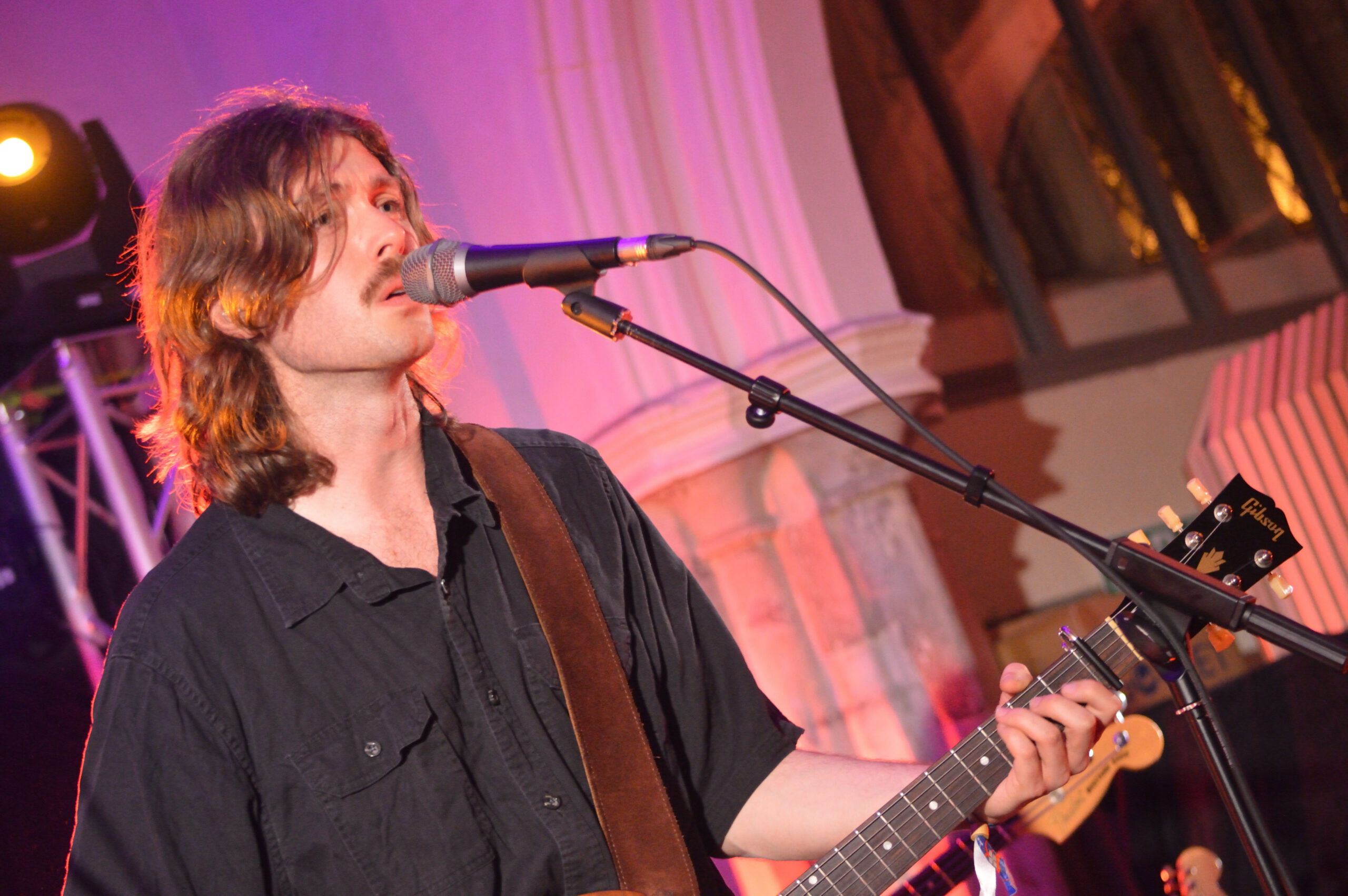
Emma’s Dog Rose leaned into mood and rhythm, its deep, pulsing bassline and repeated motifs creating a hypnotic groove. Here, the band’s ability to balance texture and melody came to the fore: fuzzy distortion, gruffer vocal tones and crashing cymbals combining into something both raw and controlled. Across the set, Brown Horse revealed a distinctive blend of indie rock energy and roots-infused sensibility, shifting effortlessly between styles while maintaining a cohesive, immersive sound.
There was an easy rapport with the Ipswich crowd, too. Despite being Norwich-based, the band spoke of the town as a second home, sharing stories, including a humorous failed attempt to visit Sutton Hoo, with a relaxed, self-effacing charm that only deepened the connection in the room.
Older material provided further highlights. Reservoir saw Emma move to pedal steel, bathed in warm, amber light, her playing adding a sweeping, almost sunlit glow to the song. Stealing Horses was particularly striking, the interplay between lilting pedal steel and bright accordion creating a rich, almost timeless sound. The combination of instruments, accordion, pedal steel, and electric guitar gave the music a depth and character that felt both rooted and exploratory.
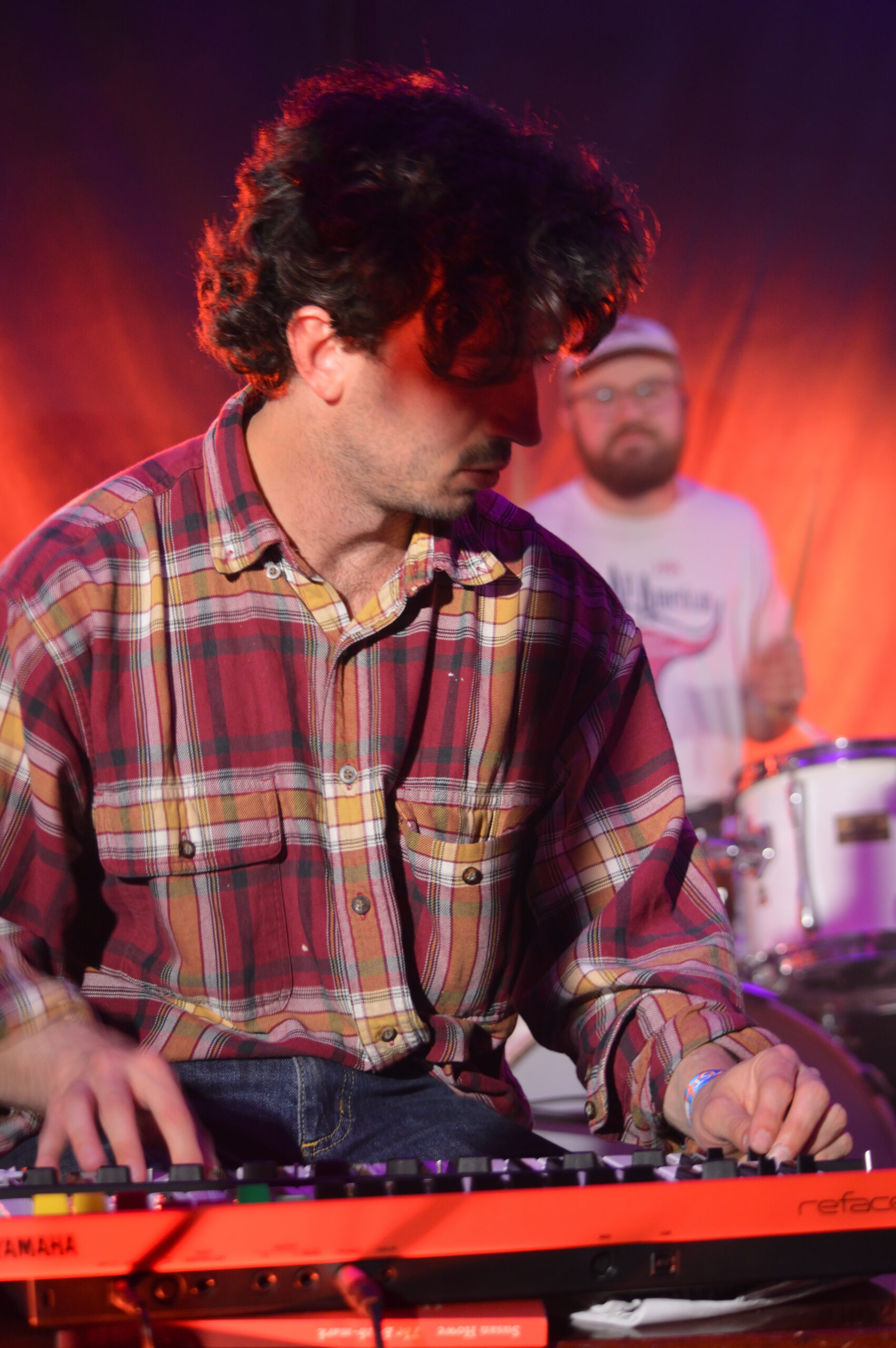
Newer songs like Comeback Loading and Sorrow Reigns continued to showcase that evolving palette. The latter, with its searing guitar and weighty rhythmic drive, leaned into a darker, more intense atmosphere, while still allowing space for the band’s intricate interplay, particularly between pedal steel, keys and guitar, to shine through.
Wreck unfolded as a slow-burning, cinematic piece, its low, intimate vocal gradually expanding into something more dramatic and expansive. In the cavernous setting of the church, the sound seemed to rise and swirl, lights moving across the space in tandem with the music. It was a moment that captured the band’s ability to build tension and release with real precision.
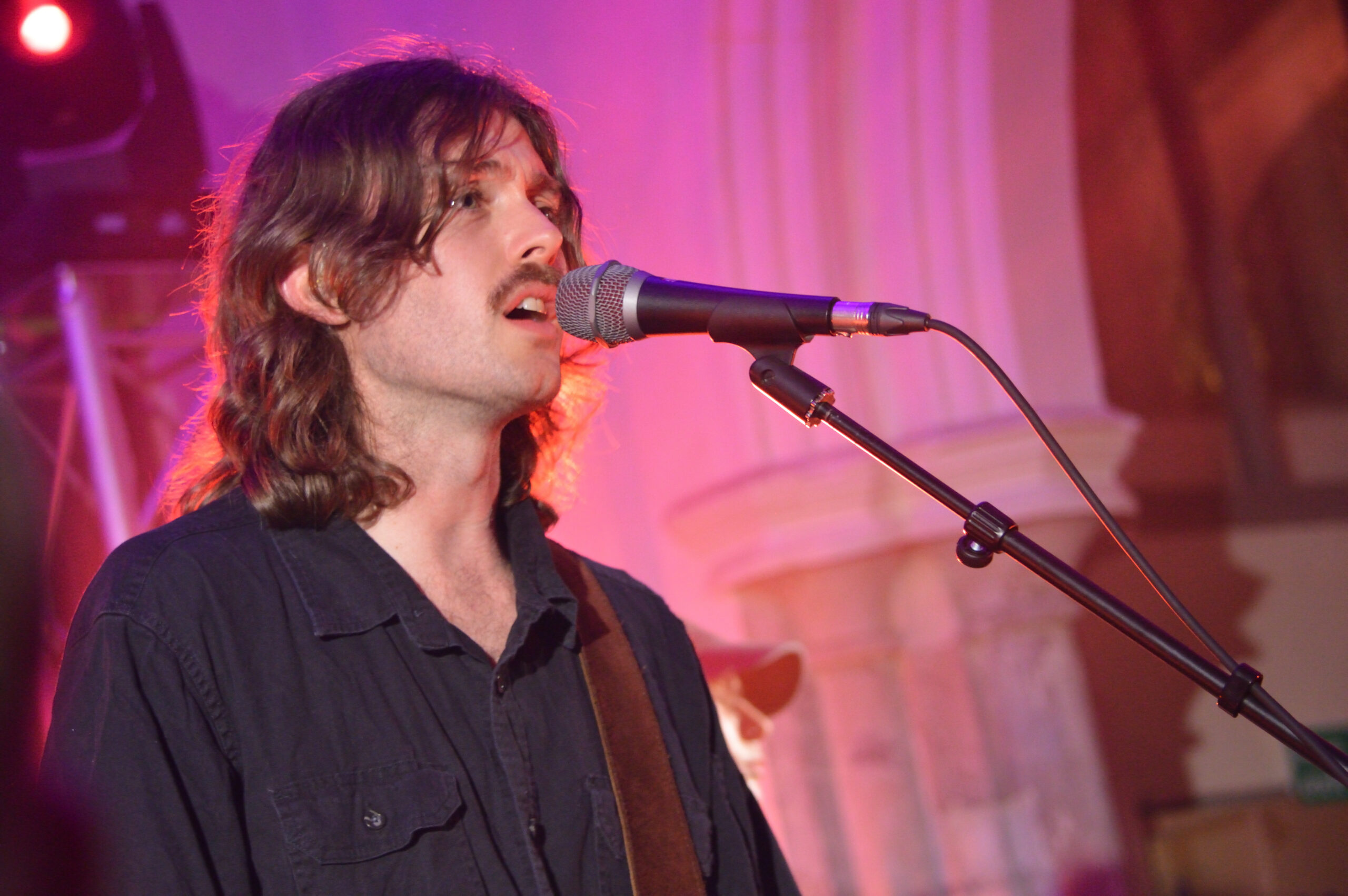
As the set moved towards its close, Watching Something Burn Up provided one of the evening’s most compelling moments. Introduced with reflections on East Anglian landscapes, including the sugar beet factory near Bury St Edmunds, the song carried a strong sense of place. Beginning in hushed, almost spoken tones, it grew steadily into a dramatic, crashing climax, with swooning pedal steel and cascading keys driving the intensity.
They closed with Outtakes, a fitting finale that brought together the many threads of their sound: swirling guitars, playful, almost carnival-like accordion, and a rhythmic core that propelled the song forward. As it built towards its conclusion with huge, deliberate drum hits, sustained notes, and a rising vocal, the sense of shared joy on stage was unmistakable. Smiles were exchanged, the crowd responded in kind, and the final moments landed with real impact.
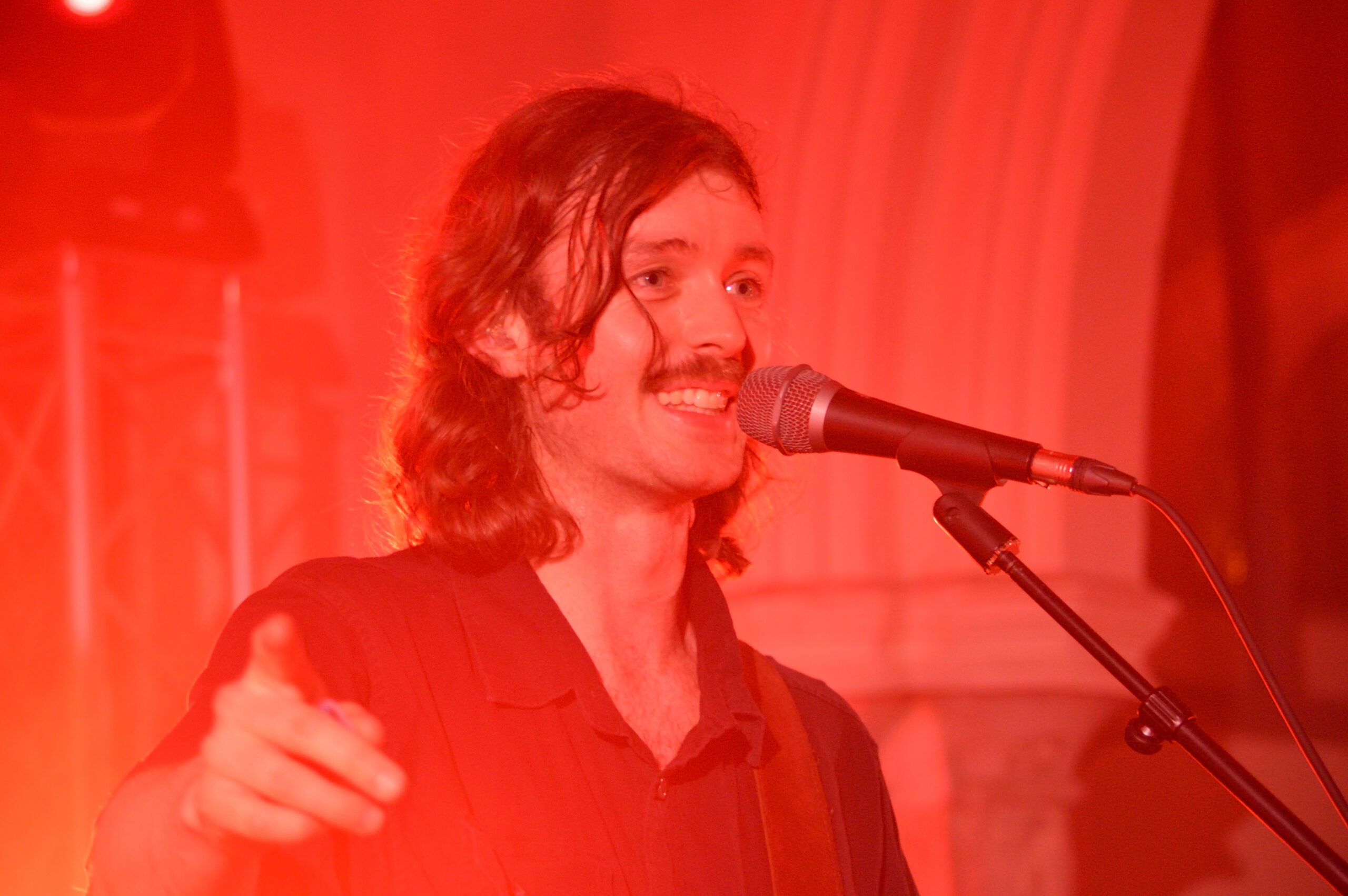
This was a performance that felt perfectly suited to its surroundings. In a space defined by height, resonance and history, Brown Horse created something expansive yet intimate, powerful yet nuanced. It was music that filled the room, but also drew you inward, rich in texture, alive with detail, and delivered with a growing sense of confidence and identity. If you get the chance to see them live, take it.
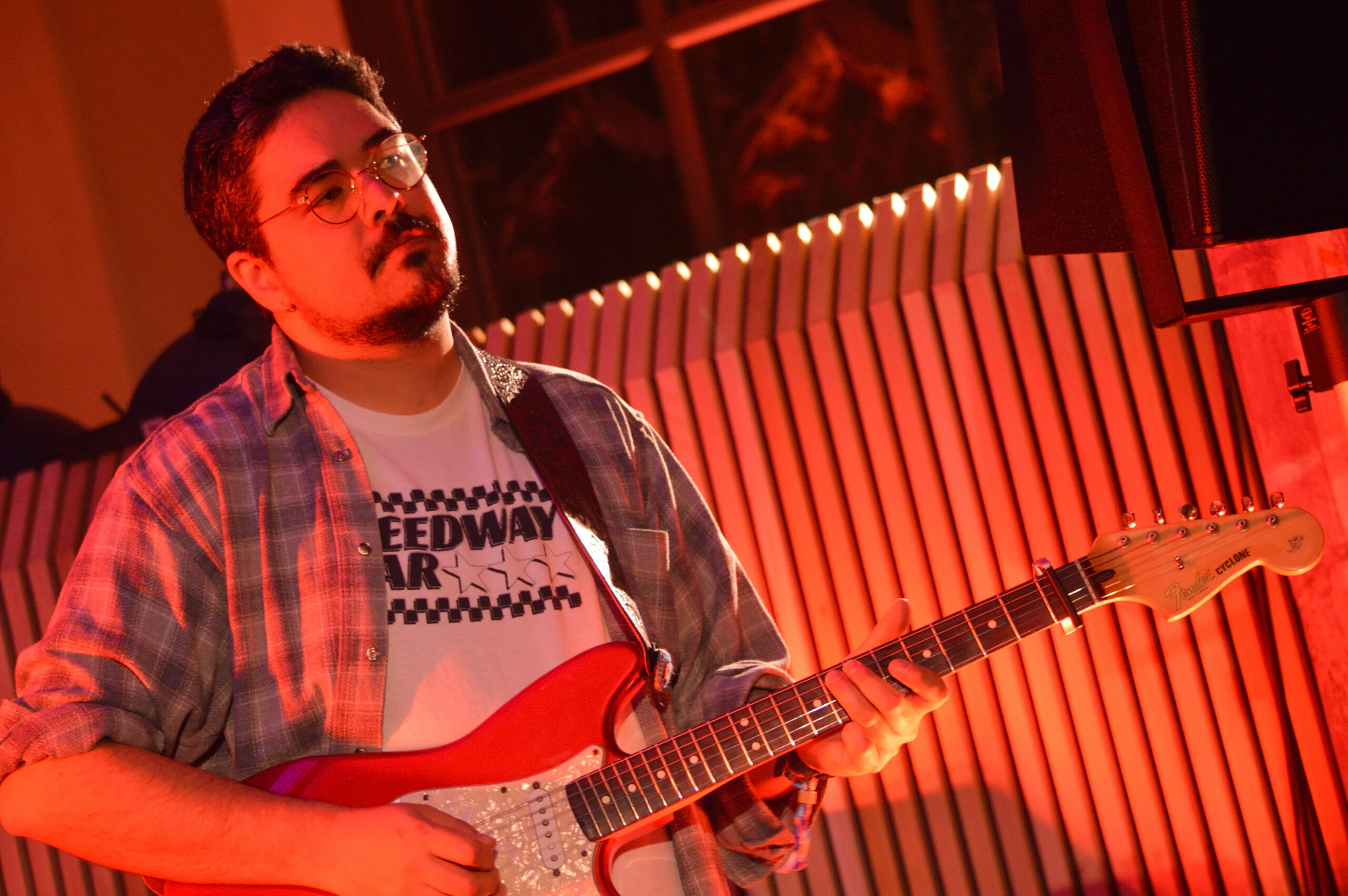
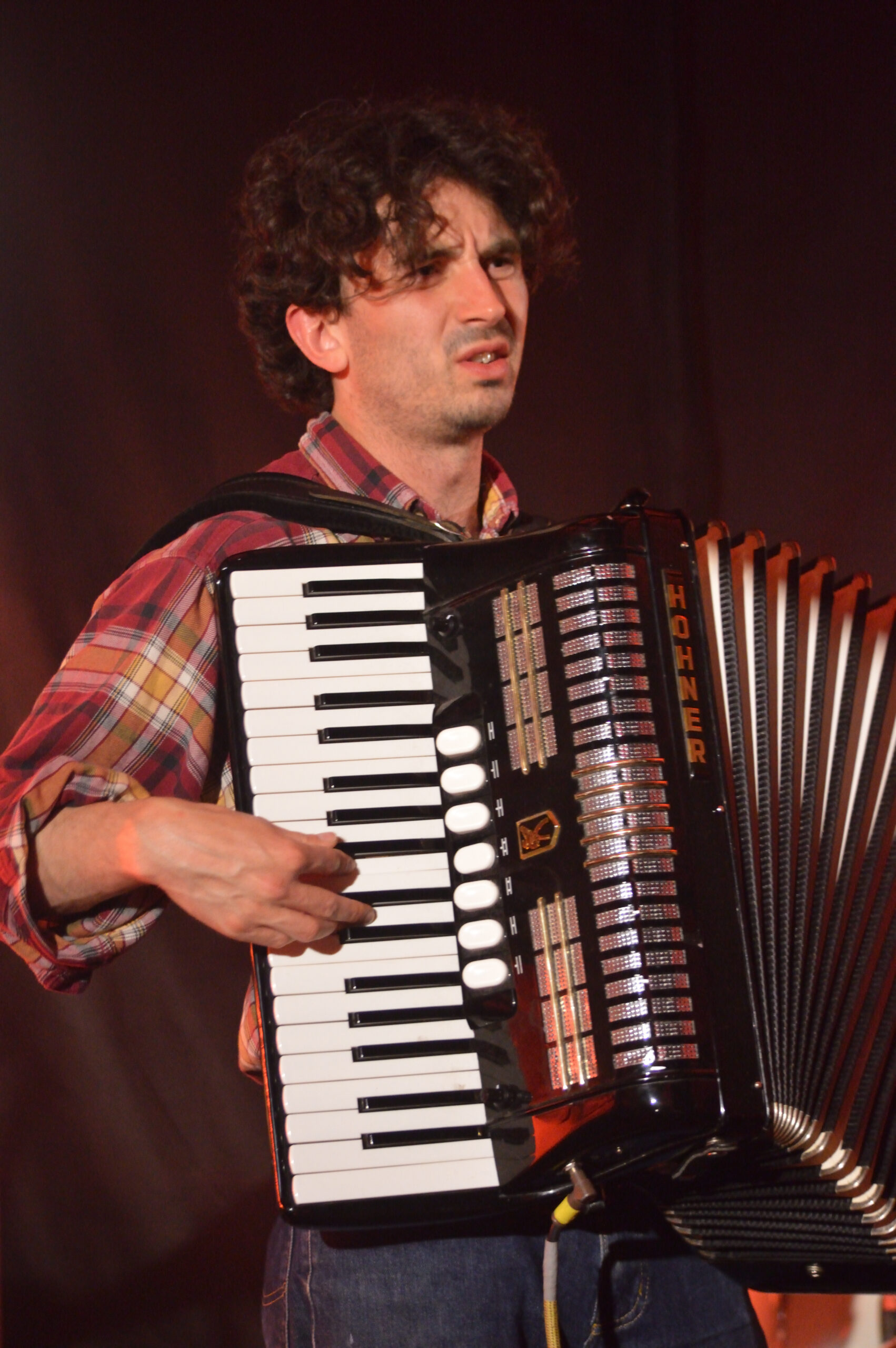
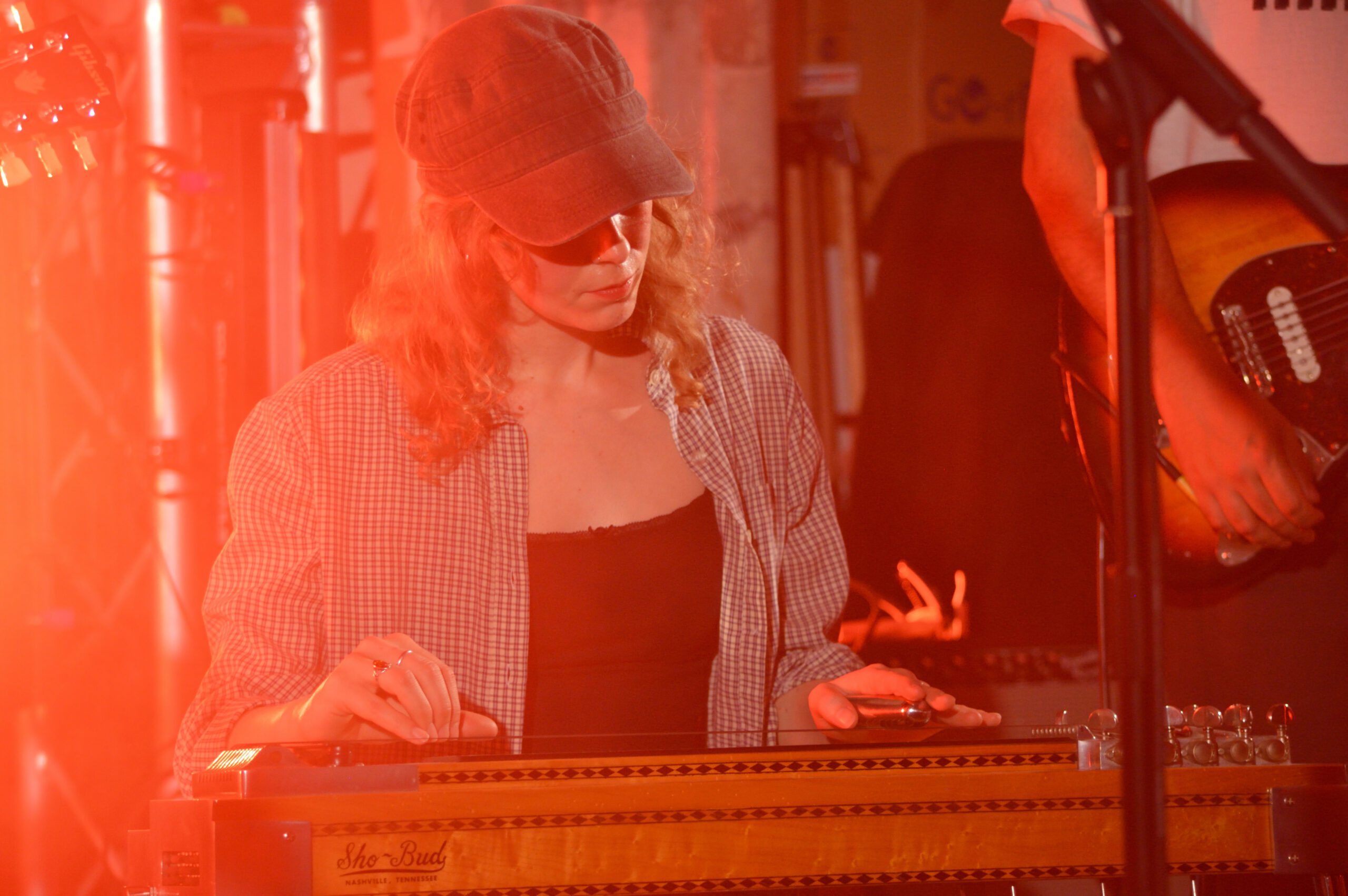 Photo credit: Andrew Frolish


