
Cullum concludes his triumvirate of distinctly British folk-fused psychedelic albums by utilising occult-tinged horror tales to make sense of current affairs.
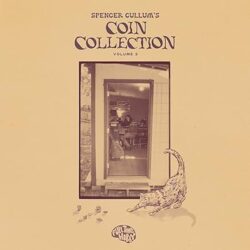 Back in 2021, pedal steel maestro and bandleader Spencer Cullum released his first Coin Collection album, which skilfully blended sounds and styles, gently merging musical landscapes with a vintage dreamlike ambience. Displaying a keen ear and a penchant for early seventies progressive rock, whether it be the jazz-influenced acts such as King Crimson and Soft Machine or those favouring a more pastoral approach like Caravan, and combining them with a passion for the architects of folk rock, like Fairport Convention or The Incredible String Band, Cullum ingeniously knitted his influences together, effortlessly creating music that often proved difficult to describe. Two years later, he would follow this with his Coin Collection 2, reinforcing his newfound reputation as one of the most talented and eclectic musicians currently operating out of Nashville. Now, with the release of Coin Collection 3, he brings to a conclusion this triumvirate of albums that meld British folk music with the psychedelic sounds that so influenced his early listening.
Like many of us lately, Cullum has found the need to escape the noise, violence, and greed that have come to soundtrack the present day, taking refuge in the makeshift recording studio built in his garden shed in Nashville, which doubles as a sanctuary from a world drunk on malicious hostility. Within this relative safety and calm, his new album took shape with a deliberate attempt to make sense of the global meltdown by creating a narrative that avoids becoming overtly political, instead turning to the folklore of his native England and its tales of ancient relics and midnight rites, to draw comparisons with today’s troubles. Much of this can be attributed to the book Damnable Tales: A Folk Horror Anthology, which Cullum received as a gift from his brother just before recording began.
The album opens with Rowan Tree, where a hypnotic rhythmic pulse acts as a conduit for a deceptively intricate finger-picked acoustic guitar. At the same time, the narrative tells how the spirits wreak revenge on our protagonist and his compatriots for having felled a sacred tree, drawing modern-day parallels to the famous Sycamore tree in Northumberland, which was unlawfully cut down, resulting in nationwide consternation. Musically, one’s attention is immediately drawn to the simpler structure of the song, a trait that extends throughout much of the album, with far less emphasis on the broader and more ambitious genre-blending strokes that were such a hallmark of his first two releases. Instead, in their place is a more traditional, sixties British folk-singer-songwriter guise, with shades of Bert Jansch, John Renbourn, and, in particular, Davy Graham.
Elsewhere, Jackie Paints finds Cullum in a reflective mood, thoughts turning to Cornwell, and his mother working in her art studio. A mystical folk song with pastoral leanings, tinkling piano, and a narrative that aches for missing both her paintings and conversation, while Gavon’s Eve, which features Allison de Groot on banjo, finds Cullum fully embracing the folk horror genre. Previous contributors to Cullum’s albums, Erin Rae and Annie Williams, are on hand again to offer delightful vocal support to Look At The Moon and Music On The Hill, respectively, while Don’t Go Down, which features the vocals of Oisin Leech along with some delightful melancholic saxophone playing from Jim Hoke, marks this song as one of the album’s highlights.
Despite the album’s primary British folk influences compared to its predecessors, it still offers enough tangents to feel musically related, especially when Cullum is unaccompanied on vocals. Songs such as Easy Street, a song inspired by an image of an ICE agent celebrating with a cigar after a day detaining and deporting people, Old Paul Hill, and, in particular, Washed Up On Shore, are all testament to Cullum’s eclectic musical palette, mixing progressive and krautrock with languid blues, drawing comparison to stalwarts of the late sixties and early seventies psychedelic folk scene, such as Kevin Ayres and Robert Wyatt. This point is particularly evident on the latter, where the piano-led minimalistic number, accompanied by only Rich Ruth on electric guitars and synths, along with Cullum’s half-sleep vocal delivery, is a minor classic.
In bringing his trilogy of albums to a close with Coin Collection 3, Cullum has delivered a slightly more stark and stripped-back record, with songs more rooted in their structure than was possibly the case on the previous two offerings. However, this approach has allowed for a more reflective and personal album, every bit the equal of its predecessors, and it will be fascinating to hear what direction this pedal steel maestro chooses to take next.


