
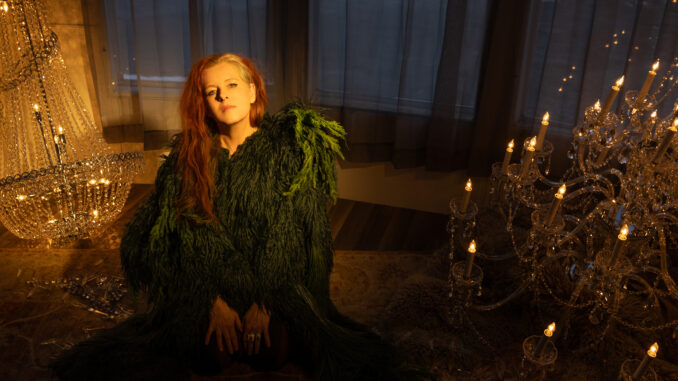
Neko Case has been on my mind a lot recently. Perhaps it’s the autumn and the mood swing of weather that prompts some thoughtful angst, but I’ve also noticed she is having a bit of a cultural renaissance. With her recent memoir, The Harder I Fight The More I Love You, receiving widespread attention and acclaim, Case’s music also appears in a pivotal moment in Niko Stratis’ debut book, The Dad Rock That Made Me A Woman. The author hears ‘I Wish I Was The Moon’ over the radio and is so struck by it that she hastily writes a lyric and “Niko(?)” in ink on her arm, which later inspires her new name after coming out publicly as trans. (You can read the excerpt Stratis wrote here)
Case’s lyrics linger on the wistfulness of being alive: dreadfully existential but liberated. She wishes she was the moon in one song, and then later becomes a tornado tracking down its human love and admitting that it “carved your name across three counties” in blood. Given the level of detail that goes into each track, any two people can listen to the same Neko Case song and walk away with two different stories in their minds, which only adds to her mystique and lasting power.
As her eighth studio album, “Neon Grey Midnight Green”, fast approaches, I wanted to look back through her discography and determine the album that I believe is essentially Neko Case. There were three main contenders for the album I couldn’t live without, but in the end, I chose one that I find myself coming back to in every season and every emotion.
Can’t Live With It: “The Virginian” (1997)
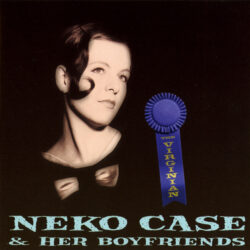 Maybe it’s unfair to pick on a debut album, especially when the follow-ups so naturally hit their stride. But “The Virginian” is the least Neko Case of her albums. It’s a bit like when pop artists try out one genre as their first release and pivot away from it for the rest of their career (See: Katy Perry debuting with a gospel / Christian rock album, going radio silent, and then dropping the pop single ‘Ur So Gay’ six years later. Not that they are in any way paralleled in talent)
No doubt the album had its merits. Case’s voice was as arresting as her later releases, which caught critics’ attention. The traditional, outward country elements earned her a sort of “honky-tonk angel” designation. This might have been a bit premature considering what was to come: the country-noir ‘Furnace Room Lullaby’.
Her plaintive country wail that likened her to Loretta Lynn could still be found on ‘Furnace Room Lullaby’, but the songwriting was more reflective and layered. Songs like ‘South Tacoma Way’ and ‘Set Out Running’ began to shape her distinct sound and tone, and by the time “Blacklisted” rolled around, Case had captured a niche: moody, bluegrass-inspired, with rich, complex stories that had to be decoded.
“The Virginian” does boast the gay country gem of a song ‘Karoline’, where Case falls in love with a cowgirl, and vows that “with a passion you inspire, I’m gonna keep those men at bay”. Yet given the covers that make up half of the album, this debut didn’t necessarily distinguish Case, nor did it properly featuring her songwriting talent.
Can’t Live Without It: “Fox Confessor Brings The Flood” (2006)
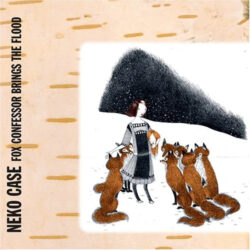 This was difficult to choose. I nearly replaced this with “Blacklisted” or “Middle Cyclone”, but “Fox Confessor” contains some of Case’s best writing and greatest emotional depths. In interviews, she’s noted that ‘Hold On, Hold On’ is the first autobiographical song she’s released. Thus, everything before that track was a story she told or a matrix of metaphors and hidden meanings. To be so out in the open was something Case often feared for years, yet she began that confessional song with the lyrics “the most tender place in my heart is for strangers”, indicating that her artistic detachment from song subjects was perhaps vulnerability all along.
“Fox Confessor” stands out for another reason, which is that many of the melodies and backing instrumentals have this music box-like quality to them. The best example of this would be the dulcimer at the beginning of ‘That Teenage Feeling’, underscoring the childlike desire for love like an old ballerina music box. I’ve noticed the music box sound in other albums: after a verse in “Middle Cyclone”’s title track and very faintly in the background of ‘Calling Cards’ around the 2:07 mark. The rising, playful electric guitar (?) riff after the chorus of ‘Maybe Sparrow’ sounds clearer than the tinny sounds mentioned above, but just as crystalline. Whether these moments are a watermark of sorts or just a sound Case likes to evoke, it makes her art feel older, like an heirloom passed down.
Case balances the delicate with the raucous effortlessly in “Fox Confessor” – just take the darker sound of the electric guitar on ‘Hold On, Hold On’. In ‘A Widow’s Toast’, she avows that “better times collide with now / And better times are coming still”, but in the demo track ‘Behind the House’, she wakes up crying, having run from a house fire in her sleep. The most tragic, ‘Star Witness’, features a collage of violent scenes and powerlessness, which was inspired by an actual event: a Black child was shot in front of Case, and didn’t receive any media coverage nor widespread grief.
That bleakness permeates much of her artistry, and the helplessness she felt when witnessing injustice appeared again in 2013’s “The Worse Things Get, The Harder I Fight…” on the a cappella track ‘Nearly Midnight, Honolulu’, where Case imagines herself comforting a child who was verbally abused by their mother. “Well, I just want to say that it happened”, she quietly chants, later stating that “I’m sorry, ‘cause it happens every day”.
Case is often an observer to the darkness she sings of, often writing in an attempt to explain it or gain control. “Fox Confessor” grappled with the inherent senselessness and injustice of life, beginning with the album opener ‘Margaret vs. Pauline’ as she omnisciently watches two emblems of the American class system and the gap of fortune between them. The titular Fox Confessor originates from a Ukrainian folk tale that warns of the danger in being vulnerable: a wolf is promised salvation by a fox who tricks him and ultimately causes his death.
Against the backdrop of car crashes, amputated fingers, and the double meaning of “blood runs crazy”, “Fox Confessor” is, at face value, a litany of fables and warnings. These warnings don’t hold much weight given the unpredictable violence of the world, which in turn motivates Case to retain her agency.
In the face of death, “I own every bell that tolls me”, she sings at the end of ‘At Last’, affirming that while she is “just an animal and cannot explain life”, she has the power to accept this turmoil and live fearlessly in spite of it.



Good