The Black Deer Festival has become a standout fixture in the UK’s Americana and roots music scene, celebrated for its eclectic line-ups, intimate atmosphere, and commitment to both emerging and established artists. In October 2025, Black Deer is launching a new urban spin on its festival experience: ‘Black Deer in the City’, which will take place at London’s Tobacco Dock. AUK’s Andrew Frolish spoke with Chris Russell-Fish, Managing Director of Black Deer, and Black Deer’s co-founder and Creative Director Gill Tee about the challenges of translating a rural festival vibe into an urban environment, and how the event will maintain its spirit while navigating logistical hurdles. Organising ‘Black Deer in the City’ is a huge undertaking alongside the other aspects of the Black Deer brand: Black Deer Live shows have already taken the festival experience to a wider audience while supporting grassroots music venues and Black Deer Radio is now well-established. Our very own Keith Hargreaves is one of the radio hosts and we urge all our readers to download the ‘Black Deer Radio’ app or access it via your smart speaker. The busy schedule includes news, interviews and a Saturday morning show with the famous Neil ‘Doctor’ Fox as well as regular shows with new host Anna Louise, who describes Black Deer as her, “…spiritual home.” Alongside Black Deer Live, the radio station and the urban adaptation of one of the UK’s leading americana festivals, the Black Deer team has also just announced a monthly live residency at iconic music venue The Half Moon in Putney. Exciting times are ahead for the Black Deer brand and Black Deer fans.
Andrew Frolish: Please tell us a little about how Black Deer began. When you were conceiving the inaugural Black Deer back in 2017–18, what was your mission and guiding principles? What were your hopes at the beginning?
Chris Russell-Fish: From the very beginning, our goal was to create a festival with a strong identity and a sense of community. We wanted to showcase Americana and roots music in a way that felt authentic, with a personal touch in how the festival was delivered. That vision has always informed our decisions, whether it’s choosing artists, designing stages, or managing logistics.
Gill Tee: Black Deer came about in a rather strange way. I was having a party at my house, and I’d set it up like a mini festival – wristbands, little VIP area, the works. My neighbour brought her uncle along, a man called Colin Lloyd. He looked quite regal, like a member of the royal family, though for the record he isn’t!
He recognised me from my days running the Hop Farm Festival and started reminiscing. He told me he loved country music, had worked as a successful marketeer in London, and spent lots of time in America. We got chatting and hit it off straight away. Then he asked if I’d ever do a festival again. I told him I’d had five great years at Hop Farm with Vince Power, learned a lot, but after it collapsed owing me a lot of money, I’d sworn off festivals. I said the only way I’d ever do another would be if it was in a genre that I loved and believed had growth potential, at the beautiful Eridge Estate, a place that I believed was a perfect place to build a festival, properly financed and where I had creative control. Colin said, “Well, I’m retired now. If I put in some seed money, would you explore the idea?” We shook hands, and that was the start of Black Deer.
I rang Deb Shilling the next day, who I was working with at the time, and asked if she wanted in. She did. We then connected with people in the industry who understood the genre – Ian Snodgrass, who’d worked at Universal, was brilliant in connecting us further. Within weeks we were on a plane to Nashville with Colin and Ian, meeting top agents and industry figures. It was daunting but also exciting. My years at Hop Farm – though they ended badly financially – were an expensive but invaluable education. Because I’d delivered five years of festivals with respected promoters, the Nashville people trusted me as many of their artists had played the festival. That credibility helped us launch Black Deer.
Andrew: So, your past experiences prepared you well for starting Black Deer?
Gill: Absolutely. At Hop Farm I learned that you must love the music – that passion carries you through the rollercoaster ride. Vince, who I worked with there, was a music man through and through. He’d gamble everything if he believed in it.
I also learned hard lessons, like when we booked Prince. Hop Farm had been running smoothly for three years, audience growing, and suddenly we got offered Prince – the only UK festival he ever did. It was an incredible show, but we only had ten weeks to add an extra day, get new council permissions, redo traffic management – everything. We pulled it off, but the short lead time meant ticket sales didn’t match the cost. It was a massive financial loss. So, I learned the importance of knowing when something is a step too far, and that balance of passion and pragmatism has been vital for Black Deer.
But none of that stopped my ambition to start Black Deer in the right way – with high production values and a clear vision. In hindsight, would I have started small? No, I wouldn’t. It had to launch big, bold, and confident. If we’d started as a tiny event, it would have been lost in the sea of festivals that never really made it. 2018 was our statement year. It was about saying: “We’re here.” People told us afterwards that it felt like Black Deer had been around for years – that it already belonged in the festival landscape. That was a wonderful thing to hear.
I learned so many lessons along the way. One was always to be on time – I remember Vince always at the gate making sure things happened exactly when they should. Operations was my thing: I loved making sure all the moving parts worked, being there from day one until the very end. I love building a site, watching it come alive.
Deb brought her own incredible expertise, and although she decided the continuing Black Deer journey was not for her, she left her mark. For me, although Black Deer is a rollercoaster ride of amazing highs and lows, it’s always been about the people and the team working together. There was so much love that went into it, that has kept me wanting to continue. When we put on the festival, I was, as the Festival Director, the first to arrive on site, and I loved watching the crew arrive and the sense of community we built even before the public come through the gates. Every night we’d light the campfire, and we even created a one-year-only pub called The Who’d’ve Thought It in an old barn we converted. Everyone working was invited to gather there each night, sharing a beer, and playing guitar around the campfire. By the time the audience arrived, that atmosphere of belonging was already there.
That sense of equality and respect has always mattered to me. Years ago, when I was Head of Entertainment at Capital Radio, I was asked to start ‘Party in the Park’. I loved watching the site being built, seeing the transformation, all the different people and characters arriving. But one day I saw a toilet contractor try to ask a question in the production office and get dismissed, as if they didn’t matter. I hated that. I thought: “If I ever have my own production company, everyone will be equally important.”
‘Party in the Park’ was a huge success, and I’d caught the bug. I went to my boss, David, and said, “I need to leave. I need to start a production company and learn how to build worlds.” He thought I was crazy, told me to go away and think about it. I came back a few weeks later and said: “I can’t do anything else. This is what I need to do.”
So, I left – though with a two-year contract to continue running ‘Party in the Park’, which gave me a strong foundation. From there, I set about building worlds. And that’s what festivals are: worlds that open up for a few days each year. With Black Deer, it’s not just the music – it’s the cooking, the bars, the campfires, the spaces where people gather. It’s a village that comes to life.
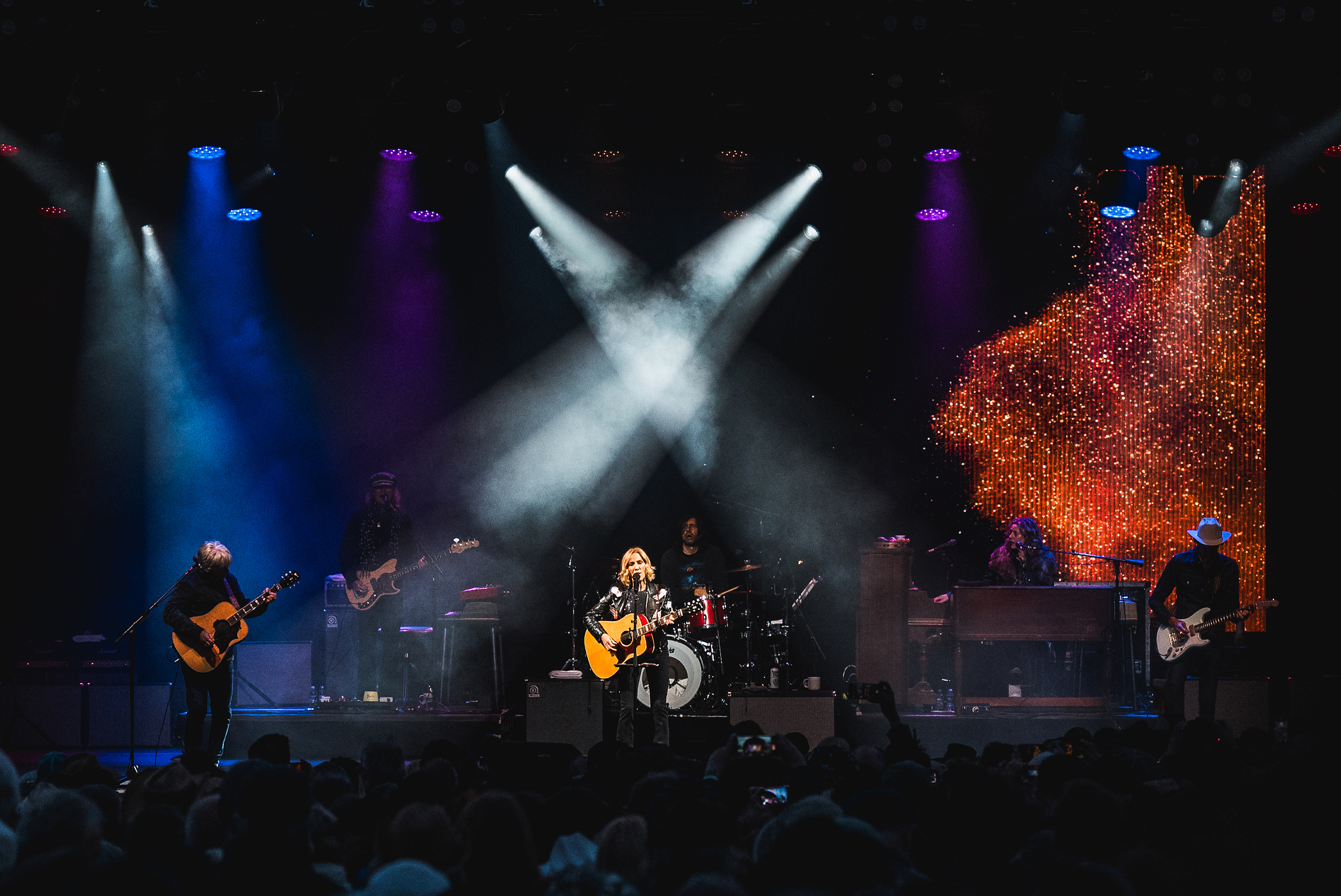
Andrew: And that was the impression from the very first year. You didn’t start small – you went straight in at a level where people said it felt like Black Deer had been around for years. You even booked Jason Isbell right from the beginning. What memories from those first years at Eridge Park stand out most for you?
Chris: There have been so many—weather events, incredible performances, and the little surprises that happen. It’s those moments that remind you just how unpredictable festival life can be.
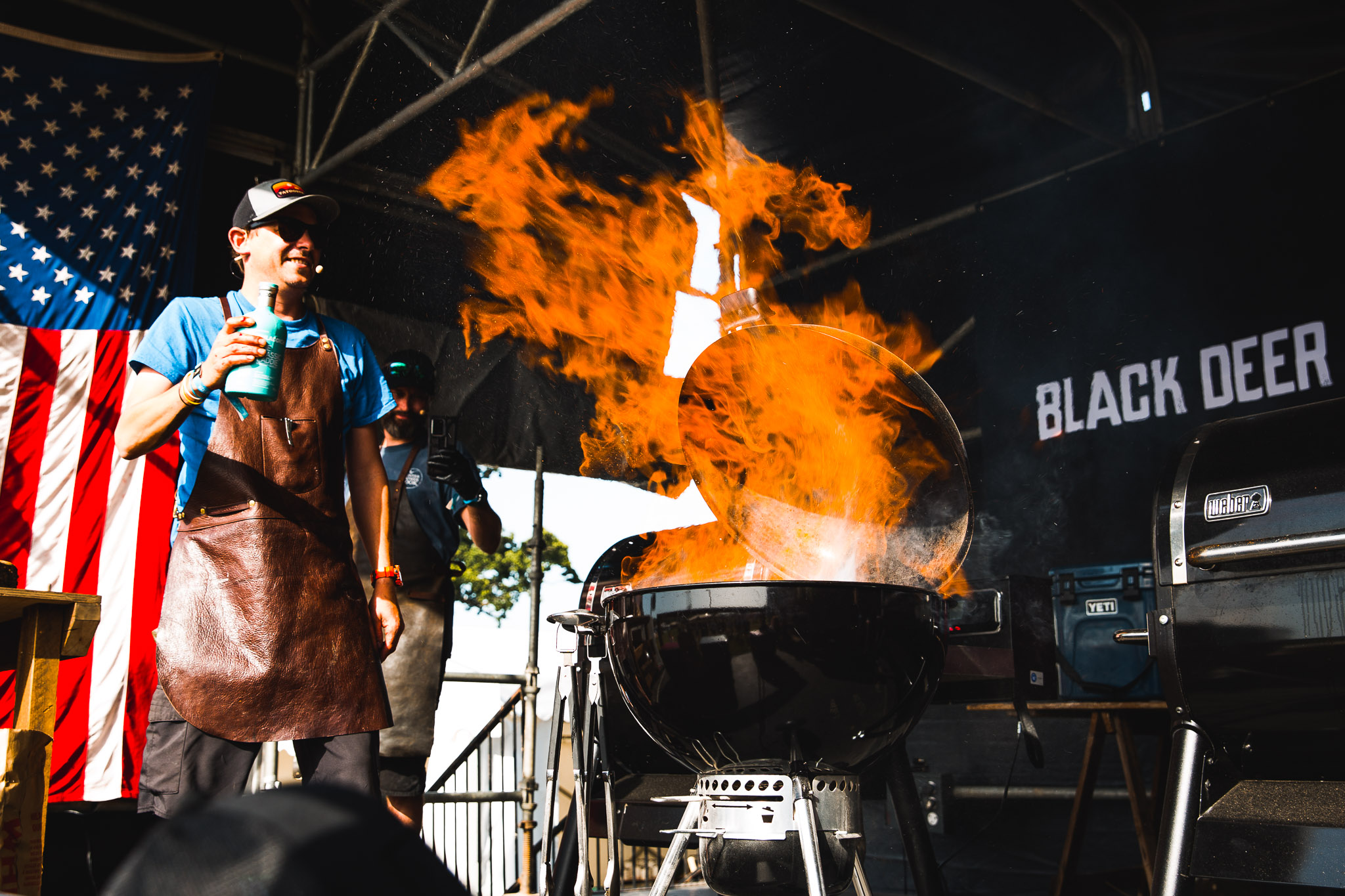
Gill: Honestly, everything about that first year was a highlight. We had an army of volunteers – I called them “the elves” – who helped us build the site. I wanted corrugated iron and wood, not just plain white marquees. I wanted it to feel like part of Eridge Park itself, not just another event. And people really felt that – it felt like a unique place. Creatively, it was magical. Friends, family, friends of friends – everyone pitched in with so much love. When we opened the gates and saw the joy on people’s faces, it was unforgettable.
The second year brought its own special moments. One I’ll never forget: I was walking alone up a hill when one of our regular attendees came over to me. He handed me a small brooch shaped like a deer and said, “Black Deer changed my life.” He told me that in 2018 he’d been in a really dark place, suffering with depression. A friend persuaded him to come to the festival, and it transformed things for him.It was the most beautiful thing to hear, and we had this big hug on the hill. Since then, every year he and his wife have brought me something they’ve made by hand – a crochet blanket with the Black Deer logo, a dreamcatcher, little tokens of love. Those moments remind me why we do this. It’s not just a festival. It really means something to people.
Andrew: Oh, that’s beautiful, when you talk about things like that. It’s a magical memory, and it goes deeper into the identity of what Black Deer really is. It’s not just about remembering a particular artist or a particular performance. It’s about something much bigger than the music. What you’ve described goes to the heart of Black Deer and the community around it. Thank you for sharing that.
I always say live music isn’t really about the music. Of course, we all love it, but it’s more about people coming together, creating bonds, and sharing an experience that goes beyond the songs on stage. That’s what makes it magical.
Gill: Thank you. And yes, for me, it really is a highlight of all the years. That one story stands out because of what it meant to that one person. And of course, I’ve had so many other lovely people say that Black Deer has meant something to them, which is wonderful. But that moment really stays with me.
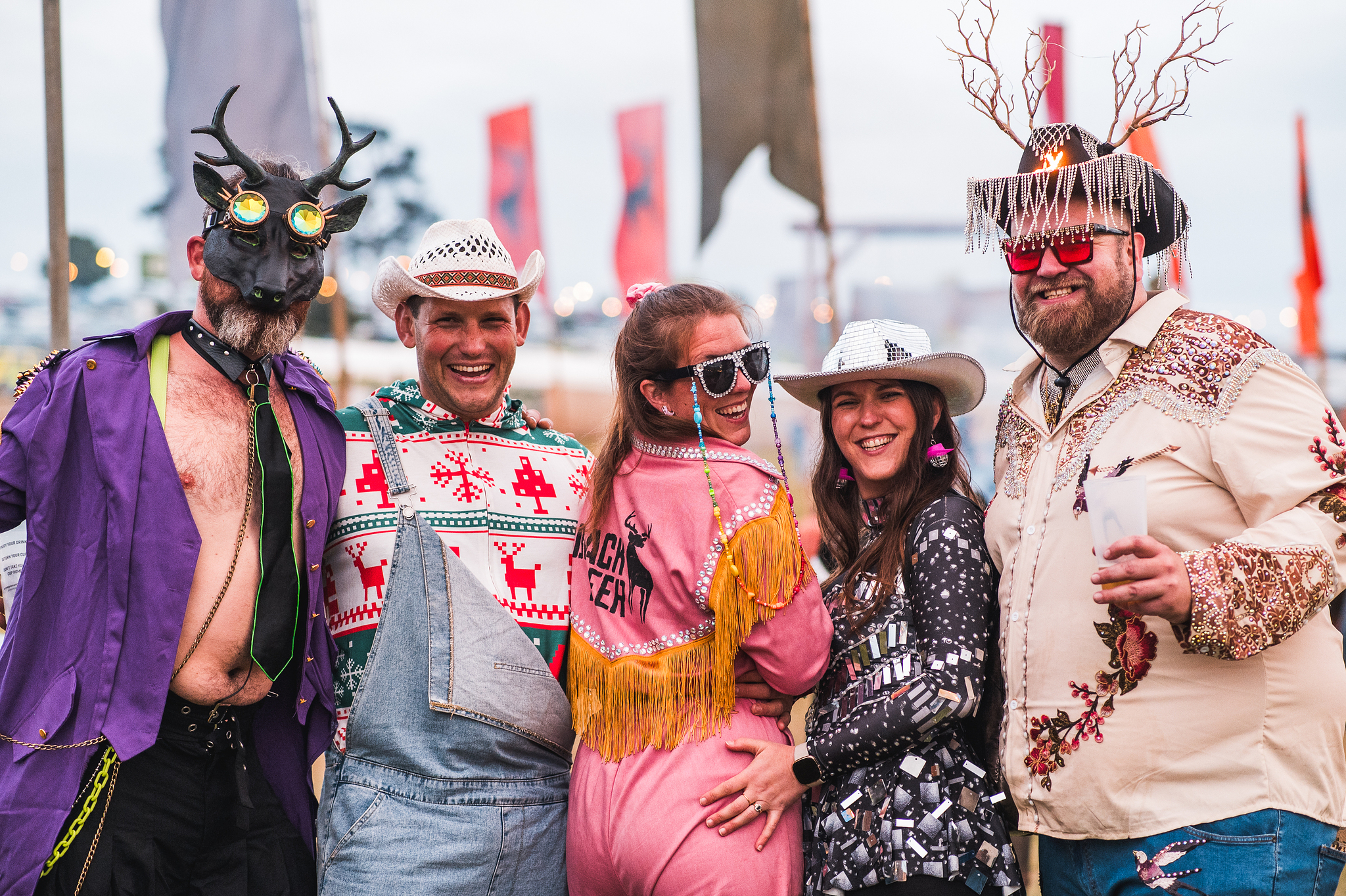
And I want that same spirit to be felt in ‘Black Deer in the City’. I know some people think: “Oh, it’s just another festival – camping, mud, and all that.” But no, it’s going to be different. I hope people realise that all the heart and love is still there. That’s never gone away. In fact, there are new people bringing their own energy and passion into it. When we go to Tobacco Dock, the whole team there – people who’ve never worked with us before – are so excited. They say, “This is the best thing.” You can feel it. So, I believe when the public comes in, they’ll sense something really special too.
Chris: I agree. The whole idea behind ‘Black Deer in the City’ is to bring a different twist to the expectation of what you’d normally find in the green fields of Eridge Park. Apart from the camping and RVs, essentially, we’ve picked up the festival and placed its components inside a beautiful historic building, with new areas to explore too.
It’s about as close to the full festival experience as we can get, without actually being at Eridge. And that’s important – because Eridge Park is completely unique, and you could never just pick up that feeling and drop it in a local town park. You’d lose the atmosphere and eloquence of the place. Tobacco Dock has its own character, its own history. And behind all of that, as Gill said, we want to make sure the Black Deer spirit – the sense of community, the “big hug” – is carried through. That’s why we chose it so carefully, to bring another aspect of what we do.
Andrew: And I think that’s the key. A successful festival – particularly in a niche musical genre – is like a village, or a community, where you feel at home. It’s a cliché, but home really is where the heart is. If the heart of Black Deer is transplanted into a new setting, then it’s still Black Deer, with all the community, passion, and love that make it what it is. The surroundings might look different, but the feeling will be the same in all the ways that matter.
Chris: Exactly. And it’s not designed to replace the festival at Eridge – that would be impossible. This is something additional. For people who are part of our community, or who want to understand the genre and experience what we’ve created, ‘In the City’ allows them to do that. Not everyone has the time, the money, or the freedom to travel to Kent for a three-day camping festival. For some people, that’s just not feasible. ‘In the City’ gives them the chance to be part of Black Deer without all the travel and logistics.
And it’s not only for our existing community – it’s also a way of reaching new people who might never have considered going to a greenfield festival. Some people still have misconceptions about what a festival is, or they just don’t want to camp. This gives them an opportunity they might otherwise never have. Gill and I have often had conversations on site at Eridge where people have come up to us and said: “This is my first ever festival.” And we’d always think, “Well, that’s going to be an interesting experience, because Black Deer is completely unique.” But it shows that we won hearts and minds by giving people a first taste of what a festival could be.
So, with ‘In the City’, we hope those who wouldn’t travel to Kent will hop on the Tube or the train and come to London instead. That’s the joy of it – delivering what Black Deer is, with all its music and magic, to people who might never otherwise have had the chance.
Andrew: I think fans and festival-goers would be intrigued by what goes on in advance and what happens behind the scenes. What can you tell us about the process and the challenges of organising a festival like Black Deer?
Chris: Nothing to it, really! You wake up in the morning a couple of days out, and the festival’s up! It’s a bit of magic! But seriously, what’s interesting – and I’ll let Gill answer a little bit more about the production and the greenfield side – is that it isn’t a five-minute job. It’s a seven-day-a-week, eleven-month-of-the-year job to get everything together. You’ve been there, you’ve seen it – it’s quite complicated, to say the least. We’ve always been quite a small team, and everybody goes above and beyond. The challenges for a greenfield site are very different to the challenges every small promoter faces in grassroots venues. Last year we did 60 grassroots shows with Black Deer Live and our co-promoters, and they come with their own set of challenges.
Now we’ve also introduced the radio station. Broadcasting brings a whole new phase. We’ve got a really great set of hosts and strong production team to support behind that, but it comes with its own set of challenges. And to make things even more interesting, we’ve launched ‘Black Deer in the City’, which is, for all intents and purposes, a complete festival inside a building—six stages and everything that comes with it.
Each of these projects brings a wide range of issues and considerations, depending on the environment. Eridge Park, for example, is a protected site with rivers and everything that entails. That’s very different from putting on a show in a listed building in London. That said, supporting grassroots venues is actually simpler in some ways. And whether it’s the festival, the city event, the radio, or live shows around the country, we’re really lucky to work with co-promoters and production teams who are true professionals. They make the job much easier.
We’re not reinventing the wheel, but every project – whether it’s in London, Liverpool, or Eridge – comes with its own challenges. The trick is choosing the right people, building a team that works well together, and ensuring that everyone shares the vision. Having Black Deer Festival as our foundation gives us an atmosphere and ethos that we try to carry across all our projects. Whether you’re camping outdoors at Eridge or getting off the bus at Tobacco Dock, where ‘In the City’ will take place, the aim is that you still feel the ‘Black Deer spirit.’ That’s the challenge – creating a uniform experience across multiple venues, while adapting to each unique setting.
Andrew: Can you tell us more about how ‘Black Deer in the City’ came about and what have been some of the biggest challenges in moving from a rural festival to an urban setting?
Chris: Absolutely. The original Black Deer Festival started at Eridge Park, which is in Kent near Tunbridge Wells. The idea for taking the festival into a city came from wanting to make the festival more accessible to people who can’t travel out to the countryside. We wanted to bring the same spirit and energy, but in a setting that’s easier for urban audiences to reach. The idea really grew out of necessity, but also opportunity. When we looked at how the festival had been received in Eridge Park, it became clear we had something people really connected with. But not everyone can travel down to Kent for a whole weekend — whether because of cost, time, or the sheer logistics of camping. So, we thought: how do we take that same heart and community and give more people access to it around the UK?
The answer was to reimagine the festival inside the city. We found a space — a historic dockside warehouse in London — and began to ask: how do we take the best of Black Deer and bring it here? Not a replacement for Eridge, but a different experience with the same DNA.
Gill: Yes, and from the start, we wanted to be really clear: this isn’t just “a festival moved indoors.” It’s something new, but it carries the same warmth, intimacy and love that Black Deer has always been about. We’ve had such an amazing response from the people working with us at the venue — they’re genuinely excited about what’s coming. That energy makes a difference.
Chris: There are quite a few challenges! Over the years we’ve faced all kinds of weather challenges – rainstorms, heatwaves, even an evacuation, which is rare and a huge logistical challenge, but it’s something you have to plan for. Each year comes with its own surprises, and you just have to adapt. You have to consider safety, communication, and timing. And even outside of emergencies, you’re dealing with the practicalities of infrastructure – stages, trader spaces, security, tech – everything has to be carefully managed. That’s part of running a festival.
Andrew: How does that compare to moving the festival into a city setting?
Chris: Logistically, city spaces come with their own complexities and all sorts of restrictions. You’re dealing with tighter spaces, different regulations, noise limits, access for large vehicles, parking, urban crowd flow and so on. You also must think carefully about the layout: in the country you have acres of space, but in the city, you’re working with streets, parks, or squares. You need to make sure it’s safe, enjoyable, and still gives people that festival feeling. Plus, there’s the challenge of coordinating with local authorities, neighbours, and vendors in a city context, which is a bit more complex than at a rural site. The challenge is to maintain the festival’s identity and community feel while adapting to an entirely different environment. We had to rethink stage layouts, schedules, and even how attendees navigate the space. But it’s been really rewarding to plan a city-based experience of Black Deer and see it all come together, especially when you have the support of such a wonderful partnership and team of professionals at Tobacco Dock, who are working hand in hand with us.
Andrew: What keeps you motivated after all the challenges to continue expanding the Black Deer experience?
Chris: The love of our music genre and the community. Seeing people connect with the music and with each other, discovering new artists, and feeling part of something special – that’s what keeps us going and it’s incredibly rewarding. Also, the challenge itself is exciting. Running a festival alongside live grassroots shows and a radio station is a huge logistical undertaking, but when everything comes together, it’s magical. It’s what keeps us going, planning year after year, and now exploring new ways to bring Black Deer to urban audiences.
Andrew: Did you have to change the way you programme the music?
Chris: Not really in terms of the artists, but yes in terms of set times and stage setup. We have tried to encompass as many artists as possible into the weekend to provide our audiences with the widest experience possible. Stages in the city can’t be as sprawling, so you have to be clever about how you schedule acts across our six stages. It’s all about maintaining a coherent experience for the audience while being mindful of the urban environment and the residents who live around the venue itself.
Andrew: How did audiences respond to Black Deer Live and to the announcement of ‘Black Deer in the City’?
Chris: The feedback has been overwhelmingly positive. People love it. People appreciate the accessibility of a city location and being able to experience Black Deer without having to plan a full weekend away. They like the sense of discovery – the little nooks of the city that became stages, the way the event encourages them to explore the space. And, of course, the music itself always shines through, which is the most important thing. The music is still the core of the experience, whether it is at one of our grassroots venue shows, on Black Deer Radio, the festival or now In the City.
Andrew: Are there any surprises or lessons learned from running events in both rural and urban settings that you’d carry forward?
Chris: Definitely. One big takeaway is how important it is to be flexible and ready to problem-solve on the fly. Problems will arise—weather, tech issues, access problems—and you have to be ready to adapt. Planning is essential, but you also need to be creative on your feet. The urban setting taught us to think differently about logistics, audience flow, and sound management, but the core principle remains the same: deliver an authentic, memorable experience for the audience. Urban festivals throw up unexpected challenges: access issues, last-minute permits, crowd flow problems—you name it. You also realise just how much work goes into creating a relaxed, immersive experience in a space that wasn’t originally designed for festivals. But when it comes together, it’s incredibly rewarding.
Andrew: What’s it like selecting and starting discussions with artists? At what stage do you get into that? And how do you work on the balance of artists? That must be very complicated too?
Chris: It has its challenges, yes, but again it comes back to finding the right people. For our grassroots shows – Black Deer Live, we work with co-promoters who understand their local markets and have strong relationships with venues, artists and agents. We then help them book the right acts that reflect what we’re trying to do. For example, for ‘Black Deer in the City’, we’re working with Brighthelmstone for Tobacco Dock, Desertscene are curating the Roadhouse Stage, The Half Moon in Putney – a famous venue – are collaborating with us on the Emporium and VIP stages, and we’re also working with David Green on the Emporium stage.
It’s not just down to Gill or I deciding who to book – we’ve built a curation team who work with us to create the right mix of artists. Obviously, a 250-capacity grassroots venue is very different to Tobacco Dock, which is very different again to the Eridge Park Festival. The same approach applies to Black Deer Radio. We have a curation team, but we also give freedom to our hosts to select music. The station is an educational platform, really – Americana is such a broad genre, and no one can give you a single definition. That’s the beauty of it.
On the radio, we’ve interviewed many, many artists in the last year, which we play at 7 p.m. every day. From Sheryl Crow to emerging bands, no one can define Americana exactly, which is why we say: “Americana music – Easy to love, hard to define.” The breadth of talent allows us to support emerging acts – something that’s central to what we do. We’ve deliberately supported emerging bands in grassroots venues, giving them a platform, while also working with mid-range and headline artists. In ‘Black Deer in the City’ we’re limited by space – rooms are 200, 500, 900, and 2,000 capacity. So, we can’t book a massive artist who would draw 7,000 people, because the venue can’t accommodate that. The trick is finding artists who are exciting and credible, but who also suit the room sizes. At the festival, if 10,000 people want to see Sheryl Crow, we can accommodate that. At Tobacco Dock, you can’t move the walls of a Grade I listed building! So, it’s about balance, and again about the team making those choices.
We’ve also secured some really special exclusives, like American Aquarium playing their first show in England this year or The Gasoline Gypsies – artists who’ve never played the UK before. That’s exciting for us, and we have just announced a Black Deer Live tour with them. It’s about creating opportunities for emerging talent while also giving audiences something unique.
Andrew: You mentioned new acts. Are there any particular artists that you’re especially looking forward to at ‘Black Deer in the City’?
Chris: All 60 of them! Honestly, it’s such a wonderful lineup. We’re very deliberate about the curation. We want people to come to ‘Black Deer in the City’ and say, “Oh my God, I’ve just discovered my new favourite artist.” That’s the magic – again, supporting artists, giving them a platform, and letting audiences fall in love with them. For many people, Black Deer is their first real introduction to Americana. They might only recognise one or two names on the lineup, but once they immerse themselves, they discover the sheer breadth and quality of talent. That’s something we’re very proud of.
As Neil Fox shows every Saturday morning on his Breakfast Americana show on Black Deer Radio, the genre is so wide-ranging and rich. We do our best to deliver great music, wonderful artists, and memorable experiences. At the festival, we’ve had amazing headline moments – Van Morrison and Sheryl Crow were incredible, and every year we’ve had truly special performances. Although we are not able to have a greenfield festival this year, through the city event, radio, and live shows, we’re still able to bring that Black Deer magic to audiences.
Andrew: You’ve got quite a lot of returning artists this year – Robert Vincent, Ferris & Sylvester, Michele Stodart, Hannah White, The Wandering Hearts – which is very welcome. That seems to be part of the festival’s identity, and its sense of community. How important are those artists who return year after year?
Chris: There are artists who resonate deeply with our audience, and we’re very conscious that we have a high percentage of returning festival-goers each year. This is the first ‘In the City’, so it’ll be interesting to see what new audiences we attract in London. At the same time, we know there are loyal followers who will come because they recognise those familiar names. Part of our role is to continue to give a voice to those much-loved artists, while also introducing new names. A large percentage of this lineup has never played Black Deer before. It’s about being both familiar and fresh – honouring the artists people love, while also offering exclusives, like artists playing the UK for the first time.
As you know, the UK has an incredible pool of talent. It’s amazing, but there aren’t enough platforms for them. That’s one of the driving sentiments behind ‘Black Deer Live’, ‘In the City’, and the radio: to push boundaries and create more opportunities. For example, the Roadhouse Stage curated by Desertscene will bring some heavier sounds, while other areas showcase very different ends of the americana spectrum. These different formats give us flexibility and help us reflect the breadth of talent in the UK, USA, Canada and beyond. Historically, around half of our artists have come from the States. That’s always been our foundation. But these new events give us a chance to concentrate more on the UK marketplace too, and the brilliant artists we have here.
And I can tell you, Tobacco Dock won’t be the only ‘In the City’. We’ve got surprises coming, and we hope to bring flagship ‘In the City’ events to several UK cities by 2026. Gill and I are also exploring opportunities at Eridge for next year. I won’t say too much, but Eridge is our spiritual home. It’s such a beautiful site, as you know, and it would be very special to bring Black Deer back there.
Andrew: Sounds exciting! Tell us about new features and new stages we can expect at ‘Black Deer in the City’.
Gill: Yes, absolutely. As Chris says, Tobacco Dock is obviously very different from a greenfield site, so we’ve had to think carefully about how to give it individuality – not just a replica of the festival, but with its own special additions. One idea I’ve had for years is a dance hall. I’ve always thought it would lend itself perfectly to americana and country culture. I’ve finally been able to make it happen! I’ve pulled together a team, including Lindsey Shaw, who’s an artist, historian, and all-round creative powerhouse. She’s curating the dance hall with me. We’ll have Steve Young and the Nashville Nights headlining both nights, and during the day there will be dance lessons, live music, and audience participation. Lindsey’s own band, The Lucky Stripes, will also play. It’s all about creating a space where people don’t just watch music – they join in, have fun, and become part of it.
Another new feature is the Emporium. I’ve noticed how Western and Americana fashion has become mainstream. It’s a fashion movement that I don’t think is going anywhere soon. There are so many amazing looks that fit so beautifully within this umbrella, and I wanted the Emporium to reflect that, with carefully chosen traders who bring real quality and style.
We’re also adding a catwalk show. Each day, we’ll invite audience members who come “dressed to impress” to take part. Vera Black, the hatmaker, is curating it, and artists will help judge. There’ll be prizes, and we’re hoping to create a social media buzz in advance, encouraging people to share their Black Deer looks on TikTok and Instagram before the event.
The Emporium will have its own stage, curated by The Half Moon in Putney, thanks to Nina, who runs the venue. We’ve bonded over our shared love of this music, and I knew she’d be perfect to bring the Half Moon into Black Deer. So, in the Emporium you’ll have fashion, live music, traders, and a real buzz – a distinctive space that adds something new and exciting to ‘Black Deer in the City’.
Andrew: That’s always been a feature of Black Deer – collaborations, curation, and the community that comes with it. And then there’s Superjam. It feels like Superjam has been part of the DNA from the very beginning.
Gill: Yes, it really has. Superjam started with just six young people. Two guys – David and Nick – converted a basement in Tunbridge Wells into a little studio space. They came from music and film, and both had struggled in education themselves despite good backgrounds. They wanted to give something back, so they took in six young people who had fallen through the cracks of mainstream education, who all had difficulties through their varying issues and were predominantly neurodiverse, to navigate their way. Through the love, care and understanding from David and Nick, along with some handpicked tutors, it proved to those young people that that they have something to offer and they do not deserve to be on the scrapheap of life.
I first met David and Nick back when I was Festival Director at the Hop Farm Festival, and I became one of their early external mentors. What began in that basement grew into something extraordinary: Superjam is now a college with campuses in Swanley, Canterbury, Brighton, and Wandsworth. The Wandsworth campus even came about because the college leaders saw the Superjam stage at Black Deer in 2023; they were so inspired by it that they partnered with us. From the very start of Black Deer, I knew Superjam had to be part of it. It’s in my heart. The students gain huge work experience by managing their stage, performing, and taking on the roles associated with running a stage within a much larger operation.
For ‘In the City’, we’re adapting it. Because the stage is smaller, we’ll have fewer students, but we’re curating songwriter circles – intimate, heartfelt sets that really mean something. One lovely story is about Hannah White’s son. When I first met Hannah through Paul Sexton, she told me about him – a gifted musician who had fallen out of the education system. I introduced Hannah to Superjam in Swanley. He struggled at first, even dropped out, but David and Nick never gave up on him. They brought him back, and now he’s thriving at university. Hannah often comes to the Superjam stage to talk about how it changed his life. And there are so many stories like that.
I’m also proud to be a trustee and chairperson of the new Superjam Foundation, now a registered charity. Its mission goes beyond the students – it supports anyone who’s neurodiverse or struggling with education, mentoring them as they move into the wider world. Because often, young people manage well inside that nurturing environment, but when they step out into university or work, they lose that warmth and safety. The Foundation is about providing continuity, real mentorship, and practical support.
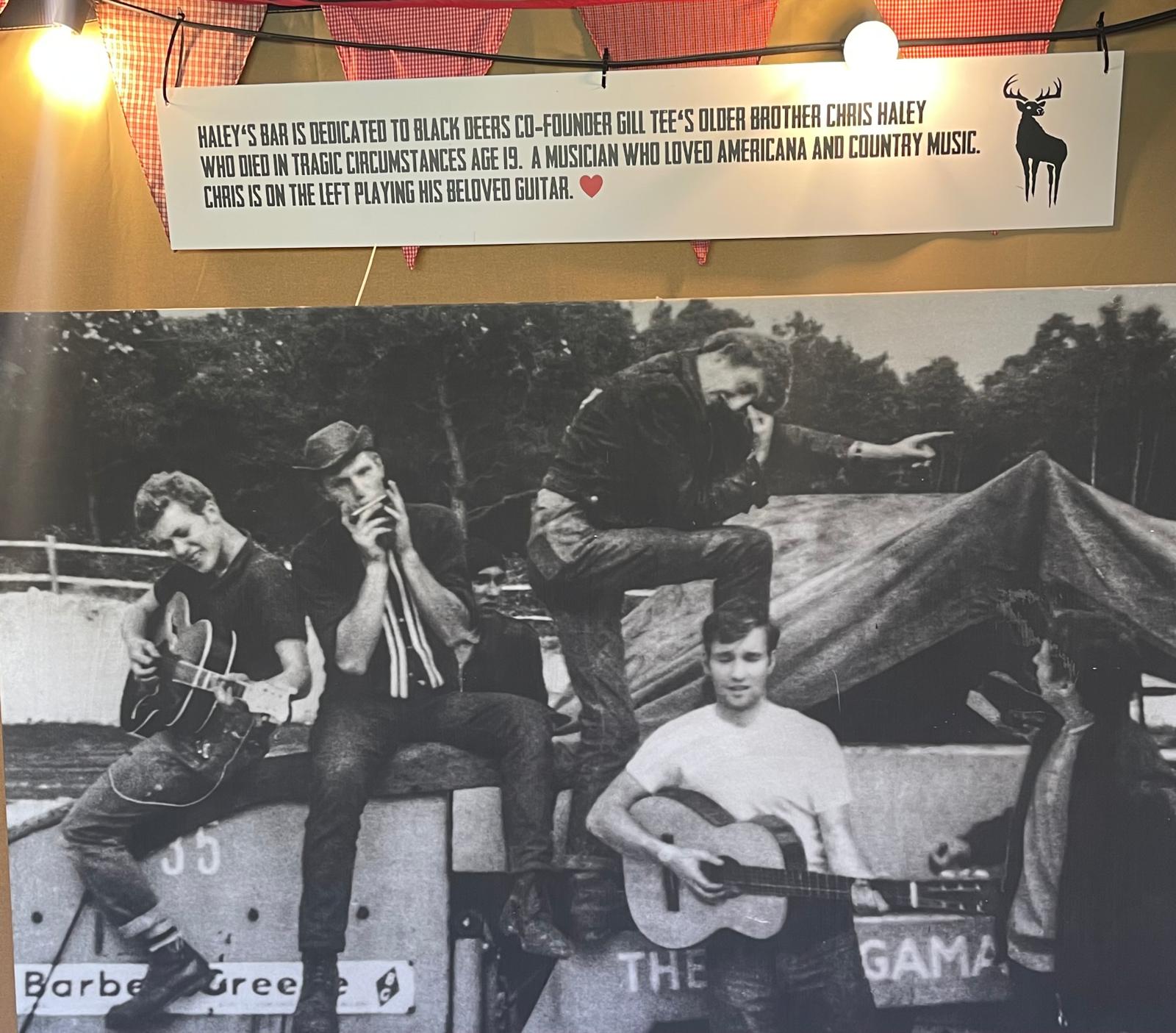
For me, it’s also personal. When I was 12, my brother, who was a musician and who introduced me to Americana and country music, was murdered. Haley’s Bar was created as a tribute to my beautiful brother. That trauma stays with you forever. It could have led me down a very dark path. I struggled with bulimia, with feeling invisible in my grief, but I came out of it determined to help others. That’s why I feel so strongly about creating spaces where young people can be supported, given chances, and shown that they matter. Black Deer has given me a vehicle to do that, and I’ve always had Chris’s support. I sometimes joke that I needed “a grown-up” alongside me. Chris probably regrets the day he met me! But we’ve built this together, and Superjam remains one of the things I’m most proud of.
Andrew: That’s extraordinary and incredibly moving. You speak with such passion, and it’s exactly right – so often, it’s the young people who seem the most challenging, who most need our time, our belief, and our care. The difference you’re making is clear.
Gill: Thank you. That means a lot. I’ve been involved with Superjam for over a decade, and I’ve seen how even small acts of time and attention can transform lives. Some of these young people go home to very difficult situations: poverty, violence, neglect. For them, being given a space at a festival, being treated with respect, being listened to – it can be life-changing.
I also try to educate the wider music industry about this. I know it can feel daunting, taking on a young person who’s neurodiverse or has had a tough background. But I always say: it’s okay not to know exactly what to do. Just try. The rewards of watching these young people grow and shine are immense. And the more people in our industry who step up, the more lives we can change.
Andrew: A lot of the features that you’ve mentioned lend themselves to the spaces you’ve got available at Tobacco Dock. How did that come about? How did you end up with that venue, and what’s the story behind choosing it and in some ways recreating Black Deer in that particular space?
Gill: Tobacco Dock kind of found us really. Chris and I had always wanted to do more – radio, one-day shows, those kinds of things – and we’d often talked about what else we could be ambitious about. Then I got a message from Patrick Donovan, the Chair and joint CEO of Tobacco Dock. He said he’d been following my journey with Black Deer on LinkedIn, that he loved everything about it, and he wondered if we could have a conversation, as he had an ambition to create a music event at Tobacco Dock that was different to everything they had done in the past.
Coincidentally, he was also great friends with my old boss at Capital Radio, David Mansfield, who was CEO when I was there. So, we had an immediate rapport. I met Patrick for lunch and we got on like a house on fire. I talked to him about what we were doing and what our ambitions were for the brand. He probably didn’t quite know what to make of me as sometimes my passion gets the better of me, resulting in a lot of tugging of his arm in excitement when ideas were popping into my head of how this venue could work so well for us! I’d been to Tobacco Dock a couple of times and loved the building – such a beautiful, atmospheric space. I could instantly imagine Black Deer there.
Patrick was keen to do something with longevity. They’d had dance raves and plenty of corporate events, which were successful, but he wanted something that fit his vision for Tobacco Dock. By the end of our lunch, and after a lot of being him being pulled around, he felt Black Deer was a perfect match! I called Chris, we met Patrick and his senior team, and from there we worked through a deal. It’s been a wonderful partnership.
Chris: The timing was good too, because Gill and I had already been developing the “in the city” concept for a while. We’d been talking to other venues around the country as well and were already in negotiations elsewhere. So, when Gill met Patrick, we had a fully formed idea – it wasn’t just a dream on paper. We knew what we wanted to do; the challenge was finding the right places for it.
Tobacco Dock was perfect for us, but the other venues we’re looking at have their own unique qualities too. That’s the joy of the concept: Black Deer works if the venue and its architecture help create a distinctive experience, just as we’ve done with the Eridge Park Festival. Eridge is so unique it can’t be replicated, but the right city venues give us new ways to make Black Deer tangible for new audiences.
Gill: The important thing is ethos. Wherever we go, it has to feel welcoming – like a ‘big hug’. That’s what Black Deer is: passion for music, passion for community, and working with partners who share those values. I’m always hugging people and the festival should feel like a big hug every year!
Andrew: From the very beginning, I’ve felt that sense of welcome and community. Whether I’ve been reviewing for Americana UK, recording backstage sessions with artists, or just there as a fan, it’s always felt like a place with real identity. How have you managed to create and maintain that sense of community?
Gill: I think it’s because it’s genuine. We didn’t start Black Deer to make a quick buck – honestly, there isn’t one in this industry. People can tell if you’re fake. From the beginning, it was about our love of the music, supporting grassroots artists, and building something real. Community is central. One of my most magical memories from Eridge was watching someone in tears of joy because a song connected with them in a way they’d never experienced before. That’s the heart of it — live music as a shared experience that goes beyond the music itself. It’s about belonging. That’s what we want people to feel in the city too.
Chris: And the venue helps. If you took the festival and put it in a municipal park, it wouldn’t feel the same. But Tobacco Dock has history, atmosphere — it gives us a canvas that’s completely different but still wonderfully special.
Gill: Respect for the audience has always been central. If someone spends their hard-earned money on a ticket, they deserve the best we can give them. And it doesn’t stop when the festival ends – from year one we made a point of staying in touch with our community throughout the year. Now with the radio station and one-day shows, that connection continues to grow.
Chris: That’s exactly it. The community is at the heart of it all.
Gill: And eight years on, it still feels like five minutes! Chris, I told you it would never be dull!
Chris: Never dull, that’s for sure! Working with Gill is always wonderful – never boring!
Andrew: One of the things I imagine Tobacco Dock will do is give people that smaller-stage experience. At Black Deer, I often find myself drifting away from the main stage and into places like the Ridge Stage, the Superjam Stage, or Haley’s Bar. Of course, if it’s someone like Rosanne Cash, I’m right down the front leaning on the barrier. But I love that shift in atmosphere. That’s why I think this new format will really work – people love those smaller, more intimate environments.
Gill: Exactly. We hear it all the time – people say how much they love the Roadhouse or Haley’s, because they want that closeness with the performer. Our main stage in the city will actually be Ridge-sized, which means we get that balance: big enough for atmosphere, but still intimate. Two thousand people might sound like a lot, but it isn’t overwhelming.
Chris: That balance has been at the heart of what we’re building. From the start it was about finding the right premises and the right atmosphere to carry the essence of Black Deer into a new setting. And as Gill said, a 2,000-capacity stage is no small thing, but you can also step into the dance hall where there are just over 200 people. That range is what makes it unique. We’ve actually stopped using the word “festival.” This is not a festival, not a concert — it’s an event. A hybrid. In Eridge, we are and always will be a traditional grass-field festival. But in the city, we’ve created something different: a footprint that brings together all the diversity of a festival under one roof. Instead of scattering acts across multiple venues like some urban festivals, we’ve consolidated everything. It’s new, and I think it will be interesting for the industry to watch. For us, though, it’s really about community.
Andrew: That leads me neatly to a final question. You’ve mentioned Eridge Park, and also the idea of ‘Black Deer in the City’ becoming a presence in different cities. What’s next for Black Deer as a brand? What comes after October?
Chris: For us, the first thing is to make sure Black Deer in the City is successful with our partners at Tobacco Dock — not just commercially, but in fulfilling the dream Gill and I have always had. Ideally, we’d love to replicate this in two, three, even four cities around the UK, so more people can become part of the community. Realistically, someone in the far reaches of the UK may not take multiple trains and spend hundreds of pounds to get to Kent. But they might come along if Black Deer is on their doorstep.
We’ve kept ticket prices accessible – £84 plus booking fee for around 60 artists and all the additional activities across the event weekend. And if we can build this in other cities, it opens up a much wider audience for us to showcase the amazing artists that americana music has to offer.
At the same time, we’re expanding ‘Black Deer Live’. We’re both passionate about supporting grassroots venues, which, as you know, are disappearing at an alarming rate. We’re putting on 60–100 shows, recording them, broadcasting them on the radio station, supporting artists with professional tools, promotion, and socials. It’s about giving emerging acts a proper platform. Longer-term, that network of shows and venues will allow us to build tours that are actually sustainable for mid-level and new artists – something that is desperately needed.
Gill: And beyond that, of course, we want to return to Eridge Park – the spiritual home of Black Deer. We’re looking seriously at what could be possible there in 2026 or 2027. It won’t look exactly the same as before — not six stages and huge production — but something more intimate that still makes the most of that beautiful backdrop. The local community loved it; we had no complaints, only positive feedback. It would be such a shame not to do something there again.
Chris: Exactly. At the end of the day, we’re a commercial business as well as a community project, so it has to be sustainable. But finding a route back to Eridge is a priority.
Gill: We built Black Deer to last. We want to spread the word. Through city events, live shows and the radio station, we’ll keep growing this community. Over the years we’ve had to bring in investors, who have been our lifeblood, and I am eternally grateful for them, but right now Chris and I are aligned and driving it forward together. We’ve got complementary skills, and we’re both passionate about what Black Deer stands for.
Chris: Gill keeps me cheerful when I get too serious!
Gill: I make him hug people! The point is, if we spread the word through in-the-city events, through the live shows, through the radio station, then over time more and more people will fall in love with what we do. And eventually, even those who might not travel to Kent now will build Black Deer into their holiday or weekend plans. That’s how we see it growing.
Chris: We’re excited about expanding the footprint of Black Deer in new formats, bringing the festival’s spirit into the city while retaining its unique identity. The focus is still on music, community and quality experiences. Whether people are at Eridge Park or in a city square or on the radio, it’s about creating something special that people will remember and allowing them to discover and explore the huge talent that resides in the Americana music genre.
Andrew: That’s a brilliant summary, and probably the perfect way to wrap things up. Thank you both so much for your time. It’s been a real pleasure talking with you. Congratulations on everything you’ve built, and the way you’ve diversified while staying true to your vision.
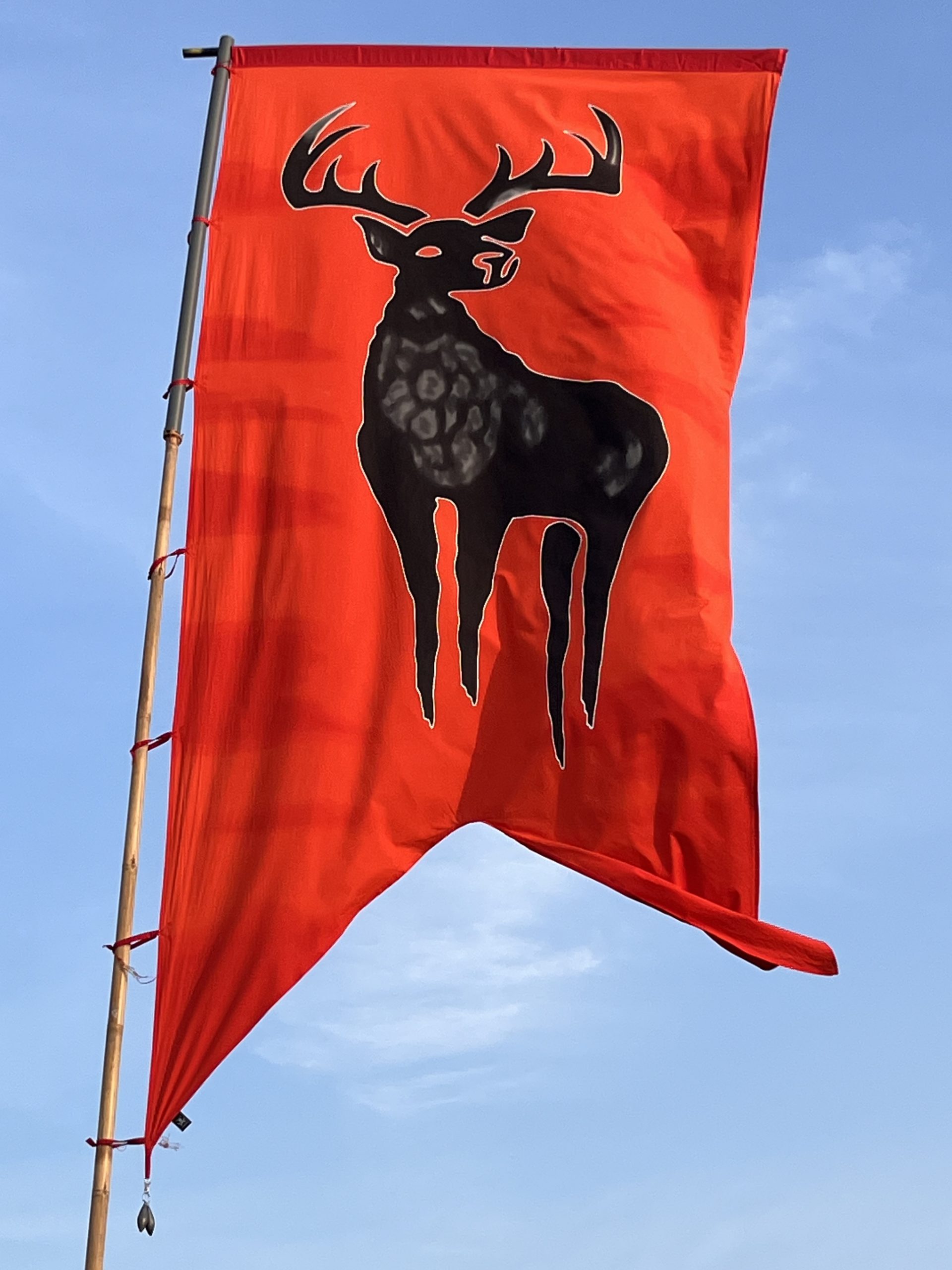
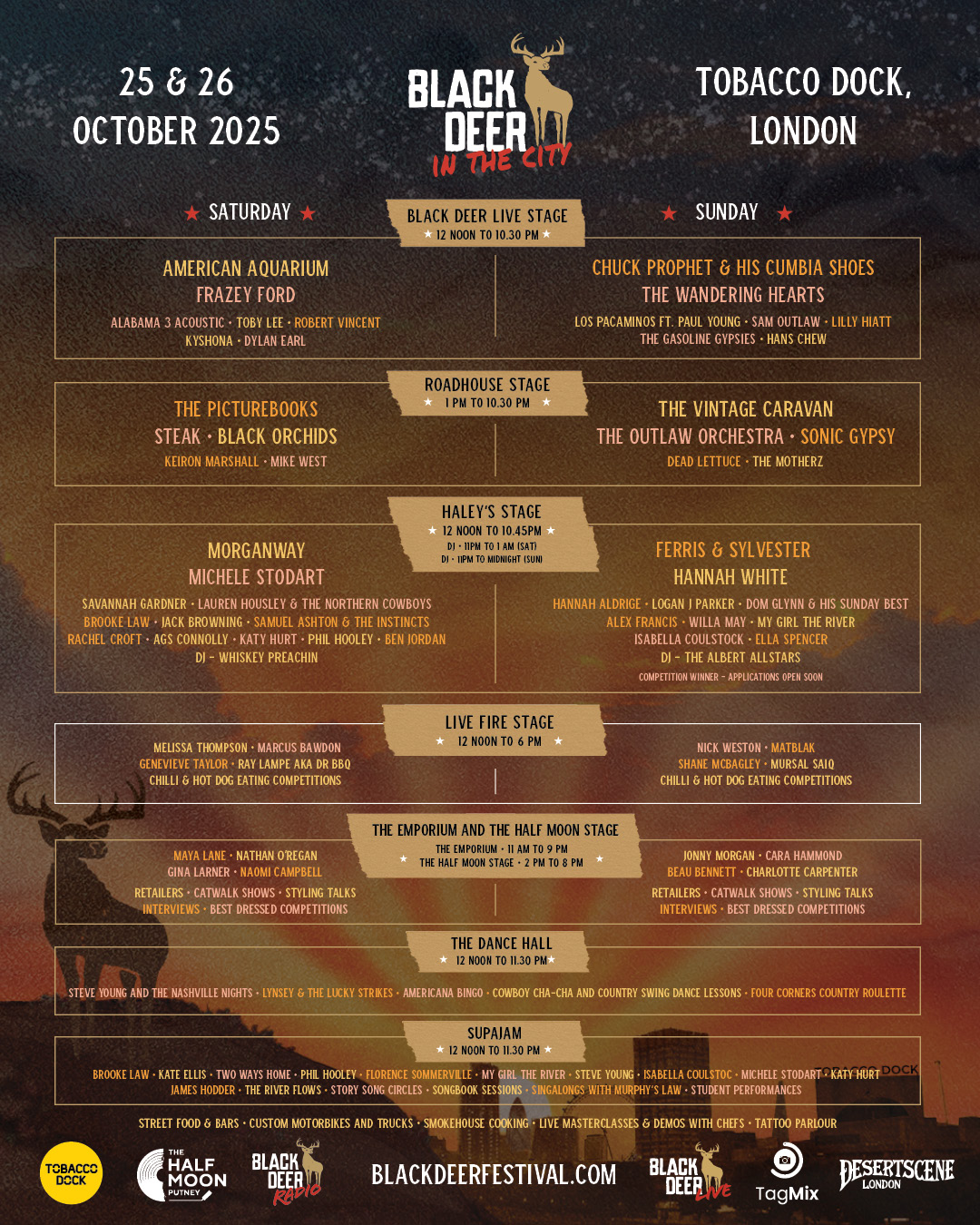
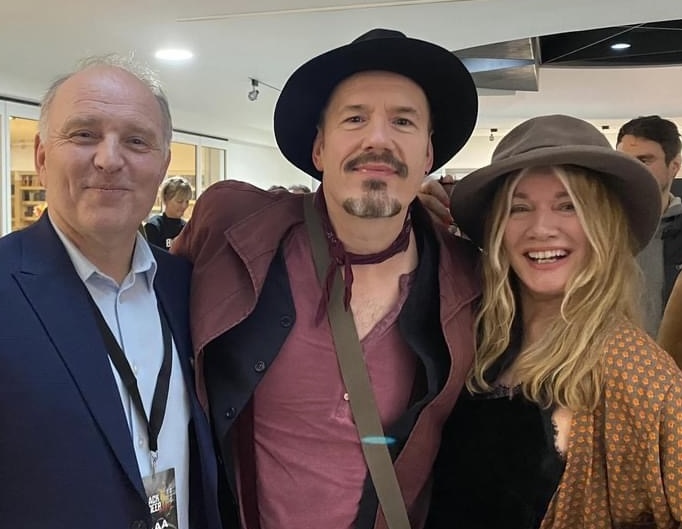
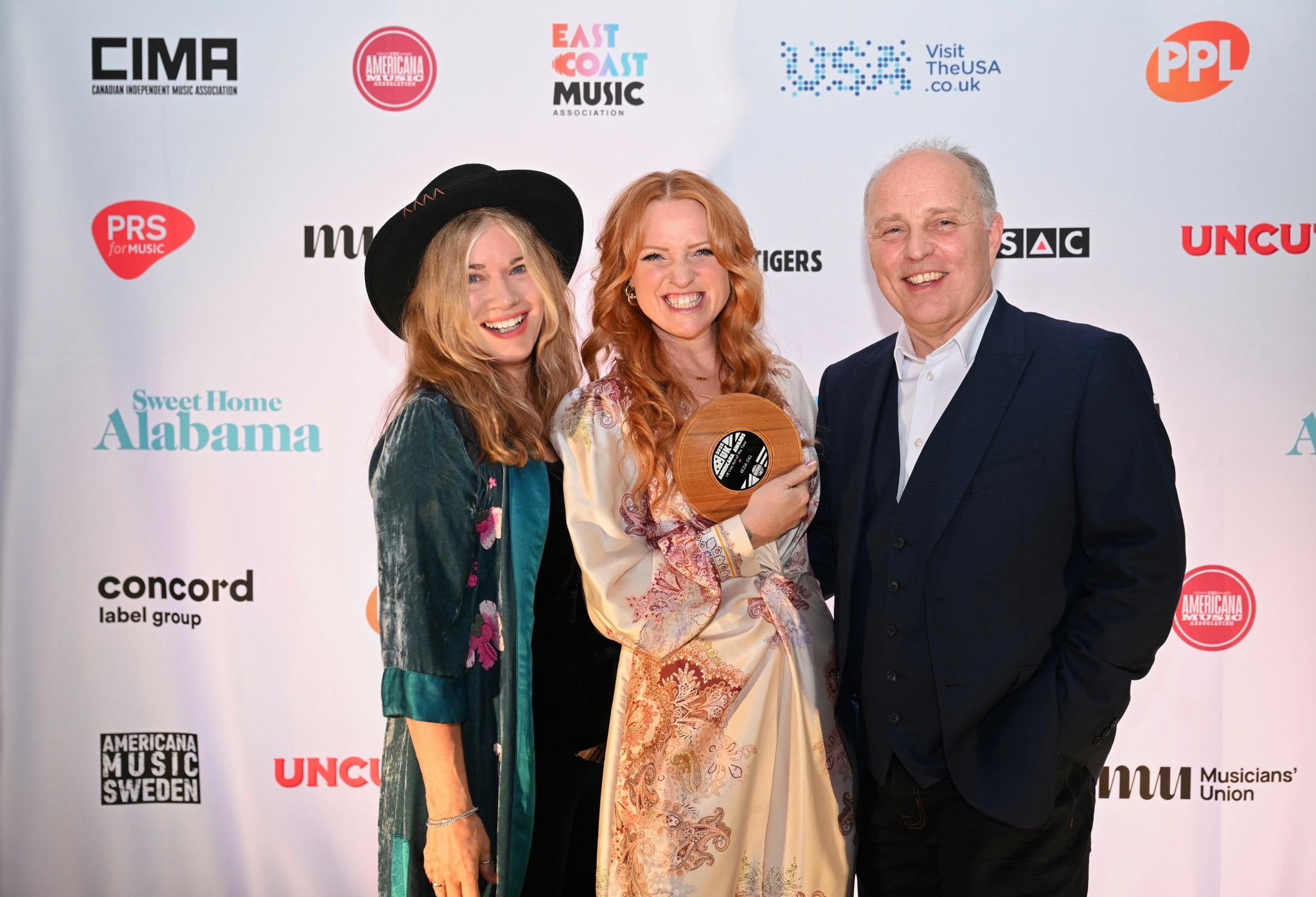
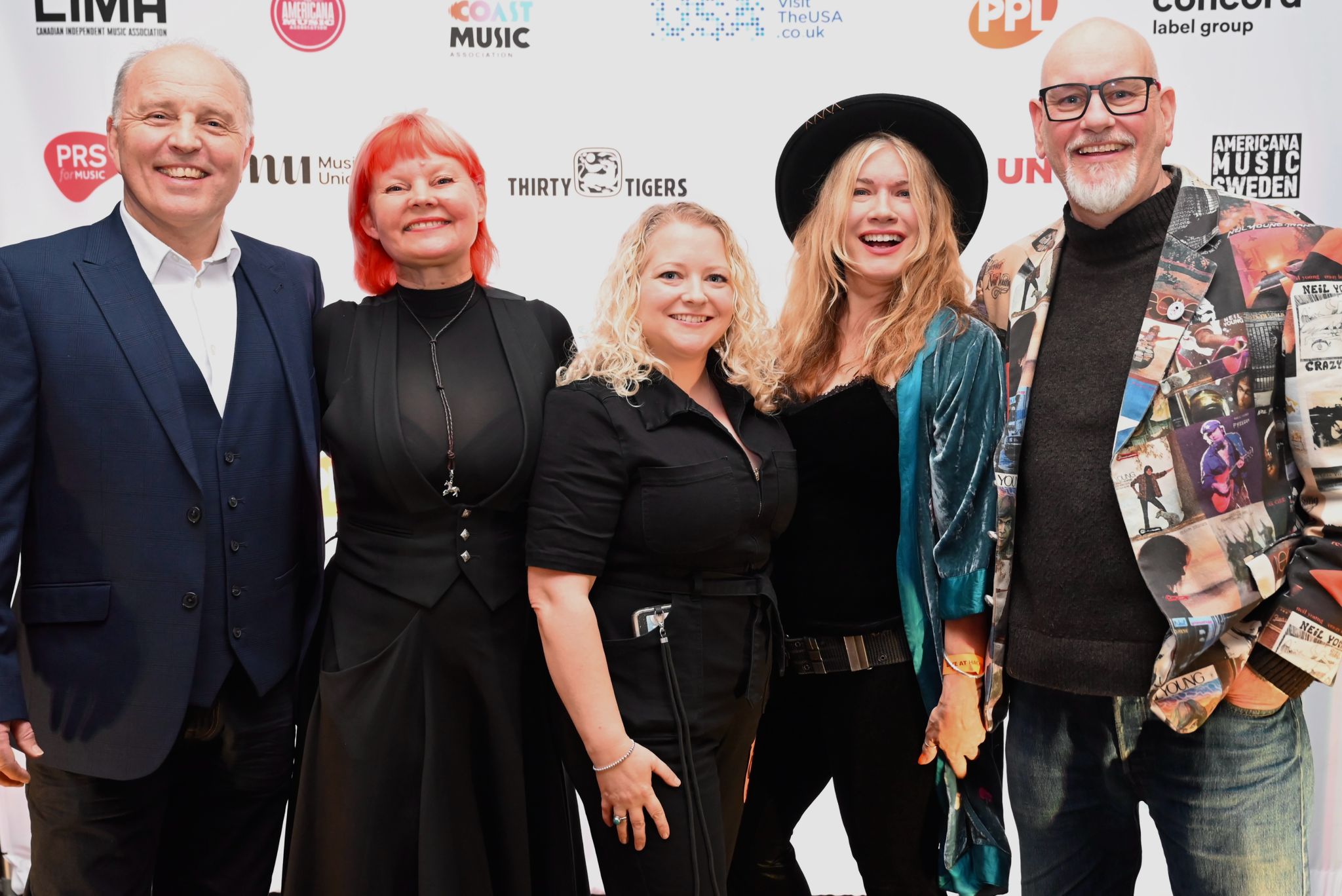
Photo of Chris and Gill, who work behind the scenes to deliver that spiritual, communal Black Deer experience. Note AUK’s own Keith Hargreaves in the final photo!