
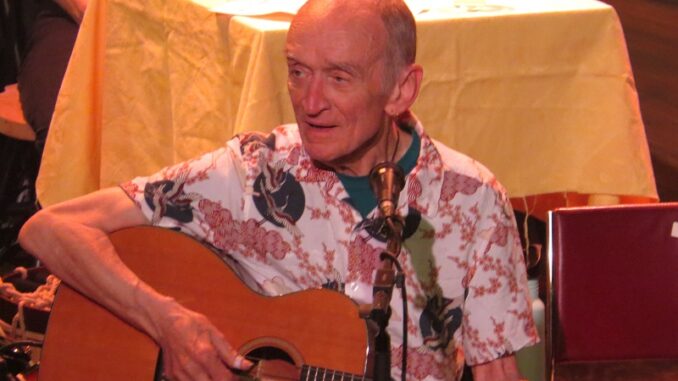
A first visit to EartH, the Hackney multi-venue performance space – and specifically a gig in the EartH Theatre venue, which is a converted and restored Art Deco cinema space. This celebration of the life and music of Martin Carthy promised to be an eclectic mix with, alongside the man himself, such names as Billy Bragg, John Kirkpatrick, Angeline Morrison, and Maddy Prior mentioned in the gig adverts. There was family in the form of Marry Waterson and unsurprisingly Eliza Carthy with whom Martin occasionally records and tours with. With a 5pm doors and a curfew listed as just after 10pm it also promised to be a pretty lengthy affair – the names and the overall duration each accounting in part for the speed with which the gig sold out – that, and the fact that the venue is on the bijou side with a (mostly) seated capacity which is a little under 700.
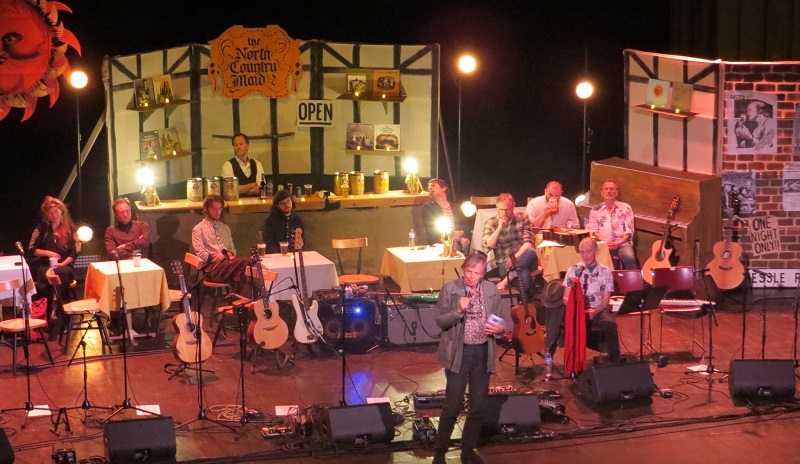
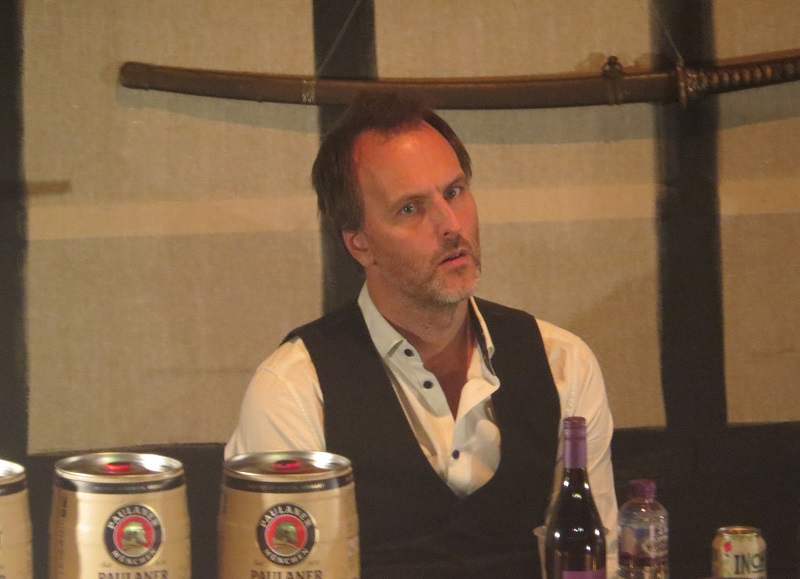
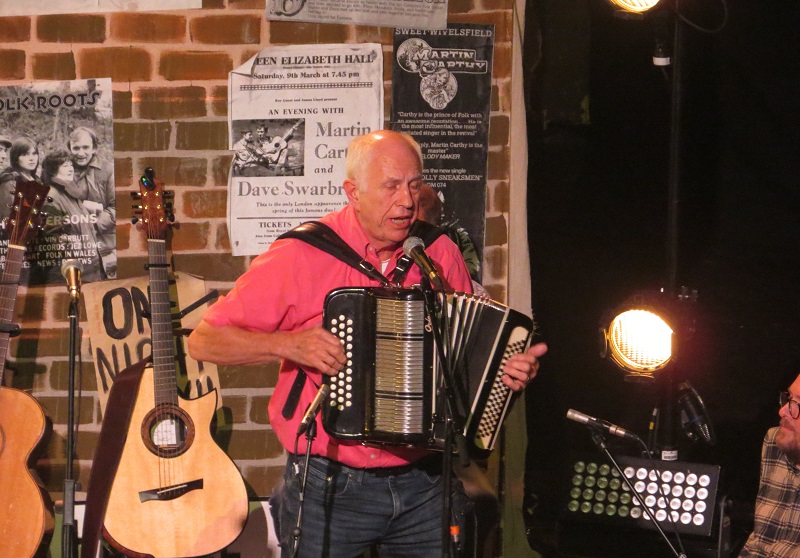
For a man who has spent a great deal of his life in the little rooms in pubs where so many folk clubs have run the staging couldn’t have been more appropriate. Rather than have a revolving cast appear and disappear from the stage, as many as possible of the performers could be seen relaxing in a cosy pub set up on stage – The North Country Maid (a song that would be sung later unaccompanied by Emily Portman and Jackie Oates). Overhead hung Bright Phoebus, the table lamps were brass monkeys. And, who was that genial barman? None other than Jon Boden, who seemed happy to contribute just harmony vocals and a short snatch of song at the start of Act III of this gig. As well as the many posters advertising various Martin Carthy partnerships there were other props whose meaning would only become apparent as the evening went on.
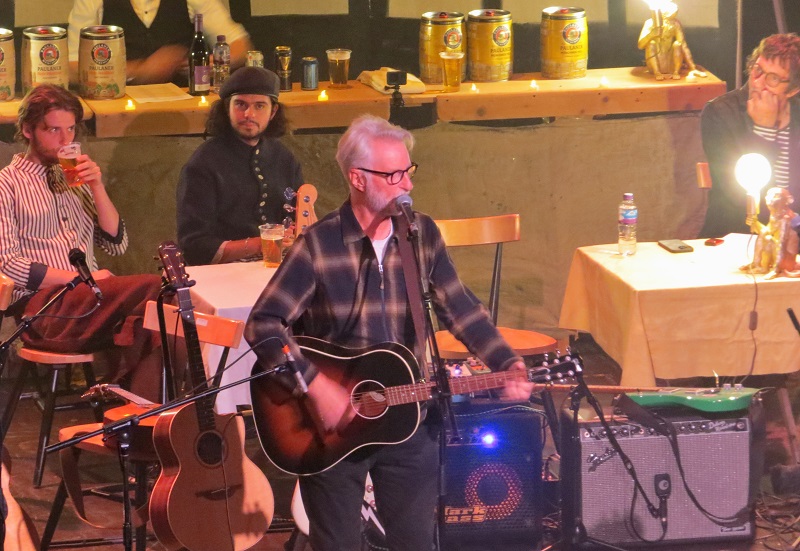
With four hour’s to fill – including a thirty minute interval – it fell to Joe Boyd to get the proceedings under way with his memories of meeting Martin Carthy in the Sixties, and his wonderment at hearing at a festival guitar playing that could be percussive enough to be the sole accompaniment to Morris dancing. Boyd also passed on a message from Paul Simon who recalled his learning of ‘Scarborough Fair‘ from Carthy. Billy Bragg kicked off the music with a nod to the first inspirations that attracted Carthy to the guitar – like The Beatles it was skiffle – and Carthy’s very first record purchase ‘Rock Island Line‘ followed up with The Vipers’ ‘Don’t You Rock Me Daddy-o‘, who Bragg described as The Clash of the skiffle movement.
Turning to the man of the moment, Martin Carthy added his own main contribution to the evening with a stately ‘High Germany‘ and then ‘Lovely Joan‘, the latter introduced with a reminiscence of Dave Swarbrick encouraging him to play the song even though he didn’t know it – although he assured us that although he may have just strummed a few chords at the time he did know it now. This wasn’t Martin’s sole contribution to the evening – he’d tell tales, with some prompting from Eliza, and, sat front of stage, he’d join in the playing as and when he felt like it.
The famous outside of folk was represented by Blur’s Graham Coxon who added a spectral electric accompaniment to Jon Wilks’ singing of ‘Scarborough Fair‘ which took the recitation of the impossible tasks to be achieved to win back love in an even bleaker direction, with final banshee wails of guitar from Coxon underscoring the impossibility of a reconciliation. Coxon’s own solo rendition on acoustic guitar of ‘The Trees They Do Grow High‘ was a reminder that these songs have only survived because voices of all qualities have carried on singing them and he brought the same plain vocals to Mike Waterson’s tale of a wife’s revenge on a drunken husband, ‘A Stitch In Time‘.
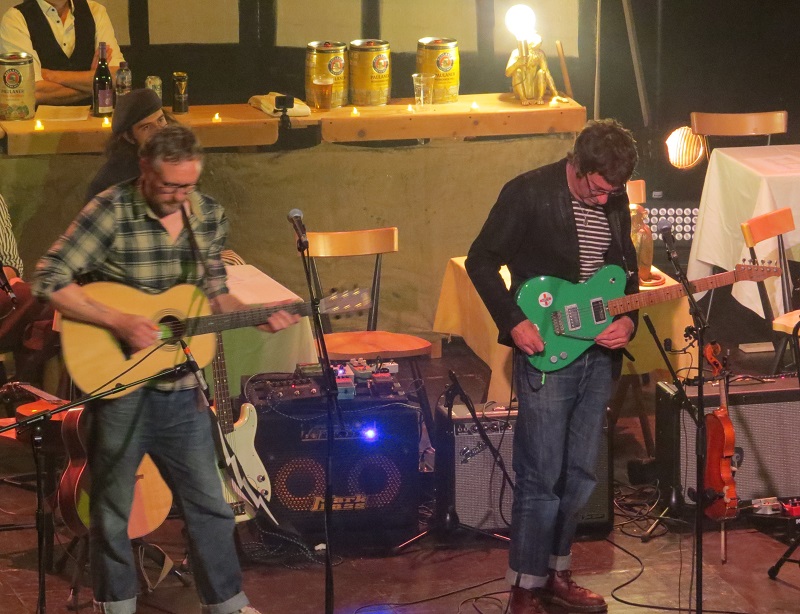
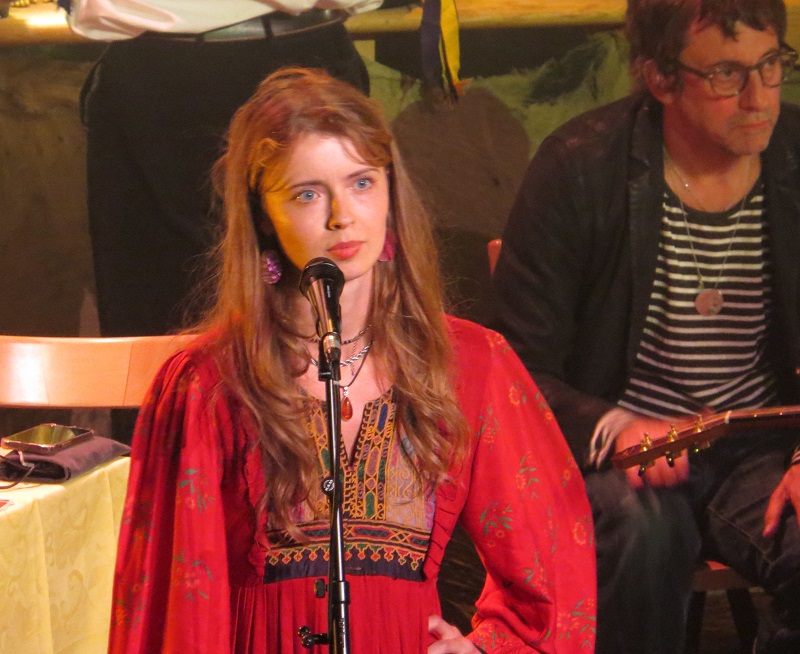
The wonderful Olivia Chaney contributed two songs, a very lovely ‘Sovay‘ and a jaw-dropping rendition of a song that she had recorded as part of Offa Rex, ‘The Queen of Hearts‘ which was mesmerising and a wonderful showcase for Chaney’s perfect vocals delivered with a passion, it was quite the highlight.
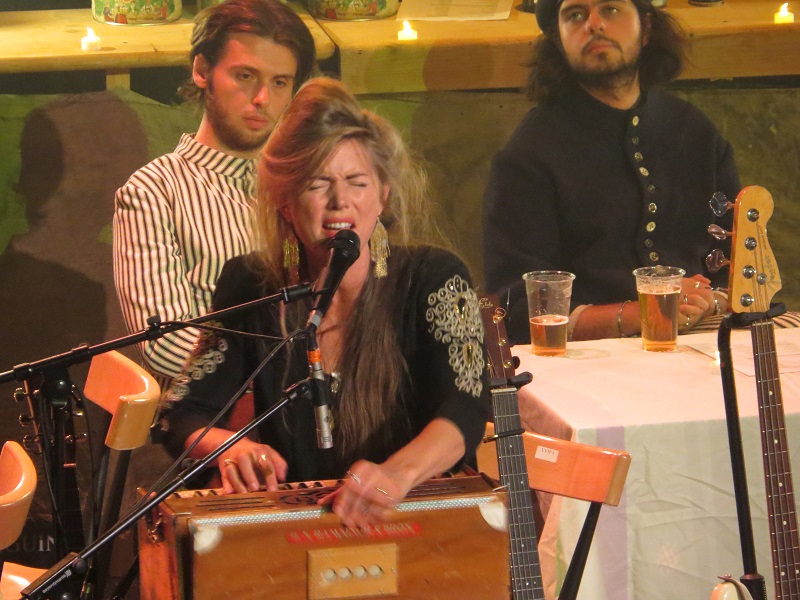
Generations are short in music, and so, although only a dozen years younger than the man, Martin Simpson is one of a host of guitar players who would claim Martin Carthy as an inspiration. He returned to Carthy’s first single – the B-side of which was Leon Rosselson’s ‘Palaces of Gold‘ which asks the question – what would happen if well off people’s children had to go to the schools or live in the houses that are deemed acceptable for poor people’s children? The rather obvious answer is: “Buttons would be pressed / Rules would be broken / Strings would be pulled / And magic words spoken. / Invisible fingers would mould / Palaces of gold.” There’s a different type of injustice in ‘Polly on the Shore‘ where a sailor, dying in battle, wishes he’d taken her advice and stayed at home with his true love.
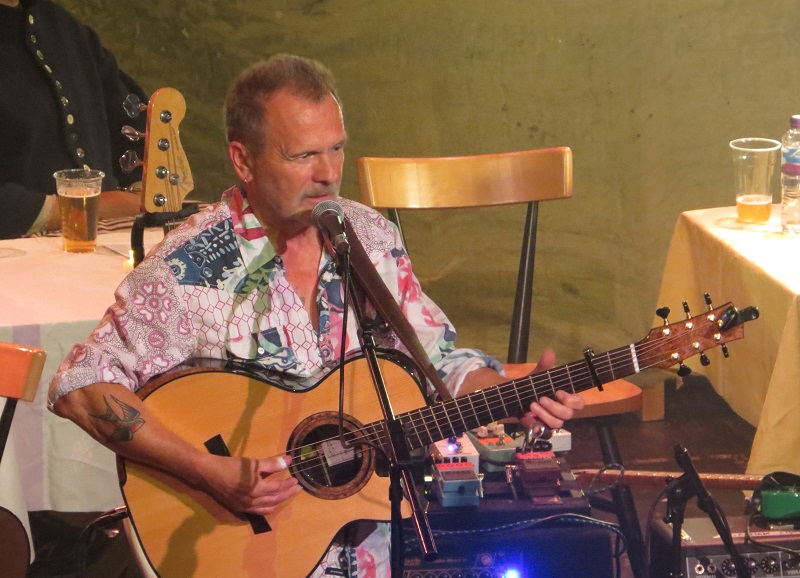
It fell to Nick Hart to take the gig into its first interval, and as he only had time for one song he made it a long one (as Nigel Tufnel might say “nobody knows where it came from or how many verses it has“) ‘Famous Flower of Serving Men‘. It’s a song that has it all – a cruel mother, foul murder, cross-dressing to enter service, a revelation and a declaration of love and the meting out of a cruel punishment.
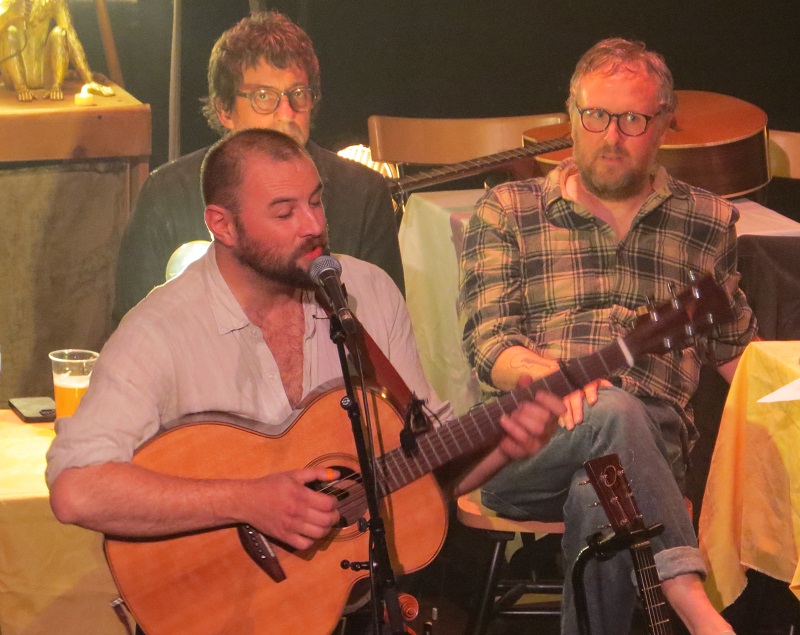
If the first act of this tribute concert had focused on early songs and traditional folk songs revived and retuned by Carthy, the second act turned its attention to the decades of collaborations, and the various combinations of relations performing together that flowered after Carthy married into the Waterson musical family. But first there were some video messages from people who couldn’t make the event including KT Tunstall, an effusive Paul Brady, Jools Holland, Van Dyke Parks and Paul Weller. And if Robert Plant got a rousing cheer then this was nothing compared to Bob Dylan’s reception – a Dylan who remembered their early days fondly and their time at the King & Queen club in the bitter Winter of ’61 and promised a meeting somewhere down the line. Let’s hope so, and let’s hope to be present as well – Dylan is touring the UK in November after all.
Returning to the music and a just perfect ‘Willie’s Lady‘ and ‘Geordie‘ from the superb Goblin Band – who bring together a Seventies folk rock sensibility and couple that to a older traditional feel with period instruments and a seventeenth century style marching drum, as well as a bit of dressing up. Their enthusiasm for the music is great to see, and they bring a bit of that folk club stomp to the event, particularly on the beautifully sung ‘Geordie‘.
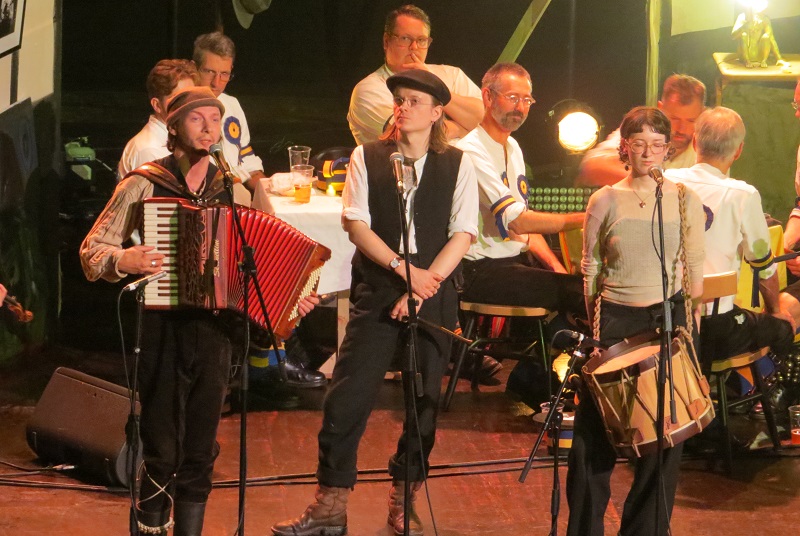
Unaccompanied singing brought a moment of folk purity to EartH, with Emily Portman and Jackie Oates singing ‘North Country Maid‘ as a tribute to Norma Waterson, and ‘Our Captain Cried All Hands‘ given extra poignancy with Emily Portman’s recollections of meeting Martin Carthy at the age of 17 and how his encouragement helped to set the course of her life.
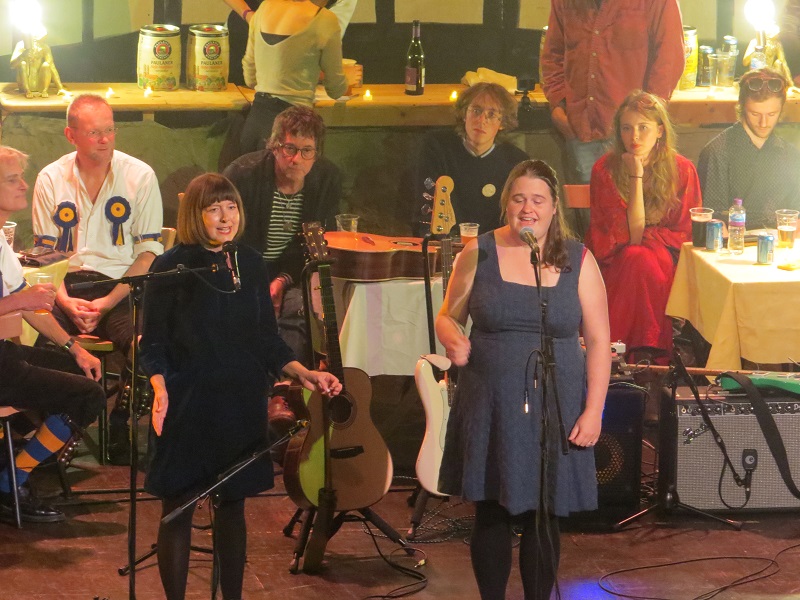
A couple of songs from the legendary “Bright Phoebus” album were mid-set highlight, with Marry Waterson’s take on ‘Fine Horseman‘ delivering all the strange dream like qualities of the song, it was beyond beautiful. Which is not to take away from Eliza Carthy’s take on ‘Red Wine Promises‘ whose drunken defiance she embodies with ease.
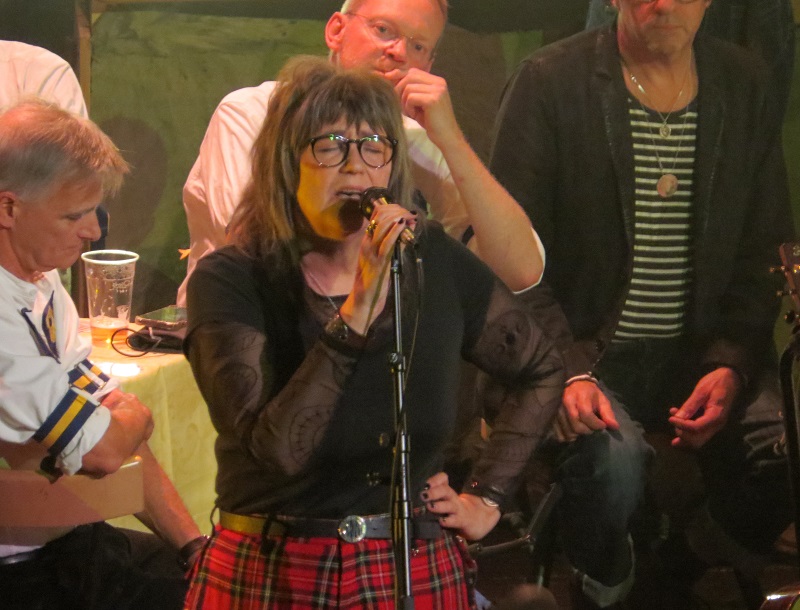
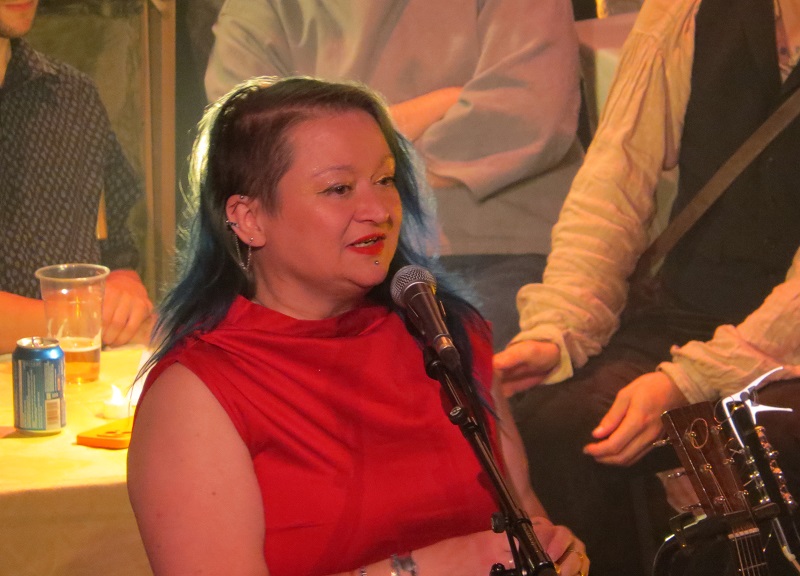
Time just doesn’t seem to have affected John Kirkpatrick – himself getting close to eighty and yet his oaken voice is as strong as ever and his playing is faultless. He takes on ‘Banks of Green Willow‘ with it’s unusual twists in the tune, before playing for Hammersmith Morris and their lively display – all shades of folk are being touched on on this evening.
The second set wound down towards its clearly much needed interval with a youthful ensemble making for a modern take on a Seventies electric folk band. Lileth Chinn had wonderful vocals on ‘The Blacksmith‘ the better of the two songs attempted, with a slightly ragged ‘Cold, Haily, Windy Night‘ closing the set in a very folk-rock way.
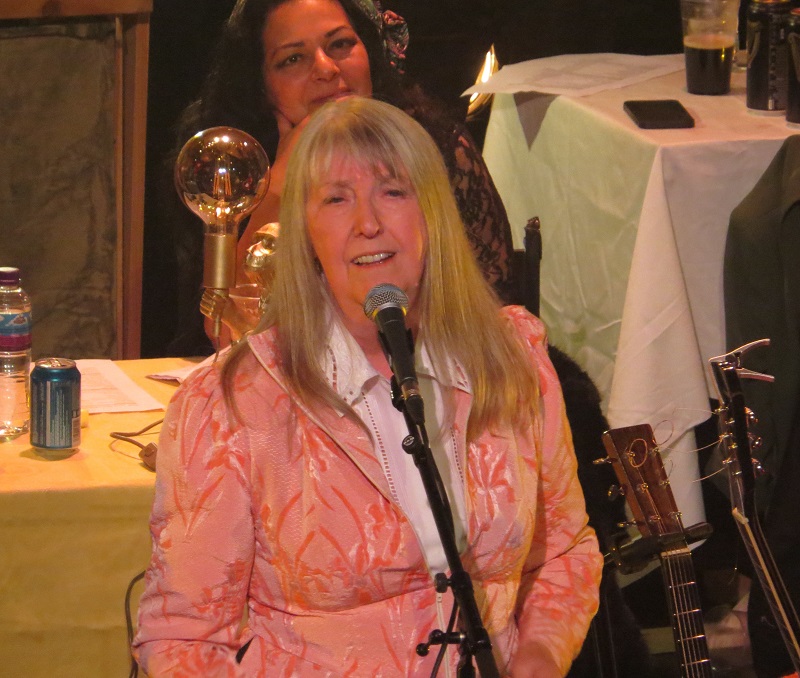
The third and final set at first continued the theme of “bands associated with Martin Carthy” before embracing pathways to the future of folk – and it’s a real tribute to Martin Carthy that he has never sat on his laurels, and is not afraid of changes and new sounds in the eternal evolution of folk music. But sticking a little with the past, John Kirkpatrick had played with Carthy in an incarnation of Steeleye Span (naturally, alongside Maddy Prior) and both had also been in Brass Monkey. Maddy Prior offered a mini Steeleye reunion, with ‘Lark in the Morning‘ a song, she admits, she was too folk-snobby to sing until she saw it in a Folk journal because she’d learnt it at school and the bawdy ‘The Bedmaking‘ which she’d similarly ignored until she heard how Martin had arranged it. Thus are folk songs saved from obscurity.
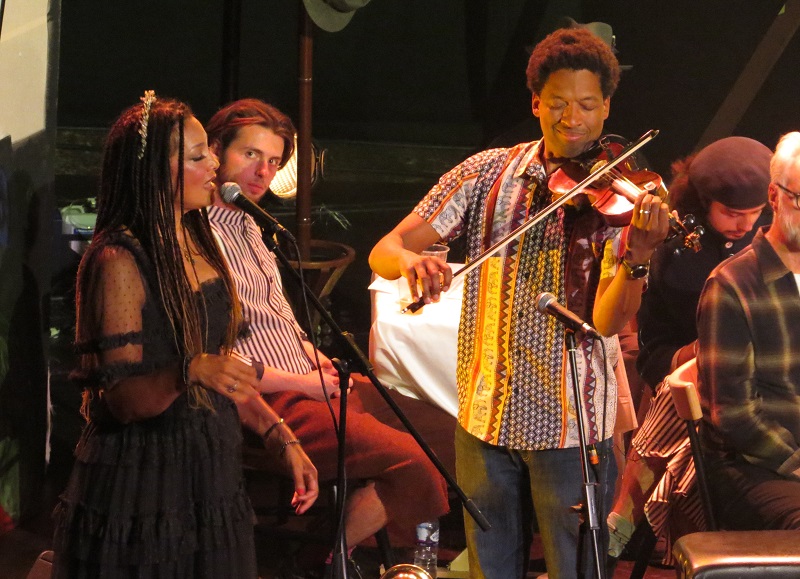
There’s more rarely heard joy on ‘Jack Frost‘, one of Mike Waterson’s finest compositions before the nudge into the folk future really got underway with Angeline Morrison explaining that her first hearing of Martin and Swarb’s version of ‘The Brown Girl‘ had given her confidence that there was a place in folk music for her. With a strong voice that nonetheless conveys a fragile beauty it’s nothing short of a blessing that she found this song.
It’s the breadth of what we call English folk that allows a concert to sensibly include the rousing vocals of Billy Bragg and the more mellifluous tones of Angeline Morrison, and this can go so far as to include the addition of a brass section. So, following John Kirkpatrick and Nick Hart providing the sing-a-long-able ‘Riding Down To Portsmouth‘, a song Kirkpatrick wryly remarks Martin would play – and sing along to – in Brass Monkey which was “a little bit annoying really” it was time to resurrect that simian with a three piece brass section playing on ‘Maid of Australia‘. With time marching on – the 10:10PM curfew was already well in the rear-view mirror – the final appearance of the night was The Imagined Village, the multi-cultural reimagining of English Folk for a powerful ‘John Barleycorn‘ given a mystical twist on this arrangement, and a blistering ‘Hard Times of Old England / England Half English‘ with Billy Bragg ripping into those who would appropriate a flag and seek to define what is – and by implication what isn’t – English. It’s a vital political statement that as the foregoing had shown was completely in-place at this celebration of Martin Carthy.
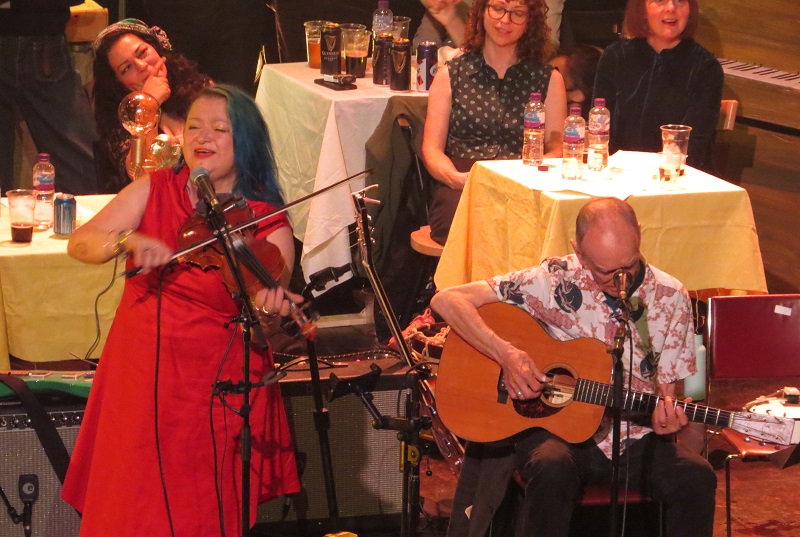
And, after a full ensemble rendition of ‘Bright Pheobus‘ followed by a slightly less well joined in ‘Some Old Salty’ there was just a couple of things happening before lights up – the presenting of a cake and then the lifting of the piano (revealed to be a plywood prop) to the stage edge where it was vigorously chopped to pieces with the very same Samurai sword that Carthy and Dylan used to chop up an old piano for firewood way back in that terrible winter of 1961. A slightly chaotic end to what had been a superb gig full of hidden surprises and superb renditions of songs both well know and rarely sung. Since it was in a sense a birthday party – same time next year?


