
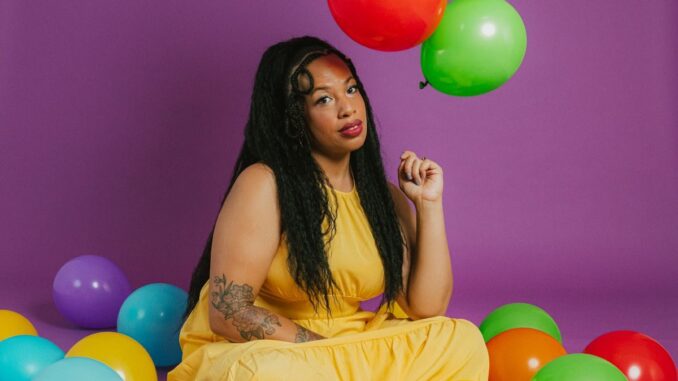
Runner-up in our readers’ poll for Best UK Artist in 2025, Lady Nade has steadily built a reputation as one of the most distinctive and emotionally resonant voices in UK roots music. Blending jazz, Americana, folk, soul, country and pop, her music defies easy categorisation, yet remains grounded in soulful songwriting and delivered with a wonderfully smooth, soothing vocal that feels both intimate and powerfully resonant.
Her recent releases — including Rainbow and Sober — explore themes of identity, wellbeing and self-acceptance with remarkable openness. Drawing on personal experiences of grief, neurodivergence and sobriety, Lady Nade writes with honesty and vulnerability, balancing emotional depth with a sense of warmth, positivity and hope. While her songs are often uplifting and joyful, there is always an authenticity at their core, rooted in lived experience and a belief in music as a powerful force for connection, compassion and healing.
That ethos extends far beyond her recorded work. Alongside her career as a performer and songwriter, Lady Nade has long been committed to using music as a tool for wellbeing, working in community and health settings and helping to break down stigma around mental health. It is a thread that runs through everything she does, shaping both her creative output and her relationship with audiences.
She is currently touring with Lady Nade Sings Nina Simone, a deeply felt celebration of one of her most formative influences, which has been warmly received for its sensitivity, power and emotional depth. Ahead of the tour and the release of her forthcoming album, Identity, Andrew Frolish caught up with Lady Nade for a thoughtful, wide-ranging conversation.
Warm, open and charismatic — much like her music — Lady Nade spoke candidly about her journey, her influences, the importance of wellbeing, and what it means to truly unmask and embrace who we are.
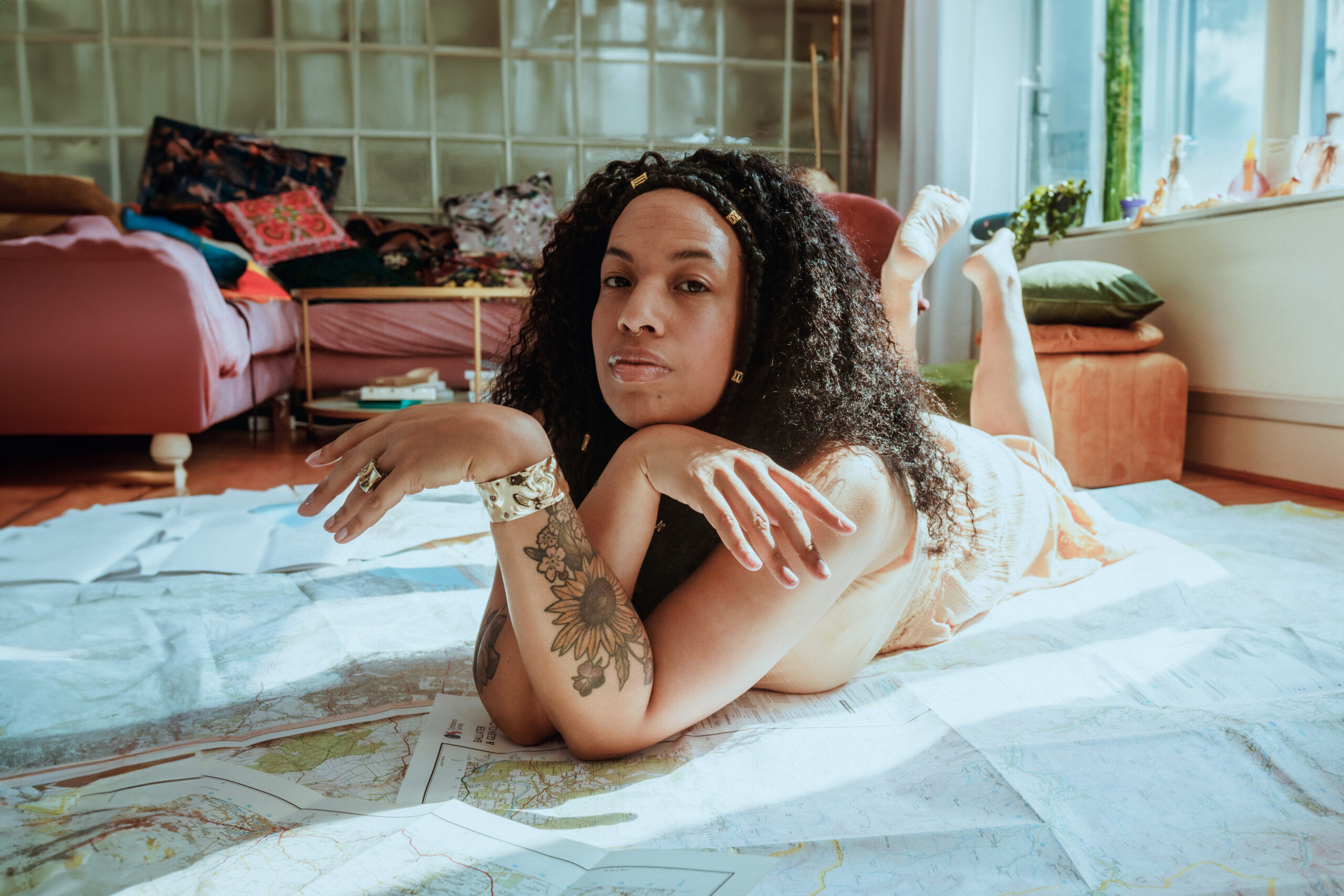
Andrew Frolish (Americana UK): Thanks so much for doing this. What a pleasure.
Lady Nade: You too. I just want to say thank you so much for all your amazing support. It’s been so amazing to have you guys as fans and supporters of what I do. The way you publicise and share artists’ work is so wonderful, and I just want to say thank you for continuing to support my career.
AF: What a lovely message to start with. It’s an absolute pleasure. We all do it just for the love of it — totally immersed in the music and what you do — and it’s a privilege to be a small part of it. So thank you. I have to start by talking about Seven Dials, because it’s quite unusual — unique even — for one of our favourite singers to have some involvement in a Netflix hit drama. So how did you get involved in Seven Dials, and what’s that been like?
LN: Oh, it was so much fun. I got involved through an audition process. A music supervisor from Netflix got in touch — they were looking for a singer to front a 1940s-style band for the show, and they discovered my music and my voice. They asked if I’d be interested, and of course I said yes. They told me they had about a hundred singers, so it was a proper audition process. It’s not too dissimilar to a music audition, but I actually haven’t done that many auditions in my career, so it felt quite new.
Because it was for TV, they wanted a singer to front a band but also potentially appear in the show, so I had to send pictures of my face, my size, all of that. It was really funny because at the time I had these bubble-style hair extensions that looked a bit like dreads, and I remember thinking, that’s not very 1940s, is it? The music was more 1920s-inspired, but the series itself was set in the 1940s. I really wanted the part, so I thought maybe I should say something about how I could change my hairstyle. I’d listened to an interview with Millie Bobby Brown where she talked about shaving her head for Stranger Things, and how that showed how willing she was to fully become the character. So I messaged them to say, “Just to let you know, I’m more than willing to rock any hairstyle you want me to have.” I even said I could remove my bubble hair — which had taken hours to put in only a week before. I remember thinking, this is a big commitment, but I really wanted the role.
I don’t know if that was what did it — I’d like to think it was my voice — but when the music supervisor called me, her tone wasn’t clear. She said, “We’ve kind of made a decision,” and I honestly didn’t know which way it was going to go. Then she said, “Out of all the singers, we’ve chosen you,” and it was just incredible.
It felt surreal. This role asked me to do a bit of acting and to be on screen — stepping into a whole new world. TV is very different. You’re in makeup at six in the morning, you’re filming all day, and you don’t know how much will actually make it into the final cut. You can film for ten hours and end up with a minute on screen. There’s no guarantee. Everything gets cut down and cut down again. So you have to let go of control a bit and just treat it as an opportunity, thinking of it as the first opportunity rather than the only or last. I’m known in the Americana and folk scenes and it’s great that I’ve got this amazing fanbase and community around me, but in the rest of the world I’m not well known. So, it’s a foot in the door into a world that’s so much bigger.
But it was also amazing. You’d get your makeup done, then someone would come along and check it. Then you’d go to hair, and someone would check that. Then costume — someone literally dressing you, putting stockings on — and then someone would check that too. Sometimes they’d say, “No, we’re changing this.” There was even a whole debate about whether to cover my tattoos. In the end they gave me gloves. It made me realise just how huge the production team is, and how skilled everyone is. On the second day, there was a different crew recreating the same look from photos, and I was blown away by how precise and talented they were.
And then, of course, it all comes down to the director’s cut. You don’t know how much you’ll be in it. You’re sworn to secrecy, you sign NDAs, and you’re just waiting. I didn’t even know how much I’d appear until it aired. In the end, you can hear me singing for about a minute in the series. You catch a glimpse of me, but a lot of people said they recognised my voice before they saw me, which feels very on-brand for my life! People were saying, “I could hear you before I could see you.” The amazing thing was that they released the soundtrack, and my voice became part of a number-one Netflix series. One of the songs, Everybody Loves My Baby, was Shazamed over 5,000 times in one day. That means so many more people around the world hearing my voice. That means so much to me, because when I first got into music, all I wanted was to use the power of music to build community and support mental health and wellbeing. To have that now happening on such an international scale through TV is just incredible.
AF: And that allows your songs to expand into new markets, to new places and new people. You’ve got two songs on the soundtrack, haven’t you — Let’s Sow a Wild Oat as well as Everybody Loves My Baby?
LN: Yes — two songs on the soundtrack. We actually recorded them especially for the show, and that was a really amazing day at AIR Studios in London. It was so much fun. We had a baritone clarinet on one of the tracks, which you don’t hear very often, so part of the process was even hunting one of those down. The producers did manage to find someone in the end, which was brilliant. It was a really fun day, but also very secretive. Going into London, being in this huge studio with amazing musicians and producers, and not being able to tell anyone. I had to keep everything hush-hush.
I’m dyslexic, so I’m always double-and triple-checking things. I laughed when, at one point, the song title got misspelled — Everybody Loves My Baby became something else entirely. I remember thinking, hang on, that wasn’t me this time! It made me feel better knowing it’s not just me.
AF: When you watch that scene back, the buzz in the club is amazing — it’s rammed with people, there’s a real sense of joy. Is that kind of atmosphere something you get in venues you play? Are there places that give you that feeling when you perform?
LN: It certainly used to be, when I was playing more clubs and bars rather than theatres or concert halls. I really miss that hustle and bustle — that smoky closeness, that jazzy, bluesy vibe. My new album is actually leaning more in that direction, so I’m really looking at targeting venues like that again. It complements the jazz-blues sound really well. I’ve always explored different styles of music, and I’ve tried to stay true to the song rather than the genre — thinking about what the song needs.
That’s meant I’ve been weaving in and out of lots of genres. A friend of mine, Yola, once described me as “genre-fluid,” and I really felt that. When I release music, I have to pick categories — folk, R&B, soul — but if I think about my music as a whole, it’s definitely genre-fluid. I’ve written jazz songs, blues songs, roots songs, folk songs, pop songs, even dance songs. Early on, venues like The Old Duke in Bristol were really important to me. I’d do open mics there, and they supported jazz and blues alongside everything else. That openness really shaped me. More recently, venues like Peggy’s Skylight in Nottingham give me that Seven Dials jazz-and-blues feel. The Louisiana in Bristol as well — it’s on a boat, it’s dark, it’s intimate. That’s exactly the atmosphere Seven Dials was trying to recreate: a space where people from different walks of life, sexualities, classes, and creeds could gather safely. Historically, those spaces were really important because society wasn’t as accepting. Now we’re more open, which is wonderful, but on the flip side we’re losing venues because people can’t afford to go out as much. Live music spaces are struggling.
Accessibility has always been really important to me. Early in my career I played free venues because they were accessible. As things grew, I had to move to bigger venues to sustain myself, but I’m always trying to strike that balance. I work closely with my agent to create a mix of venues. I want my shows to be accessible. I do early-bird tickets, and I tell people that if they’re struggling to hear my music or come to a show, they can message me and I may be able to give some free tickets or CDs. My fanbase has created this amazing ecosystem where people who can afford more sometimes give tips which helps support those who can’t. Music should be accessible to everyone. It’s always about finding that balance — valuing yourself, but keeping the doors open.
AF: What an amzing approach and attitude towards live music and making that connection. Speaking of performing, you’re about to embark on a pretty special tour — Lady Nade Sings Nina Simone. What’s that about? How did it come about, and how do audiences respond when you sing Nina Simone’s music?
LN: The response is absolutely amazing. Nina Simone is so deeply loved by people who know her, and at the same time there are still people who don’t know who she is, which always surprises me — and then doesn’t surprise me at the same time. She wasn’t given the visibility she deserved because of the colour of her skin. She was rejected from college when she wanted to study piano, and she lived through a time of segregation and liberation. There was a real resistance to promoting black women, and that legacy still has an impact on who gets remembered and who doesn’t.
When I discovered Nina Simone, it was a real seeing is believing moment for me. I grew up listening to my grandma’s rock ’n’ roll and Americana mixtapes — very male-dominated — and I didn’t watch much TV, I just listened to records. Then, growing up with my grandad, it was like I grew up in a different generation – my friends were listening to their mum and dad’s music but I was listening to my grandad’s. So, I didn’t have that modern influence of, say, ska or soul or punk. Then, pop music kind of exploded into my life through the Spice Girls. I’m a 1988 baby, so they just broke through everything. That’s why my music has pop elements alongside roots and folk. I was listening to blues and Americana at home, and then pop hit me from the outside. And actually, Mel B was a really important figure for me. Seeing a black woman with an afro in pop music was huge. Again, seeing is believing.
Later on, I started searching for other music. I got into rock, indie, heavier stuff — bands like Muse — and they did their version of Feeling Good. By chance, Nina Simone’s version came on straight after, and I remember thinking, Hold on — who is this? I heard her voice and was completely drawn in. Then I saw her, and that was it. It took me back to the roots music I loved, but with this deep soul and truth. From there I discovered other artists like Sarah Vaughan, and suddenly I was listening to female jazz singers — black female singers — and Nina Simone became my North Star.
There was something about her songs that spoke directly to my core and my identity. I love Ella Fitzgerald, but Nina’s music carried something else — this sense of oppression, resistance, and a deep advocacy for equality. That really resonated with me. I started learning her songs, studying her in college, and people would come up to me after shows and say, “You remind me of Nina Simone.” And for me, that was the highest compliment. I know musicians sometimes struggle with comparisons, because we want to feel unique — and we are — but being compared to someone like Nina Simone is an honour.
The tour really came about around what would have been her 90th anniversary, during the pandemic. We did a few socially distanced shows, and the response was overwhelming — the atmosphere, the feedback, the buzz was so profound that I said to my agent, “I think we should do this as a tour.” We did the first tour, and then venue after venue, audience after audience — it just grew and grew. For me, it’s about amplifying black voices. Nina wanted more black voices to be heard, more equality. By honouring her music, I’m also amplifying my own voice as a black woman. It feels like following in her footsteps. It honestly feels like a dream.
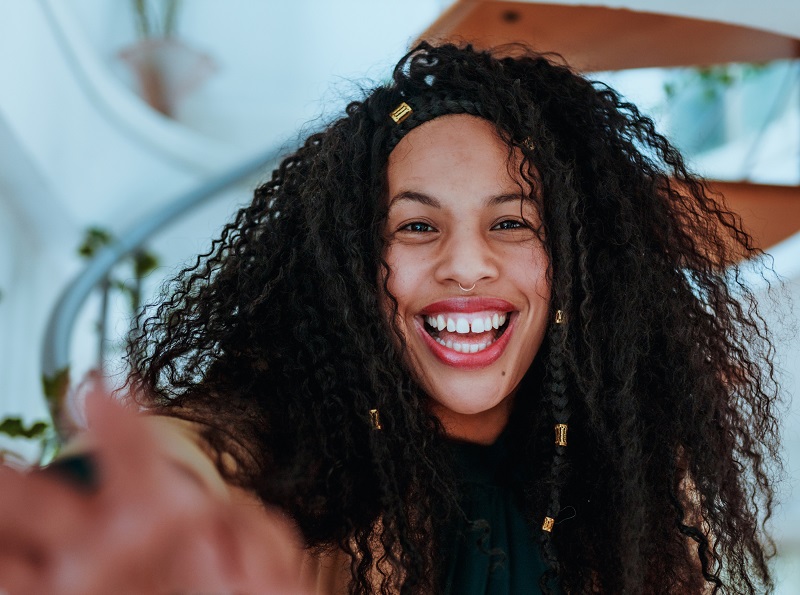
AF: Let’s talk about your new music. You’ve just released an EP called Masks, and the first two songs in particular really stood out to me — Masks and Rainbow. They’re both about identity, but they feel very different emotionally. Masks is a sort of emotional armour, about hiding behind that mask and then journeying towards revealing yourself. Then Rainbow is also about identity but is a really uplifting song about embracing all aspects of yourself, all your feelings, all of your selves. They are quite a contrast, with a different tone to them. Can you tell us about those songs: where they came from, what you’re trying to achieve through them and compare the two?
LN: It’s funny you should say that, because Identity will actually be the title of the new album. That’s a bit of a reveal! Originally, it was going to be called Conversations, because I felt like I was having all these conversations — but then I realised that all of them were really about identity.
Masks comes from my own journey of discovering and finding myself. I spent a lot of my life masking — hiding parts of who I was to fit in. Through therapy, especially during the stillness of the pandemic, I started to understand my mental health more deeply. I realised I was neuro-divergent — ADHD — and that I’d been masking without even knowing it. At the same time, I realised I was using alcohol to self-soothe and numb things. I got sober — I’ve been sober for six years now — and all of that unmasking came together.
Rainbow is about the inner world. It’s about realising that we hold so many emotions at once — joy, sadness, anger, hope — and that they can all coexist. Identity, for me, is about acceptance. Not the version of yourself you think you should be, or the version you’ve been hiding behind, but who you actually are.
There’s this analogy I love about Winnie-the-Pooh — that Christopher Robin represents mental health, and all the characters represent different traits. Tigger has ADHD, Eeyore is depressed, Piglet has anxiety or OCD, Winnie-the-Pooh has an addiction to honey. But what’s beautiful is that none of them try to change each other. They all get invited to the party. No one says, “Don’t invite Eeyore, he’s too depressing,” or “Don’t invite Tigger, he’s too hyper.” They all belong. That’s what identity has become for me — accepting all parts of yourself, making peace with them, making friends with them. Understanding that being different is actually a gift.
AF: You’ve spoken a lot about wellbeing and mental health, and I know that’s a big part of your music and why you create for yourself and for your audiences. How have you promoted wellbeing through music, both for yourself and for others?
LN: Absolutely. I was invited into music mentoring when I was about 15, through free workshops in Bristol through the Bristol Plays Music scheme, formerly known as Remix, now all under the banner of Bristol Beacon. I started peer mentoring, welcoming newcomers into those spaces, especially young people from disadvantaged or dysfunctional backgrounds, places where they haven’t got access. That really aligned with my core values — community, togetherness, service. Later, I trained as a music mentor and started working in hospitals, schools, and prisons. It’s such fulfilling work. Music became a tool for wellbeing in a very real way. I realised just how powerful it is — not just creatively, but emotionally and socially.
I started writing music after losing my grandmother. I was living with my grandparents, and when she passed away, writing was a way of keeping the conversation going. Again – the idea of conversations. It helped me process grief. I heard a quote that grief is the only emotion that, without validation, it can’t be made whole because, without anybody there to validate our feelings, we’re just isolated – without being made whole, it’s continuing to harm us. That opportunity to take music and turn people’s pain and angst into positivity and well-being has become and continues to be a huge part of what I love to do with music. Yesterday, I was playing at Southmead Hospital for end-of-life patients. I played for a patient who may not be alive by the end of the week. His body and his partner had an amazing reaction. He was drifting in and out of consciousness, smiling, humming along. His partner was so moved. That’s the power of music.
I’ve played on neurological wards, for people recovering from trauma. Music can take people out of pain, into moments of well-being, even briefly. Don’t get me wrong – I love making joyful music too, for people to dance and rejoice and have fun — not just for pain relief. I love doing that and that’s why I’ve explored so many different types of songs. I don’t necessarily write about the end of life but music’s power and using my voice to soothe and heal and uplift and connect is extraordinary. I guess it started from a deeper understanding of loss that then moved into a bigger understanding of community and healing. That work grew from personal loss into a wider mission — using music as a tool for well-being, community, and healing, for others as much as for myself.
AF: That feels like a really powerful place to finish. You’ve talked about the variety in your music and all the genres that you draw upon and experiment with. But the thread running through everything you do — across genres, across projects — is music as a tool for connection, to support positivity and well-being. It’s an important message to close our conversation on. Thank you so much for your time.
LN: Thank you so much for advocating for bands, keeping stories alive – that translates to well-being as well because it’s about human connection. I really appreciate your support and your lovely questions.


